Переглянути в інтер'єрі
 Надіслати як листівку
 Поділитися
 Деталі витвору
 Посібник

 Завантажити
 Схожі екземпляри
 Рентгенівське дослідження
 Слайд-шоу
 Питання та відповіді
 Статистика
Study for

- 813.0 x 588.0 cm


 Розгорнути текст
Гікле / Художній принт
Друк جيкле або на полотні музейної якості з оперативним виготовленням та різноманітними варіантами фінішної обробки. ( Замовити картину ручної роботи Перейти до цифрових зображень)




P118B ₴10

P118H ₴10

P118W ₴10

P438Z ₴10

P508JH ₴12

P508YH ₴12

P805H ₴10

P805Z ₴10

P919BZ ₴10

P919G ₴10

P919XJ ₴10

P959ZH ₴10

P968JZ ₴12

W106C ₴8

W218G ₴10

W218JH ₴8

W218Y ₴10

W307PJ ₴10

W316G ₴10

W316PJ ₴8

W316Y ₴10

W398PJ ₴8

W4111J ₴10

W500HY ₴15

W500JH ₴15

W692G ₴12

W849H ₴8

W940BG ₴15

W953PJ ₴8




Обирайте з наших стандартних розмірів, що відповідають оригінальним пропорціям твору мистецтва.

Введіть необхідну ширину та висоту, щоб принт ідеально підійшов до вашої рами або стіни. Принт можна лише обрізати, але не можна зробити більшим за оригінал, тому при зміні пропорцій частина зображення буде втрачена. Перед друком ми надсилаємо вам цифровий макет для затвердження. Зображення на цій сторінці не відображає реальну обрізку — її можна побачити лише на макеті.
Доставка по всьому світу () за 2 тижні замість стандартних 4/5 тижнів. (5 Листопад)

Безкоштовна експрес-доставка по всьому світу

Високоякісне лляне полотно

Повне страхове покриття доставки

Гарантія повернення митних зборів

Гарантія точного відтворення кольорів

Політика повернення протягом 100 днів (лише у разі виявлення дефектів)

Гарантія повернення 100% коштів

Пропозиція на оптові замовлення
 Скляний варіант доступний лише для розмірів до 110 см

Study for
Гікле / Художній принт
Розмір репродукції
-


Підсумкова вартість
₴ 3644
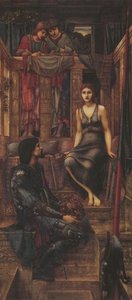
A Vision of Myth and Beauty: Edward Burne-Jones’s “Study for The Sirens”
Edward Coley Burne-Jones, a pivotal figure bridging the romantic currents of the Pre-Raphaelite Brotherhood with the burgeoning aesthetic sensibilities of late Victorian England, possessed an extraordinary ability to conjure worlds both fantastical and deeply human. His art wasn't merely decorative; it was a deliberate exploration of myth, symbolism, and the very essence of beauty. Among his most captivating works is this exquisite “Study for The Sirens,” a preparatory drawing that offers a tantalizing glimpse into the genesis of a monumental painting—a testament to Burne-Jones’s meticulous process and profound artistic vision. This particular study, recently rediscovered and now held within the Ringling Museum of Art in Sarasota, Florida, reveals not just a sketch but a carefully considered meditation on desire, temptation, and the alluring power of the unknown.
The drawing itself is executed with remarkable delicacy in black and red chalk, upon a sheet of high-quality paper. Burne-Jones’s hand moves with confident fluidity, capturing the subtle nuances of form and gesture with breathtaking precision. The composition—a partial view of two figures, a young man and a woman, seated on a grassy bank beside a stream—is deceptively simple yet brimming with latent drama. Notice the loose, expressive lines that define the contours of their bodies, suggesting both vulnerability and an underlying current of sensuality. The artist’s attention to detail is immediately apparent in the rendering of the foliage, the flowing water, and the delicate folds of fabric – elements that contribute significantly to the overall atmosphere of the piece.
Echoes of Mythology and Pre-Raphaelite Sensibilities
“The Sirens,” as Burne-Jones envisioned it, was deeply rooted in Greek mythology. The sirens were mythical creatures—often depicted as beautiful women whose enchanting songs lured sailors to their doom. However, Burne-Jones’s interpretation transcends the traditional cautionary tale. This study hints at a more complex narrative – one of irresistible attraction and the perilous allure of beauty. The figures are not presented as victims but as active participants in a scene of quiet contemplation, suggesting an awareness of the potential consequences of their encounter. The composition draws heavily on Pre-Raphaelite conventions: the emphasis on naturalism, the idealized portrayal of the human form, and the incorporation of classical motifs – all hallmarks of Burne-Jones’s distinctive style.
The influence of Dante Gabriel Rossetti is also palpable in this study. Like Rossetti, Burne-Jones was fascinated by medieval romance and folklore, and he frequently drew inspiration from Arthurian legends and other mythological tales. The use of rich colors, the dramatic lighting, and the evocative atmosphere all contribute to a sense of heightened emotion and psychological intensity – qualities that are characteristic of both artists’ work. The drawing's intimate scale further enhances its emotional impact, inviting the viewer to step into the scene and contemplate the unspoken desires and anxieties of the figures depicted.
A Window into the Artist’s Process
What makes this particular “Study for The Sirens” so compelling is that it offers a rare glimpse into Burne-Jones's creative process. It’s not a finished masterpiece but rather a preliminary sketch—a series of studies and drawings that he created as he developed his ideas for larger works. The drawing reveals the artist’s initial thoughts, experiments with composition, and adjustments to the figures’ poses and expressions. The fact that this particular study was previously misidentified as being by the circle of Augustus John adds an intriguing layer of historical complexity to its story.
Further research into Burne-Jones's work reveals a fascinating connection to the Institute for Advanced Study in Princeton, where scholars from across Europe sought refuge and intellectual stimulation during the tumultuous years following World War I. Burne-Jones’s own life was marked by both artistic triumph and personal tragedy – his marriage to Georgiana MacDonald ended in heartbreak after her death, and he struggled with bouts of depression throughout his career. Despite these challenges, he remained a prolific artist, producing some of the most enduring images of the Victorian era. The rediscovery of this “Study for The Sirens” serves as a poignant reminder of Burne-Jones’s extraordinary talent and his lasting contribution to the world of art.
A Timeless Appeal
“Study for The Sirens” is more than just a drawing; it's an invitation to lose oneself in a world of myth, beauty, and psychological depth. Its evocative atmosphere, masterful technique, and profound symbolism continue to resonate with viewers today. Whether you are an art collector seeking a rare and significant addition to your collection, or simply an admirer of Victorian art, this exquisite study offers a unique opportunity to connect with one of the most celebrated artists of the 19th century. Reproductions of this piece capture the essence of Burne-Jones’s vision, allowing you to bring its timeless beauty into your home or office.
Питання та відповіді
Чи використовує «Study for» роботи Едвард Берне-Джонс сильні контрасти чи м'які гармонії?
У творі "Study for" Bold контраст поєднується з Unified Palette гармонією.
У якому році було створено "Study for"?
«Study for» датована 1870 роком. Ця дата дозволяє визначити місце твору в творчому шляху Едвард Берне-Джонс та відповідну епоху.
Яка техніка виконання та дата створення «Study for» роботи Едвард Берне-Джонс?
«Study for» було створено у 1870 році з використанням техніки Oil On Canvas. Матеріал та дата описують, як і коли було створено оригінал.
Біографія митця
A Dream Woven in Color: The Life and Art of Edward Burne-Jones
Edward Coley Burne-Jones, a name synonymous with Victorian romanticism and Pre-Raphaelite beauty, was born in the industrial heart of Birmingham in 1833. His early life, marked by the tragic loss of his mother, shaped a contemplative spirit deeply immersed in imaginative worlds – a foundation that would profoundly influence his artistic vision. Raised by his father and the steadfast housekeeper Ann Sampson, he received an education at King Edward VI Grammar School and later the Birmingham School of Art, honing his technical skills but it was his time at Exeter College, Oxford, that truly ignited his creative destiny. There, amidst the intellectual fervor of the Pre-Raphaelite movement, he forged a lifelong friendship with William Morris, a bond built on shared passions for beauty and a yearning to reclaim the artistic values of the Middle Ages – a rejection of the perceived ugliness and materialism of the modern world. This connection would not only shape Burne-Jones’s artistic trajectory but also become central to the establishment of Morris & Co., a firm dedicated to reviving traditional craftsmanship and elevating design to an art form in itself.The Brotherhood and the Birth of a Unique Style
Oxford became a crucible for artistic experimentation, where Burne-Jones, alongside Morris and their circle – including Dante Gabriel Rossetti and John Ruskin – delved into medieval literature, mythology, and art. The writings of Ruskin, with his passionate defense of craftsmanship and his critique of industrial society, profoundly influenced the group’s aesthetic sensibilities. They sought to escape the perceived artificiality of contemporary art by returning to the idealized beauty and spiritual depth of the Middle Ages. This wasn't mere nostalgia; it was a deliberate act of rebellion against the prevailing trends of the era. The formation of "The Brotherhood" provided a space for these artists to collaborate, share ideas, and develop their individual styles – Burne-Jones’s quickly distinguishing itself through its ethereal beauty, melancholic grace, and meticulous attention to detail. His early works were heavily influenced by Rossetti's romanticism, but he soon developed his own distinctive voice, characterized by elongated figures, dreamlike landscapes, and a profound sense of longing. The influence of Botticelli and Filippo Lippi is evident in the delicate forms and muted colors that permeate many of his paintings, yet Burne-Jones infused these classical elements with a uniquely British sensibility – a blend of elegance, melancholy, and spiritual yearning.From Painting to Tapestry: A Renaissance of Craft
Burne-Jones’s artistic output extended far beyond the canvas. Recognizing the potential for art to permeate every aspect of life, he collaborated closely with William Morris in establishing Morris & Co., a revolutionary firm dedicated to reviving traditional crafts. He wasn't simply designing decorative patterns; he was reimagining the very concept of artistry, advocating for a holistic approach where beauty and functionality intertwined seamlessly. The firm produced exquisite textiles, wallpapers, furniture, ceramics, and stained glass – all bearing the hallmark of Burne-Jones’s refined aesthetic. His designs for stained glass windows are particularly remarkable, transforming churches and cathedrals into luminous realms of color and narrative. These weren't merely functional elements; they were works of art in their own right, imbued with symbolism and designed to evoke a sense of wonder and spiritual contemplation. This commitment to craftsmanship wasn’t simply about reviving ancient techniques; it was a deliberate attempt to elevate the status of decorative arts, challenging the prevailing hierarchy that placed painting and sculpture at the pinnacle of artistic achievement. Burne-Jones's designs for the "Story of Beauty and the Beast" tile exemplify this fusion of artistry and functionality, showcasing his ability to create both visually stunning and practically useful objects.Mythic Visions and Personal Shadows
Burne-Jones’s subject matter often drew from medieval legends, Arthurian romances, and classical mythology – tales of chivalry, love, loss, and the eternal struggle between good and evil. His most famous works, such as *The Legend of King Arthur* (1878) and *The Lady of Shalott* (1888), capture this spirit with breathtaking beauty and emotional depth. He wasn’t simply illustrating these stories; he was interpreting them through his own unique artistic vision, imbuing them with a sense of melancholy and psychological complexity. However, Burne-Jones's personal life was not without its shadows. His marriage to Georgiana MacDonald, though enduring, was marked by a passionate affair with his Greek model, Maria Zambaco, which led to a dramatic crisis. Despite these emotional challenges, he continued to produce an astonishing body of work, exploring themes of love, loss, and the search for spiritual meaning throughout his career.A Lasting Legacy
Edward Burne-Jones’s influence on British art and design is undeniable. His paintings continue to captivate audiences with their ethereal beauty, intricate detail, and profound emotional depth. He played a pivotal role in revitalizing traditional crafts through his collaboration with William Morris, establishing a new standard for decorative arts. His stained glass windows remain iconic examples of Victorian artistry, transforming sacred spaces with their luminous colors and evocative narratives. Burne-Jones’s work stands as a testament to the power of art to transcend time and touch the deepest recesses of the human soul – a reminder that beauty, spirituality, and craftsmanship can coexist in harmonious balance. His legacy endures not only through his paintings but also through the enduring influence he had on subsequent generations of artists and designers who sought to recapture the lost ideals of the Pre-Raphaelite movement.
Едвард Берне-Джонс
1833 - 1898 , Великобританія
Короткі факти
- Artistic Movement Or Style: Прерафаелізм, Естетизм
- Artists Or Movements Influenced By This Artist:
- Вікторіанські художники
- Ремісники
- Artists Who Influenced This Artist:
- Россетті
- Ботьєллі
- Ліппі
- Date Of Birth: 1833
- Date Of Death: 1898
- Full Name: Edward Coley Burne-Jones
- Nationality: Британський
- Notable Artworks:
- Merlin і Німея
- Король Копетхуа та служка
- Place Of Birth: Бірмінгем, Великобританія
Пов'язані статті

The Pre-Raphaelite Brotherhood: Rediscovering Beauty, Romance, and Medieval Magic in Victorian Art
Embark on a journey through the Pre-Raphaelite Brotherhood. Discover the romantic symbolism, medieval magic, and radical beauty of Rossetti and Burne-Jones in this expert exploration of Victorian art history.

25 шедеврів Данте Габріеля Россетті: мистецтво, краса та декор для вашого дому
Відкрийте 25 захопливих шедеврів Данте Габріеля Россетті! Пориньте у світ прерафаелітів, символізму та неймовірної краси. Купуйте репродукції картин онлайн на OriginalUniqueArt.com – декор для вашого дому з музейною якістю.

The Pre-Raphaelite Brotherhood: Rediscovering Romanticism, Mythological Depth, and Vivid Detail in Victorian Art
Explore the breathtaking world of the Pre-Raphaelite Brotherhood. Discover how this movement redefined Victorian art through vivid detail, mythological depth, and romanticism. An expert guide for classic art enthusiasts seeking to rediscover these timeless masterpieces.
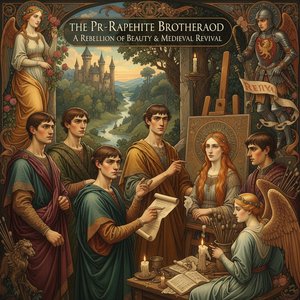
The Pre-Raphaelite Brotherhood: A Rebellion of Beauty & Medieval Revival
Explore the captivating world of the Pre-Raphaelite Brotherhood! Discover their rebellion against academic art, iconic masterpieces, and lasting influence on Victorian aesthetics. Learn about Rossetti, Burne-Jones & more.
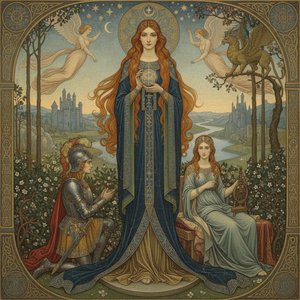
Edward Burne-Jones: A Pre-Raphaelite Vision of Myth, Symbolism & Aesthetic Idealism
Discover the enchanting world of Edward Burne-Jones and the Pre-Raphaelite Brotherhood. Explore his mythical paintings, distinctive style, and lasting influence on Victorian art & the Aesthetic Movement. Expert analysis & high-quality reproductions at OriginalUniqueArt.