Переглянути в інтер'єрі
 Надіслати як листівку
 Поділитися
 Деталі витвору
 Посібник

 Завантажити
 Схожі екземпляри
 Рентгенівське дослідження
 Слайд-шоу
 Статистика
Night
 Акварель
- Настінний декор
- Pre-Raphaelite Movement
 1870
1870- — XIX століття
 79.0 x 56.0 cm
 Тейт Галерея
 Розгорнути текст
Гікле / Художній принт
Друк جيкле або на полотні музейної якості з оперативним виготовленням та різноманітними варіантами фінішної обробки. ( Замовити картину ручної роботи Перейти до цифрових зображень)




P118B ₴10

P118H ₴10

P118W ₴10

P438Z ₴10

P508JH ₴12

P508YH ₴12

P805H ₴10

P805Z ₴10

P919BZ ₴10

P919G ₴10

P919XJ ₴10

P959ZH ₴10

P968JZ ₴12

W106C ₴8

W218G ₴10

W218JH ₴8

W218Y ₴10

W307PJ ₴10

W316G ₴10

W316PJ ₴8

W316Y ₴10

W398PJ ₴8

W4111J ₴10

W500HY ₴15

W500JH ₴15

W692G ₴12

W849H ₴8

W940BG ₴15

W953PJ ₴8




Обирайте з наших стандартних розмірів, що відповідають оригінальним пропорціям твору мистецтва.

Введіть необхідну ширину та висоту, щоб принт ідеально підійшов до вашої рами або стіни. Принт можна лише обрізати, але не можна зробити більшим за оригінал, тому при зміні пропорцій частина зображення буде втрачена. Перед друком ми надсилаємо вам цифровий макет для затвердження. Зображення на цій сторінці не відображає реальну обрізку — її можна побачити лише на макеті.
Доставка по всьому світу () за 2 тижні замість стандартних 4/5 тижнів. (26 Жовтень)

Безкоштовна експрес-доставка по всьому світу

Високоякісне лляне полотно

Повне страхове покриття доставки

Гарантія повернення митних зборів

Гарантія точного відтворення кольорів

Політика повернення протягом 100 днів (лише у разі виявлення дефектів)

Гарантія повернення 100% коштів

Пропозиція на оптові замовлення
 Скляний варіант доступний лише для розмірів до 110 см

Night
Гікле / Художній принт
Розмір репродукції
-


Підсумкова вартість
₴ 3588
A Celestial Ascent: The Ethereal Vision of Burne-Jones’s Night
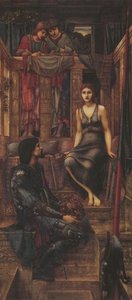
In the quietude of the late Victorian era, few works capture the intersection of myth and mysticism as profoundly as Edward Coley Burne-Jones’s Night. Completed in 1870, this watercolor masterpiece serves as a breathtaking window into the Pre-Raphaelite soul, where the boundaries between the earthly and the divine begin to dissolve. The painting presents us with a moment of pure, celestial grace: Lady Psyche, soaring through a star-studded firmament. As she ascends, her form is caught in a state of weightless transition, embodying the very essence of a dream realized. For the discerning collector or interior designer, this piece offers more than mere decoration; it provides an atmospheric anchor, a portal to a realm of infinite peace and spiritual aspiration.
The narrative depth of the work is rooted in the classical beauty of Apuleius’s Metamorphoses. Here, we witness Psyche, the personification of the soul, navigating the luminous expanse of the heavens. Her outstretched arms are not merely a gesture of flight but a profound symbol of surrender to the divine and the eternal cycle of rebirth. Burne-Jones meticulously weaves this mythological thread into the fabric of the painting, using the figure of Psyche to mirror the human longing for transcendence. The way her flowing drapery catches the unseen currents of the night sky creates a sense of rhythmic movement that guides the viewer’s eye upward, mirroring the character's own spiritual journey toward the light.
A Symphony of Luminous Technique and Color
Technically, Night is a triumph of watercolor mastery. Burne-Jones employs a sophisticated layering of delicate washes to achieve a depth that belies the medium’s transparency. The palette is a hauntingly beautiful arrangement of cool blues, deep violets, and midnight indigos, punctuated by the shimmering brilliance of distant stars. This careful gradation of color creates an atmospheric perspective that pulls the viewer into the vastness of the cosmos. There is a palpable luminosity to the sky, as if the light itself is emanating from within the paper, casting a soft, otherworldly glow upon Psyche’s form.
The artist’s attention to detail provides a tactile richness to the ethereal scene. One can almost feel the weightless texture of the gown and the crispness of the nocturnal air. This precision, combined with the dreamlike subject matter, allows the painting to function as a centerpiece of profound emotional impact. Whether placed in a contemplative study, a grand salon, or a modern living space, a high-quality reproduction of this work brings an air of sophisticated mystery and timeless elegance. It is a piece that invites long periods of reflection, rewarding the observer with new layers of beauty and meaning upon every encounter.
Питання та відповіді
Чи можу я побачити рентгенівський знімок «Night» роботи Едвард Берне-Джонс?
«Night» можна досліджувати шар за шаром на сторінці Рентгенівське дослідження твору — це інтерактивний візуалізатор, натхненний освітлювальним столом реставратора, що пропонує одинадцять оптичних пластів зображення.
Де я можу знайти статистику про «Night» роботи Едвард Берне-Джонс?
Сторінка Статистика переглядів для роботи «Night» роботи Едвард Берне-Джонс містить статистику публічних переглядів: кількість щомісячних відвідувань цього твору, порівняння з найбільш популярними роботами митця та географію відвідувачів.
Чи є «Night» роботи Едвард Берне-Джонс суспільним надбанням?
Статус авторського права для «Night» роботи Едвард Берне-Джонс: цей твір є є суспільним надбанням — термін дії авторського права закінчився. Це визначає, чи можна вільно створювати репродукції зображення.
Біографія митця
A Dream Woven in Color: The Life and Art of Edward Burne-Jones
Edward Coley Burne-Jones, a name synonymous with Victorian romanticism and Pre-Raphaelite beauty, was born in the industrial heart of Birmingham in 1833. His early life, marked by the tragic loss of his mother, shaped a contemplative spirit deeply immersed in imaginative worlds – a foundation that would profoundly influence his artistic vision. Raised by his father and the steadfast housekeeper Ann Sampson, he received an education at King Edward VI Grammar School and later the Birmingham School of Art, honing his technical skills but it was his time at Exeter College, Oxford, that truly ignited his creative destiny. There, amidst the intellectual fervor of the Pre-Raphaelite movement, he forged a lifelong friendship with William Morris, a bond built on shared passions for beauty and a yearning to reclaim the artistic values of the Middle Ages – a rejection of the perceived ugliness and materialism of the modern world. This connection would not only shape Burne-Jones’s artistic trajectory but also become central to the establishment of Morris & Co., a firm dedicated to reviving traditional craftsmanship and elevating design to an art form in itself.The Brotherhood and the Birth of a Unique Style
Oxford became a crucible for artistic experimentation, where Burne-Jones, alongside Morris and their circle – including Dante Gabriel Rossetti and John Ruskin – delved into medieval literature, mythology, and art. The writings of Ruskin, with his passionate defense of craftsmanship and his critique of industrial society, profoundly influenced the group’s aesthetic sensibilities. They sought to escape the perceived artificiality of contemporary art by returning to the idealized beauty and spiritual depth of the Middle Ages. This wasn't mere nostalgia; it was a deliberate act of rebellion against the prevailing trends of the era. The formation of "The Brotherhood" provided a space for these artists to collaborate, share ideas, and develop their individual styles – Burne-Jones’s quickly distinguishing itself through its ethereal beauty, melancholic grace, and meticulous attention to detail. His early works were heavily influenced by Rossetti's romanticism, but he soon developed his own distinctive voice, characterized by elongated figures, dreamlike landscapes, and a profound sense of longing. The influence of Botticelli and Filippo Lippi is evident in the delicate forms and muted colors that permeate many of his paintings, yet Burne-Jones infused these classical elements with a uniquely British sensibility – a blend of elegance, melancholy, and spiritual yearning.From Painting to Tapestry: A Renaissance of Craft
Burne-Jones’s artistic output extended far beyond the canvas. Recognizing the potential for art to permeate every aspect of life, he collaborated closely with William Morris in establishing Morris & Co., a revolutionary firm dedicated to reviving traditional crafts. He wasn't simply designing decorative patterns; he was reimagining the very concept of artistry, advocating for a holistic approach where beauty and functionality intertwined seamlessly. The firm produced exquisite textiles, wallpapers, furniture, ceramics, and stained glass – all bearing the hallmark of Burne-Jones’s refined aesthetic. His designs for stained glass windows are particularly remarkable, transforming churches and cathedrals into luminous realms of color and narrative. These weren't merely functional elements; they were works of art in their own right, imbued with symbolism and designed to evoke a sense of wonder and spiritual contemplation. This commitment to craftsmanship wasn’t simply about reviving ancient techniques; it was a deliberate attempt to elevate the status of decorative arts, challenging the prevailing hierarchy that placed painting and sculpture at the pinnacle of artistic achievement. Burne-Jones's designs for the "Story of Beauty and the Beast" tile exemplify this fusion of artistry and functionality, showcasing his ability to create both visually stunning and practically useful objects.Mythic Visions and Personal Shadows
Burne-Jones’s subject matter often drew from medieval legends, Arthurian romances, and classical mythology – tales of chivalry, love, loss, and the eternal struggle between good and evil. His most famous works, such as *The Legend of King Arthur* (1878) and *The Lady of Shalott* (1888), capture this spirit with breathtaking beauty and emotional depth. He wasn’t simply illustrating these stories; he was interpreting them through his own unique artistic vision, imbuing them with a sense of melancholy and psychological complexity. However, Burne-Jones's personal life was not without its shadows. His marriage to Georgiana MacDonald, though enduring, was marked by a passionate affair with his Greek model, Maria Zambaco, which led to a dramatic crisis. Despite these emotional challenges, he continued to produce an astonishing body of work, exploring themes of love, loss, and the search for spiritual meaning throughout his career.A Lasting Legacy
Edward Burne-Jones’s influence on British art and design is undeniable. His paintings continue to captivate audiences with their ethereal beauty, intricate detail, and profound emotional depth. He played a pivotal role in revitalizing traditional crafts through his collaboration with William Morris, establishing a new standard for decorative arts. His stained glass windows remain iconic examples of Victorian artistry, transforming sacred spaces with their luminous colors and evocative narratives. Burne-Jones’s work stands as a testament to the power of art to transcend time and touch the deepest recesses of the human soul – a reminder that beauty, spirituality, and craftsmanship can coexist in harmonious balance. His legacy endures not only through his paintings but also through the enduring influence he had on subsequent generations of artists and designers who sought to recapture the lost ideals of the Pre-Raphaelite movement.
Едвард Берне-Джонс
1833 - 1898 , Великобританія
Короткі факти
- Artistic Movement Or Style: Прерафаелізм, Естетизм
- Artists Or Movements Influenced By This Artist:
- Вікторіанські художники
- Ремісники
- Artists Who Influenced This Artist:
- Россетті
- Ботьєллі
- Ліппі
- Date Of Birth: 1833
- Date Of Death: 1898
- Full Name: Edward Coley Burne-Jones
- Nationality: Британський
- Notable Artworks:
- Merlin і Німея
- Король Копетхуа та служка
- Place Of Birth: Бірмінгем, Великобританія
Пов'язані статті
Edward Burne-Jones: A Pre-Raphaelite Vision of Myth, Symbolism & Aesthetic Idealism
Discover the enchanting world of Edward Burne-Jones and the Pre-Raphaelite Brotherhood. Explore his mythical paintings, distinctive style, and lasting influence on Victorian art & the Aesthetic Movement. Expert analysis & high-quality reproductions at OriginalUniqueArt.

Ephemeral Visions: Exploring the Artistic Legacy & Contemporary Practice of Watercolor Painting
Explore the captivating world of watercolor painting! Discover its rich history, essential techniques, influential artists & collecting tips. A comprehensive guide for art enthusiasts from OriginalUniqueArt.
Топ-25 шедеврів Едварда Гоппера: мистецтво самотності та американського реалізму | OriginalUniqueArt
Відкрийте для себе 25 культових картин Едварда Гоппера – символів американського реалізму та самотності. Історія мистецтва, техніки живопису та натхнення для вашого інтер'єру від OriginalUniqueArt.com. Дослідіть всю колекцію онлайн!

25 шедеврів Данте Габріеля Россетті: мистецтво, краса та декор для вашого дому
Відкрийте 25 захопливих шедеврів Данте Габріеля Россетті! Пориньте у світ прерафаелітів, символізму та неймовірної краси. Купуйте репродукції картин онлайн на OriginalUniqueArt.com – декор для вашого дому з музейною якістю.

Топ-10 легендарних акварелей, що змінили світ мистецтва | OriginalUniqueArt
Відкрийте для себе 10 легендарних акварелей від Turner, Monet та інших майстрів! Історія мистецтва, техніки живопису та натхнення для декору вашого дому. Купуйте репродукції картин аквареллю преміум-якості на OriginalUniqueArt.com.