

 Переглянути в інтер'єрі
 Надіслати як листівку
 Поділитися
 Детальніше

 Завантажити
 Схожі експонати
 Рентгенівське дослідження
 Слайд-шоу
October Morning


 Читати далі
Олійная репродукція ручної роботи
Написана вручну олією на полотні у вашому розмірі та рамі, виготовлена на замовлення нашими художниками. ( Замовити принт Купити цифрове зображення)




P118B $10

P118H $10

P118W $10

P438Z $10

P508JH $12

P508YH $12

P805H $10

P805Z $10

P919BZ $10

P919G $10

P919XJ $10

P959ZH $10

P968JZ $12

W106C $8

W218G $10

W218JH $8

W218Y $10

W307PJ $10

W316G $10

W316PJ $8

W316Y $10

W398PJ $8

W4111J $10

W500HY $15

W500JH $15

W692G $12

W849H $8

W940BG $15

W953PJ $8




Обирайте з наших стандартних розмірів, що відповідають оригінальним пропорціям твору мистецтва.

Ви можете вказати власні розміри, щоб репродукція ідеально підійшла до конкретної рами або інтер'єру. Якщо вибраний вами розмір не відповідає пропорціям оригіналу, ми або обріжемо полотно, або доповнимо картину додатковими елементами, промальованими вручну. Цифровий макет буде надіслано вам на затвердження перед початком виробництва.
Зверніть увагу, що попередній перегляд на екрані не відображає фактичне обрізання або розширення зображення. Тільки макет точно покаже остаточну композицію.
Хоча ми можемо виготовити виріб у нестандартному розмірі, для збереження оригінальних пропорцій рекомендуємо обирати варіанти зі встановленого списку.
Після оформлення замовлення команда OriginalUniqueArt.com зв'яжеться з клієнтом електронною поштою для отримання інструкцій та надасть попередній макет
Доставка по всьому світу () за 3–4 тижні замість стандартних 5 тижнів. (15 Серпень). Без жодних компромісів у якості.

Безкоштовна експрес-доставка по всьому світу

Високоякісне лляне полотно

Повне страхове покриття доставки

Гарантія відшкодування митних зборів

Гарантія точного відтворення кольорів

Політика повернення протягом 60 днів (лише у разі виявлення дефектів)

Гарантія повернення 100% коштів

Пропозиція на оптові замовлення
 Скляний варіант доступний лише для розмірів до 110 см

October Morning
Матеріал репродукції
Розмір репродукції
-


Підсумкова вартість
$ 300
Опис твору
October Morning: A Symphony of Autumnal Light by Dwight William Tryon
Dwight William Tryon’s “October Morning” isn't merely a landscape painting; it’s an immersion into the heart of a fleeting autumnal moment, captured with a delicate precision and imbued with a profound sense of tranquility. Painted in 1921, during a period when American art was increasingly embracing tonalism – a style prioritizing mood and atmosphere over sharp detail – this piece exemplifies Tryon's signature approach: a quiet contemplation of the natural world rendered through subtle color shifts and luminous washes.
The scene unfolds within a gently sloping meadow, bisected by a meandering stream reflecting the soft hues of the sky. A carefully arranged row of trees dominates the midground, their branches reaching upwards like supplicating arms, each leaf painted with an almost impossibly delicate gradation of greens, yellows, and ochres – a testament to Tryon’s mastery of layering thin glazes of oil paint. These aren't the bold, vibrant colors of Impressionism; instead, they are muted, atmospheric, evoking the fading warmth of the sun as it dips below the horizon. The distant trees recede into a hazy blue-grey, creating an illusion of depth and vastness that draws the viewer’s eye into the painting’s serene embrace.
The Tonalist's Palette: Technique and Style
Tryon’s technique is characterized by its meticulous attention to light and shadow. He employed a ‘wet-on-wet’ approach, applying paint while it was still wet on the canvas, allowing colors to blend seamlessly and creating soft edges that contribute to the painting's ethereal quality. The absence of harsh outlines or defined forms reinforces this sense of atmospheric depth. The use of thin glazes – multiple layers of translucent color applied over each other – builds up the image gradually, resulting in a luminous surface that seems to glow from within. This technique is deeply rooted in the Barbizon school of painting, which emphasized capturing the essence of nature rather than its literal representation.
Notably, Tryon’s work aligns with the broader artistic currents of his time. Influenced by James McNeill Whistler's emphasis on tonal harmony and color relationships, he sought to evoke a feeling of quiet contemplation and spiritual connection through his art. His paintings are often described as “luminist,” though he predates the more formalized Luminist movement, sharing its core principles of capturing fleeting moments of light and atmosphere.
Symbolism and Emotional Resonance
“October Morning” is rich in symbolic meaning, reflecting a deep connection to the rhythms of nature. The row of trees, stretching towards the horizon, can be interpreted as a symbol of resilience and endurance – mirroring the steadfastness of nature through the changing seasons. The stream, flowing gently across the meadow, represents the passage of time and the cyclical nature of life. The muted colors evoke feelings of peace, nostalgia, and melancholy—a poignant reminder of the beauty of impermanence.
More than just a depiction of a landscape, “October Morning” is an invitation to pause, reflect, and connect with the natural world. It’s a painting that speaks to our deepest longings for tranquility and connection, offering a moment of respite from the complexities of modern life. The soft light and muted colors create a sense of warmth and serenity, inviting the viewer to lose themselves in the beauty of this autumnal scene.
A Legacy of Serenity: Tryon’s Enduring Appeal
Dwight William Tryon's work continues to resonate with audiences today due to its timeless appeal. His paintings capture a sense of quietude and beauty that transcends time, offering viewers a glimpse into the heart of nature. His dedication to capturing subtle nuances of light and color has earned him recognition as one of America’s most important landscape painters. Reproductions of “October Morning” are prized by collectors and interior designers alike, bringing a touch of serenity and autumnal charm to homes and galleries around the world.
Біографія митця
Early Life and Artistic Beginnings
Dwight William Tryon, a name synonymous with serene American landscapes, was born in Hartford, Connecticut, on August 13, 1849. His early life unfolded within the quiet embrace of New England’s countryside, a formative period that would profoundly shape his artistic sensibilities. The untimely death of his father at a young age cast a shadow over his childhood, leading to an upbringing largely entrusted to his grandparents' farm in East Hartford. This immersion in rural life—the rhythms of nature, the changing seasons, and the subtle beauty of the landscape—became the bedrock of his artistic vision, providing him with a deep connection to the natural world that would permeate his work throughout his career. Initially without formal training, Tryon’s innate talent for observation and representation blossomed organically. He found solace and inspiration in a local bookstore, not merely as a customer but as an employee, absorbing the knowledge of art books and instructional manuals. These early explorations were characterized by tireless sketching sessions, meticulously translating the nuances of light and shadow onto paper—a practice that foreshadowed his later mastery of atmospheric effects. His dedication culminated in his first sale in 1870, followed by a series of local exhibitions that hinted at the burgeoning talent awaiting recognition within the broader art world. His acceptance into the National Academy of Design in 1873 marked a significant milestone, providing him with access to formal training and a platform for showcasing his work.European Influences and the Shaping of a Style
Driven by an ambition to refine his skills and broaden his artistic horizons, Tryon embarked on a transformative journey to France in 1876. This pivotal move allowed him to immerse himself in the vibrant artistic currents of Europe, seeking guidance from some of the era’s most influential figures. He studied under Jacquesson de la Chevreuse at the École des Beaux-Arts, absorbing the techniques and philosophies of French academic art. However, his education extended far beyond the confines of the classroom; he actively sought mentorship from luminaries like Charles-François Daubigny, Henri Harpignies, and Jean Baptiste-Antoine Guillemet – artists deeply connected to the Barbizon School. Initially, Tryon’s style leaned towards Luminism, a movement characterized by its emphasis on capturing the effects of light and atmosphere through subtle gradations of tone. Yet, his artistic path soon diverged, drawn to the principles of the Barbizon School—a movement that prioritized direct observation of nature, a muted palette, and a focus on conveying mood and emotion rather than precise detail. The Barbizon School’s emphasis on capturing the essence of a scene resonated deeply with Tryon's own sensibilities, shaping his approach to landscape painting. Crucially, he found inspiration in the work of James McNeill Whistler, whose tonalist style—characterized by harmonious color arrangements and subtle gradations—proved particularly influential. Whistler’s ability to evoke atmosphere and mood through carefully considered color palettes profoundly impacted Tryon's artistic development, leading him to prioritize emotional resonance over strict realism.Mature Style and Atmospheric Landscapes
By the late 1880s, Dwight William Tryon had fully realized his distinctive style—a signature approach that would define his legacy as a leading American Tonalist. His canvases often feature a carefully considered composition: a grouping or broken row of trees positioned in the middle distance, acting as a visual bridge between a luminous sky above and a foreground marsh or pasture below. These scenes are frequently imbued with autumnal hues—russets, ochres, and browns—evoking a sense of tranquility, melancholy, and the passage of time. Beyond landscapes, Tryon also excelled at seascapes, utilizing pastel to capture the expansive beauty of water, sky, and beach under varying weather conditions – from misty mornings to dramatic sunsets. His mastery lay not in meticulous detail but in his ability to convey atmosphere—the subtle shifts in light, the delicate play of color, and the overall mood of a scene. *Salt-Marsh, December*, which garnered first prize at the Tennessee Centennial Exposition in 1897, stands as a prime example of this skill, showcasing his talent for capturing the serene beauty of the natural world with remarkable sensitivity. His paintings were consistently exhibited nationally, gaining recognition at prestigious venues such as the Pennsylvania Academy of Fine Arts and the Montross Gallery.Patronage, Recognition, and Lasting Legacy
The trajectory of Tryon’s career was significantly enhanced by his relationship with Charles Lang Freer, a discerning collector who became his most important patron. Freer acquired dozens of Tryon's works, providing him with financial security and enabling him to dedicate himself fully to his art. Furthermore, Freer collaborated with the artist on interior design projects for his Detroit home, further solidifying their connection. This generous support allowed Tryon to flourish creatively, and many of these paintings now reside in the esteemed Freer Gallery of Art as part of the Smithsonian Institution—a testament to Freer’s foresight and Tryon's enduring artistic merit. Additional recognition came in 1908 when he received the Carnegie Prize at the Carnegie Exhibition, solidifying his position among the leading artists of his time. Throughout his career, Tryon remained an active member of several prestigious art organizations, including the Society of American Artists, the American Watercolor Society, and the National Institute of Arts and Letters (now the American Academy of Arts and Letters). In 1887, he established a summer home in South Dartmouth, Massachusetts, which served as his primary residence for the remainder of his life—a sanctuary where he could continue to draw inspiration from the surrounding landscape. Dwight William Tryon passed away on July 1, 1925, leaving behind a rich artistic legacy defined by his contribution to American Tonalism and his exceptional ability to capture atmospheric landscapes and seascapes with delicate color and refined feeling. His works continue to be celebrated and are held in prominent collections such as the Smithsonian American Art Museum and the Freer Gallery of Art, ensuring that his vision endures for generations to come.
Двійт Вільям Тріон
1849 - 1925 , США
Короткі факти
- Artistic Movement Or Style: Тоналізм, Барбізонська школа
- Artists Or Movements Influenced By This Artist: ['Американський тоналізм']
- Artists Who Influenced This Artist:
- Чарлз-Франсуа Дабньоі
- Джеймс Макнейл Уілстер
- Date Of Birth: 13 серпня 1849
- Date Of Death: 1 липня 1925
- Full Name: Dwight William Tryon
- Nationality: Американський
- Notable Artworks:
- Болото, грудень
- Весна
- Висінки Ньюбері в місяць
- Place Of Birth: Гартем, США
Пов'язані статті
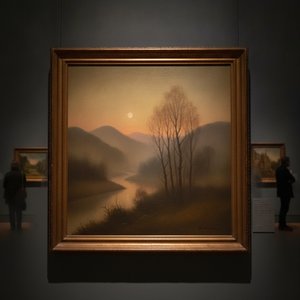
Tonalism Explained: The Art of Mood, Mist, and Masterful Color in Landscape Painting
Discover the evocative world of Tonalism. Explore how masters like Whistler and Tryon used mist, shadow, and subtle color to capture profound mood and atmosphere in landscape art. An expert guide for fine art enthusiasts and collectors.
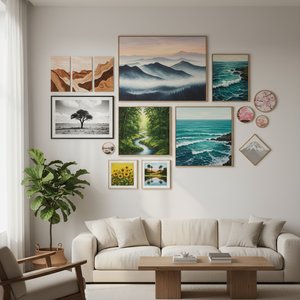
Топ-10 шедеврів пейзажу: мистецтво природи в інтер'єрі від OriginalUniqueArt
Відкрийте для себе 10 найвідоміших пейзажів в історії мистецтва! Ван Гог, Моне та інші майстри. Репродукції картин високої якості від OriginalUniqueArt – натхнення для вашого дому. Дослідіть колекцію онлайн!

Топ-25 шедеврів Джона Констебла: пейзажі Англії для вашого дому | OriginalUniqueArt
Відкрийте для себе 25 найкращих шедеврів Джона Констебла! Англійські пейзажі, романтизм та емоційне світло в живописі. Репродукції картин високої якості для вашого дому від OriginalUniqueArt.com. Дослідіть повну колекцію онлайн!

Evocations of Place: A Historical Journey Through Landscape Art
Explore the rich history of landscape art with OriginalUniqueArt. Discover renowned artists, movements like Impressionism & Romanticism, and expert guidance for collecting timeless pieces. Find your perfect serene escape today!
Serene Visions: Exploring Themes of Tranquility in Art History & Contemporary Practice
Explore the history of serene landscape art & discover artists who evoke tranquility. Find the perfect calming artwork for your home with expert guidance from OriginalUniqueArt.

