- Додому

- Цифрове зображення
- Двійт Вільям Тріон
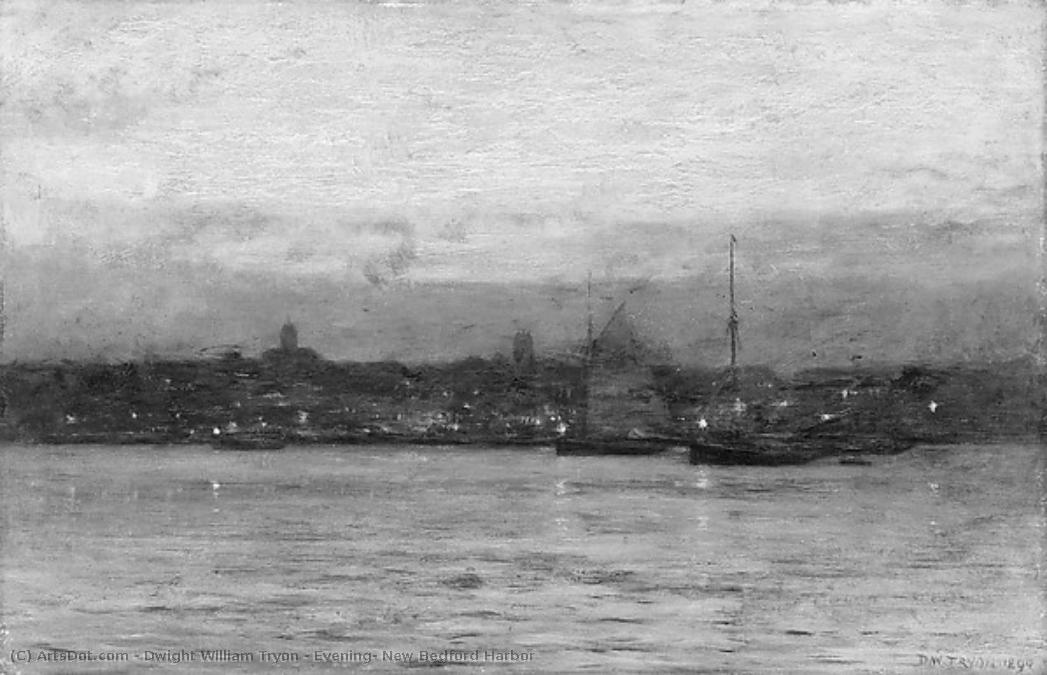
- Evening, New Bedford Harbor
 Preview
 Замовити друк Замовити репродукцію
 Надіслати
 Поділитися
 Деталі витвору
 Додати до улюблених

 Завантажити
 Схожі вироби
 Рентгенівське дослідження
 Слайд-шоу
Evening, New Bedford Harbor
 Oil On Canvas
- WallArt
- Tonalist Painting
 1890
1890- 19th Century
 51.0 x 80.0 cm
 Музей Метрополітен
 Розгорнути текст
Придбайте цифрову копію високої роздільної здатності з покращеною якістю, що значно перевершує онлайн-перегляд.
Кожен файл ретельно підготовлений нашими фахівцями за допомогою сучасних інструментів та професійної ручної ретуші. Ми гарантуємо виняткову чіткість, точну передачу кольору та високу деталізацію кожного зображення.
Фінальний файл надсилається електронною поштою протягом 72 годин і оптимізований для негайного використання у професійних виданнях та друкованих матеріалах. Таку якість обирають провідні дизайнерські студії, видавництва та галереї.
Цифрове зображення
Завантажте файл високої роздільної здатності для особистого перегляду, друку та творчих проєктів.
Включено в кожне замовлення цифрових зображень
Експертна цифрова доставка, гарантовано
Обираючи OriginalUniqueArt.com, ви отримуєте не просто зображення — ви отримуєте професійно вдосконалений цифровий витвір мистецтва, створений з надзвичайною точністю та підкріплений гарантією задоволення. Ось усе, що автоматично додається до вашого замовлення:

Швидка доставка на email
Ваш цифровий файл із зображенням високої роздільної здатності буде надісланий вам електронною поштою протягом 72 годин після оформлення замовлення — він буде готовий до негайного використання.

Цифровий файл із покращенням ШІ
Ваш витвір мистецтва професійно оптимізовано за допомогою передових інструментів штучного інтелекту та ручної корекції, що забезпечує максимальну деталізацію, чіткість і точність передачі кольорів.

Безкоштовне повторне надання послуг протягом усього життя
Випадково видалили або втратили файл? Не хвилюйтеся — ми надішлемо його вам повторно в будь-який час безкоштовно.

Без митних зборів — завжди
Насолоджуйтесь вашим витвором мистецтва миттєво без жодних мит, зборів або плати за доставку — цифрові завантаження завжди не оподатковуються.

Гарантія точності кольорів
Ми гарантуємо, що ваше цифрове зображення максимально точно відтворює оригінальні кольори завдяки використанню професійних інструментів та систем управління кольором.

Гарантія задоволення протягом 60 днів
Якщо ви не задоволені придбаним цифровим зображенням, ми відкоригуємо його або повернемо 100% вартості протягом 60 днів — без жодних запитань.

Гарантія повернення 100% коштів
Не задоволені покупкою? Отримайте повне повернення коштів протягом 60 днів після отримання цифрового файлу — без жодних запитань.

Знижки на оптові замовлення
Купуйте 3 зображення — заощаджуйте 10% — Купуйте 5 — заощаджуйте 15% — Купуйте 10+ — заощаджуйте 20%. Чудово підходить для творчих проєктів, галерей та агентств.
Опис колекційного об'єкта
A Moment of Quietude: The Essence of Dwight William Tryon’s “Evening, New Bedford Harbor”
Dwight William Tryon's "Evening, New Bedford Harbor" isn’t merely a depiction of a maritime scene; it’s an immersion into a specific time and mood. Painted in 1890, this oil on wood canvas captures the profound stillness of twilight over the harbor, offering a glimpse into the lives intertwined with the sea and the quiet dignity of a fading day. The painting immediately draws the viewer in with its monochromatic palette – a carefully orchestrated dance of grays, blacks, and whites that eschews traditional color for an exploration of light, shadow, and atmosphere. It’s a testament to Tryon's mastery of tonalism, an American art movement he embraced wholeheartedly, prioritizing emotional resonance over precise representation.
The composition itself is remarkably balanced, dividing the canvas into distinct yet harmonious zones. The foreground, dominated by the dark, reflective waters of the harbor, anchors the scene and establishes a sense of depth. Beyond this lies the middle ground, populated with several ships – not rendered as individual entities but rather as suggestive forms, blending seamlessly into the hazy distance. Finally, the background reveals the faint outline of New Bedford’s cityscape, softened by atmospheric perspective and appearing almost dreamlike. This careful arrangement creates a feeling of spaciousness and invites contemplation, mirroring the quiet solitude of the scene.
The Language of Tone: Tryon's Tonalist Technique
Tryon’s technique is characterized by an exquisite sensitivity to light and texture. He achieves this through meticulous blending and layering of oil paints – a process that results in surfaces that appear incredibly smooth, almost velvety to the touch. There’s no visible brushstroke; instead, the paint seems to melt into one another, creating subtle gradations of tone that mimic the diffused light of dusk. This deliberate softness contributes significantly to the painting's overall atmosphere of tranquility and melancholy. The artist skillfully utilizes the absence of strong highlights or shadows, relying instead on the nuanced interplay of light and dark to define form and create a sense of volume.
The choice of a monochromatic palette is not arbitrary; it’s integral to Tryon's artistic vision. By stripping away color, he forces the viewer to engage with the painting on a purely sensory level – focusing on the subtle shifts in tone, the play of light and shadow, and the overall mood conveyed by the scene. This approach aligns perfectly with the principles of tonalism, which sought to capture the essence of a subject through its emotional impact rather than its literal appearance.
Symbolism and Emotional Resonance: A Portrait of a Working Harbor
“Evening, New Bedford Harbor” is more than just a landscape; it’s a poignant meditation on labor, community, and the passage of time. The scene evokes the quiet dignity of the fishermen and sailors who worked tirelessly in the harbor, their lives inextricably linked to the rhythms of the sea. The muted colors and soft lighting suggest a sense of weariness and reflection – perhaps a moment of respite before returning to the demands of the next day. The distant cityscape hints at the bustling life of New Bedford, while the vast expanse of water symbolizes both opportunity and uncertainty.
Furthermore, the painting’s overall mood is imbued with a subtle sense of nostalgia. It's as if Tryon is inviting us to step back in time and witness a moment that has long since vanished – a reminder of a bygone era when life revolved around the sea and its bounty. The piece resonates with a quiet beauty, prompting viewers to contemplate their own relationship to nature, community, and the enduring power of memory.
A Legacy of Tonalist Beauty: Tryon’s Enduring Appeal
Dwight William Tryon's "Evening, New Bedford Harbor" stands as a remarkable example of American tonalism – a testament to the artist’s skill and sensitivity. Its evocative atmosphere, meticulous technique, and subtle symbolism continue to captivate viewers today. Reproductions of this masterpiece offer a unique opportunity to bring this serene scene into your home or office, allowing you to experience its quiet beauty and emotional resonance firsthand. It's a piece that speaks volumes without uttering a single word, inviting contemplation and offering a moment of respite from the complexities of modern life.
Біографія митця
Early Life and Artistic Beginnings
Dwight William Tryon, a name synonymous with serene American landscapes, was born in Hartford, Connecticut, on August 13, 1849. His early life unfolded within the quiet embrace of New England’s countryside, a formative period that would profoundly shape his artistic sensibilities. The untimely death of his father at a young age cast a shadow over his childhood, leading to an upbringing largely entrusted to his grandparents' farm in East Hartford. This immersion in rural life—the rhythms of nature, the changing seasons, and the subtle beauty of the landscape—became the bedrock of his artistic vision, providing him with a deep connection to the natural world that would permeate his work throughout his career. Initially without formal training, Tryon’s innate talent for observation and representation blossomed organically. He found solace and inspiration in a local bookstore, not merely as a customer but as an employee, absorbing the knowledge of art books and instructional manuals. These early explorations were characterized by tireless sketching sessions, meticulously translating the nuances of light and shadow onto paper—a practice that foreshadowed his later mastery of atmospheric effects. His dedication culminated in his first sale in 1870, followed by a series of local exhibitions that hinted at the burgeoning talent awaiting recognition within the broader art world. His acceptance into the National Academy of Design in 1873 marked a significant milestone, providing him with access to formal training and a platform for showcasing his work.European Influences and the Shaping of a Style
Driven by an ambition to refine his skills and broaden his artistic horizons, Tryon embarked on a transformative journey to France in 1876. This pivotal move allowed him to immerse himself in the vibrant artistic currents of Europe, seeking guidance from some of the era’s most influential figures. He studied under Jacquesson de la Chevreuse at the École des Beaux-Arts, absorbing the techniques and philosophies of French academic art. However, his education extended far beyond the confines of the classroom; he actively sought mentorship from luminaries like Charles-François Daubigny, Henri Harpignies, and Jean Baptiste-Antoine Guillemet – artists deeply connected to the Barbizon School. Initially, Tryon’s style leaned towards Luminism, a movement characterized by its emphasis on capturing the effects of light and atmosphere through subtle gradations of tone. Yet, his artistic path soon diverged, drawn to the principles of the Barbizon School—a movement that prioritized direct observation of nature, a muted palette, and a focus on conveying mood and emotion rather than precise detail. The Barbizon School’s emphasis on capturing the essence of a scene resonated deeply with Tryon's own sensibilities, shaping his approach to landscape painting. Crucially, he found inspiration in the work of James McNeill Whistler, whose tonalist style—characterized by harmonious color arrangements and subtle gradations—proved particularly influential. Whistler’s ability to evoke atmosphere and mood through carefully considered color palettes profoundly impacted Tryon's artistic development, leading him to prioritize emotional resonance over strict realism.Mature Style and Atmospheric Landscapes
By the late 1880s, Dwight William Tryon had fully realized his distinctive style—a signature approach that would define his legacy as a leading American Tonalist. His canvases often feature a carefully considered composition: a grouping or broken row of trees positioned in the middle distance, acting as a visual bridge between a luminous sky above and a foreground marsh or pasture below. These scenes are frequently imbued with autumnal hues—russets, ochres, and browns—evoking a sense of tranquility, melancholy, and the passage of time. Beyond landscapes, Tryon also excelled at seascapes, utilizing pastel to capture the expansive beauty of water, sky, and beach under varying weather conditions – from misty mornings to dramatic sunsets. His mastery lay not in meticulous detail but in his ability to convey atmosphere—the subtle shifts in light, the delicate play of color, and the overall mood of a scene. *Salt-Marsh, December*, which garnered first prize at the Tennessee Centennial Exposition in 1897, stands as a prime example of this skill, showcasing his talent for capturing the serene beauty of the natural world with remarkable sensitivity. His paintings were consistently exhibited nationally, gaining recognition at prestigious venues such as the Pennsylvania Academy of Fine Arts and the Montross Gallery.Patronage, Recognition, and Lasting Legacy
The trajectory of Tryon’s career was significantly enhanced by his relationship with Charles Lang Freer, a discerning collector who became his most important patron. Freer acquired dozens of Tryon's works, providing him with financial security and enabling him to dedicate himself fully to his art. Furthermore, Freer collaborated with the artist on interior design projects for his Detroit home, further solidifying their connection. This generous support allowed Tryon to flourish creatively, and many of these paintings now reside in the esteemed Freer Gallery of Art as part of the Smithsonian Institution—a testament to Freer’s foresight and Tryon's enduring artistic merit. Additional recognition came in 1908 when he received the Carnegie Prize at the Carnegie Exhibition, solidifying his position among the leading artists of his time. Throughout his career, Tryon remained an active member of several prestigious art organizations, including the Society of American Artists, the American Watercolor Society, and the National Institute of Arts and Letters (now the American Academy of Arts and Letters). In 1887, he established a summer home in South Dartmouth, Massachusetts, which served as his primary residence for the remainder of his life—a sanctuary where he could continue to draw inspiration from the surrounding landscape. Dwight William Tryon passed away on July 1, 1925, leaving behind a rich artistic legacy defined by his contribution to American Tonalism and his exceptional ability to capture atmospheric landscapes and seascapes with delicate color and refined feeling. His works continue to be celebrated and are held in prominent collections such as the Smithsonian American Art Museum and the Freer Gallery of Art, ensuring that his vision endures for generations to come.
Двійт Вільям Тріон
1849 - 1925 , США
Короткі факти
- Artistic Movement Or Style: Тоналізм, Барбізонська школа
- Artists Or Movements Influenced By This Artist: ['Американський тоналізм']
- Artists Who Influenced This Artist:
- Чарлз-Франсуа Дабньоі
- Джеймс Макнейл Уілстер
- Date Of Birth: 13 серпня 1849
- Date Of Death: 1 липня 1925
- Full Name: Dwight William Tryon
- Nationality: Американський
- Notable Artworks:
- Болото, грудень
- Весна
- Висінки Ньюбері в місяць
- Place Of Birth: Гартем, США

