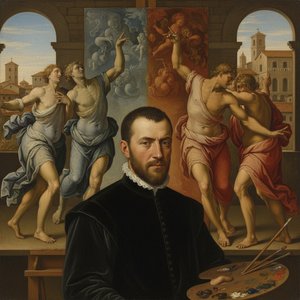
() ·

Картина, створена вручну спеціально для вас

Trinity (detail)

Олійная репродукція ручної роботи

Написана вручну олією на полотні у вашому розмірі та рамі, виготовлена на замовлення нашими художниками. ( Перейти до друку Перейти до цифрових зображень)

Опис експоната

Domenico Beccafumi's 'Trinity' (1513) is a monumental High Renaissance masterpiece depicting the Holy Trinity, showcasing dynamic figures and innovative composition within a richly detailed panel.

Біографія митця

Domenico Beccafumi (1486-1551) був синійським живописцем, відомим своїм новаторським манеристичним стилем – характеризувався драматичною емоцією, спотвореними фігурами та розкішною декоративною деталями, особливо у великих фресках, таких як «Транзит Діви Марії» та «Патріотизм».

від ·

Розділ 1

Якого розміру вона має бути?

Гортайте, щоб змінити розмір; на зображенні ліворуч показано рамку її справжньої ширини. Пропорції оригіналу збережено.

Стандартний розмір
індивідуальний розмір
CM
INCH

Обирайте з наших стандартних розмірів, що відповідають оригінальним пропорціям твору мистецтва.

ширина
висота

Введіть необхідну ширину та висоту, щоб картина підійшла до вашої рами або стіни. Оскільки це ручний розпис, для зміни пропорцій художник може дописати трохи більше по краях або дещо обрізати композицію — вибір за вами. Перед початком роботи ми надішлемо вам цифровий макет для затвердження. Зображення, показане на цій сторінці, не є реальним результатом — лише макет відображає майбутній вигляд.

Розділ 2

Яким має бути спосіб доставки?

Оберіть тип країв натяжного полотна

Оберіть свою раму

Corner sample of the WhiteWrap canvas edge finish, stretched on масив дерева bars
Білий край ₴1
Corner sample of the BlurSideWrap canvas edge finish, stretched on масив дерева bars
Розмитий край ₴1
Corner sample of the ExtendedWrap canvas edge finish, stretched on масив дерева bars
З розширенням ₴1
Corner sample of the P118B picture frame: формований полістирол, 5 cm wide and 3 cm thick
P118B ₴10
Corner sample of the P118H picture frame: формований полістирол, 5 cm wide and 3 cm thick
P118H ₴10
Corner sample of the P118W picture frame: формований полістирол, 5 cm wide and 3 cm thick
P118W ₴10
Corner sample of the P438Z picture frame: формований полістирол, 5.5 cm wide and 3.5 cm thick
P438Z ₴10
Corner sample of the P508JH picture frame: формований полістирол, 7 cm wide and 3.5 cm thick
P508JH ₴12
Corner sample of the P508YH picture frame: формований полістирол, 7 cm wide and 3.5 cm thick
P508YH ₴12
Corner sample of the P805H picture frame: формований полістирол, 5 cm wide and 3.5 cm thick
P805H ₴10
Corner sample of the P805Z picture frame: формований полістирол, 5 cm wide and 3.5 cm thick
P805Z ₴10
Corner sample of the P919BZ picture frame: формований полістирол, 7 cm wide and 3.5 cm thick
P919BZ ₴10
Corner sample of the P919G picture frame: формований полістирол, 7 cm wide and 3.5 cm thick
P919G ₴10
Corner sample of the P919XJ picture frame: формований полістирол, 7 cm wide and 3.5 cm thick
P919XJ ₴10
Corner sample of the P959ZH picture frame: формований полістирол, 5 cm wide and 3 cm thick
P959ZH ₴10
Corner sample of the P968JZ picture frame: формований полістирол, 6 cm wide and 4 cm thick
P968JZ ₴12
Corner sample of the W106C picture frame: масив дерева, 5 cm wide and 3 cm thick
W106C ₴8
Corner sample of the W218G picture frame: масив дерева, 5 cm wide and 3 cm thick
W218G ₴10
Corner sample of the W218JH picture frame: масив дерева, 5 cm wide and 3 cm thick
W218JH ₴8
Corner sample of the W218Y picture frame: масив дерева, 5 cm wide and 3 cm thick
W218Y ₴10
Corner sample of the W307PJ picture frame: масив дерева, 6 cm wide and 3 cm thick
W307PJ ₴10
Corner sample of the W316G picture frame: масив дерева, 6 cm wide and 3 cm thick
W316G ₴10
Corner sample of the W316PJ picture frame: масив дерева, 6 cm wide and 3 cm thick
W316PJ ₴8
Corner sample of the W316Y picture frame: масив дерева, 6 cm wide and 3 cm thick
W316Y ₴10
Corner sample of the W398PJ picture frame: масив дерева, 5 cm wide and 3 cm thick
W398PJ ₴8
Corner sample of the W4111J picture frame: масив дерева, 6.5 cm wide and 3.5 cm thick
W4111J ₴10
Corner sample of the W500HY picture frame: масив дерева, 7 cm wide and 5 cm thick
W500HY ₴15
Corner sample of the W500JH picture frame: масив дерева, 7 cm wide and 5 cm thick
W500JH ₴15
Corner sample of the W692G picture frame: масив дерева, 8 cm wide and 4 cm thick
W692G ₴12
Corner sample of the W849H picture frame: масив дерева, 5 cm wide and 3 cm thick
W849H ₴8
Corner sample of the W940BG picture frame: масив дерева, 7.5 cm wide and 4.5 cm thick
W940BG ₴15
Corner sample of the W953PJ picture frame: масив дерева, 6 cm wide and 3.5 cm thick
W953PJ ₴8
Corner sample of the H24-GOLD picture frame: різьблене дерево з левкасом, 10 cm wide and 6 cm thick
H24-GOLD ₴30
Corner sample of the H24-SILVER picture frame: різьблене дерево з левкасом, 10 cm wide and 6 cm thick
H24-SILVER ₴30
Corner sample of the H36-GOLD picture frame: різьблене дерево з левкасом, 15 cm wide and 6.5 cm thick
H36-GOLD ₴45
Corner sample of the H36-SILVER picture frame: різьблене дерево з левкасом, 15 cm wide and 6.5 cm thick
H36-SILVER ₴45

Багет: . Загальний розмір із рамою: .

Розділ 3

Хто це малює, і чи має щось змінитися?

Приклади того, що можна змінити: замінити обличчя на фото клієнта; додати домашню тварину (наприклад, замінити кота на собаку); додати приховане повідомлення на фоні; змінити пейзаж або елементи фону.
Після оформлення замовлення команда OriginalUniqueArt.com надішле клієнту електронний лист із запитом інструкцій та надасть попередній макет для перегляду

Доставка по всьому світу () за 3–4 тижні замість стандартних 5 тижнів. (9 Листопад). Без жодних компромісів у якості.

Розділ 4

Останні штрихи

Табличка, як у музеї?

Деталі гравірування на бронзовій табличці

This elegant plaque features the artist's name and the title of the artwork, finely engraved for a timeless presentation.

It is made from bronze with a refined, elegant finish. The text is precisely laser-engraved for a sharp and permanent result. Measuring 9x2 cm, the plaque is compact yet easy to read. It's built to be durable and scratch-resistant, offering a professional, museum-quality look. Mounting is simple thanks to the included adhesive backing.

Деталі прозорої акрилової таблички

The plaque includes essential engraved details such as the artist's name, the title of the artwork, the date it was created, the type of media used-like oil on canvas or watercolor-a brief description of the piece, and a QR code that links to the complete artwork information.

It is crafted from clear acrylic, offering a sleek, modern appearance. The text is UV-engraved in black to ensure strong visual contrast. With a size of 10x15 cm, it ensures optimal readability. It comes equipped with two metal hooks for secure wall mounting. The plaque is designed to be weather-resistant, making it suitable for various environments, and it includes interactive features that work seamlessly with smartphone scanning.

Деталі чорної акрилової таблички

This elegant plaque includes engraved information such as the artist's name, the title of the artwork, the date it was created, the type of media used (like oil on canvas or watercolor), a short description of the artwork, and a QR code for quick access to more information.

The plaque itself is made from refined black acrylic with a premium finish. The text is laser-engraved in white for high contrast and readability. Its size is 10x15 cm, designed to be easy to read. It comes with two metal hooks for professional mounting. The design is sleek and fits any interior style. It is also weather-resistant and durable, with built-in digital integration for mobile compatibility.

Захисний лак?

Коли вам це потрібно?

Розділ 5

Ваша картина, згідно із вашим замовленням

Trinity (detail)

Матеріал репродукції

Розмір репродукції

-

Видатний майстер-художник

Більше деталізації, витонченості та додаткового часу на створення твору

-

Рама для репродукції

-

-

Для творів мистецтва або репродукцій, розмір яких перевищує 105 см (приблизно 41 дюйм) з будь-якого боку, рама доставляється у вигляді розібраного комплекту. Такий метод гарантує безпечну доставку та запобігає пошкодженням під час транспортування.

Потребує професійного збирання — це не продукт для самостійного виготовлення (DIY).
Комплект має бути зібраний, а полотно натягнуте досвідченим майстром багетних робіт із використанням клейового дерева (не входить у комплект), щипців для натягування полотна та затискачів, щоб підрамник залишався рівним під час висихання клею. Неправильне збирання або нерівномірне натягування полотна може призвести до незворотного пошкодження твору мистецтва, що не підпадає під дію нашої гарантії.

  • У комплект входять усі бруски з цільного дерева, точно вирізані за розміром.

  • Збирається за допомогою гвинтів, що входять до комплекту, а також клейового розчину для кутових з'єднань, який не входить до комплекту і має бути підготовлений вашим майстром.

  • Потрібні професійні інструменти, які не входять до комплекту: щипці для натягування полотна (натягувач) та затискачі, щоб утримувати рейки рівно під час висихання клею.

Важливо:
Для з'єднання кутів потрібен клей для дерева, перекладини необхідно затиснути струбцинами до повного висихання клею, а для натягування полотна на зібрану раму знадобляться щипці для натягування полотна. Жоден із цих інструментів не входить до комплекту. Будь ласка, проконсультуйтеся з досвідченим майстром багетного оформлення перед замовленням рами такого розміру.

Етикетка експоната

-

-

Захисний лак

Глянцевий лак (підсилює яскравість кольорів, захищає від світла та вологи)

-

Персоналізувати мій витвір

Приклади можливих змін: заміна обличчя на фото клієнта; додавання домашньої тварини (наприклад, заміна кота на собаку); додавання прихованого повідомлення на фоні; зміна пейзажу або елементів фону.

-

Прискорено

Доставка по всьому світу () за 3–4 тижні замість стандартних 5 тижнів. (9 Листопад). Без компромісів у якості.

-

Експрес-доставка

Доставка по всьому світу () протягом 5 тижнів. (16 Листопад).

Включено в ціну

Підсумкова вартість

₴ 13469

Загальна вартість ₴ 13469

Скляний варіант доступний лише для розмірів до 110 см

До кожного замовлення додається

  • Безкоштовна експрес-доставка по всьому світу
  • Високоякісне лляне полотно
  • Повне страхове покриття доставки
  • Гарантія повернення митних зборів
  • Гарантія точного відтворення кольорів
  • Політика повернення протягом 100 днів (лише у разі виявлення дефектів)
  • Гарантія повернення 100% коштів
  • Пропозиція на оптові замовлення

The Genesis of a Vision: Domenico Beccafumi's Trinity

Domenico di Pace Beccafumi, a name often overshadowed by the titans of Florence, nevertheless stands as a crucial bridge between the High Renaissance and the burgeoning complexities of Mannerism. Born in the modest Tuscan town of Montaperto around 1486, his artistic journey was one defined not just by technical skill but by an intensely individual vision—a deeply rooted sensibility informed by the traditions of Siena yet boldly reaching towards new expressive possibilities. His story is a testament to how regional artistry could simultaneously embrace and subtly transform broader stylistic trends, culminating in works of profound emotional resonance.

The “Trinity,” painted circa 1513, offers an immediate glimpse into this unique perspective. Commissioned for the Cappella del Manto within the venerable Santa Maria della Scala hospital complex in Siena – a space steeped in history and dedicated to healing – the altarpiece transcends mere devotional representation; it becomes a carefully constructed meditation on faith, sacrifice, and divine presence. Beccafumi’s decision to depict Jesus Christ on the cross as a young man, rather than the more conventional aged figure, immediately establishes a dynamic tension within the composition, injecting a palpable sense of vulnerability and nascent power into the scene.

A Synthesis of Influences: Style and Technique

Beccafumi’s style is remarkably complex, a skillful synthesis of influences from Siena, Florence, and Rome. He inherited the Sienese tradition's emphasis on rich color palettes, dramatic lighting, and a heightened sense of emotional intensity – qualities evident in his masterful use of chiaroscuro to sculpt form and draw the viewer’s eye towards the central figure. Yet, he was also deeply influenced by the Florentine artists who had recently returned from Rome, absorbing their innovations in perspective, anatomical accuracy, and a more dynamic approach to composition. The subtle distortions of figures, particularly in the depiction of the angels, hint at the emerging Mannerist aesthetic – a deliberate departure from the idealized forms of the High Renaissance.

Technically, Beccafumi demonstrates remarkable control over his medium. The oil paint is applied with meticulous detail, creating a surface texture that is both luminous and tactile. The layering of colors—the deep blues and purples of the background contrasted against the vibrant reds and golds of the garments—further enhances the sense of depth and drama. Note also the intricate detailing in the drapery, which flows with an almost sculptural quality, adding to the overall dynamism of the scene.

Symbolism and Spiritual Depth

The “Trinity” is rich in symbolic meaning. The central image of Christ on the cross represents sacrifice and redemption—the core tenets of Christian theology. Above him, the figures of God the Father and the Holy Spirit are rendered with a subtle elegance, suggesting a divine hierarchy while simultaneously conveying a sense of profound unity. The inclusion of two cherubs in the foreground adds an element of innocence and hope, anchoring the scene within a narrative of salvation. The choice of saints flanking Christ—Cosmas and Damian, known for their healing abilities – further reinforces the altarpiece’s connection to the hospital complex where it was originally displayed.

Interestingly, the composition echoes elements found in Raphael's “Foligno Madonna,” suggesting a conscious engagement with contemporary artistic trends. However, Beccafumi transcends mere imitation; he imbues the scene with his own distinctive emotional intensity and spiritual depth. The restless movement of figures, the dramatic lighting, and the carefully orchestrated symbolism all contribute to a powerful and unforgettable visual experience.

A Legacy of Dramatic Emotion

Domenico Beccafumi’s “Trinity” is more than just a religious painting; it's a profound exploration of faith, sacrifice, and the human condition. It stands as a testament to his unique artistic vision—a synthesis of Sienese tradition, Florentine innovation, and personal expression. The work’s enduring appeal lies in its ability to evoke a powerful emotional response, inviting viewers to contemplate the mysteries of life, death, and redemption. Reproductions of this masterpiece capture not only its visual splendor but also the spirit of its creator—a true Sienese visionary who left an indelible mark on the history of Italian Renaissance art.

Питання та відповіді

До якого періоду творчості Domenico Di Pace Beccafumi належить твір "Trinity (detail)"?

«Trinity (detail)» належить до Late Renaissance творчого шляху Domenico Di Pace Beccafumi. Ця класифікація пов’язує твір із етапом становлення митця.

Яка сприймається яскравість твору «Trinity (detail)» роботи Domenico Di Pace Beccafumi?

За рівнем сприйнятої яскравості, «Trinity (detail)» роботи Domenico Di Pace Beccafumi є balanced.

У якому музеї зберігається оригінал «Trinity (detail)»?

Оригінал твору «Trinity (detail)» можна побачити в Pinacoteca Nazionale, Сієна, Італія.

Більше про цю картину

Переглянути в інтер'єрі Перегляд в AR Перейти до друку Перейти до цифрових зображень Надіслати як листівку
Деталі витвору Посібник Додати до улюблених Завантажити Схожі екземпляри Рентгенівське дослідження Слайд-шоу Питання та відповіді Статистика

У цифрах

  • 1513рік написання
  • 29доступні варіанти обрамлення
  • стандартні розміри, у власних пропорціях
  • 5тижнів на написання та доставку
Domenico Di Pace Beccafumi

Domenico Di Pace Beccafumi

1486 - 1551, Італія

Короткі факти про Domenico Di Pace Beccafumi

  • Artistic Movement Or Style: Mannerism
  • Artists Or Movements Influenced By This Artist: ['']
  • Artists Who Influenced This Artist:
    • Raphael
    • Michelangelo
  • Date Of Birth: c. 1486
  • Date Of Death: May 18, 1551
  • Full Name: Domenico di Pace Beccafumi
  • Nationality: Italian
  • Notable Artworks:
    • Trinity Triptych
    • The Annunciation
    • Transit of the Virgin
  • Place Of Birth: Montaperto, Italy

Біографія митця

Domenico Beccafumi (1486-1551): A Sienese Visionary

Domenico di Pace Beccafumi, a name that resonates less immediately than those of his Florentine contemporaries, nonetheless occupies a pivotal position in the narrative of Italian Renaissance art. Born around 1486 in the small Tuscan town of Montaperto, near Siena, Beccafumi’s artistic journey was one of remarkable development, culminating in a style that bridged the High Renaissance and the burgeoning complexities of Mannerism. His story isn't simply about technical skill; it is about a deeply individual vision—a sensibility steeped in the traditions of his Sienese heritage yet boldly reaching towards new expressive possibilities. His origins were humble: the son of Giacomo di Pace, a peasant farmer, Beccafumi’s talent was recognized by Lorenzo Beccafumi, who adopted him and provided for his initial artistic training with Mechero, a local Sienese artist. This early grounding in the Sienese school would prove foundational, even as he ventured beyond its established conventions. The Sienese tradition, already diverging from the classical ideals embraced elsewhere in Italy, fostered an environment where emotional intensity and decorative detail were valued, qualities that would become hallmarks of Beccafumi’s unique style.

Early Training and Influences: Seeds of Innovation

Beccafumi's formative years instilled within him a profound appreciation for Sienese artistic sensibilities—a preference for luminous color palettes, intricate ornamentation, and a certain reverence for medieval iconography. This heritage contrasted sharply with the humanist ideals dominating Florence at the time, shaping Beccafumi’s artistic worldview from its earliest stages. His initial training under Mechero honed his skills in fresco painting, equipping him with the techniques necessary to execute monumental commissions—a skill that would define much of his subsequent career. Crucially, he encountered the groundbreaking works of Raphael and Michelangelo during his travels to Rome around 1509, absorbing their innovations in composition, anatomy, and dramatic expression. However, unlike many artists who sought to directly emulate these masters, Beccafumi synthesized these influences through his own distinct lens. He didn’t simply *copy* the Roman style; he filtered it through a pre-existing Sienese aesthetic—one characterized by a certain provincialism, an emphasis on decorative detail, and a lingering medieval sensibility. This careful assimilation of Roman grandeur would become a cornerstone of Beccafumi's distinctive artistic approach.

Rome: Embracing Mannerist Style

The move to Rome marked a pivotal moment in Beccafumi’s artistic evolution, exposing him to the epicenter of Renaissance innovation. He immersed himself in the artistic discourse of the papal city, engaging with artists and intellectuals who championed new aesthetic ideals—ideals that challenged the prevailing conventions of High Renaissance art. This engagement fueled his experimentation with Mannerist techniques—characterized by distorted figures, exaggerated poses, and unsettling spatial illusions. Beccafumi’s paintings became increasingly imbued with psychological depth and emotional intensity, reflecting a profound preoccupation with human experience. He deliberately disrupted harmonious proportions and balanced compositions, prioritizing expressive distortion over realistic representation—a bold departure from the idealized forms favored by Raphael and Michelangelo. This stylistic choice signaled his embrace of Mannerism's rejection of classical ideals and its exploration of subjective perception.

Major Achievements: Frescoes That Transformed Siena

Beccafumi’s artistic legacy rests primarily on his monumental frescoes in Siena, particularly those adorning the Oratory of St. Benedict—a commission he undertook for over two decades. The Trinity Triptych, housed in the Pinacoteca Nazionale di Siena, stands as a testament to his mastery of oil painting and his ability to convey religious devotion with both grandeur and intimacy. Its luminous colors and subtly unsettling spatial perspective exemplify Beccafumi’s innovative approach to visual representation. Similarly, *The Annunciation*, also at the Pinacoteca Nazionale, showcases his distinctive use of color and composition—creating a scene that is simultaneously serene and imbued with psychological tension. However, perhaps his most ambitious undertaking was his direction of the pavement for Siena Cathedral between 1517 and 1544. This monumental project involved intricate designs inlaid with marble and mosaics—a feat of artistic craftsmanship that cemented Beccafumi’s reputation as a visionary artist. He skillfully blended Sienese tradition with Mannerist influences, creating artworks that transcended mere decoration—they communicated profound spiritual ideas through masterful visual language.

A Lasting Impression: The Enduring Legacy of Siena's Maestro

Domenico Beccafumi died in Siena in 1551, marking a symbolic end to the city’s long and distinguished tradition of painting. He is rightfully regarded as the last significant representative of the Sienese school—preserving its unique aesthetic qualities while simultaneously anticipating the developments of Mannerism. His work stands apart from the more harmonious compositions of the High Renaissance, embracing instead a sense of emotional tension, instability, and expressive distortion. This willingness to challenge conventional norms foreshadowed later trends in art, influencing subsequent generations with his innovative techniques and psychological depth. Beccafumi’s legacy is not simply as a painter but as a visionary who dared to explore the boundaries of artistic expression—leaving behind a body of work that continues to captivate and intrigue viewers today. He remains a compelling figure, a testament to the enduring power of individual vision within the broader currents of art history.

Основна інформація

  • Movement: High Renaissance, Mannerism
  • Artist: Domenico Beccafumi
  • Year: 1513
  • Notable elements: Cherubs, dynamic figures
  • Subject or theme: Religious scene, Trinity
  • Influences:
    • Raphael
    • Fra Bartolomeo

Квіз про мистецтво

У кожному запитанні лише одна правильна відповідь.

Запитання 1:
What is the primary subject depicted in Domenico Beccafumi’s ‘Trinity’?
Запитання 2:
In what city is Domenico Beccafumi’s ‘Trinity’ currently housed?
Запитання 3:
The ‘Trinity’ triptych was originally commissioned for which religious space?
Запитання 4:
Which artistic movement does Domenico Beccafumi’s ‘Trinity’ exemplify?
Запитання 5:
What is a notable stylistic feature of Beccafumi's 'Trinity' that reflects his influence from other artists?
Досліджуйте твори мистецтва, впорядковані за темами, стилями та характеристиками.