
 Переглянути в інтер'єрі
 Надіслати
 Поділитися
 Деталі

 Завантажити
 Схожі експонати
 Рентгенівське дослідження
 Слайд-шоу
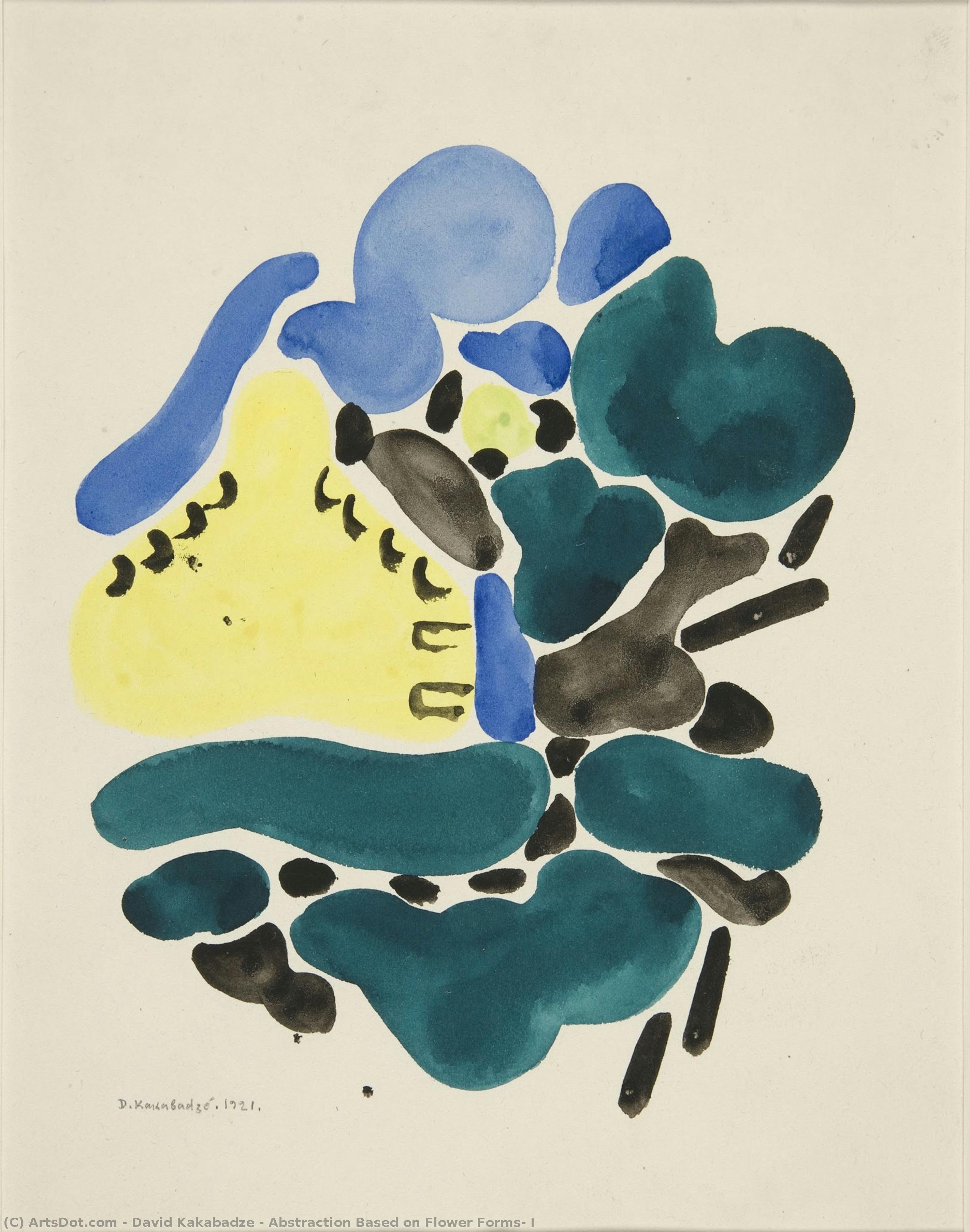
Abstraction Based on Flower Forms, I
 Watercolor
- WallArt
- Abstraction
 1921
1921- Modern
 23.0 x 18.0 cm
 Арт-палац Грузії - Музей культурної історії
 Читати далі
Гікле / Художній принт
Музейна якість друку جيкле або на полотні з оперативним виготовленням та різноманітними варіантами фінішної обробки. ( Перейти до замовлення ручного розпису Перейти до зображення)




































Обирайте з наших стандартних розмірів, що відповідають оригінальним пропорціям твору мистецтва.

Ви можете вказати власні розміри, щоб репродукція ідеально підійшла до конкретної рами або інтер'єру. Якщо обраний вами розмір не відповідає пропорціям оригіналу, ми або обріжемо полотно, або розширимо зображення за допомогою дзеркального відображення чи суцільної заливки країв. Перед початком виробництва вам буде надіслано цифровий макет для затвердження.
Будь ласка, зверніть увагу, що попередній перегляд на екрані не відображає фактичне обрізання або розширення. Тільки макет точно покаже фінальну композицію.
Хоча можливість замовлення індивідуальних розмірів доступна, ми рекомендуємо обирати формат із попередньо визначеного списку, щоб зберегти оригінальні пропорції.
Доставка по всьому світу () за 2 тижні замість стандартних 4/5 тижнів. (10 Серпень)

Безкоштовна експрес-доставка по всьому світу

Високоякісне лляне полотно

Повне страхове покриття доставки

Гарантія відшкодування митних зборів

Гарантія точного відтворення кольорів

Політика повернення протягом 60 днів (лише у разі виявлення дефектів)

Гарантія повернення 100% коштів

Знижка на оптові замовлення
 Скляний варіант доступний лише для розмірів до 110 см

Abstraction Based on Flower Forms, I
Гікле / Художній принт
Розмір репродукції
-


Загальна вартість
$ 80
Опис колекційного експоната
A Visionary Dance of Form and Color
In the delicate interplay of "Abstraction Based on Flower Forms, I," we encounter a profound moment in the evolution of Georgian Modernism. Created in 1921 by the visionary polymath David Kakabadze, this watercolor on paper serves as a mesmerizing window into an era where the boundaries of reality were being courageously redrawn. The composition unfolds upon a deep, evocative blue background, acting as a nocturnal or celestial stage for a dreamlike arrangement of shapes. While the title suggests a botanical origin, the painting transcends mere representation, inviting the viewer into a surrealist landscape where organic floral motifs collide with unexpected, almost whimsical elements. The presence of scattered yellow and black shapes—reminance of shoes—alongside a subtle clock in the upper corner, creates a delightful tension between the natural world and the artifacts of human existence, challenging our perceptions of time and space.
The technique employed by Kakabadze is nothing short of masterful, utilizing the fluid, translucent nature of watercolor to achieve a sense of ethereal lightness. Each stroke contributes to a layered complexity, where earthy tones and vibrant accents bleed into one another, creating a rhythmic movement across the 23 x 18 cm surface. This piece exemplifies the early 20th-century shift toward abstraction, where the artist’s goal was not to mimic the physical world, but to capture its underlying energy and essence. For the discerning collector or interior designer, this artwork offers a sophisticated focal point; its intricate textures and balanced color palette provide a sense of intellectual depth and quiet contemplation, making it an ideal centerpiece for spaces that value avant-garde history and artistic nuance.
The Legacy of a Georgian Master
To understand the emotional resonance of this work, one must look to the life of David Kakabadze himself. A true pioneer, Kakabadze was a figure who bridged the gap between the traditional roots of his native Georgia and the radical currents of the European avant-garde. His scientific background in natural sciences allowed him to approach art with a unique structural understanding, which is evident in the way he deconstructs floral forms into geometric abstractions. This painting is not merely an aesthetic exercise; it is a testament to a period of intense cultural transformation. The juxtaposition of the ephemeral—the flower—with the mechanical—the clock—speaks to the broader modernist preoccupation with the fleeting nature of life amidst the encroaching industrial age.
Owning a high-quality reproduction of such a significant piece allows one to bring a fragment of art history into the contemporary home. The artwork’s ability to evoke both mystery and tranquility makes it a versatile choice for modern decor, whether placed in a minimalist gallery-style setting or a richly textured study. It serves as a conversation starter, a piece of "living" history that continues to pulse with the creative spirit of 1921. As we gaze upon these abstracted forms, we are reminded of the power of art to reshape our reality, offering a timeless escape into a world where color and shape tell stories far beyond the reach of words.
Біографія митця
A Pioneer of Georgian Modernism: The Life and Art of David Kakabadze
David Kakabadze, born in the village of Kukhi near Khoni, Georgia, in 1889, stands as a pivotal figure in the development of twentieth-century Georgian art. His career was one of remarkable innovation, seamlessly blending the burgeoning currents of European avant-garde movements with a deep reverence for his native Georgian traditions. Kakabadze wasn’t merely an artist; he was a polymath – a painter, graphic artist, scenic designer, art scholar, cinematic innovator, and even an amateur photographer. This multifaceted approach to creativity defined his artistic journey and cemented his legacy as one of Georgia's most important modernist masters. His early life, though rooted in the simplicity of a peasant family, was marked by intellectual curiosity fostered through sponsorship that allowed him to pursue studies at St. Petersburg University, graduating with a degree in natural sciences in 1916. Simultaneously, he honed his artistic skills under Dmitroyev-Kavkazsky and immersed himself in the study of Georgia’s rich artistic heritage. This dual education – scientific rigor combined with artistic sensitivity – would become a hallmark of his work.Early Influences and Artistic Formation
Kakabadze's formative years instilled within him a profound appreciation for both intellectual inquiry and aesthetic exploration. The patronage he received from local philanthropists enabled him to access the highest levels of academic education, equipping him with the analytical tools necessary to dissect artistic traditions and formulate innovative conceptual frameworks. His studies at St. Petersburg University weren’t simply about acquiring knowledge; they were about engaging in a dialogue with the intellectual currents shaping Europe at the time – movements like Symbolism and Neo-Romanticism that championed emotion and imagination alongside rational thought. Crucially, he recognized the importance of grounding artistic experimentation within a broader understanding of cultural context. This conviction led him to dedicate himself to researching Georgia’s ancient art history, immersing himself in the iconography and stylistic conventions of medieval Georgian frescoes and manuscripts. He meticulously documented these traditions, demonstrating an unwavering commitment to preserving Georgia's cultural heritage while simultaneously seeking inspiration for his own artistic endeavors.Parisian Encounters: Embracing Cubism and Avant-Garde Innovation
Following a brief period teaching and painting in Tbilisi, Kakabadze embarked on a transformative chapter of his life in Paris from 1919 to 1927. This sojourn placed him squarely at the epicenter of the European avant-garde, exposing him to the revolutionary ideas of Cubism, Futurism, and Constructivism – movements that challenged conventional notions of representation and embraced radical experimentation with form and material. He actively participated in exhibitions organized by Société des Artistes Indépendants, forging connections with fellow Georgian artists Lado Gudiashvili and Shalva Kikodze who shared his passion for exploring new artistic horizons. It was during this period that Kakabadze’s style underwent a dramatic metamorphosis. Initially captivated by the landscapes of Imereti province – his homeland – he began to grapple with “subjectless painting,” striving to transcend mere visual depiction and communicate deeper emotional truths. He experimented with unconventional materials like metal, mirror glass, and stained glass, rejecting traditional pigments in favor of innovative techniques that pushed the boundaries of artistic expression. This bold stylistic shift reflected Kakabadze’s conviction that art should serve as a vehicle for intellectual contemplation and transformative experience.Cinema and Stage Design: Expanding Artistic Boundaries
Kakabadze's inventive spirit extended far beyond painting, demonstrating his remarkable versatility as an artist and innovator. Recognizing the potential of emerging technologies – specifically cinema – he became fascinated by the possibilities offered by moving images to convey narrative and emotion in ways that traditional painting couldn’t achieve. He designed and constructed a stereoscopic film projector for which he secured international patents, pioneering a technique that created the illusion of three-dimensionality without requiring special glasses. This ambitious project wasn't merely a technological feat; it was an artistic endeavor driven by Kakabadze’s desire to reimagine theatrical performance and explore new dimensions of visual storytelling. Furthermore, he collaborated extensively with Kote Marjanishvili, Georgia’s leading theatre director, crafting stunning set designs for Marjanishvili’s productions that incorporated innovative elements like projections and sculptural forms—a testament to his ability to synthesize artistic vision with technical expertise.Legacy and Recognition
David Kakabadze died in 1952, leaving behind a body of work that was largely overlooked during his lifetime but has since garnered increasing recognition as one of Georgia’s most important modernist masters. His pioneering contributions to cinema, his unwavering commitment to artistic experimentation, and his profound engagement with Georgian cultural heritage continue to inspire artists today. His paintings—particularly those depicting Imereti landscapes—remain treasured examples of Georgian art history, embodying the spirit of innovation and intellectual curiosity that characterized Kakabadze’s extraordinary life. Today, his works are housed in prominent museums across Europe and America, ensuring that his legacy endures as a beacon of artistic brilliance and a symbol of Georgia's contribution to the global avant-garde movement.
Давід Какабадзе
1889 - 1952 , Грузія
Досьє митця
- Artistic Movement Or Style: Авангардизм, Кубізм
- Artists Or Movements Influenced By This Artist: ['Багато художників']
- Date Of Birth: 20 серпня 1889 р.
- Date Of Death: 10 травня 1952 р.
- Full Name: David Kakabadze
- Nationality: Грузинський
- Notable Artworks:
- Якось
- Бретань
- Ескіз отримання різних рівнів світла в ламповій розетці
- Place Of Birth: Кутаїсі, Грузія
Схожі статті

Топ-10 легендарних акварелей, що змінили світ мистецтва | OriginalUniqueArt
Відкрийте для себе 10 легендарних акварелей від Turner, Monet та інших майстрів! Історія мистецтва, техніки живопису та натхнення для декору вашого дому. Купуйте репродукції картин аквареллю преміум-якості на OriginalUniqueArt.com.

Топ-10 шедеврів геометричної абстракції: мистецтво для вашого інтер'єру від OriginalUniqueArt.com
Відкрийте для себе 10 шедеврів геометричної абстракції від Кандинського, Малевича та Мондріана! Історія мистецтва, кольори та форми. Репродукції картин преміум-класу на OriginalUniqueArt.com – ідеальний декор для вашого дому.

Топ-10 знаменитих картин у відтінках сіро-блакитного: мистецтво для вашого дому
Пориньте у світ сіро-блакитного кольору! Від Моне до Ренуара – топ-10 знаменитих картин, що зачаровують глибиною відтінків. Історія мистецтва, техніки та натхнення для вашого дому. Знайдіть репродукцію мрії на OriginalUniqueArt.com!

Топ-25 шедеврів Василя Кандинського: подорож у світ абстрактного мистецтва | OriginalUniqueArt.com
Відкрийте для себе 25 найвідоміших шедеврів Василя Кандинського! Пориньте у світ абстрактного мистецтва, експресіонізму та кольорових композицій. Репродукції картин Кандинського преміум-якості на OriginalUniqueArt.com – для вашого інтер'єру з душею. Дослідіть повну колекцію онлайн!

Ephemeral Visions: Exploring the Artistic Legacy & Contemporary Practice of Watercolor Painting
Explore the captivating world of watercolor painting! Discover its rich history, essential techniques, influential artists & collecting tips. A comprehensive guide for art enthusiasts from OriginalUniqueArt.


