

 Переглянути в інтер'єрі
 Надіслати
 Поділитися
 Деталі
 Посібник

 Завантажити
 Схожі предмети колекціонування
 Рентгенівське дослідження
 Слайд-шоу
 Статистика переглядів
Rainy night on bridlingtom promenade

 Читати далі
Олійная репродукція ручної роботи
Написана вручну олією на полотні у вашому розмірі та рамі, виготовлена на замовлення нашими художниками. ( Перейти до друку Перейти до цифрових зображень)




P118B $10

P118H $10

P118W $10

P438Z $10

P508JH $12

P508YH $12

P805H $10

P805Z $10

P919BZ $10

P919G $10

P919XJ $10

P959ZH $10

P968JZ $12

W106C $8

W218G $10

W218JH $8

W218Y $10

W307PJ $10

W316G $10

W316PJ $8

W316Y $10

W398PJ $8

W4111J $10

W500HY $15

W500JH $15

W692G $12

W849H $8

W940BG $15

W953PJ $8




Обирайте з наших стандартних розмірів, що відповідають оригінальним пропорціям твору мистецтва.

Ви можете вказати власні розміри, щоб репродукція ідеально підійшла до конкретної рами або інтер'єру. Якщо вибраний вами розмір не відповідає пропорціям оригіналу, ми або обріжемо полотно, або доповнимо картину додатковими елементами, промальованими вручну. Цифровий макет буде надіслано вам на затвердження перед початком виробництва.
Зверніть увагу, що попередній перегляд на екрані не відображає фактичне обрізання або розширення зображення. Тільки макет точно покаже остаточну композицію.
Хоча ми можемо виготовити виріб у нестандартному розмірі, для збереження оригінальних пропорцій рекомендуємо обирати варіанти зі встановленого списку.
Після оформлення замовлення команда OriginalUniqueArt.com зв'яжеться з клієнтом електронною поштою для отримання інструкцій та надасть попередній макет
Доставка по всьому світу () за 3–4 тижні замість стандартних 5 тижнів. (25 Вересень). Без жодних компромісів у якості.

Безкоштовна експрес-доставка по всьому світу

Високоякісне лляне полотно

Повне страхове покриття доставки

Гарантія повернення митних зборів

Гарантія точного відтворення кольорів

Політика повернення протягом 100 днів (лише у разі виявлення дефектів)

Гарантія повернення 100% коштів

Знижка на оптові замовлення
 Скляний варіант доступний лише для розмірів до 110 см

Rainy night on bridlingtom promenade
Техніка репродукції
Розмір репродукції
-


Загальна вартість
$ 300
David Hockney: Bridlingtom Promenade Revisited
David Hockney’s “Rainy Night on Bridlingtom Promenade” isn't merely a depiction of London; it’s an embodiment of memory, perception, and the artist’s relentless pursuit of capturing fleeting moments in time. Painted in 1967 during Hockney’s formative years in Los Angeles – a period profoundly influenced by Californian light and color – this canvas transcends geographical boundaries to resonate with universal themes of solitude, contemplation, and the melancholic beauty inherent in urban decay. The painting itself is deceptively simple at first glance. A narrow promenade stretches across the composition, bathed in the muted hues of a rainy evening. The dominant palette leans heavily into blues and greens – shades that evoke not just meteorological conditions but also a deeper emotional resonance. These colors aren’t blended smoothly; instead, Hockney employs a technique he termed “joinery,” meticulously layering thin washes of pigment to create an illusion of depth and texture. This method, pioneered by Hockney alongside Frank Auerbach and Lucian Freud, prioritizes visual impact over photorealistic accuracy—a deliberate rejection of prevailing artistic conventions of the era. The promenade’s emptiness is punctuated by three strategically placed lamps – a luminous beacon against the gloom. These aren't rendered with meticulous detail; rather, they are treated as geometric shapes, radiating light and color that illuminate the surrounding area. Hockney’s use of acrylic paint—a relatively new medium at the time—allowed for unprecedented vibrancy and luminosity, pushing the boundaries of what was considered acceptable artistic expression. The lamps serve as a visual anchor, drawing the eye inward and inviting contemplation about the passage of time and the elusive nature of experience. Beyond its formal qualities, “Rainy Night on Bridlingtom Promenade” speaks to Hockney’s broader philosophical concerns. He famously stated that he wanted to paint "the world as it is seen," rejecting idealized representations in favor of capturing the raw immediacy of observation. The painting embodies this ethos—a testament to Hockney's belief that art should strive for truthfulness, even if that truthfulness resides in acknowledging imperfection and decay. It’s a poignant reminder that beauty can be found not only in grand vistas but also in the quiet corners of everyday life. The piece’s enduring appeal lies partly in its ability to evoke nostalgia—a longing for moments past that are forever lost to time. Hockney's masterful manipulation of color and texture transports viewers back to a specific place and moment, prompting reflection on memory and perception. It is a painting that invites us to slow down, observe carefully, and appreciate the subtle nuances of experience—a timeless contribution to British art history and a continuing source of inspiration for artists and collectors alike.Exploring Hockney's Technique: Joinery
David Hockney’s distinctive “joinery” technique represents a radical departure from traditional painting methods. Unlike blending colors seamlessly across surfaces, Hockney applies thin washes of pigment in successive layers—often up to 30—creating an illusion of depth and texture without resorting to glazing or scumbling. This painstaking process involves applying paint with a brush, allowing it to dry partially before adding another layer on top. The resulting surface resembles a jigsaw puzzle, where each fragment contributes to the overall visual effect. This method gained prominence during Hockney’s collaboration with fellow artists Auerbach and Freud in the mid-1960s—a period marked by experimentation and a desire to challenge artistic conventions. Joinery prioritizes visual impact over photographic realism, focusing on capturing the essence of form and color rather than striving for an accurate representation of reality. It's a technique that demands considerable patience and precision but yields extraordinary results—creating surfaces that shimmer with luminosity and conveying a palpable sense of atmosphere. Hockney himself described it as “painting with glue,” emphasizing the importance of layering and building up texture to achieve his artistic vision.Symbolism in Light and Darkness
The interplay between light and darkness within "Rainy Night on Bridlingtom Promenade" is laden with symbolic significance—reflecting Hockney’s broader engagement with philosophical ideas about perception and consciousness. The three lamps illuminate the promenade, representing not merely illumination but also a beacon of hope amidst the gloom—a visual metaphor for resilience and perseverance in the face of adversity. However, the darkness surrounding the lamps underscores the pervasive influence of melancholy and solitude—themes that recur throughout Hockney’s oeuvre. The muted blues and greens of the rainy night evoke feelings of introspection and contemplation, inviting viewers to consider the complexities of human experience. Hockney's deliberate use of color is carefully calibrated to convey emotional resonance—a testament to his belief that art should engage both intellect and emotion simultaneously. The emptiness of the promenade itself symbolizes isolation—a poignant reminder that even in bustling urban environments, individuals can experience profound feelings of loneliness. Yet, this solitude isn’t presented as bleak or despairing; rather, it serves as a catalyst for observation and reflection—encouraging viewers to appreciate the beauty inherent in stillness and simplicity. Hockney's masterful depiction captures the essence of these ideas—transforming a seemingly unremarkable scene into a powerful meditation on human existence.A Legacy of Innovation
“Rainy Night on Bridlingtom Promenade” stands as a cornerstone of David Hockney’s artistic legacy—a testament to his unwavering commitment to innovation and experimentation. By rejecting photographic realism and embracing a technique that prioritizes visual impact over meticulous detail, Hockney redefined British art in the 1960s—establishing himself as one of the most influential figures of his generation. His pioneering use of acrylic paint and his groundbreaking “joinery” method continue to inspire artists today—demonstrating the enduring power of artistic vision and the importance of challenging conventions. Hockney’s work remains a celebration of beauty, observation, and the transformative potential of art—a timeless contribution to British cultural heritage.Біографія митця
David Hockney, b.1937
David Hockney, born July 9, 1937, in Bradford, England, is more than simply a painter; he’s a visual polymath whose career has spanned painting, drawing, printmaking, stage design, and photography. His story begins amidst the grit and determination of Bradford, a landscape that instilled within him a keen observational eye, even as his father, Kenneth Hockney, fostered a spirit of independent thought through conscientious objection during World War II. This early environment shaped a young artist who would consistently challenge conventions and forge his own path. Formal education at Wellington Primary School and Bradford Grammar School laid the foundation for a career that would redefine British art in the 20th and 21st centuries, culminating in studies at Bradford College of Art and later, the prestigious Royal College of Art in London. It was during these formative years that Hockney began to articulate a unique artistic voice, one that blended Pop sensibilities with a distinctly British perspective.The Rise of a Pop Icon and Beyond
The 1960s witnessed Hockney’s ascent as a pivotal figure within the burgeoning Pop Art movement. However, unlike some contemporaries who wholeheartedly embraced American commercial culture, Hockney brought a uniquely British sensibility to the genre. His work exploded with vibrant color and bold lines, depicting scenes that were both familiar and subtly subversive. A Bigger Splash (1966), perhaps his most iconic early piece, encapsulates this perfectly – a seemingly simple depiction of a swimming pool becomes a meditation on Californian leisure, artifice, and the very act of seeing. This wasn’t merely representation; it was an exploration of how we perceive reality. Critics noted Hockney's masterful use of color theory, mirroring the influence of Bauhaus principles. His double portraits, like American Collectors (Fred and Marcia Weisman), demonstrate his remarkable ability to capture not just likeness but also the essence of personality and relationship—a technique that foreshadowed later explorations into psychological portraiture. Hockney’s stylistic choices reflected a deliberate rejection of traditional academic conventions, aligning him with the rebellious spirit of the era.Experimentation, Innovation, and The Rescue Of Painting
Hockney's artistic curiosity has never been confined to a single medium. Throughout his career, he relentlessly experimented with new technologies and approaches. From his early embrace of lithography and etching to his later explorations of photography – particularly his use of Polaroid composites in the 1980s – Hockney consistently pushed the boundaries of what art could be. He famously declared painting wasn’t dead but needed “rescuing” from its own conventions, leading him to develop innovative techniques like perspective distortions and fragmented viewpoints. This desire to revitalize painting led to ambitious projects such as Pearblossom Hwy., 11–18th April 1986, a complex photomontage that challenged traditional notions of space and representation—a bold statement against the prevailing artistic trends of his time. His stage designs for opera, including sets for Mozart's The Magic Flute and Stravinsky’s The Rake’s Progress, further demonstrate his versatility and ability to translate his visual language into a different artistic realm. Hockney’s meticulous attention to detail—evident in both his paintings and stage productions—established him as a visionary artist who anticipated future developments in art and design.Recognition, Legacy, And Enduring Influence
David Hockney’s contributions to the art world have been widely recognized throughout his illustrious career. He was appointed Order of the Companion of Honour (CH) in 2018, a testament to his profound impact on British culture—a distinction bestowed upon him for services to the arts and humanitarian causes. Prior to that, he was elected a Fellow of the Royal Society (FRS) in 2003 and received the Laureate of the Praemium Imperiale for Painting in 2000—an honor recognizing his exceptional artistic achievement. His works are held in major museum collections worldwide, ensuring his art continues to inspire new generations. Hockney’s influence extends beyond the visual arts; he has become a cultural icon, celebrated for his wit, intelligence, and unwavering commitment to artistic exploration. He remains an active force in the art world, continually challenging expectations and inspiring artists across disciplines—a figure whose legacy will undoubtedly endure for decades to come.- Notable Paintings: Including *A Bigger Splash*, *Portrait of an Artist (Pool with Two Figures)*, *We Two Boys Together Clinging*, and numerous landscapes capturing the beauty of Yorkshire and California.
- Techniques: Hockney pioneered innovative approaches to painting, utilizing techniques like aerial perspective, grid compositions, and Polaroid photography to redefine visual representation.
- Stage Design Achievements: His designs for opera productions—particularly *The Magic Flute* and *The Rake’s Progress*—were celebrated for their theatrical grandeur and artistic vision.
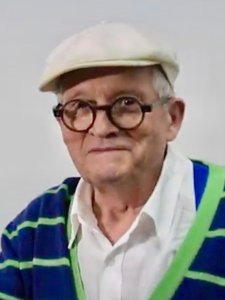
Девід Хөкні
1937 - , Великобритания
Довідкова інформація
- Artistic Movement Or Style: Поп-арт
- Artists Or Movements Influenced By This Artist: ['Пауліна Боти']
- Artists Who Influenced This Artist: ['Фрэнсіс Бакен']
- Date Of Birth: 9 липня 1937
- Full Name: David Hockney
- Nationality: Британський
- Notable Artworks:
- Більший розлив
- Портрет художника
- Двох хлопців разом
- Place Of Birth: Бредфорд, Великобританія
Схожі статті
David Hockney: A Retrospective on Pop Art's Chronicler of Light, Space, and the Everyday
Explore the life & work of David Hockney, Pop Art's master chronicler. Discover his iconic paintings, Californian landscapes, and lasting influence on modern art. Expert analysis for collectors.
Acrylic Paint Guide: Mastering the Versatile Medium of Modern Art through Chemistry and Technique
Master the versatile world of acrylic painting with our expert guide for art students. Explore the chemistry, historical evolution, and advanced techniques—from watercolor-like washes to bold impasto—to elevate your modern artistry and technical skill.
Acrylic on Paper: A Modern Canvas for Contemporary Expression
Explore the versatility of acrylic painting on paper! Discover expert techniques, artist insights & archival practices for creating stunning contemporary art. Learn more at OriginalUniqueArt.
The Art Student’s Definitive Guide to Acrylic Painting: Mastering the World’s Most Versatile Medium
Unlock your creative potential with this expert guide for art students. Master acrylic painting techniques, from fluid washes to textured impasto. Learn about essential brushes, surfaces, and advanced color theory to elevate your fine arts practice with professional precision.
David Bomberg: Reassessing the Pioneering Spirit of Early British Abstraction
Explore the groundbreaking work of David Bomberg, a pivotal figure in British abstraction. Discover his artistic evolution, influences, and lasting legacy through insightful analysis & expert commentary.


