

 Переглянути в інтер'єрі
 Надіслати
 Поділитися
 Деталі
 Посібник

 Завантажити
 Схожі предмети колекціонування
 Рентгенівське дослідження
 Слайд-шоу
 Статистика переглядів
Nine discourses on Commodus
 Oil On Canvas
- WallArt
- Abstract Expressionism
 1963
1963 134.0 x 204.0 cm
 Музей Гуггенхайма Бильбао
 Читати далі
Гікле / Художній принт
Музейна якість друку جيкле або на полотні з оперативним виготовленням та різноманітними варіантами фінішної обробки. ( Купити картину ручної роботи Перейти до цифрових зображень)




P118B $10

P118H $10

P118W $10

P438Z $10

P508JH $12

P508YH $12

P805H $10

P805Z $10

P919BZ $10

P919G $10

P919XJ $10

P959ZH $10

P968JZ $12

W106C $8

W218G $10

W218JH $8

W218Y $10

W307PJ $10

W316G $10

W316PJ $8

W316Y $10

W398PJ $8

W4111J $10

W500HY $15

W500JH $15

W692G $12

W849H $8

W940BG $15

W953PJ $8




Обирайте з наших стандартних розмірів, що відповідають оригінальним пропорціям твору мистецтва.

Ви можете вказати власні розміри, щоб репродукція ідеально підійшла до конкретної рами або інтер'єру. Якщо обраний вами розмір не відповідає пропорціям оригіналу, ми або обріжемо полотно, або розширимо зображення за допомогою дзеркального відображення чи суцільної заливки країв. Перед початком виробництва вам буде надіслано цифровий макет для затвердження.
Будь ласка, зверніть увагу, що попередній перегляд на екрані не відображає фактичне обрізання або розширення. Тільки макет точно покаже фінальну композицію.
Хоча можливість замовлення індивідуальних розмірів доступна, ми рекомендуємо обирати формат із попередньо визначеного списку, щоб зберегти оригінальні пропорції.
Доставка по всьому світу () за 2 тижні замість стандартних 4/5 тижнів. (26 Вересень)

Безкоштовна експрес-доставка по всьому світу

Високоякісне лляне полотно

Повне страхове покриття доставки

Гарантія повернення митних зборів

Гарантія точного відтворення кольорів

Політика повернення протягом 100 днів (лише у разі виявлення дефектів)

Гарантія повернення 100% коштів

Знижка на оптові замовлення
 Скляний варіант доступний лише для розмірів до 110 см

Nine discourses on Commodus
Гікле / Художній принт
Розмір репродукції
-


Загальна вартість
$ 80
Nine Discourses on Commodus: A Descent into Roman Excess
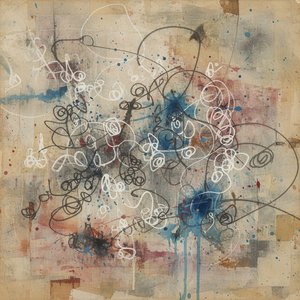
Cy Twombly’s “Nine Discourses on Commodus,” painted in 1963, isn't merely a depiction of a historical event; it’s an immersive plunge into the psychological and political turmoil that consumed the late Roman Empire. This monumental work, measuring a substantial 204 x 134 cm, resides within the Guggenheim Museum Bilbao, offering viewers a visceral experience far beyond simple representation. The painting's genesis lies in Twombly’s fascination with the reign of Emperor Commodus Aurelius Antoninus, a figure notorious for his cruelty, extravagance, and ultimately, his assassination. Rather than presenting a straightforward narrative, Twombly constructs an atmosphere—a suffocating blend of anxiety, violence, and impending doom – using a deliberately fragmented and unsettling visual language. The foundation of the composition is a pale grey field, acting as a neutral backdrop against which swirling masses of pigment explode in shades of crimson, ochre, and black. These aren’t carefully blended colors; they are applied with a raw, almost violent energy, creating a sense of chaotic movement and instability. The technique itself is crucial: Twombly employed a layering process, building up the paint in thick impasto strokes, punctuated by scribbles, dashes, and even what appear to be deliberate “mistakes.” This physicality—the tangible evidence of his hand at work—adds another layer of intensity to the piece, inviting viewers to confront the act of creation alongside the subject matter. The painting’s historical context is inextricably linked to the broader anxieties of the mid-1960s – a period marked by the Cold War, the Cuban Missile Crisis, and the assassination of John F. Kennedy. Twombly, deeply influenced by Charles Olson's concept of “Projective Involvement,” sought to create works that actively engaged with contemporary experience, translating the turmoil of his time into visual form.The Language of Scribble: Style and Technique
Twombly’s distinctive style is instantly recognizable—a potent blend of calligraphic gesture and abstract expressionism. He deliberately rejected traditional representational techniques, opting instead for a system of “scribbles,” marks, and symbols that operate on a deeply personal level. These aren't random gestures; they are meticulously controlled, almost architectural in their arrangement. The recurring numerical sequences—often appearing as clusters of digits—are not merely decorative elements but rather structural components of the composition, guiding the viewer’s eye through the swirling chaos. The influence of Paul Klee is evident in Twombly's use of simplified forms and geometric patterns, while the gestural intensity of Franz Kline provides a counterpoint to the more controlled scribbles. However, Twombly transcends these influences, forging his own unique visual vocabulary—one characterized by a raw emotionality and an unsettling sense of unease. The layering of paint, achieved through multiple applications and scraping back, creates a complex surface texture that is both visually arresting and physically engaging. The deliberate imperfections – the drips, smudges, and uneven application – are not flaws but rather integral to the painting’s expressive power, reflecting the instability and violence at its core.Symbolism and Historical Allusion
“Nine Discourses on Commodus” isn't a literal depiction of the events surrounding Commodus’ reign; it’s an allegorical exploration of themes such as tyranny, excess, and decay. The title itself refers to nine distinct “discourses,” or arguments, that explore different facets of Commodus’ character and his downfall. The swirling masses of color can be interpreted as representing the chaos and instability of his rule, while the crimson hues evoke blood and violence. The numerical sequences, often referencing architectural grids and geometric patterns, suggest a sense of order imposed upon chaos—a futile attempt to control an uncontrollable situation. Furthermore, the painting draws parallels between Commodus’ excesses and the anxieties of the 1960s – a period marked by political instability, social unrest, and the threat of nuclear war. The figure of Commodus himself embodies the dangers of unchecked power and the destructive consequences of moral decay. It's important to note that Twombly frequently drew upon classical mythology and literature in his work, imbuing his paintings with layers of historical allusion and symbolic meaning.Emotional Resonance and Legacy
Despite its unsettling subject matter, “Nine Discourses on Commodus” possesses a profound emotional resonance. The painting’s raw energy and visceral intensity evoke a sense of unease and anxiety—a reflection of the turbulent times in which it was created. It's not a comfortable or easily digestible work; it demands engagement, prompting viewers to confront uncomfortable truths about human nature and the fragility of civilization. Initially met with critical derision – largely due to its unconventional style and perceived detachment from the prevailing trends of Pop Art and Minimalism – “Nine Discourses on Commodus” has since been recognized as a pivotal work in the history of postwar painting. It stands as a testament to Twombly’s unique vision and his willingness to challenge conventional artistic norms. Today, it is celebrated for its expressive power, its complex symbolism, and its enduring relevance—a haunting reminder of the dangers of excess and the cyclical nature of history. Reproductions capture only a fraction of the painting's depth; experiencing it in person within the Guggenheim Bilbao is an essential encounter with one of the 20th century’s most enigmatic artists.Біографія митця
A Life Etched in Line and Color
Edwin Parker Twombly Jr., known to the world as Cy Twombly, was a singular force in 20th and 21st-century art—an American painter, sculptor, and photographer whose work defied easy categorization. Born on April 25, 1928, in Lexington, Virginia, his artistic journey began with a foundation steeped in classical education and a restless spirit that propelled him across continents. Early studies under Pierre Daura at Washington and Lee University were followed by formative experiences at the Arts Students League of New York and Black Mountain College, where he encountered pivotal figures like Robert Rauschenberg, John Cage, and Merce Cunningham. These encounters fostered an environment of experimentation and interdisciplinary exploration that would profoundly shape his artistic vision. However, it was a 1952 voyage to Italy and North Africa with Rauschenberg—funded by a grant from the Virginia Museum of Fine Arts—that proved truly transformative. Immersed in ancient ruins, vibrant cultures, and the weight of history, Twombly discovered a wellspring of inspiration that would define his aesthetic for decades to come.The Evolution of an Enigmatic Style
Twombly’s artistic style was not born fully formed; it evolved through a series of explorations and refinements. His early works, such as the *North African Sketchbooks* (1953), already hinted at his unique blend of abstract forms and poetic references. These weren't mere travel journals but rather investigations into the essence of place—a distillation of light, texture, and memory. Throughout the 1960s, Twombly’s style began to coalesce around a distinctive vocabulary of scribbled lines, gestural marks, and fragmented words on expansive canvases. Works like the *Ferragosto* series (1961) and *The Italians* (1961) exemplify this period—paintings that seem to exist between calligraphy and chaos, evoking both ancient inscriptions and the immediacy of graffiti. He wasn’t interested in replicating reality but rather in capturing a sense of feeling, memory, and the passage of time. This approach challenged conventional notions of painting, moving away from representation towards a more subjective and emotionally resonant form of expression. Cold Stream* (1966), with its swirling loops and bold text, is a powerful example of this evocative style. The influence of artists like Jean Dubuffet and Alberto Giacometti, alongside the poetic sensibilities of Stéphane Mallarmé, Rainer Maria Rilke, and John Keats, became increasingly apparent in his work during this period.Influences and Artistic Lineage
While fiercely independent, Twombly’s work wasn't created in a vacuum. He drew inspiration from a diverse range of sources—from the raw energy of Jean Dubuffet and Alberto Giacometti to the poetic sensibilities of Stéphane Mallarmé, Rainer Maria Rilke, and John Keats. Classical mythology and history also played a significant role, providing him with a rich tapestry of themes and symbols to explore. His paintings often allude to ancient narratives, subtly weaving together fragments of stories and legends. Twombly’s influence on subsequent generations of artists is undeniable. He paved the way for painters like Jean-Michel Basquiat, Anselm Kiefer, Francesco Clemente, and Julian Schnabel, who embraced a similar spirit of experimentation and emotional intensity. His willingness to break down traditional boundaries and explore new forms of expression resonated deeply with artists seeking to challenge the status quo. He demonstrated that painting could be more than just representation; it could be a vehicle for conveying complex emotions, ideas, and experiences.Major Achievements and Lasting Legacy
Throughout his career, Twombly received numerous accolades, including the Golden Lion award at the Venice Biennale in 2001 and being named a Chevalier of the Légion d’Honneur in 2010. His work is represented in major museum collections worldwide, including the Menil Collection in Houston, the Tate Modern in London, and New York’s Museum of Modern Art. A particularly significant achievement was his commission to create a ceiling piece for the Musée du Louvre in Paris—a testament to his international recognition and artistic stature. Three studies from the Temeraire* (1998-99), now held by the Art Gallery of New South Wales, exemplifies his later style – large scale works that are both delicate and powerful. Twombly’s enigmatic style continues to fascinate art enthusiasts and scholars alike. His paintings invite viewers to engage in a dialogue—to decipher the hidden meanings within the layers of paint and scribbled lines. He passed away on July 5, 2011, in Rome after a long battle with cancer, leaving behind a legacy that will continue to inspire and challenge artists for generations to come. A plaque in Santa Maria in Vallicella serves as a lasting memorial to his profound contribution to the world of art.Exploring Twombly’s World
Cy Twombly's work is an invitation to contemplate the complexities of human experience—to delve into the realms of memory, history, and emotion. His paintings are not simply objects to be admired but rather portals to another world—a world where lines dance, words whisper, and feelings take shape. Whether it’s the vibrant energy of *Untitled (Peony Blossom Painting)* or the evocative abstraction of *Proteus*, each work offers a unique glimpse into the artist's inner landscape. His influence extends beyond painting, impacting sculpture and photography as well. To truly appreciate Twombly’s genius, one must allow oneself to be swept away by the fluidity of his lines, the richness of his colors, and the depth of his poetic vision.- Explore Cy Twombly's artworks on OriginalUniqueArt.
- Read more about Cy Twombly on Wikipedia.
- Discover the Musée du Louvre’s collection, featuring Twombly’s commissioned work, on OriginalUniqueArt: Musée du Louvre.

Ці Twombly
1928 - 2011 , США
Довідкова інформація
- Artistic Movement Or Style: Абстрактний експресіонізм
- Artists Or Movements Influenced By This Artist: ['Жан-Мішель Баськіат']
- Artists Who Influenced This Artist:
- Пієр Даура
- Жан Дубуфет
- Date Of Birth: 25 квітня 1928
- Date Of Death: 5 липня 2011
- Full Name: Edwin Parker Twombly Jr.
- Nationality: Американський
- Notable Artworks:
- Apollo та Митець
- Cold Stream
- Place Of Birth: Лексінгтон, США
Схожі статті

Beyond Representation: Exploring the Emotional Landscape of Abstract Expressionism
Explore the profound emotional world of Abstract Expressionism with OriginalUniqueArt. Discover key artists like Pollock & Rothko, learn about collecting, and find museum-quality reproductions to inspire your space.

Топ-10 шедеврів геометричної абстракції: мистецтво для вашого інтер'єру від OriginalUniqueArt.com
Відкрийте для себе 10 шедеврів геометричної абстракції від Кандинського, Малевича та Мондріана! Історія мистецтва, кольори та форми. Репродукції картин преміум-класу на OriginalUniqueArt.com – ідеальний декор для вашого дому.

Топ-25 шедеврів Василя Кандинського: подорож у світ абстрактного мистецтва | OriginalUniqueArt.com
Відкрийте для себе 25 найвідоміших шедеврів Василя Кандинського! Пориньте у світ абстрактного мистецтва, експресіонізму та кольорових композицій. Репродукції картин Кандинського преміум-якості на OriginalUniqueArt.com – для вашого інтер'єру з душею. Дослідіть повну колекцію онлайн!
Cy Twombly: Scribbles of Emotion – Deconstructing Post-War Expressionism Through Calligraphy & Abstraction
Explore the captivating world of Cy Twombly with OriginalUniqueArt. Discover the emotional depth & artistic significance behind his abstract calligraphy. Expert insights for collectors.

Топ-10 шедеврів абстрактного експресіонізму: мистецтво, яке змінила епоху | OriginalUniqueArt.com
Відкрийте для себе 10 шедеврів абстрактного експресіонізму! Дізнайтесь історію Поллока, Ротко та інших геніїв. Репродукції картин преміум-якості для вашого дому від OriginalUniqueArt.com. Дослідіть колекцію онлайн!