

 Переглянути в інтер'єрі
 Надіслати як листівку
 Поділитися
 Детальніше

 Завантажити
 Схожі експонати
 Рентгенівське дослідження
 Слайд-шоу
 Статистика
Leaving Paphos Ringed With Waves III


 Читати далі
Гікле / Художній принт
Музейна якість друку جيкле або на полотні з оперативним виготовленням та різноманітними варіантами фінішної обробки. ( Замовити репродукцію ручної роботи Перейти до цифрових зображень)




































Обирайте з наших стандартних розмірів, що відповідають оригінальним пропорціям твору мистецтва.

Ви можете вказати власні розміри, щоб репродукція ідеально підійшла до конкретної рами або інтер'єру. Якщо обраний вами розмір не відповідає пропорціям оригіналу, ми або обріжемо полотно, або розширимо зображення за допомогою дзеркального відображення чи суцільної заливки країв. Перед початком виробництва вам буде надіслано цифровий макет для затвердження.
Будь ласка, зверніть увагу, що попередній перегляд на екрані не відображає фактичне обрізання або розширення. Тільки макет точно покаже фінальну композицію.
Хоча можливість замовлення індивідуальних розмірів доступна, ми рекомендуємо обирати формат із попередньо визначеного списку, щоб зберегти оригінальні пропорції.
Доставка по всьому світу () за 2 тижні замість стандартних 4/5 тижнів. (16 Вересень)

Безкоштовна експрес-доставка по всьому світу

Високоякісне лляне полотно

Повне страхове покриття доставки

Гарантія відшкодування митних зборів

Гарантія точного відтворення кольорів

Політика повернення протягом 100 днів (тільки у разі виявлення дефектів)

Гарантія повернення 100% коштів

Пропозиція на оптові замовлення
 Скляний варіант доступний лише для розмірів до 110 см

Leaving Paphos Ringed With Waves III
Гікле / Художній принт
Розмір репродукції
-


Підсумкова вартість
$ 80
A Symphony of Scrawl and Sea: The Poetic Chaos of Cy Twombly
In the vast, evocative landscape of contemporary abstraction, few works command the viewer's attention with such raw, visceral energy as Cy Twombly’s "Leaving Paphos Ringed With Waves III." Created in 2009, this masterpiece serves as a profound meditation on movement, memory, and the elemental forces of nature. At first glance, the canvas presents a striking visual dichotomy: a deep, immersive blue field that suggests the infinite depths of the Mediterranean, interrupted by sudden, rhythmic bursts of crimson. This is not merely a painting; it is an emotional event captured in pigment, where the boundaries between calligraphy, graffiti, and fine art dissolve into a singular, breathtaking expression.
The technique employed in this work is quintessential to Twombly’s late-career mastery. He utilizes a method that feels both spontaneous and deeply deliberate, employing large-scale, freely-scribbled marks that dance across the solid blue background. The red drips of paint act as punctuation marks in a visual poem, cascading down the canvas like blood or sunset light reflecting on turbulent waters. This interplay of texture—the smooth, expansive blue against the tactile, energetic red—creates a sense of depth that draws the eye into a rhythmic trance. For the collector or interior designer, this piece offers a sophisticated focal point, providing a sense of dynamic motion that can breathe life and intellectual intrigue into any modern space.
The Echoes of Antiquity and Neo-Expressionist Spirit
To understand "Leaving Paphos Ringed With Waves III," one must look toward the historical and mythological currents that flowed through Twombly’s life. The title itself evokes the ancient city of Paphos, a site steeped in Greek mythology and legend. By referencing such a classical landscape, Twombly bridges the gap between the ancient world and the frenetic energy of Neo-Expressionism. His style, which famously incorporates elements of calligraphic scrawls and cryptic symbols, suggests a language that is being written and erased simultaneously. It evokes the feeling of an archaeological find—fragments of a lost text emerging from the blue depths of time.
This work sits comfortably within the lineage of Abstract Expressionism, yet it pushes the movement into a more personal, lyrical territory. While his contemporaries might have focused on pure form, Twombly infused his marks with a sense of gestural poetry. The emotional impact of the piece is one of profound nostalgia and restless energy; it captures the bittersweet sensation of departure—the "leaving" mentioned in the title. For those seeking to adorn a gallery or a luxury residence, this reproduction offers more than just aesthetic beauty; it provides a window into a complex psychological landscape, making it an indispensable acquisition for anyone moved by the intersection of classical myth and modern abstraction.
Біографія митця
A Life Etched in Line and Color
Edwin Parker Twombly Jr., known to the world as Cy Twombly, was a singular force in 20th and 21st-century art—an American painter, sculptor, and photographer whose work defied easy categorization. Born on April 25, 1928, in Lexington, Virginia, his artistic journey began with a foundation steeped in classical education and a restless spirit that propelled him across continents. Early studies under Pierre Daura at Washington and Lee University were followed by formative experiences at the Arts Students League of New York and Black Mountain College, where he encountered pivotal figures like Robert Rauschenberg, John Cage, and Merce Cunningham. These encounters fostered an environment of experimentation and interdisciplinary exploration that would profoundly shape his artistic vision. However, it was a 1952 voyage to Italy and North Africa with Rauschenberg—funded by a grant from the Virginia Museum of Fine Arts—that proved truly transformative. Immersed in ancient ruins, vibrant cultures, and the weight of history, Twombly discovered a wellspring of inspiration that would define his aesthetic for decades to come.The Evolution of an Enigmatic Style
Twombly’s artistic style was not born fully formed; it evolved through a series of explorations and refinements. His early works, such as the *North African Sketchbooks* (1953), already hinted at his unique blend of abstract forms and poetic references. These weren't mere travel journals but rather investigations into the essence of place—a distillation of light, texture, and memory. Throughout the 1960s, Twombly’s style began to coalesce around a distinctive vocabulary of scribbled lines, gestural marks, and fragmented words on expansive canvases. Works like the *Ferragosto* series (1961) and *The Italians* (1961) exemplify this period—paintings that seem to exist between calligraphy and chaos, evoking both ancient inscriptions and the immediacy of graffiti. He wasn’t interested in replicating reality but rather in capturing a sense of feeling, memory, and the passage of time. This approach challenged conventional notions of painting, moving away from representation towards a more subjective and emotionally resonant form of expression. Cold Stream* (1966), with its swirling loops and bold text, is a powerful example of this evocative style. The influence of artists like Jean Dubuffet and Alberto Giacometti, alongside the poetic sensibilities of Stéphane Mallarmé, Rainer Maria Rilke, and John Keats, became increasingly apparent in his work during this period.Influences and Artistic Lineage
While fiercely independent, Twombly’s work wasn't created in a vacuum. He drew inspiration from a diverse range of sources—from the raw energy of Jean Dubuffet and Alberto Giacometti to the poetic sensibilities of Stéphane Mallarmé, Rainer Maria Rilke, and John Keats. Classical mythology and history also played a significant role, providing him with a rich tapestry of themes and symbols to explore. His paintings often allude to ancient narratives, subtly weaving together fragments of stories and legends. Twombly’s influence on subsequent generations of artists is undeniable. He paved the way for painters like Jean-Michel Basquiat, Anselm Kiefer, Francesco Clemente, and Julian Schnabel, who embraced a similar spirit of experimentation and emotional intensity. His willingness to break down traditional boundaries and explore new forms of expression resonated deeply with artists seeking to challenge the status quo. He demonstrated that painting could be more than just representation; it could be a vehicle for conveying complex emotions, ideas, and experiences.Major Achievements and Lasting Legacy
Throughout his career, Twombly received numerous accolades, including the Golden Lion award at the Venice Biennale in 2001 and being named a Chevalier of the Légion d’Honneur in 2010. His work is represented in major museum collections worldwide, including the Menil Collection in Houston, the Tate Modern in London, and New York’s Museum of Modern Art. A particularly significant achievement was his commission to create a ceiling piece for the Musée du Louvre in Paris—a testament to his international recognition and artistic stature. Three studies from the Temeraire* (1998-99), now held by the Art Gallery of New South Wales, exemplifies his later style – large scale works that are both delicate and powerful. Twombly’s enigmatic style continues to fascinate art enthusiasts and scholars alike. His paintings invite viewers to engage in a dialogue—to decipher the hidden meanings within the layers of paint and scribbled lines. He passed away on July 5, 2011, in Rome after a long battle with cancer, leaving behind a legacy that will continue to inspire and challenge artists for generations to come. A plaque in Santa Maria in Vallicella serves as a lasting memorial to his profound contribution to the world of art.Exploring Twombly’s World
Cy Twombly's work is an invitation to contemplate the complexities of human experience—to delve into the realms of memory, history, and emotion. His paintings are not simply objects to be admired but rather portals to another world—a world where lines dance, words whisper, and feelings take shape. Whether it’s the vibrant energy of *Untitled (Peony Blossom Painting)* or the evocative abstraction of *Proteus*, each work offers a unique glimpse into the artist's inner landscape. His influence extends beyond painting, impacting sculpture and photography as well. To truly appreciate Twombly’s genius, one must allow oneself to be swept away by the fluidity of his lines, the richness of his colors, and the depth of his poetic vision.- Explore Cy Twombly's artworks on OriginalUniqueArt.
- Read more about Cy Twombly on Wikipedia.
- Discover the Musée du Louvre’s collection, featuring Twombly’s commissioned work, on OriginalUniqueArt: Musée du Louvre.

Ці Twombly
1928 - 2011 , США
Короткі факти
- Artistic Movement Or Style: Абстрактний експресіонізм
- Artists Or Movements Influenced By This Artist: ['Жан-Мішель Баськіат']
- Artists Who Influenced This Artist:
- Пієр Даура
- Жан Дубуфет
- Date Of Birth: 25 квітня 1928
- Date Of Death: 5 липня 2011
- Full Name: Edwin Parker Twombly Jr.
- Nationality: Американський
- Notable Artworks:
- Apollo та Митець
- Cold Stream
- Place Of Birth: Лексінгтон, США
Пов'язані статті
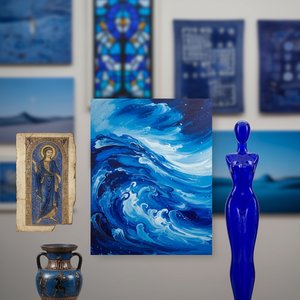
The Allure of Azure: Exploring the Symbolic & Aesthetic Depths of Blue in Art History
Explore the rich history of blue in art! Discover its symbolism, from ancient pigments to modern masterpieces by Kandinsky & Seurat. Uncover the psychological impact and cultural meanings behind this captivating hue.

Топ-10 знаменитих картин у відтінках сіро-блакитного: мистецтво для вашого дому
Пориньте у світ сіро-блакитного кольору! Від Моне до Ренуара – топ-10 знаменитих картин, що зачаровують глибиною відтінків. Історія мистецтва, техніки та натхнення для вашого дому. Знайдіть репродукцію мрії на OriginalUniqueArt.com!
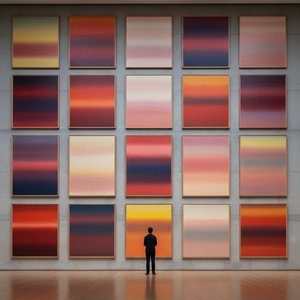
25 шедеврів Марка Ротко: глибокі емоції та колірні симфонії для вашого дому | OriginalUniqueArt
Відкрийте 25 найвідоміших шедеврів Марка Ротко! Пориньте у світ емоційного абстрактного експресіонізму, колірних симфоній та глибокого психологічного живопису. Купуйте репродукції картин Ротко преміум-якості для вашого дому на OriginalUniqueArt.com.
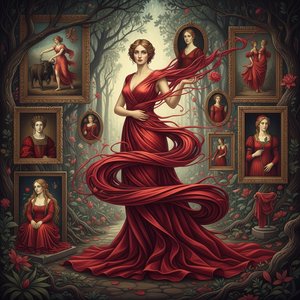
Crimson Threads of Narrative: Exploring Symbolism & Representation in Artworks Featuring the Red Dress
Explore the rich symbolism of the red dress in art history! From ancient power displays to iconic portraits like Cézanne’s 'Madame Cezanne', discover the cultural and artistic significance behind this captivating color. Expert analysis & insights.

10 шедеврів німецького експресіонізму, що змінили мистецтво | OriginalUniqueArt
Пориньте у світ німецького експресіонізму! 10 шедеврів від Кандинського, Кірхнера та інших – історія творчості, емоцій та кольорів. Купуйте репродукції картин на OriginalUniqueArt.com та створіть неповторний інтер'єр.