

 Переглянути в інтер'єрі
 Надіслати
 Поділитися
 Деталі
 Посібник

 Завантажити
 Схожі предмети колекціонування
 Рентгенівське дослідження
 Слайд-шоу
 Статистика переглядів
Dutch Interior
 Acrylic On Canvas
- WallArt
- Surrealist Homage
 1962
1962 267.0 x 302.0 cm
 Музей Метрополітен
 Читати далі
Гікле / Художній принт
Музейна якість друку جيкле або на полотні з оперативним виготовленням та різноманітними варіантами фінішної обробки. ( Купити картину ручної роботи Перейти до цифрових зображень)




P118B $10

P118H $10

P118W $10

P438Z $10

P508JH $12

P508YH $12

P805H $10

P805Z $10

P919BZ $10

P919G $10

P919XJ $10

P959ZH $10

P968JZ $12

W106C $8

W218G $10

W218JH $8

W218Y $10

W307PJ $10

W316G $10

W316PJ $8

W316Y $10

W398PJ $8

W4111J $10

W500HY $15

W500JH $15

W692G $12

W849H $8

W940BG $15

W953PJ $8




Обирайте з наших стандартних розмірів, що відповідають оригінальним пропорціям твору мистецтва.

Ви можете вказати власні розміри, щоб репродукція ідеально підійшла до конкретної рами або інтер'єру. Якщо обраний вами розмір не відповідає пропорціям оригіналу, ми або обріжемо полотно, або розширимо зображення за допомогою дзеркального відображення чи суцільної заливки країв. Перед початком виробництва вам буде надіслано цифровий макет для затвердження.
Будь ласка, зверніть увагу, що попередній перегляд на екрані не відображає фактичне обрізання або розширення. Тільки макет точно покаже фінальну композицію.
Хоча можливість замовлення індивідуальних розмірів доступна, ми рекомендуємо обирати формат із попередньо визначеного списку, щоб зберегти оригінальні пропорції.
Доставка по всьому світу () за 2 тижні замість стандартних 4/5 тижнів. (25 Вересень)

Безкоштовна експрес-доставка по всьому світу

Високоякісне лляне полотно

Повне страхове покриття доставки

Гарантія повернення митних зборів

Гарантія точного відтворення кольорів

Політика повернення протягом 100 днів (лише у разі виявлення дефектів)

Гарантія повернення 100% коштів

Знижка на оптові замовлення
 Скляний варіант доступний лише для розмірів до 110 см

Dutch Interior
Гікле / Художній принт
Розмір репродукції
-


Загальна вартість
$ 80
A Roman Echo: The Genesis of Dutch Interior
Cy Twombly's 1962 painting, *Dutch Interior*, isn’t merely a depiction of a room; it’s an immersive experience, a layered meditation on the act of creation itself. Emerging from a spacious studio in central Rome—a space that liberated him from the constraints of smaller formats—Twombly embarked on a work that immediately challenged conventional notions of representation. The painting’s genesis is inextricably linked to this new environment; it feels less like a finished product and more like an ongoing, almost frantic, dialogue with the ancient walls of the Eternal City – a conversation etched in layers of graphite, wax crayon, and oil paint.
The title itself—a deliberate homage to the Dutch Golden Age—immediately establishes a historical framework. Twombly wasn’t simply replicating a scene; he was engaging with the spirit of seventeenth-century Dutch interior paintings, those meticulously rendered depictions of domestic life that captured a specific cultural sensibility. However, this engagement is far from straightforward imitation. Instead, it's a complex negotiation, a playful subversion of established conventions. The painting becomes a palimpsest—a layered text where the echoes of Vermeer and Rembrandt mingle with Twombly’s own unique visual language.
The Language of Scribble: Technique and Process
What immediately strikes the viewer is the apparent chaos – the accumulation of seemingly disparate marks. Scribbles, smears, hastily scrawled numbers, and biomorphic forms coalesce on the canvas, creating a surface that resists easy interpretation. This isn’t the product of a single, deliberate act; rather, it suggests multiple hands at work, a collective energy channeled through Twombly's brush. The technique is deliberately raw and unrefined – a rejection of polished surfaces in favor of an immediate, visceral impact.
Twombly’s masterful use of media further complicates the narrative. Pencil provides a skeletal framework, wax crayon introduces a tactile warmth, and oil paint adds depth and luminosity. The layering is crucial; each medium interacts with the others, creating subtle shifts in texture and tone. The artist frequently incorporated his own physical presence into the work – fingerprints, smudges, even what appear to be handprints—transforming the canvas into a record of his creative process, a tangible manifestation of his engagement with the artwork.
Symbolism and the Fragmented Self
Beyond the purely visual, *Dutch Interior* is rich in symbolic resonance. The inclusion of clocks, chairs, and vases—familiar objects from a domestic setting—only serves to heighten the sense of unease and disorientation. These elements are not rendered with precision or detail; instead, they’re fragmented, distorted, and imbued with an unsettling ambiguity. The numbers scrawled across the canvas – often in a vertical arrangement – add another layer of complexity, hinting at both order and chaos.
Furthermore, Twombly's frequent references to his own body—the fingerprints, handprints—suggest a profound sense of self-awareness. The painting becomes a meditation on identity, on the act of representation, and on the elusive nature of the creative process. It’s as if Twombly is grappling with his own presence within the artwork, attempting to capture not just an image but also the very essence of his being.
A Legacy of Ambiguity: Emotional Impact
Ultimately, *Dutch Interior* resists easy categorization or definitive interpretation. It’s a painting that demands engagement, inviting viewers to lose themselves in its layers of complexity and ambiguity. The work possesses a haunting beauty—a sense of melancholy and introspection—that lingers long after the initial viewing. It's a testament to Twombly's ability to create art that is both deeply personal and universally resonant, a powerful reminder of the enduring mysteries of human experience.
Біографія митця
A Life Etched in Line and Color
Edwin Parker Twombly Jr., known to the world as Cy Twombly, was a singular force in 20th and 21st-century art—an American painter, sculptor, and photographer whose work defied easy categorization. Born on April 25, 1928, in Lexington, Virginia, his artistic journey began with a foundation steeped in classical education and a restless spirit that propelled him across continents. Early studies under Pierre Daura at Washington and Lee University were followed by formative experiences at the Arts Students League of New York and Black Mountain College, where he encountered pivotal figures like Robert Rauschenberg, John Cage, and Merce Cunningham. These encounters fostered an environment of experimentation and interdisciplinary exploration that would profoundly shape his artistic vision. However, it was a 1952 voyage to Italy and North Africa with Rauschenberg—funded by a grant from the Virginia Museum of Fine Arts—that proved truly transformative. Immersed in ancient ruins, vibrant cultures, and the weight of history, Twombly discovered a wellspring of inspiration that would define his aesthetic for decades to come.The Evolution of an Enigmatic Style
Twombly’s artistic style was not born fully formed; it evolved through a series of explorations and refinements. His early works, such as the *North African Sketchbooks* (1953), already hinted at his unique blend of abstract forms and poetic references. These weren't mere travel journals but rather investigations into the essence of place—a distillation of light, texture, and memory. Throughout the 1960s, Twombly’s style began to coalesce around a distinctive vocabulary of scribbled lines, gestural marks, and fragmented words on expansive canvases. Works like the *Ferragosto* series (1961) and *The Italians* (1961) exemplify this period—paintings that seem to exist between calligraphy and chaos, evoking both ancient inscriptions and the immediacy of graffiti. He wasn’t interested in replicating reality but rather in capturing a sense of feeling, memory, and the passage of time. This approach challenged conventional notions of painting, moving away from representation towards a more subjective and emotionally resonant form of expression. Cold Stream* (1966), with its swirling loops and bold text, is a powerful example of this evocative style. The influence of artists like Jean Dubuffet and Alberto Giacometti, alongside the poetic sensibilities of Stéphane Mallarmé, Rainer Maria Rilke, and John Keats, became increasingly apparent in his work during this period.Influences and Artistic Lineage
While fiercely independent, Twombly’s work wasn't created in a vacuum. He drew inspiration from a diverse range of sources—from the raw energy of Jean Dubuffet and Alberto Giacometti to the poetic sensibilities of Stéphane Mallarmé, Rainer Maria Rilke, and John Keats. Classical mythology and history also played a significant role, providing him with a rich tapestry of themes and symbols to explore. His paintings often allude to ancient narratives, subtly weaving together fragments of stories and legends. Twombly’s influence on subsequent generations of artists is undeniable. He paved the way for painters like Jean-Michel Basquiat, Anselm Kiefer, Francesco Clemente, and Julian Schnabel, who embraced a similar spirit of experimentation and emotional intensity. His willingness to break down traditional boundaries and explore new forms of expression resonated deeply with artists seeking to challenge the status quo. He demonstrated that painting could be more than just representation; it could be a vehicle for conveying complex emotions, ideas, and experiences.Major Achievements and Lasting Legacy
Throughout his career, Twombly received numerous accolades, including the Golden Lion award at the Venice Biennale in 2001 and being named a Chevalier of the Légion d’Honneur in 2010. His work is represented in major museum collections worldwide, including the Menil Collection in Houston, the Tate Modern in London, and New York’s Museum of Modern Art. A particularly significant achievement was his commission to create a ceiling piece for the Musée du Louvre in Paris—a testament to his international recognition and artistic stature. Three studies from the Temeraire* (1998-99), now held by the Art Gallery of New South Wales, exemplifies his later style – large scale works that are both delicate and powerful. Twombly’s enigmatic style continues to fascinate art enthusiasts and scholars alike. His paintings invite viewers to engage in a dialogue—to decipher the hidden meanings within the layers of paint and scribbled lines. He passed away on July 5, 2011, in Rome after a long battle with cancer, leaving behind a legacy that will continue to inspire and challenge artists for generations to come. A plaque in Santa Maria in Vallicella serves as a lasting memorial to his profound contribution to the world of art.Exploring Twombly’s World
Cy Twombly's work is an invitation to contemplate the complexities of human experience—to delve into the realms of memory, history, and emotion. His paintings are not simply objects to be admired but rather portals to another world—a world where lines dance, words whisper, and feelings take shape. Whether it’s the vibrant energy of *Untitled (Peony Blossom Painting)* or the evocative abstraction of *Proteus*, each work offers a unique glimpse into the artist's inner landscape. His influence extends beyond painting, impacting sculpture and photography as well. To truly appreciate Twombly’s genius, one must allow oneself to be swept away by the fluidity of his lines, the richness of his colors, and the depth of his poetic vision.- Explore Cy Twombly's artworks on OriginalUniqueArt.
- Read more about Cy Twombly on Wikipedia.
- Discover the Musée du Louvre’s collection, featuring Twombly’s commissioned work, on OriginalUniqueArt: Musée du Louvre.

Ці Twombly
1928 - 2011 , США
Довідкова інформація
- Artistic Movement Or Style: Абстрактний експресіонізм
- Artists Or Movements Influenced By This Artist: ['Жан-Мішель Баськіат']
- Artists Who Influenced This Artist:
- Пієр Даура
- Жан Дубуфет
- Date Of Birth: 25 квітня 1928
- Date Of Death: 5 липня 2011
- Full Name: Edwin Parker Twombly Jr.
- Nationality: Американський
- Notable Artworks:
- Apollo та Митець
- Cold Stream
- Place Of Birth: Лексінгтон, США
Схожі статті

Топ-25 шедеврів Василя Кандинського: подорож у світ абстрактного мистецтва | OriginalUniqueArt.com
Відкрийте для себе 25 найвідоміших шедеврів Василя Кандинського! Пориньте у світ абстрактного мистецтва, експресіонізму та кольорових композицій. Репродукції картин Кандинського преміум-якості на OriginalUniqueArt.com – для вашого інтер'єру з душею. Дослідіть повну колекцію онлайн!

Топ-10 шедеврів абстрактного експресіонізму: мистецтво, яке змінила епоху | OriginalUniqueArt.com
Відкрийте для себе 10 шедеврів абстрактного експресіонізму! Дізнайтесь історію Поллока, Ротко та інших геніїв. Репродукції картин преміум-якості для вашого дому від OriginalUniqueArt.com. Дослідіть колекцію онлайн!
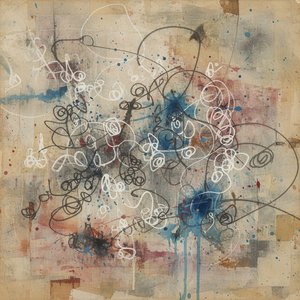
Cy Twombly: Scribbles of Emotion – Deconstructing Post-War Expressionism Through Calligraphy & Abstraction
Explore the captivating world of Cy Twombly with OriginalUniqueArt. Discover the emotional depth & artistic significance behind his abstract calligraphy. Expert insights for collectors.

Unlocking Contemporary Abstraction: A Designer's Guide to Curating Emotion and Color for Modern Interiors
Master the art of decorating with contemporary abstraction. Our expert guide for designers explores how to use color, geometry, and emotion to transform modern interiors into soulful, curated spaces through professional art selection and placement strategies.
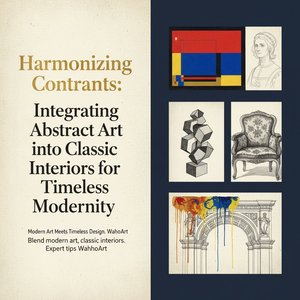
Гармонія Контрастів: Інтеграція Сучасної Абстрактної Живопису в Класичні Інтер'єри для Вічної Елегантності
Відкрийте гармонію контрастів! Експертні поради від OriginalUniqueArt щодо інтеграції сучасного абстрактного живопису в класичні інтер'єри. Підберіть ідеальне мистецтво для вашого дому – ексклюзивні репродукції та картини на замовлення з доставкою по Україні.