

 Надіслати
 Поділитися
 Деталі
 Посібник

 Завантажити
 Схожі предмети колекціонування
 Слайд-шоу
 Статистика переглядів
Dress


 Читати далі
Гікле / Художній принт
Музейна якість друку جيкле або на полотні з оперативним виготовленням та різноманітними варіантами фінішної обробки. ( Купити картину ручної роботи Перейти до цифрових зображень)




































Обирайте з наших стандартних розмірів, що відповідають оригінальним пропорціям твору мистецтва.

Ви можете вказати власні розміри, щоб репродукція ідеально підійшла до конкретної рами або інтер'єру. Якщо обраний вами розмір не відповідає пропорціям оригіналу, ми або обріжемо полотно, або розширимо зображення за допомогою дзеркального відображення чи суцільної заливки країв. Перед початком виробництва вам буде надіслано цифровий макет для затвердження.
Будь ласка, зверніть увагу, що попередній перегляд на екрані не відображає фактичне обрізання або розширення. Тільки макет точно покаже фінальну композицію.
Хоча можливість замовлення індивідуальних розмірів доступна, ми рекомендуємо обирати формат із попередньо визначеного списку, щоб зберегти оригінальні пропорції.
Доставка по всьому світу () за 2 тижні замість стандартних 4/5 тижнів. (27 Вересень)

Безкоштовна експрес-доставка по всьому світу

Високоякісне лляне полотно

Повне страхове покриття доставки

Гарантія повернення митних зборів

Гарантія точного відтворення кольорів

Політика повернення протягом 100 днів (лише у разі виявлення дефектів)

Гарантія повернення 100% коштів

Знижка на оптові замовлення
 Скляний варіант доступний лише для розмірів до 110 см

Dress
Гікле / Художній принт
Розмір репродукції
-


Загальна вартість
$ 80
The Genesis of a Masterpiece: Cristóbal Balenciaga and the ‘Dress’
The world of fashion, often perceived as fleeting trends and ephemeral glamour, occasionally yields objects of profound and enduring significance. Cristóbal Balenciaga’s “Dress,” a 1953 creation housed within the Museo Nacional de Artes Decorativas in Madrid, stands as one such testament – not merely a garment, but a meticulously crafted exploration of silhouette, texture, and the very nature of perception. Born from the atelier of a visionary couturier who challenged convention and embraced an almost sculptural approach to design, this piece embodies Balenciaga’s signature blend of architectural precision and understated elegance.
Balenciaga's early life in Getaria, a small fishing village on Spain’s Basque coast, instilled within him a deep appreciation for structure and form. This foundational influence is immediately apparent in the “Dress,” where the bodice – a testament to Balenciaga’s mastery of tailoring – is rigidly defined by vertical darts and reinforced with metallic boning, creating an almost architectural framework. The choice of pale-pink satin, a luxurious yet delicate material, further emphasizes this sense of controlled structure, while simultaneously lending a subtle air of romanticism.
Deconstructing the Silhouette: Form and Function
The dress’s silhouette is a captivating paradox – simultaneously restrictive and fluid. The fitted bodice, with its sweetheart neckline and strategically placed straps, cinches the waist before blossoming into a full, gathered skirt. This dynamic interplay of form speaks to Balenciaga's fascination with volume and his ability to manipulate fabric to create an illusion of movement. The verticality of the bodice is cleverly countered by the horizontal sweep of the skirt, generating visual interest and preventing the design from feeling overly formal.
- The Bodice: A study in precision, featuring vertical darts that sculpt the torso and metallic boning for structural support.
- The Skirt: Gathered at the waist, creating a full, voluminous silhouette reminiscent of a classical Greek gown.
- The Stole: Adding layers of texture and visual complexity with its intricate lace detailing and castanet/fan motifs – a nod to Spanish heritage.
A Tapestry of Texture and Symbolism
Beyond its structural elegance, the “Dress” is rich in textural detail and symbolic resonance. The satin’s smooth surface contrasts beautifully with the delicate lace appliqué adorning the stole, creating a tactile experience for the viewer. The inclusion of Spanish motifs – the castanets and fans – subtly references Balenciaga's roots and his admiration for Iberian culture. These elements aren’t merely decorative; they contribute to a narrative of heritage and artistic inspiration.
Furthermore, the dress’s monochrome presentation—a black-and-white photograph capturing its essence—heightens its impact. The absence of color forces the viewer to focus entirely on form, texture, and construction, revealing the intricate details that define Balenciaga's genius. It echoes the stark elegance of early 20th-century photography, lending a timeless quality to the image.
The Legacy of Illusion: A Timeless Masterpiece
The “Dress” is more than just a beautiful garment; it’s a meditation on perception and the power of design. Its enduring appeal lies in its ability to simultaneously challenge and delight, inviting viewers to contemplate the relationship between form, texture, and meaning. Cristóbal Balenciaga's legacy continues through this piece – a testament to his innovative spirit, unparalleled craftsmanship, and profound understanding of the human form. Reproductions capture only a fraction of the original’s impact, but offer a window into the mind of one of fashion’s most influential figures.
Біографія митця
Cristóbal Balenciaga Eizaguirre: The Architect of Elegance
Cristóbal Balenciaga Eizaguirre, a name synonymous with unparalleled artistry and revolutionary design, stands as one of the most influential figures in 20th-century fashion. Born in 1895 in Getaria, a picturesque fishing village nestled on the rugged coast of Spain’s Basque Country, his journey from humble beginnings to global acclaim is a testament to innate talent, relentless dedication, and an unwavering pursuit of perfection. Balenciaga's legacy extends far beyond mere clothing; he fundamentally reshaped the silhouette of women’s fashion, establishing a new standard for elegance, structure, and sculptural form that continues to inspire designers today. His life was deeply intertwined with his birthplace – Getaria, a place that instilled in him an appreciation for natural beauty and a profound connection to the sea, elements which subtly informed his distinctive aesthetic.Early Life and Artistic Foundations
Cristóbal’s early years were shaped by the realities of rural Spain. Following the death of his father, a fisherman, he and his siblings relied on their mother's skills as a seamstress for support. This intimate exposure to the craft of tailoring from a young age proved pivotal, nurturing within him an instinctive understanding of fabric, construction, and the transformative power of design. At the tender age of twelve, he apprenticed with a tailor in San Sebastián, a vibrant coastal city known for its artistic heritage. This early training provided a solid foundation, introducing him to the technical intricacies of garment making – skills that would later become hallmarks of his meticulous approach. A significant turning point occurred when the Marchioness de Casa Torres, a prominent figure in Getaria’s society, recognized Balenciaga's exceptional talent and became his patron, sending him to Madrid for formal training at prestigious fashion houses. This patronage opened doors to further education in Paris, the undisputed heart of the global fashion industry, where he honed his skills and began to develop his unique vision.The Parisian Years: Innovation and Influence
Paris marked a crucial stage in Balenciaga’s career. He quickly established himself as a rising star within the competitive world of haute couture, attracting the attention of influential figures like Coco Chanel and Christian Dior – designers who recognized and celebrated his groundbreaking approach to design. Balenciaga's designs were characterized by their bold silhouettes, innovative use of volume, and masterful manipulation of fabric. He rejected the prevailing trends of the era, opting instead to create garments that were both structurally sound and visually arresting. His early collections showcased a remarkable ability to translate artistic concepts – particularly those inspired by Spanish history and culture – into wearable art. The “Infanta” dresses, drawing inspiration from Velázquez’s portraits of Spanish royalty, exemplified this fusion of historical reference and contemporary design. He also embraced the dramatic forms of flamenco costumes, incorporating their bold colors and intricate details into his evening wear.A Revolutionary Approach to Silhouette
Balenciaga's most enduring contribution to fashion was undoubtedly his radical reimagining of the female silhouette. He moved away from the restrictive corsets and hourglass shapes that dominated the mid-20th century, instead favoring fluid lines, dramatic volumes, and a sense of architectural precision. His signature “barrel line” – a wide, sculpted bodice – created an illusion of height and elegance, while his innovative use of draping and pleating allowed for unparalleled movement and grace. He was particularly celebrated for his ability to create garments that appeared deceptively simple yet were the result of painstaking craftsmanship and meticulous attention to detail. The introduction of the “sack dress” in 1957 – a straight-up, unstructured garment that eliminated the waistline – was a revolutionary act, challenging conventional notions of femininity and paving the way for more relaxed and modern styles. His influence extended beyond individual garments; he fundamentally altered the way clothing interacted with the body, creating a new vocabulary of form and movement.Legacy and Lasting Impact
Cristóbal Balenciaga’s career spanned several decades, culminating in his final collection in 1968. Despite facing increasing competition from ready-to-wear fashion, he remained steadfast in his commitment to haute couture, refusing to compromise on the quality or artistry of his creations. His untimely death in 1972 marked the end of an era, but his legacy continues to resonate within the fashion industry today. His designs are studied by students at prestigious art and design schools worldwide, and his influence can be seen in the work of countless contemporary designers. The Cristóbal Balenciaga Museum, located in his birthplace of Getaria, serves as a testament to his enduring impact, preserving and celebrating his remarkable achievements. He remains an icon – “The Master” – whose innovative spirit and unwavering dedication to craftsmanship continue to inspire generations of fashion enthusiasts.
Крістобаль Баленсіага
1895 - 1972 , Іспанія
Довідкова інформація
- Artistic Movement Or Style: Авангардне мистецтво / сюрреалізм
- Artists Or Movements Influenced By This Artist: ['Diego Velázquez']
- Artists Who Influenced This Artist:
- Хуберт де Живене
- Крістіан Dior
- Date Of Birth: 21 січня 1895
- Date Of Death: 23 березня 1972
- Full Name: Cristóbal Balenciaga Eizaguirre
- Nationality: Іспанець
- Notable Artworks:
- Study to 'Song of Songs IV'
- Tree Roots
- Acrobat
- Place Of Birth: Гетарія, Іспанія
Схожі статті

Crimson Threads of Narrative: Exploring Symbolism & Representation in Artworks Featuring the Red Dress
Explore the rich symbolism of the red dress in art history! From ancient power displays to iconic portraits like Cézanne’s 'Madame Cezanne', discover the cultural and artistic significance behind this captivating color. Expert analysis & insights.
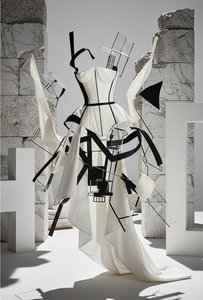
Gianfranco Ferré: Deconstructing Haute Couture – A Legacy of Architectural Form
Explore the revolutionary world of Gianfranco Ferré, 'the architect of fashion.' Discover his architectural approach to haute couture, iconic Dior designs, and lasting influence on luxury style. A deep dive for collectors & enthusiasts.
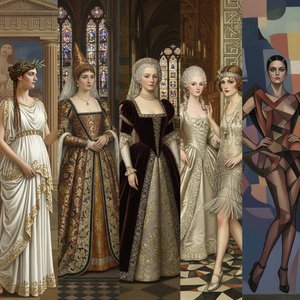
Style Through the Ages: Iconic Artworks That Defined the Evolution of Fashion Design
Explore the breathtaking intersection of fine art and high fashion. Discover how iconic masterpieces from Art Deco to Impressionism have shaped the world of luxury couture and timeless design in this curated visual journey.

Cristóbal Balenciaga: Deconstructing Haute Couture's Architectural Legacy
Explore the revolutionary world of Cristóbal Balenciaga, the 'couturier's couturier'. Discover his architectural designs, lasting influence on haute couture, and guide to collecting rare pieces. A connoisseur’s resource.
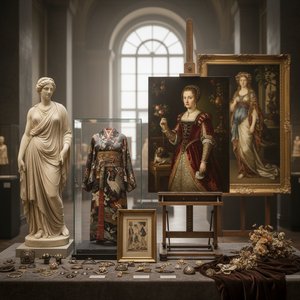
Draped Narratives: Fashion as Symbol & Subject in Historical Art
Explore the fascinating history of fashion as a symbol of power & status in art! Discover masterpieces from Gainsborough to Tissot and learn how clothing shaped societal narratives. Find museum-quality reproductions at OriginalUniqueArt.


