

 Переглянути в інтер'єрі
 Надіслати як листівку
 Поділитися
 Деталі витвору
 Посібник

 Завантажити
 Схожі екземпляри
 Рентгенівське дослідження
 Слайд-шоу
 Q&A
Q&A Статистика
Rachel Weeping


 Розгорнути текст
Гікле / Художній принт
Друк جيкле або на полотні музейної якості з оперативним виготовленням та різноманітними варіантами фінішної обробки. ( Замовити картину ручної роботи Перейти до цифрових зображень)




P118B ₴10

P118H ₴10

P118W ₴10

P438Z ₴10

P508JH ₴12

P508YH ₴12

P805H ₴10

P805Z ₴10

P919BZ ₴10

P919G ₴10

P919XJ ₴10

P959ZH ₴10

P968JZ ₴12

W106C ₴8

W218G ₴10

W218JH ₴8

W218Y ₴10

W307PJ ₴10

W316G ₴10

W316PJ ₴8

W316Y ₴10

W398PJ ₴8

W4111J ₴10

W500HY ₴15

W500JH ₴15

W692G ₴12

W849H ₴8

W940BG ₴15

W953PJ ₴8




Обирайте з наших стандартних розмірів, що відповідають оригінальним пропорціям твору мистецтва.

Введіть необхідну ширину та висоту, щоб принт ідеально підійшов до вашої рами або стіни. Принт можна лише обрізати, але не можна зробити більшим за оригінал, тому при зміні пропорцій частина зображення буде втрачена. Перед друком ми надсилаємо вам цифровий макет для затвердження. Зображення на цій сторінці не відображає реальну обрізку — її можна побачити лише на макеті.
Доставка по всьому світу () за 2 тижні замість стандартних 4/5 тижнів. (28 Жовтень)

Безкоштовна експрес-доставка по всьому світу

Високоякісне лляне полотно

Повне страхове покриття доставки

Гарантія повернення митних зборів

Гарантія точного відтворення кольорів

Політика повернення протягом 100 днів (лише у разі виявлення дефектів)

Гарантія повернення 100% коштів

Пропозиція на оптові замовлення
 Скляний варіант доступний лише для розмірів до 110 см

Rachel Weeping
Гікле / Художній принт
Розмір репродукції
-


Підсумкова вартість
₴ 3589
The Haunting Beauty of Loss
Charles Willson Peale’s “Rachel Weeping,” painted in 1772, isn't merely a portrait; it’s a visceral embodiment of sorrow, a poignant meditation on loss and the enduring bonds of family. The painting depicts Rachel Peale, Charles’s wife, mourning the death of their child – a tragedy that struck deeply within the heart of this prominent American artist and his family. Yet, despite its subject matter, “Rachel Weeping” transcends mere grief to become a powerful statement about resilience, faith, and the enduring nature of love.
Peale’s decision to immortalize this moment of profound sorrow was revolutionary for its time. Rather than shy away from depicting the raw emotion of bereavement, he embraced it with unflinching honesty. The composition immediately draws the viewer in – a woman enveloped in shadow, cradling her lifeless infant, a scene both heartbreaking and strangely dignified. It’s a stark departure from the idealized depictions of motherhood prevalent in earlier art, offering instead an intimate glimpse into the depths of human suffering.
Neoclassical Elegance Meets Emotional Intensity
Stylistically, “Rachel Weeping” masterfully blends elements of Neoclassicism with Romanticism. Peale’s training under Benjamin West, a leading figure in the British Neoclassical movement, is evident in the painting's carefully rendered details – the delicate folds of Rachel’s garments, the precise modeling of her face, and the restrained palette dominated by muted browns, grays, and creams. However, beneath this formal elegance lies an undeniable surge of emotional intensity. The use of chiaroscuro—the dramatic contrast between light and shadow—heightens the sense of drama and underscores the painting’s central theme of grief. Notice how the light gently illuminates Rachel's face, highlighting her sorrowful expression while leaving much of the background shrouded in darkness.
Peale’s technique is remarkably skillful. He employs a loose brushstroke to create a sense of movement and immediacy, capturing the raw emotion of the scene with remarkable sensitivity. The positioning of the child – nestled close to Rachel's chest, its head resting on her shoulder – speaks volumes about the profound connection between mother and child, further amplifying the painting’s emotional impact.
Symbolism and a Testament to Family
The symbolism within “Rachel Weeping” is layered and deeply resonant. The inclusion of other figures in the background—a man standing behind Rachel and another positioned further back on the right—suggests a wider family circle, emphasizing the communal nature of grief. The presence of medical bottles hints at the era’s limited understanding of illness and death, adding a layer of historical context to the scene. Most powerfully, Rachel's posture – her head bowed in sorrow, her hands clasped protectively around the child—evokes the iconography of the Madonna and Child, transforming her grief into a sacred act of mourning.
Peale’s decision to paint this image after the loss of his own children underscores the profound personal connection he felt to the subject matter. “Rachel Weeping” is not simply a portrait; it's a deeply felt expression of love, loss, and the enduring strength of the human spirit. It remains a hauntingly beautiful testament to the complexities of family life and the universal experience of grief.
A Legacy of Emotional Depth
“Rachel Weeping” holds a significant place in American art history as one of the earliest examples of a portrait confronting difficult emotions with such directness. Its emotional honesty and technical skill continue to resonate with viewers today, prompting reflection on themes of loss, family, and the enduring power of human connection. Reproductions of this iconic painting offer a powerful opportunity to experience Peale’s masterful artistry and contemplate the profound beauty that can be found even in moments of deepest sorrow.
Питання та відповіді
Як поєднуються техніка та стиль у "Rachel Weeping"?
«Rachel Weeping» роботи Чарльз Вілсон Пейл поєднує в собі техніку Олія на полотні зі стилем Neoclassical Portraiture. Техніка та художній напрям визначають спосіб створення та стилістику твору.
Яка орієнтація має «Rachel Weeping» роботи Чарльз Вілсон Пейл?
Формат твору "Rachel Weeping" — Квадрат. Це допоможе вам під час планування місця розміщення репродукції.
Як «Rachel Weeping» роботи Чарльз Вілсон Пейл пов’язує Neoclassical Portraiture з батьківщиною митця?
Твір у стилі Neoclassical Portraiture «Rachel Weeping» був створений художником, який народився в Великобританія.
Біографія митця
Charles Willson Peale: A Life of Art, Science, and Patriotism
Born April 15, 1741, Chester, Queen Anne’s County, Maryland; Died February 22, 1827, Philadelphia, Pennsylvania Charles Willson Peale stands as a singular figure in American art history—a man who seamlessly blended artistic talent with scientific curiosity and unwavering patriotism. His life was shaped by early hardship – the untimely death of his father plunged his family into financial difficulties – yet it blossomed into an extraordinary contribution to both visual culture and the burgeoning field of natural history, establishing him as one of the nation’s foremost innovators.Early Life and Artistic Training
Peale's formative years were characterized by a practical apprenticeship as a saddler, honing skills that would later inform his artistic endeavors. However, it was his encounter with John Hesselius and subsequent studies under John Singleton Copley that ignited his passion for portraiture, revealing an innate aptitude for capturing likeness accurately—a skill he would carry throughout his prolific career. Yet, perhaps the most transformative influence arrived in London during 1767-1770 when he immersed himself in the artistic currents of Europe, specifically under Benjamin West’s tutelage. This exposure to Neoclassical ideals profoundly shaped Peale's stylistic sensibilities, grounding him in a tradition that valued grandeur and intellectual rigor.Artistic Career and Major Works
Peale’s fame rests primarily upon his portraits of luminaries from the American Revolution—a staggering sixty depictions of George Washington alone. These canvases transcend mere likeness; they are meticulously crafted documents that encapsulate the spirit of the era, embodying both artistic achievement and historical significance. Peale's style evolved gracefully over time, initially mirroring West’s neoclassical aesthetic but gradually incorporating elements of realism to heighten expressive power. His magnum opus remains *The Staircase Group* (c. 1795), a breathtaking example of trompe l'oeil artistry—a technique that convincingly integrates architectural features into the painted scene, blurring the boundaries between illusion and reality and showcasing his sons Raphael and Titian as if they truly inhabited the space.Scientific Pursuits and Peale’s American Museum
Beyond his artistic accomplishments, Peale possessed an ardent devotion to natural history. Driven by a desire to advance scientific understanding, he spearheaded expeditions to document flora and fauna across America—a pioneering undertaking for its time. Recognizing the importance of disseminating knowledge, he founded Peale's American Museum in Philadelphia (1784)—one of the earliest museums on US soil. This institution housed an astonishing array of specimens—botanical illustrations alongside animal skeletons, fossils, and archaeological artifacts—serving as a beacon of enlightenment and fostering intellectual curiosity within the young republic. Notably, his acquisition of mastodon bones from Wyoming cemented his reputation as a visionary scientist and solidified the museum’s place in American cultural heritage.Legacy and Historical Significance
Charles Willson Peale's legacy extends far beyond his artistic output; he represents a pivotal figure in shaping America’s intellectual landscape. His work embodies the spirit of the Enlightenment—a commitment to observation, reason, and artistic excellence—influencing subsequent generations of artists and scientists alike. The enduring impact of Peale’s portraits is undeniable, providing invaluable visual records of pivotal moments in American history. Furthermore, his founding of Peale's American Museum stands as a testament to his unwavering belief in the transformative power of education and scientific exploration—a conviction that continues to resonate today. His family lineage continued through his sons James Peale and Rubens Peale, who themselves pursued artistic careers and enriched the museum’s collection with their own contributions, ensuring that Peale's vision endured for centuries to come.
Чарльз Вілсон Пейл
1741 - 1827 , Великобританія
Короткі факти
- Artistic Movement Or Style: Ніокласицизм
- Artists Who Influenced This Artist:
- Джон Хесселіус
- Джон Сінґглтон Кроулі
- Бенджамін Вест
- Date Of Birth: 15 квітня 1741 р.
- Date Of Death: 22 лютого 1827 р.
- Full Name: Charles Willson Peale
- Nationality: Американський
- Notable Artworks:
- Ступінчаста група
- Портрети Джорджа Вашингтона
- Place Of Birth: Честер, Великобританія
Пов'язані статті

Titian Ramsay Peale II: A Legacy of Botanical Precision & Artistic Innovation
Explore the life & art of Titian Ramsay Peale II, a master of botanical precision and wildlife painting. Discover his legacy bridging art & natural history at OriginalUniqueArt.

Echoes of Loss: Exploring Representations of Grief Across Art History
Explore the profound history of grief in art, from Renaissance masterpieces to Baroque drama. Discover how artists captured loss, mourning & faith through powerful imagery. Expert insights at OriginalUniqueArt.

Echoes of Absence: Loss & Grief in Visual Art Through the Ages
Explore the profound history of grief in art, from Renaissance masterpieces to contemporary expressions. Discover how artists have captured loss, mourning, and mortality through powerful imagery & symbolism. OriginalUniqueArt offers expert insights.

Charles Willson Peale: Portraiture, Enlightenment Ideals & Shaping American Identity
Explore the life & art of Charles Willson Peale – Revolutionary portraitist, scientist, and founder of America’s first museum. Discover his iconic paintings of Washington & the Enlightenment ideals that shaped a nation.
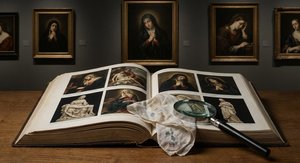
The Visceral Language of Loss: Exploring Grief's Depiction in Art History
Explore the profound history of grief in art with OriginalUniqueArt. Discover Renaissance & Baroque masterpieces depicting loss, mourning, and faith. Expert insights & handmade reproductions available.

