

 Переглянути в інтер'єрі
 Надіслати як листівку
 Поділитися
 Деталі витвору
 Посібник

 Завантажити
 Схожі екземпляри
 Рентгенівське дослідження
 Слайд-шоу
 Статистика
Spring Maiden


 Розгорнути текст
Олійная репродукція ручної роботи
Написана вручну олією на полотні у вашому розмірі та рамі, виготовлена на замовлення нашими художниками. ( Перейти до друку Перейти до цифрових зображень)




P118B ₴10

P118H ₴10

P118W ₴10

P438Z ₴10

P508JH ₴12

P508YH ₴12

P805H ₴10

P805Z ₴10

P919BZ ₴10

P919G ₴10

P919XJ ₴10

P959ZH ₴10

P968JZ ₴12

W106C ₴8

W218G ₴10

W218JH ₴8

W218Y ₴10

W307PJ ₴10

W316G ₴10

W316PJ ₴8

W316Y ₴10

W398PJ ₴8

W4111J ₴10

W500HY ₴15

W500JH ₴15

W692G ₴12

W849H ₴8

W940BG ₴15

W953PJ ₴8




Обирайте з наших стандартних розмірів, що відповідають оригінальним пропорціям твору мистецтва.

Введіть необхідну ширину та висоту, щоб картина підійшла до вашої рами або стіни. Оскільки це ручний розпис, для зміни пропорцій художник може дописати трохи більше по краях або дещо обрізати композицію — вибір за вами. Перед початком роботи ми надішлемо вам цифровий макет для затвердження. Зображення, показане на цій сторінці, не є реальним результатом — лише макет відображає майбутній вигляд.
Після оформлення замовлення команда OriginalUniqueArt.com зв'яжеться з клієнтом електронною поштою для отримання інструкцій та надасть попередній макет
Доставка по всьому світу () за 3–4 тижні замість стандартних 5 тижнів. (28 Жовтень). Без жодних компромісів у якості.

Безкоштовна експрес-доставка по всьому світу

Високоякісне лляне полотно

Повне страхове покриття доставки

Гарантія повернення митних зборів

Гарантія точного відтворення кольорів

Політика повернення протягом 100 днів (лише у разі виявлення дефектів)

Гарантія повернення 100% коштів

Пропозиція на оптові замовлення
 Скляний варіант доступний лише для розмірів до 110 см

Spring Maiden
Матеріал репродукції
Розмір репродукції
-


Підсумкова вартість
₴ 13446
Spring Maiden: A Portrait of Transient Beauty
Charles Webster Hawthorne’s “Spring Maiden,” painted in 1925, isn't merely a depiction of a young woman; it’s a carefully constructed meditation on the fleeting nature of youth and the poignant beauty found within moments of quiet contemplation. This oil-on-canvas work, currently residing at the High Museum of Art in Atlanta, exemplifies Hawthorne’s signature Luminist style – a deliberate rejection of dramatic lighting and bold brushstrokes in favor of subtle tonal gradations and an emphasis on capturing the ephemeral quality of light and atmosphere. The painting immediately draws the viewer in with its muted palette dominated by earthy browns, soft greens, and delicate creams, creating a sense of serene stillness that belies the emotional depth at its core.
Hawthorne’s technique is remarkably restrained, yet profoundly effective. He employs a layering approach, building up color slowly to achieve a velvety texture and an almost photographic realism. Notice how he renders the fabric of her dress – not with sharp outlines but with delicate washes of color that suggest both its weight and its fluidity. The loose brushwork in the background, particularly around the suggestion of trees and foliage, contributes to the painting’s overall sense of atmospheric depth, pulling the viewer into a dreamlike state. Hawthorne's training under William Merritt Chase is evident in his masterful use of light and shadow, creating an illusion of three-dimensionality that elevates the portrait beyond a simple likeness.
The Luminist Influence and New England Roots
To fully appreciate “Spring Maiden,” it’s crucial to understand Hawthorne's artistic lineage. He was deeply influenced by the Luminist movement, which originated in post-Civil War America and sought to capture the quiet beauty of everyday life – particularly landscapes bathed in soft light. This movement rejected the grand narratives and dramatic scenes favored by earlier generations of American painters, instead focusing on capturing the subtle nuances of nature and human experience. Hawthorne’s upbringing in Maine, steeped in the traditions of shipbuilding and ice farming—his father a captain—provided him with an intimate connection to the rugged coastline and its ever-changing light, themes that would permeate his work throughout his career.
Born in Lodi, Illinois, in 1872, Hawthorne’s early years were far removed from the coastal landscapes he would later immortalize. However, a return to Maine as a child profoundly shaped his artistic vision. This connection to the sea—its power, its beauty, and its inherent melancholy—became a recurring motif in his paintings, informing both subject matter and aesthetic sensibility. His work is often described as embodying the spirit of New England, capturing not just the physical landscape but also the emotional resonance of its history and culture.
Symbolism and the Portrait’s Essence
The young woman depicted in “Spring Maiden” possesses an enigmatic quality that invites interpretation. Her slightly downturned gaze suggests a pensive mood—a moment of introspection amidst the beauty of springtime. The white flower she holds, likely a lily or similar bloom, symbolizes purity, innocence, and new beginnings – fitting themes for a portrait celebrating youth and renewal. Hawthorne’s careful attention to detail extends beyond mere representation; he imbues the painting with a sense of quiet dignity and understated grace.
The composition itself is carefully balanced, drawing the eye to the woman's face while simultaneously creating a sense of spaciousness around her. The muted colors and soft lighting contribute to this feeling of tranquility, suggesting a moment suspended in time—a fleeting glimpse of beauty that will inevitably fade with the passage of seasons. It’s a portrait not just of a young woman, but of an entire mood, a captured essence of springtime itself.
A Legacy of Light and Observation
Charles Webster Hawthorne's “Spring Maiden” stands as a testament to his skill as a painter and his deep understanding of the Luminist aesthetic. His dedication to capturing light and atmosphere, combined with his masterful technique and evocative symbolism, has secured its place as a significant work in American art history. The painting’s enduring appeal lies not only in its technical brilliance but also in its ability to evoke a sense of quiet contemplation and appreciation for the beauty of the natural world – qualities that continue to resonate with viewers today. Reproductions of this piece offer a wonderful opportunity to bring Hawthorne's evocative style into any space, capturing the spirit of New England’s coastal landscapes and the poignant beauty of fleeting moments.
Питання та відповіді
Наскільки насиченими є кольори у творі "Spring Maiden"?
Кольори твору «Spring Maiden» роботи Чарльз Вебстер Хоуторн вирізняються Subtle Color насиченістю та Monochromatic інтенсивністю.
Які сюжети зображені у «Spring Maiden» роботи Чарльз Вебстер Хоуторн?
Тематика, представлена у «Spring Maiden» роботи Чарльз Вебстер Хоуторн, включає new england, coastline, landscape, figure, painting, hawthorne, 1925. Разом вони підсумовують зміст твору.
До якого етапу кар'єри Чарльз Вебстер Хоуторн належить «Spring Maiden», враховуючи дату її створення?
Дата 1925 дозволяє віднести «Spring Maiden» до Mature Period творчого розвитку Чарльз Вебстер Хоуторн.
Біографія митця
A Luminist of the New England Coast
Charles Webster Hawthorne, born in Lodi, Illinois, on January 8th, 1872, stands as a truly pivotal figure in American art—a beacon illuminating the transition and burgeoning national identity of the early 20th century. While his formative years unfolded amidst the rolling fields of inland America, it was the rugged, windswept coastline of Maine—to which his parents relocated shortly after his birth—that irrevocably shaped his artistic vision. This profound connection to the sea, instilled through childhood experiences with his father’s profession as a ship captain and ice farmer, became an enduring motif throughout his career, deeply informing both the subject matter he chose to depict and the very aesthetic sensibility that defined his work. Hawthorne's journey toward becoming a celebrated portraitist and genre painter was one of unwavering dedication—a commitment to meticulously capturing the essence of light, form, and the human spirit, coupled with an innovative approach to art education that would leave an indelible mark on American painting for generations to come. Initially pursuing formal training in New York City, he skillfully balanced the demands of a modest office job with evening classes at the prestigious Art Students League under the tutelage of George de Forest Brush and H. Siddons Mowbray, followed by invaluable studies at the National Academy of Design. Crucially, his exposure to William Merritt Chase—first as a student and later as an assistant at Shinnecock Hills—proved transformative, instilling in him a deep appreciation for *plein air* painting and recognizing the expressive potential inherent within the bold application of brushwork. These formative experiences laid the foundation for Hawthorne’s distinctive style – characterized by its robust handling of paint, luminous tonal qualities, and a remarkable ability to evoke both atmosphere and emotion.The Cape Cod School and a Philosophy of Painting
Hawthorne's influence extended far beyond his own canvases; he was also an exceptionally influential teacher, driven by a profound desire to nurture genuine artistic vision in those who sought his guidance. Recognizing a critical need for a dedicated space where artists could immerse themselves fully in the direct observation of nature—a vital component often lacking in traditional academic settings—he established the Cape Cod School of Art in Provincetown, Massachusetts, in 1899. This institution quickly evolved into more than just an art school; it became a vibrant hub for aspiring painters from across the country – a haven where they could escape the constraints of formal training and pursue their artistic passions with newfound freedom. Hawthorne’s pedagogical approach was remarkably unconventional yet profoundly effective. He eschewed rigid techniques, instead focusing on fostering individual vision through rigorous observation, experimentation, and a deep engagement with the natural world. He famously urged his students to “go out like a savage,” embracing an uninhibited approach to painting—stripping away preconceived notions and allowing the immediacy of experience to guide their hand. This philosophy resonated deeply with many artists, attracting those seeking a more authentic and expressive path to artistic creation. Among his most notable pupils was Norman Rockwell, who spent a formative summer studying under Hawthorne, absorbing lessons that would later profoundly influence his iconic American scenes. Bertha Noyes, another prominent student, went on to become a significant figure in the Washington D.C. artistic community, further spreading Hawthorne’s innovative approach. The Cape Cod School of Art flourished under Hawthorne's guidance for over three decades, leaving an enduring legacy not only within the art world but also as a catalyst for a new generation of American painters.Capturing Light and Life: Themes and Techniques
Hawthorne’s paintings are immediately recognizable for their vibrant color palettes and masterful handling of light – a hallmark of *luminism*. He frequently depicted scenes from the seaside around Provincetown, Massachusetts, portraying fishermen, families, and everyday life with an extraordinary sensitivity to atmosphere and character. His portraits, in particular, stand out for their psychological depth and expressive brushwork; he wasn’t simply interested in capturing likeness but rather sought to convey the inner essence of his subjects – their personalities, their stories, and their connection to the world around them. He achieved this through meticulous observation of light and shadow, skillfully utilizing tonal variations to model form and create a palpable sense of volume. His technique often involved applying paint with broad, confident strokes—allowing the texture of the canvas itself to contribute significantly to the overall effect. This approach, deeply influenced by both William Merritt Chase’s Munich School training and the legacy of Dutch masters like Frans Hals, resulted in paintings that are simultaneously realistic and profoundly painterly – imbued with a sense of immediacy and vitality. Hawthorne's work also reflects an interest in *genre* painting—depicting scenes of everyday life with a keen eye for detail and social commentary. He found beauty in the ordinary, elevating humble subjects to the level of art through his skillful execution and empathetic portrayal. His First Voyage, for example, captures a poignant moment of youthful potential, while works like *The Red Dress* demonstrate his ability to imbue even seemingly simple compositions with emotional resonance.Influences and Artistic Development
Hawthorne’s artistic development was shaped by a confluence of influences—each contributing to the unique character of his work. His early training at the Art Students League in New York City exposed him to the techniques of George de Forest Brush and H. Siddons Mowbray, providing him with a solid foundation in traditional academic painting. However, it was his time as an assistant to William Merritt Chase at Shinnecock Hills that proved to be truly transformative. Chase’s emphasis on *plein air* painting—working directly from nature—and his innovative use of tonal values profoundly influenced Hawthorne's approach to color and composition. Furthermore, Hawthorne’s travels through Europe, particularly his visit to Holland, exposed him to the works of Old Masters such as Titian and Rembrandt, inspiring him to emulate their masterful use of light and shadow. He was deeply moved by Frans Hals’s loose brushwork and vibrant colors, which he incorporated into his own style. Even Hawthorne's early work shows a clear debt to Chase, with its bold brushstrokes and emphasis on capturing the effects of light. The influence of these diverse sources—combined with his own innate talent and unwavering dedication—resulted in an artistic voice that was both uniquely his own and deeply rooted in American tradition.Legacy and Enduring Influence
Charles Webster Hawthorne passed away in Baltimore, Maryland, on November 29th, 1930, leaving behind a rich artistic legacy that continues to resonate today. His wife, Marion Campbell Hawthorne, played a crucial role in preserving his work and ideas by meticulously collecting and publishing his writings in the influential book *Hawthorne on Painting* in 1938 – offering invaluable insights into his artistic philosophy and teaching methods. His works are now held in prestigious collections across the United States, including the Art Institute of Chicago, the Metropolitan Museum of Art in New York, and the Smithsonian American Art Museum in Washington D.C., ensuring their accessibility to future generations. Hawthorne’s influence can be seen in the work of countless artists who followed him—particularly those associated with the Cape Cod School of Art and the broader American Impressionist movement. He remains a celebrated figure for his luminous paintings, masterful use of oil paint, and enduring commitment to artistic education – a testament to his belief that art should be rooted in direct observation, personal expression, and a deep connection to the natural world.- Born: January 8, 1872, Lodi, Illinois
- Founded Cape Cod School of Art: 1899
- Died: November 29, 1930, Baltimore, Maryland

Чарльз Вебстер Хоуторн
1872 - 1930 , США
Короткі факти
- Artistic Movement Or Style: Імппресіонізм, Лумінізм
- Artists Or Movements Influenced By This Artist: ['Норман Роквелл']
- Artists Who Influenced This Artist: ['Вільям Мерріт Чейз']
- Date Of Birth: 8 січня 1872
- Date Of Death: 29 листопада 1930
- Full Name: Charles Webster Hawthorne
- Nationality: Американський
- Notable Artworks:
- Перше плавання
- Червоне плаття
- Place Of Birth: Ллоді, США
Пов'язані статті

Alfred Thompson Bricher: Luminism & the American Landscape Tradition
Explore the luminous landscapes of Alfred Thompson Bricher (1837-1908), a key figure in American Luminism and the Hudson River School. Discover his masterful maritime paintings & legacy.

Grahame Sydney: Evoking Otago's Soul Through Light & Landscape
Explore the captivating landscapes of Sir Grahame Sydney, a leading New Zealand artist renowned for his magic realism & evocative depictions of Otago's beauty. Discover key works and delve into his artistic legacy.
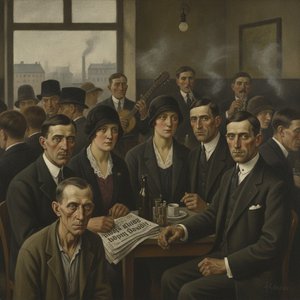
Neue Sachlichkeit: The Unflinching Realism and Social Critique of German New Objectivity
Explore the raw realism of Neue Sachlichkeit. Discover how German New Objectivity artists like Otto Dix and George Grosz captured the turbulent Weimar Republic through unflinching social critique and precise detail. A definitive guide for art historians and collectors.

Willard Leroy Metcalf: Capturing the Intimacy of American Rural Life
Explore the serene landscapes of Willard Leroy Metcalf, a key figure in American Impressionism. Discover his tranquil New England scenes & vibrant art reproductions at OriginalUniqueArt.

The Ashcan School: Capturing the Raw Spirit and Urban Realism of New York City Life
Explore the raw, evocative beauty of the Ashcan School. Discover how masters like Bellows and Glackens captured New York's urban soul through American Realism, and learn to bring this gritty, historical elegance into your modern art collection.
