

 Переглянути в інтер'єрі
 Надіслати як листівку
 Поділитися
 Детальніше

 Завантажити
 Схожі експонати
 Рентгенівське дослідження
 Слайд-шоу
Whistle Boy
 1896
1896 30.0 x 22.0 cm
 National Gallery of Bulgaria
 Читати далі
Гікле / Художній принт
Музейна якість друку جيкле або на полотні з оперативним виготовленням та різноманітними варіантами фінішної обробки. ( Замовити репродукцію ручної роботи Купити цифрове зображення)




































Обирайте з наших стандартних розмірів, що відповідають оригінальним пропорціям твору мистецтва.

Ви можете вказати власні розміри, щоб репродукція ідеально підійшла до конкретної рами або інтер'єру. Якщо обраний вами розмір не відповідає пропорціям оригіналу, ми або обріжемо полотно, або розширимо зображення за допомогою дзеркального відображення чи суцільної заливки країв. Перед початком виробництва вам буде надіслано цифровий макет для затвердження.
Будь ласка, зверніть увагу, що попередній перегляд на екрані не відображає фактичне обрізання або розширення. Тільки макет точно покаже фінальну композицію.
Хоча можливість замовлення індивідуальних розмірів доступна, ми рекомендуємо обирати формат із попередньо визначеного списку, щоб зберегти оригінальні пропорції.
Доставка по всьому світу () за 2 тижні замість стандартних 4/5 тижнів. (19 Серпень)

Безкоштовна експрес-доставка по всьому світу

Високоякісне лляне полотно

Повне страхове покриття доставки

Гарантія відшкодування митних зборів

Гарантія точного відтворення кольорів

Політика повернення протягом 60 днів (лише у разі виявлення дефектів)

Гарантія повернення 100% коштів

Пропозиція на оптові замовлення
 Скляний варіант доступний лише для розмірів до 110 см

Whistle Boy
Гікле / Художній принт
Розмір репродукції
-


Підсумкова вартість
$ 80
Опис експоната
Біографія митця
The Architect of a National Soul
Boris Schatz stands as a monumental figure in the genesis of Israeli art, recognized globally for his pioneering contributions to sculpture and painting—particularly his unwavering dedication to embodying Jewish identity through artistic expression. Born in 1867 in Varniai, Lithuania, Schatz’s journey began amidst the turbulent backdrop of late 19th-century Eastern European Jewry, a landscape that shaped his worldview and fueled his lifelong artistic ambition. His early years were steeped in the traditions of the Russian Empire, where he initially pursued formal training at the Saint Petersburg Academy of Arts, honing his skills in both painting and sculpture before embarking on a transformative relocation to Paris in 1895.
This Parisian sojourn proved crucial; Schatz found mentorship under the esteemed sculptor Fernand Cormon and embraced the stylistic innovations championed by Mark Antokolski, absorbing influences that would permeate his subsequent oeuvre. It was during this era of European refinement that his talent gained considerable acclaim, culminating in an invitation from Prince Ferdinand to Bulgaria. In Sofia, he established himself as a professor at the National Academy of Arts, a position that allowed him to nurture emerging artistic talent and solidify his commitment to fostering Bulgarian art, even as his heart remained tethered to the burgeoning Zionist movement.
A Vision Carved in Stone and Spirit
Schatz's most enduring legacy resides in the establishment of the Bezalel School of Art in Jerusalem in 1906, an institution that swiftly became synonymous with Zionist ideals and served as a crucible for shaping the visual arts landscape of nascent Israel. Unlike many artists of his time who focused on purely aesthetic pursuits, Schatz deliberately sought to depict Jewish life and traditions with unflinching realism—a conscious decision rooted in his belief that art could serve as a powerful tool for cultural preservation and national identity formation. His work was never merely decorative; it was an act of reclamation.
His sculptural works, characterized by their profound emotional depth and meticulous detail, sought to capture the very essence of a people. Through his hands, biblical figures and everyday Jewish archetypes were given physical form, imbuing them with a solemn dignity that resonated with a displaced population seeking roots. His approach was deeply influenced by several key elements:
- The Weight of Tradition: Integrating motifs from ancient Hebrew history into modern sculptural forms.
- Realism as Truth: Utilizing detailed anatomical and textural accuracy to ground spiritual themes in the physical world.
- Cultural Synthesis: Blending the academic rigor of the Russian and French academies with the local aesthetics of the Levant.
Legacy of the Bezalel Movement
The impact of Boris Schatz extends far beyond his individual masterpieces. By founding the Bezalel School, he created a sanctuary for craftsmanship where Jewish motifs—ranging from calligraphy to metalwork—could be revitalized. While the movement eventually waned in the 1920s following the introduction of modernism in Israel, the foundation Schatz laid remained unshakable. His personal collection, which included significant works by masters such as Jozef Israëls, eventually became a vital nucleus for what would become the Israel Museum.
Even today, the name Schatz is synonymous with the very birth of a national aesthetic. He did not merely observe history; he sculpted it, leaving behind a visual language that allowed a nation to see itself reflected in the permanence of bronze and the grace of oil on canvas. His life remains a testament to the idea that art is not just a reflection of reality, but a vital force in the construction of identity.
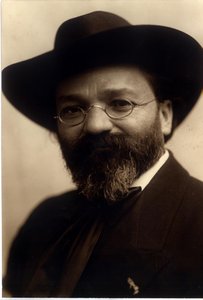
boris schatz
1867 - 1932 , Lithuania
Короткі факти
- Artistic Movement Or Style: Academic Realism
- Artists Or Movements Influenced By This Artist: ['Zionism']
- Artists Who Influenced This Artist:
- Mark Antokolski
- Fernand Cormon
- Date Of Birth: December 23, 1867
- Date Of Death: March 23, 1932
- Full Name: Boris Schatz (בוריס שלמה ברוך שץ)
- Nationality: Lithuanian-born Russian Jewish
- Notable Artworks:
- Whistle Boy
- Portrait of Elena Tantilova
- Place Of Birth: Varniai, Lithuania

