

 Переглянути в інтер'єрі
 Надіслати
 Поділитися
 Деталі
 Посібник

 Завантажити
 Схожі предмети колекціонування
 Рентгенівське дослідження
 Слайд-шоу
 Статистика переглядів
LE SILENCE


 Читати далі
Гікле / Художній принт
Музейна якість друку جيкле або на полотні з оперативним виготовленням та різноманітними варіантами фінішної обробки. ( Купити картину ручної роботи Перейти до цифрових зображень)




P118B ₴10

P118H ₴10

P118W ₴10

P438Z ₴10

P508JH ₴12

P508YH ₴12

P805H ₴10

P805Z ₴10

P919BZ ₴10

P919G ₴10

P919XJ ₴10

P959ZH ₴10

P968JZ ₴12

W106C ₴8

W218G ₴10

W218JH ₴8

W218Y ₴10

W307PJ ₴10

W316G ₴10

W316PJ ₴8

W316Y ₴10

W398PJ ₴8

W4111J ₴10

W500HY ₴15

W500JH ₴15

W692G ₴12

W849H ₴8

W940BG ₴15

W953PJ ₴8




Обирайте з наших стандартних розмірів, що відповідають оригінальним пропорціям твору мистецтва.

Ви можете вказати власні розміри, щоб репродукція ідеально підійшла до конкретної рами або інтер'єру. Якщо обраний вами розмір не відповідає пропорціям оригіналу, ми або обріжемо полотно, або розширимо зображення за допомогою дзеркального відображення чи суцільної заливки країв. Перед початком виробництва вам буде надіслано цифровий макет для затвердження.
Будь ласка, зверніть увагу, що попередній перегляд на екрані не відображає фактичне обрізання або розширення. Тільки макет точно покаже фінальну композицію.
Хоча можливість замовлення індивідуальних розмірів доступна, ми рекомендуємо обирати формат із попередньо визначеного списку, щоб зберегти оригінальні пропорції.
Доставка по всьому світу () за 2 тижні замість стандартних 4/5 тижнів. (11 Жовтень)

Безкоштовна експрес-доставка по всьому світу

Високоякісне лляне полотно

Повне страхове покриття доставки

Гарантія повернення митних зборів

Гарантія точного відтворення кольорів

Політика повернення протягом 100 днів (лише у разі виявлення дефектів)

Гарантія повернення 100% коштів

Знижка на оптові замовлення
 Скляний варіант доступний лише для розмірів до 110 см

LE SILENCE
Гікле / Художній принт
Розмір репродукції
-


Загальна вартість
₴ 3566
Le Silence: A Renaissance Portrait of Introspection
Bernardino Luini’s “Le Silence” is not merely a portrait; it's an invitation into the quietude of the human spirit, a remarkably evocative work that speaks volumes through its deliberate restraint. Painted in Milan around 1527-1530, during the twilight years of his prolific career, this piece embodies Luini’s signature style – a graceful blend of Renaissance idealism and a subtly melancholic realism. It's a painting that whispers rather than shouts, inviting prolonged contemplation and revealing layers of meaning with each careful observation.
The subject is a young woman, likely depicted in the guise of a noblewoman or perhaps a pious lady of the court. Her pose—a gentle inclination of her head, a delicate hand resting lightly upon her lips—immediately establishes an atmosphere of profound stillness. The cropped composition, focusing intently on her face and upper torso, draws the viewer into this intimate space of introspection. Luini masterfully employs soft, diffused lighting, casting subtle shadows that enhance the contours of her features without resorting to dramatic contrasts. This deliberate lack of harshness contributes significantly to the painting’s overall sense of serenity.
The Language of Restraint: Technique and Materials
Luini's technique is characterized by a remarkable mastery of *sfumato*, a subtle blurring of edges that creates an almost dreamlike quality. He achieves this through meticulous layering of thin, translucent glazes of oil paint—a hallmark of his approach. The colors are muted and earthy – warm beiges, browns, and reddish hues dominate the palette, creating a sense of timelessness and understated elegance. There’s no flamboyant display of color here; instead, Luini utilizes a restrained range to amplify the painting's emotional impact.
The use of lines is equally deliberate. They are soft and blended, avoiding sharp outlines that would disrupt the overall feeling of tranquility. The head covering—a triangular shape—adds a touch of visual interest while remaining perfectly integrated within the composition’s harmonious flow. The surface texture suggests a smooth, almost polished quality, achieved through careful blending and manipulation of the paint – an impression of refined elegance and quiet dignity.
Symbolism and Emotional Resonance
The title itself, “Le Silence,” is profoundly symbolic. It immediately establishes the painting’s central theme: introspection, discretion, and perhaps even a plea for quietude. The woman's gesture—placing her finger to her lips—is universally understood as a symbol of secrecy or silence, reinforcing this thematic core. Luini doesn’t explicitly state these meanings; he trusts the viewer to interpret them through careful observation and emotional response.
Beyond the immediate symbolism, “Le Silence” evokes a broader sense of melancholy and contemplation. It's reminiscent of Leonardo da Vinci’s *sfumato* technique, which similarly creates an atmosphere of ambiguity and mystery. The painting invites us to consider the inner life of the subject—her thoughts, her feelings, her unspoken desires. It’s a portrait that transcends mere likeness, offering instead a glimpse into the soul.
A Legacy of Grace: Historical Context
Bernardino Luini was a pivotal figure in the artistic landscape of Renaissance Milan, deeply influenced by Leonardo da Vinci. His work represents a unique synthesis of classical ideals and northern European sensibilities. Luini’s style is often described as “Luinesque,” characterized by its graceful figures, elongated eyes, and subtle emotional depth. He worked primarily for religious institutions and private patrons, producing a vast body of paintings that continue to captivate viewers today.
“Le Silence” stands as one of Luini’s most poignant achievements—a testament to his artistic skill and profound understanding of the human condition. It's a painting that rewards careful study and invites repeated contemplation, offering a timeless meditation on beauty, silence, and the mysteries of the inner world.
Запитання та відповіді
Які сюжети зображені у «LE SILENCE» Бернардино Луїні?
Сюжетами твору "LE SILENCE" є portrait, renaissance, silence, woman, contemplation, graceful, italian, fresco.
Яка орієнтація має «LE SILENCE» Бернардино Луїні?
«LE SILENCE» Бернардино Луїні має формат Portrait. Формат описує пропорції композиції.
Де я можу купити принт «LE SILENCE» Бернардино Луїні?
«LE SILENCE» доступний як художній принт на бавовняному полотні або архівному канвас-папері. Замовлення можна оформити на ця сторінка у будь-якому зручному для вас розмірі.
Де я можу купити цифрове зображення «LE SILENCE» Бернардино Луїні?
Цифрове зображення твору «LE SILENCE» Бернардино Луїні можна придбати на сторінці замовлення ця сторінка: завантаження цифрового зображення високої роздільної здатності.
Яким видом мистецтва є «LE SILENCE»?
«LE SILENCE» — це твір у техніці WallArt.
Хто продає написані вручну копії «LE SILENCE» Бернардино Луїні?
Ви можете замовити написану вручну репродукцію твору «LE SILENCE» Бернардино Луїні безпосередньо на ця сторінка: репродукція олією ручного розпису на лляному полотні, що виготовляється під замовлення.
Хто створив "LE SILENCE"?
Автором твору «LE SILENCE» є Бернардино Луїні. Робота внесена до каталогу під іменем Бернардино Луїні.
Біографія митця
A Lombard Luminary: The Life and Art of Bernardino Luini
Bernardino Luini, a name that whispers softly through the halls of Italian Renaissance art, emerged from the serene landscapes surrounding Lake Maggiore around 1480. Born in Runo, a small village nestled within the hills near Dumenza, his early life remains shrouded in a gentle mist of mystery – details scarce and often debated by scholars. Yet, it’s clear that fate guided him towards Milan, the vibrant heart of northern Italy, where he would spend much of his artistic life, absorbing the creative energy of one of Europe's most influential cities. By 1500, he had firmly established himself within Milanese society, poised to embrace the burgeoning artistic currents and become a significant figure in the region’s cultural landscape. While precise accounts of his initial training remain elusive – some credit Giovan Stefano Scotto, others Ambrogio Bergognone – a far more profound influence was undoubtedly on the horizon: Leonardo da Vinci. The nature of their relationship is a subject of ongoing discussion amongst art historians, but it's widely believed that Luini spent several formative years working directly under the master, an apprenticeship that profoundly shaped his artistic vision and technique. This wasn’t merely a matter of imitation; it was an immersion into Da Vinci’s world – a realm of subtle observation, innovative composition, and the elusive quality known as *sfumato*, which Luini would skillfully integrate into his own distinctive style.The Shadow of Leonardo: Influence and Artistic Development
Luini's artistic development wasn't defined by a wholesale replication of Da Vinci’s methods; rather, it was a sensitive assimilation of the master’s techniques filtered through the lens of his own Lombard sensibility. He didn’t strive to capture Da Vinci’s intellectual rigor or anatomical precision with the same meticulous detail, but he did embrace the softer, more lyrical aspects of the Florentine artist's style. This is particularly evident in his depictions of women – figures often described as “Luinesque” by the discerning eye of Vladimir Nabokov. These captivating portraits possess a unique quality: elongated eyes that seem to hold a profound depth of emotion, and a gentle melancholy that invites contemplation. Early works like *The Adoration of the Magi* (c. 1505), painted for San Pietro in Luino, already hint at this emerging style – showcasing a delicate handling of light and shadow, a masterful use of perspective, and a growing sense of spatial depth. The frescoes he created for the presbytery of Monza Cathedral, attributed to him, further demonstrate his evolving artistic voice. It’s important to note that Luini's work wasn’t solely defined by direct imitation; he absorbed elements from other artists as well, including Bernardino Zenale, whose influence can be seen in works like *St. Anthony of Padua* (c. 1510s). This synthesis of influences – Leonardo, Zenale, and others – contributed to the richness and complexity of Luini’s artistic style.Frescoes for Churches and Palaces: A Flourishing Career
The decades following his arrival in Milan witnessed a period of intense creative activity for Bernardino Luini. He wasn't confined to religious subjects; his talents were sought after for secular commissions as well, reflecting the breadth of his artistic skill and versatility. The frescoes he created between 1509 and 1514 for Villa Pelucca in Sesto San Giovanni stand as a testament to this adaptability – depicting mythological scenes with a refined elegance that graced the walls of this aristocratic residence. These works, now housed in Milan’s Pinacoteca di Brera, reveal a painter equally adept at capturing the dynamism of classical narratives and the intimate beauty of human form. He continued to receive prestigious commissions throughout Lombardy, adorning churches and palaces with his distinctive style – from the Oratory of Santa Maria Nuova in Pilastrello to the Certosa di Pavia. Luini’s ability to imbue even grand-scale frescoes with an air of intimacy and emotional resonance cemented his position as one of the most sought-after artists of his time, a master capable of transforming architectural spaces into immersive works of art.The Influence of Raphael: A Shift in Style
As Luini's career progressed, he began to incorporate elements of the style of Raphael, who was working in Rome during this period. This influence is particularly evident in the frescoes he painted between 1520 and 1523 for Villa Pelucca, as well as in other works now at the Brera. The shift towards a more balanced composition, clearer lines, and a greater emphasis on clarity of form reflects Luini’s engagement with the artistic trends emerging from the papal center. This period marked a subtle but significant evolution in his style, demonstrating his willingness to adapt and incorporate new influences while retaining his own unique voice.Legacy and Enduring Appeal
Bernardino Luini passed away in Milan in June 1532, leaving behind a legacy that extended far beyond his own lifetime. His son, Aurelio, followed in his footsteps, continuing the family’s artistic tradition – though he never achieved the same level of recognition as his father. However, Bernardino Luini remains one of the most celebrated figures of Lombard Renaissance painting, remembered for his graceful figures, delicate *sfumato*, and the uniquely captivating quality of his “Luinesque” women. His works continue to enchant viewers with their beauty, grace, and enduring emotional power – offering a poignant glimpse into the artistic sensibilities of a bygone era. His paintings are now treasured in museums across Italy, particularly the Pinacoteca di Brera in Milan, where they stand as a testament to his extraordinary talent and lasting contribution to the art world.
Бернардино Луїні
1480 - 1532 , Італія
Довідкова інформація
- Artistic Movement Or Style: Ренесанс, Маньєризм
- Artists Or Movements Influenced By This Artist: ['Стиль Луінеск']
- Artists Who Influenced This Artist: ['Леонардо да Вінчі']
- Date Of Birth: c. 1480-1482
- Date Of Death: 1532
- Full Name: Bernardino Luini
- Nationality: Італійський
- Notable Artworks:
- Поклоніння волхвами
- Святий Антоній Падревський
- Фрески Вілли Пелуцца
- Place Of Birth: Реньо, Італія
Схожі статті
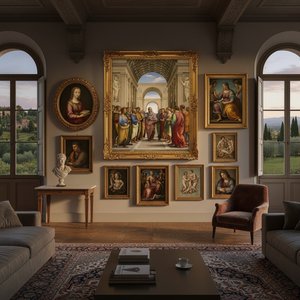
Рафаель: 25 шедеврів епохи Відродження для вашого дому | OriginalUniqueArt
Відкрийте 25 найвідоміших шедеврів Рафаеля! Історія мистецтва Відродження, техніки живопису та неймовірні історії кожної картини. Купуйте репродукції картин Рафаеля для вашого дому на OriginalUniqueArt.com.

The Subdued Palette: Exploring Emotional Resonance & Aesthetic Impact in Muted Artworks
Explore the power of muted colors in art! Discover the history, psychology & techniques behind serene palettes. Find inspiration & expert advice for creating emotionally resonant spaces with OriginalUniqueArt.
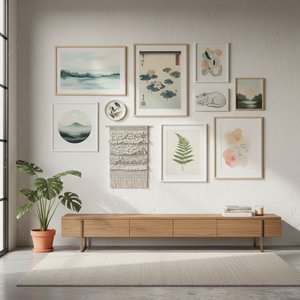
Топ-10 творів мистецтва для спокійного інтер'єру: картини та художники, що дарують безтурботність | OriginalUniqueArt.com
Відчуйте спокій та гармонію з топ-10 шедеврами живопису! Дізнайтесь історії Клода Моне, Ван Гога та інших художників. Купіть репродукції картин для створення затишного інтер'єру на OriginalUniqueArt.com.
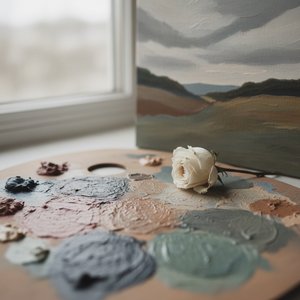
The Subdued Resonance: Exploring Emotional Depth & Artistic Nuance within Muted Color Palettes
Explore the captivating world of muted colors in art & design! Discover historical context, psychological effects, techniques, and inspiration for creating serene spaces. Elevate your aesthetic with OriginalUniqueArt.
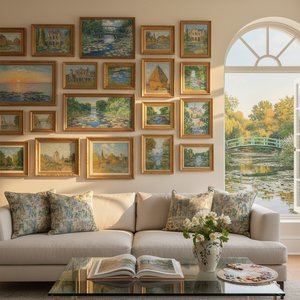
Клод Моне: Топ-25 шедеврів імпресіонізму для вашого дому | OriginalUniqueArt
Відкрийте для себе 25 найвідоміших шедеврів Клода Моне! Історія імпресіонізму, пейзажі, водні лілії та унікальні техніки живопису. Репродукції картин високої якості для вашого дому від OriginalUniqueArt.com. Дослідіть всю колекцію онлайн!

