Переглянути в інтер'єрі
 Надіслати
 Поділитися
 Деталі
 Посібник

 Завантажити
 Схожі предмети колекціонування
 Рентгенівське дослідження
 Слайд-шоу
 Статистика переглядів
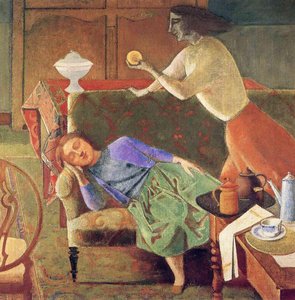
The Dream
 Oil On Canvas
- WallArt
- Expressionism
 1955
1955 162.0 x 130.0 cm
 Читати далі
Мистецький твір, представлений на цій сторінці, захищений законом про авторське право, що унеможливлює легальне створення або продаж його ідентичної репродукції. Цей захист забезпечується відповідно до міжнародних угод, таких як Бернська конвенція та національним законодавством, зокрема положеннями, що викладені в Законодавство США про авторське право — Розділ 17. Всі права захищені. Будь-яке використання без дозволу заборонено.
Цей метод повністю відповідає нормам авторського права, оскільки він не передбачає копіювання чи дублювання захищеного твору мистецтва. Натомість це творче переосмислення — створення нового малюнка під впливом оригіналу, який не є його точним відтворенням.
Гікле / Художній принт
Музейна якість друку جيкле або на полотні з оперативним виготовленням та різноманітними варіантами фінішної обробки. ( Купити картину ручної роботи Перейти до цифрових зображень)




P118B ₴10

P118H ₴10

P118W ₴10

P438Z ₴10

P508JH ₴12

P508YH ₴12

P805H ₴10

P805Z ₴10

P919BZ ₴10

P919G ₴10

P919XJ ₴10

P959ZH ₴10

P968JZ ₴12

W106C ₴8

W218G ₴10

W218JH ₴8

W218Y ₴10

W307PJ ₴10

W316G ₴10

W316PJ ₴8

W316Y ₴10

W398PJ ₴8

W4111J ₴10

W500HY ₴15

W500JH ₴15

W692G ₴12

W849H ₴8

W940BG ₴15

W953PJ ₴8




Обирайте з наших стандартних розмірів, що відповідають оригінальним пропорціям твору мистецтва.

Введіть необхідну ширину та висоту, щоб принт ідеально підійшов до вашої рами або стіни. Принт можна лише обрізати, але не можна зробити більшим за оригінал, тому при зміні пропорцій частина зображення буде втрачена. Перед друком ми надсилаємо вам цифровий макет для затвердження. Зображення на цій сторінці не відображає реальну обрізку — її можна побачити лише на макеті.
Доставка по всьому світу () за 2 тижні замість стандартних 4/5 тижнів. (25 Жовтень)

Безкоштовна експрес-доставка по всьому світу

Високоякісне лляне полотно

Повне страхове покриття доставки

Гарантія повернення митних зборів

Гарантія точного відтворення кольорів

Політика повернення протягом 100 днів (лише у разі виявлення дефектів)

Гарантія повернення 100% коштів

Знижка на оптові замовлення
 Скляний варіант доступний лише для розмірів до 110 см

The Dream
Гікле / Художній принт
Розмір репродукції
-


Загальна вартість
₴ 3591
The Enigmatic Stillness of Balthus's "The Dream"
To stand before Balthus’s The Dream is to step across the threshold into a meticulously constructed, yet deeply unsettling, private moment. This painting, dating from around 1955, captures an atmosphere so thick with unspoken narrative that it feels less like paint on canvas and more like captured memory itself. The scene centers on a woman reclined upon a couch, her head surrendered to the soft embrace of a pillow—a portrait steeped in vulnerability and repose. Nearby, another figure observes this slumber, their presence adding a layer of complex tension to what initially appears to be a simple tableau of rest.
A Study in Atmosphere and Composition
Balthus’s technique here is masterful in its ability to render the palpable weight of silence. The composition guides the eye through carefully placed objects: the elegant curve of the couch, the suggestion of a nearby chair, the delicate placement of a vase, and the solitary cup near the edge. These elements are not mere props; they are anchors in a dreamlike reality. While the painting is categorized within Expressionism—a style that allows for heightened emotional resonance over strict realism—Balthus grounds his vision with an almost classical attention to form. The interplay between the languid curves of the sleeping figure and the vertical lines suggested by the standing observer creates a subtle, yet profound, visual rhythm.
Symbolism Woven into Slumber
The very title, The Dream, invites endless interpretation, which is perhaps Balthus’s greatest gift to the viewer. Sleep itself becomes a potent symbol—a liminal space where consciousness dissolves and deeper truths surface. The dynamic between the sleeping subject and the watchful observer hints at themes of voyeurism, intimacy, and the complex dynamics of observation. Artistically, these moments often explore the delicate boundary between desire and detachment. For collectors and those seeking art for a sophisticated interior, this piece offers depth; it does not simply decorate a wall, but rather initiates a conversation within the room itself.
Echoes of Tradition in Modern Sensibility
Balthus’s career is often read as a dialogue with history. Though his work feels intensely modern, there are echoes of Old Master painting traditions—a reverence for figure study and narrative weight—filtered through a distinctly 20th-century lens. This tension between classical structure and psychological unease is what gives the piece its enduring power. Owning a reproduction of The Dream allows one to bring this sophisticated, emotionally charged dialogue into your own space. It speaks to an appreciation for art that rewards prolonged contemplation, suggesting that true beauty often resides in the moments just before waking.
Запитання та відповіді
Коли та з яких матеріалів було створено «The Dream»?
Техніка виконання «The Dream» Балтаз — Oil On Canvas, а дата створення твору — 1955.
Які сюжет та атмосферу поєднує в собі «The Dream» Балтаз?
«The Dream» Балтаз зображує sleeping woman, intimate scene, figurative painting, nude figure, dreamlike state, interior setting у Mystical настрої. Поєднання сюжету та атмосфери повністю розкриває цей твір.
Як у «The Dream» Балтаз переплітаються художній стиль та епоха?
«The Dream» належить до течії Expressionism, а її автор працював у епоху — Модерн.
Біографія митця
A World Apart: The Enigmatic Vision of Balthus
Balthasar Klossowski de Rola, universally known as Balthus, remains one of the most compelling and persistently debated figures in 20th-century art. Born in Paris on February 29, 1908, into a family steeped in intellectual and artistic circles—his father, Erich Klossowski, was a respected art historian, while his mother, Baladine Klossowska, possessed a remarkable artistic sensibility herself—his life unfolded as a deliberate rejection of prevailing artistic trends. He wasn’t driven by a desire to break with tradition; rather, he sought to revitalize classical forms with a distinctly modern sensibility, crafting a world uniquely his own – a realm often unsettling, perpetually captivating. From the outset, Balthus cultivated an aura of mystery, resisting biographical interpretations and insisting that his paintings should be experienced directly, without the mediation of external commentary.Early Years: A Nomadic Existence and Artistic Foundations
Balthus’s early life was marked by a constant state of flux. The outbreak of World War I dramatically disrupted his upbringing, forcing his family to relocate repeatedly. His father, a Prussian art historian, had previously lived in East Prussia (now part of Russia), while his mother, Baladine, was born into a Polish noble family. This itinerant existence instilled within him a profound sense of displacement and introspection – an experience that would profoundly shape the themes and mood of his artistic output. He began drawing at a remarkably young age, demonstrating an exceptional aptitude for capturing form and atmosphere. Crucially, he received early encouragement from Rainer Maria Rilke, who recognized his talent and fostered his artistic inclinations during his mother’s relationship with the poet. This formative period instilled in Balthus a deep appreciation for psychological depth and symbolic resonance, profoundly influencing his approach to representation. He absorbed influences from diverse sources – pre-Renaissance Italian painters like Piero della Francesca and Simone Martini, alongside literary figures such as Emily Brontë and Lewis Carroll—creating an artistic language that defied easy categorization, blending classical restraint with a subtle undercurrent of unease.The Shaping Years: Italy and the Renaissance Revival
A pivotal moment in Balthus’s development occurred when he traveled to Italy in 1924. This immersion in the art of the Italian Renaissance proved transformative. He became utterly captivated by the frescoes of Masaccio, Paolo Uccello, and Piero della Francesca – masters who had perfected the illusion of depth and light. These artists' meticulous attention to detail, their ability to imbue inanimate objects with a sense of life, and their mastery of perspective profoundly influenced Balthus’s technique. He sought to emulate their pale, powdery surfaces, striving for a similar ethereal quality in his own paintings. This period marked a decisive shift towards a more classical style, one that would become the hallmark of his mature work. It was during this time that he adopted the pseudonym “Balthus,” a name derived from his childhood nickname and imbued with an air of deliberate obscurity.Controversy and Recognition: The Unsettling Beauty
Balthus’s early public exhibitions sparked immediate controversy, largely due to the suggestive nature of his paintings. Works like *The Guitar Lesson* (1933-35), depicting a young girl receiving instruction from an older man, ignited debate about the artist's intentions and the potential for erotic interpretation. Critics were divided – some lauded the painting’s psychological complexity and technical mastery, while others condemned its perceived obscenity. Balthus deliberately cultivated this ambiguity, resisting attempts to impose definitive interpretations on his work. He understood that controversy was an integral part of his artistic practice, a means of challenging conventional notions of beauty and prompting viewers to confront uncomfortable truths about desire, power, and the human condition. Throughout the 1930s and 40s, he continued to develop his distinctive style, characterized by elongated figures, dramatic lighting, and a meticulous attention to detail – often depicting adolescent girls in states of reverie or contemplation.A Legacy of Introspection: Later Works and Enduring Influence
Despite the persistent controversy surrounding his work, Balthus achieved significant recognition during his lifetime. He held major exhibitions at the Museum of Modern Art in New York (1956), throughout Europe, and was appointed director of the Académie de France in Rome in 1961 – a prestigious position that further cemented his standing within the artistic establishment. His influence can be seen in the work of numerous contemporary artists, including Jan Saudek, Will Barnet, and Duane Michals, who share his interest in figurative painting, psychological realism, and the exploration of complex emotional states. Balthus’s enduring appeal lies not only in his technical virtuosity but also in his ability to tap into universal human experiences – the longing for connection, the fear of isolation, and the search for meaning in a chaotic world. His paintings are not merely images; they are portals into a realm of dreams, anxieties, and unspoken desires—a testament to the enduring power of art to challenge our perceptions and illuminate the hidden corners of the human soul. He died in 2001, leaving behind a body of work that continues to provoke, intrigue, and inspire debate.
Балтаз
1908 - 2001 , Франція
Довідкова інформація
- Artistic Movement Or Style: Класицизм, Фігуративізм
- Artists Or Movements Influenced By This Artist:
- Рейнер Марія Рільке
- Гюстав Курбе
- Artists Who Influenced This Artist:
- Мазаччо
- Пієро делла Франческа
- Когере
- Date Of Birth: 29 лютого 1908
- Date Of Death: 18 лютого 2001
- Full Name: Балтазар Клосковскі де Рола
- Nationality: Франко-польський
- Notable Artworks:
- La Rue
- The Mountain
- Girl at a Window
- Place Of Birth: Париж, Франція
Схожі статті

OriginalUniqueArt.com F.A.Q.: Elevate Your Decor with Premium Textured Giclée Prints
Discover the distinction of OriginalUniqueArt.com premium textured Giclée prints. Expertly crafted with archival 12-color pigments and museum-grade substrates, our prints offer unparalleled vividness for the discerning collector seeking luxury, durability, and timeless elegance.