
 Переглянути в інтер'єрі
 Надіслати як листівку
 Поділитися
 Детальніше

 Завантажити
 Схожі експонати
 Рентгенівське дослідження
 Слайд-шоу
Villiers David
 Acrylic On Canvas
- WallArt
 1932
1932- 19th Century
 51.0 x 40.0 cm
 Ашмолеанський музей мистецтва та археології
 Читати далі
Гікле / Художній принт
Музейна якість друку جيкле або на полотні з оперативним виготовленням та різноманітними варіантами фінішної обробки. ( Замовити репродукцію ручної роботи Купити цифрове зображення)




P118B $10

P118H $10

P118W $10

P438Z $10

P508JH $12

P508YH $12

P805H $10

P805Z $10

P919BZ $10

P919G $10

P919XJ $10

P959ZH $10

P968JZ $12

W106C $8

W218G $10

W218JH $8

W218Y $10

W307PJ $10

W316G $10

W316PJ $8

W316Y $10

W398PJ $8

W4111J $10

W500HY $15

W500JH $15

W692G $12

W849H $8

W940BG $15

W953PJ $8




Обирайте з наших стандартних розмірів, що відповідають оригінальним пропорціям твору мистецтва.

Ви можете вказати власні розміри, щоб репродукція ідеально підійшла до конкретної рами або інтер'єру. Якщо обраний вами розмір не відповідає пропорціям оригіналу, ми або обріжемо полотно, або розширимо зображення за допомогою дзеркального відображення чи суцільної заливки країв. Перед початком виробництва вам буде надіслано цифровий макет для затвердження.
Будь ласка, зверніть увагу, що попередній перегляд на екрані не відображає фактичне обрізання або розширення. Тільки макет точно покаже фінальну композицію.
Хоча можливість замовлення індивідуальних розмірів доступна, ми рекомендуємо обирати формат із попередньо визначеного списку, щоб зберегти оригінальні пропорції.
Доставка по всьому світу () за 2 тижні замість стандартних 4/5 тижнів. (23 Серпень)

Безкоштовна експрес-доставка по всьому світу

Високоякісне лляне полотно

Повне страхове покриття доставки

Гарантія відшкодування митних зборів

Гарантія точного відтворення кольорів

Політика повернення протягом 60 днів (лише у разі виявлення дефектів)

Гарантія повернення 100% коштів

Пропозиція на оптові замовлення
 Скляний варіант доступний лише для розмірів до 110 см

Villiers David
Гікле / Художній принт
Розмір репродукції
-


Підсумкова вартість
$ 80
Опис експоната
The Subject: An Intimate Gaze
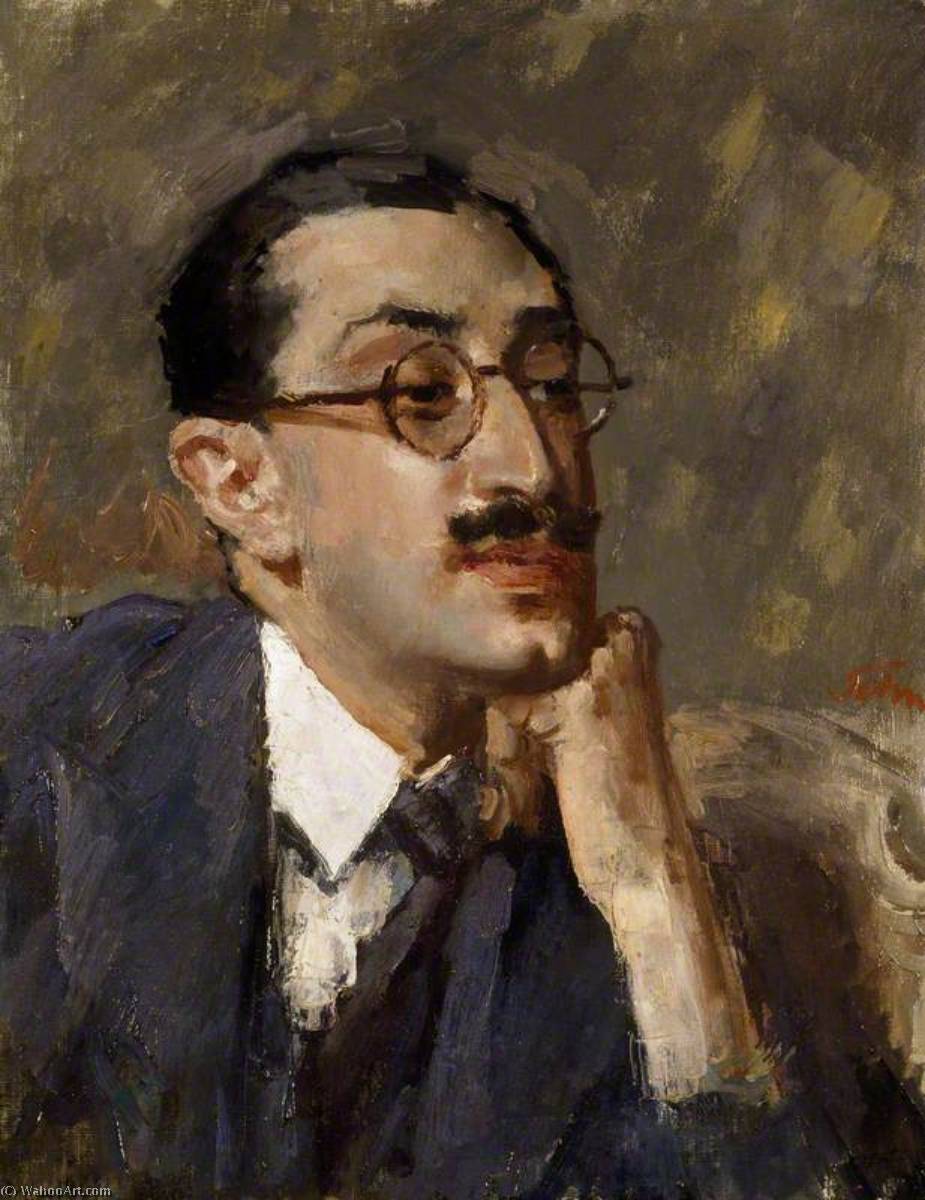
“ Villiers David,” painted in 1932 by Augustus Edwin John, isn’t a grand historical portrait or a flamboyant depiction of celebrity. Instead, it offers a remarkably intimate glimpse into the face and demeanor of an unknown gentleman. The subject, dressed in the restrained elegance of a well-tailored suit – a dark grey wool that speaks to both wealth and understated taste – is seated with his hands resting thoughtfully on his chin. His gaze, direct yet not confrontational, holds a quiet confidence, a subtle suggestion of intelligence and perhaps even melancholy. John’s masterful observation captures the nuances of human expression, revealing more than just physical features; he conveys a sense of personality, a hint of inner life.
- The man's attire – the tie, the jacket, the overall cut – speaks to a period of relative prosperity and formality.
- His posture, relaxed yet attentive, invites the viewer into his world.
- Notice the subtle lines around his eyes and mouth; these are not signs of age but rather evidence of a life lived with contemplation.
The Style: A Welsh Bohemian’s Vision
Augustus Edwin John was, by nature, an artist who defied easy categorization. Born in Wales, he cultivated a distinctly bohemian lifestyle, flitting between London and the French Riviera, always seeking inspiration and challenging conventional artistic norms. His style is characterized by a remarkable sensitivity to light and color, combined with a loose, expressive brushstroke that imbues his paintings with a palpable sense of movement and emotion. “ Villiers David” exemplifies this approach perfectly – it’s not a meticulously rendered likeness but rather an impression, a feeling captured on canvas.
John's work is often described as ‘impressionistic,’ though he deliberately avoided strict adherence to the style, preferring instead to develop his own unique visual language.Technique and Composition: A Dance of Light and Shadow
The painting’s strength lies in John’s skillful manipulation of light and shadow. He employs a broken brushstroke technique, layering colors rather than blending them smoothly, creating a shimmering effect that seems to emanate from within the canvas. The background is deliberately muted – a simple chair provides minimal distraction – allowing the viewer's attention to remain firmly focused on the subject’s face. The use of warm tones in his clothing contrasts with the cooler shades of the background, further emphasizing his presence and drawing us into his gaze. John’s meticulous attention to detail, particularly in rendering the textures of the fabric and the subtle nuances of light reflecting off the man's glasses, is truly remarkable.
Historical Context and Symbolism: A Window into a Changing World
Painted in 1932, “ Villiers David” reflects a period of significant social and cultural change. Britain was emerging from the austerity of the Great Depression, and there was a growing sense of uncertainty about the future. John’s portrait can be interpreted as a meditation on these anxieties – the man's quiet confidence suggests resilience in the face of adversity, while his contemplative gaze hints at the complexities of human experience. The inclusion of the glasses is particularly noteworthy; they symbolize intellect and observation, suggesting that this individual possesses both wisdom and a critical eye. The portrait also speaks to John’s lifelong fascination with the Romani people, whom he often depicted in his work, capturing their vibrant spirit and unique perspective.
Emotional Impact: A Moment of Quiet Reflection
Ultimately, “ Villiers David” is a profoundly moving painting. It's not merely a portrait; it’s an invitation to connect with another human being, to share in his thoughts and feelings. The man’s gaze holds a quiet dignity and a hint of melancholy, prompting us to consider our own place in the world. It’s a reminder that even in the midst of uncertainty, there is beauty and meaning to be found in simple moments of reflection. Reproductions of this piece offer a chance to bring this intimate portrait into your home, inviting contemplation and adding a touch of understated elegance to any space.
Біографія митця
A Welsh Bohemian: The Life and Art of Augustus Edwin John
Augustus Edwin John, a name synonymous with vibrant color and captivating portraits, emerged as one of the most distinctive figures in early 20th-century British art. Born on January 4, 1878, in the picturesque coastal town of Tenby, Wales, his life was a tapestry woven with artistic passion, bohemian adventures, and an unwavering pursuit of capturing the essence of human experience. From humble beginnings, John’s journey led him through diverse landscapes – from the rolling hills of Wales to the bustling studios of London, and finally, to a nomadic existence embracing the spirit of the Romani people. His art, characterized by its emotional intensity, fluid brushwork, and a remarkable ability to distill personality onto canvas, continues to resonate with audiences today.Early Influences and Artistic Foundations
John’s artistic sensibilities were shaped by a confluence of influences, beginning with his mother's encouragement and early exposure to drawing. This nascent talent blossomed during his time at the Tenby School of Art, where he quickly demonstrated an exceptional aptitude for capturing form and light. However, it was his enrollment at the Slade School of Fine Art in London – a prestigious institution steeped in tradition – that truly provided him with a formal foundation. Under the tutelage of Henry Tonks, a renowned critic and teacher, John honed his draughtsmanship to an extraordinary degree, mastering the fundamentals of line, perspective, and composition. Crucially, he absorbed the spirit of the Old Masters, particularly the dramatic compositions and rich color palettes of Peter Paul Rubens, whose dynamic energy profoundly influenced his approach to painting. Simultaneously, he was drawn to the innovations of French contemporaries like Matisse and Gauguin, embracing their expressive use of color and rejection of rigid academic conventions. The subtle tonal harmonies of Puvis de Chavannes also left an indelible mark on his aesthetic vision, demonstrating a sensitivity to mood and atmosphere. These diverse influences coalesced into a unique style – one that prioritized capturing the *feeling* of a subject rather than merely replicating its appearance.A Turning Point: Accident and Artistic Transformation
A pivotal moment in John’s life occurred in 1897 when he suffered a severe head injury during a diving accident in Tenby. This traumatic event dramatically altered his personality, unleashing a newfound spontaneity and boldness that would permeate both his life and art. The injury resulted in a loss of peripheral vision, forcing him to rely more heavily on his central field of sight – an experience that profoundly impacted his perception of the world and his approach to painting. He described this shift as a liberation from the constraints of academic technique, allowing him to paint with greater immediacy and emotional intensity. This newfound freedom manifested in looser brushwork, brighter colors, and a willingness to experiment with unconventional compositions. It was during this period that he began to develop his signature style – one characterized by vibrant hues, fluid lines, and an uncanny ability to capture the fleeting emotions of his subjects.Portraits of Character: A Master of Psychological Insight
Augustus Edwin John is perhaps most celebrated for his captivating portraits, which transcend mere likeness to reveal profound psychological insights. He possessed a remarkable gift for capturing not just outward appearance but also the inner life and character of his sitters. His portraits are imbued with a sense of immediacy and spontaneity, as if he were freezing a fleeting moment in time. Royal figures like David Lloyd George, literary giants such as James Joyce, and prominent personalities like Francis Henry Crittall all found themselves immortalized on canvas by John’s discerning eye. He wasn't interested in creating idealized representations; instead, he sought to reveal the complexities of human nature – their vulnerabilities, passions, and quirks. His ability to convey a sitter’s personality through subtle gestures, expressions, and body language is what truly sets his portraits apart. Notable works like *Caspar* (1909), depicting a young boy with an innocent gaze, and *Air Mechanic Shaw* (1935), a powerful portrait of T.E. Lawrence, exemplify this extraordinary talent.Beyond the Portrait: Romani Encounters and Nomadic Life
While renowned for his portraits, John’s artistic interests extended far beyond the confines of traditional genre painting. A profound fascination with Romani culture led him to embrace a nomadic lifestyle, traveling in a caravan with his family for an extended period. This immersive experience profoundly influenced his art, imbuing it with themes of freedom, wanderlust, and the beauty of the natural world. He documented his encounters with the Romani people through numerous paintings and sketches, capturing their vibrant costumes, expressive faces, and unique way of life. His deep connection to this community culminated in his presidency of the Gypsy Lore Society, a testament to his commitment to understanding and celebrating their rich cultural heritage. These experiences fostered a sense of empathy and openness that permeated his art, adding layers of depth and complexity to his work.Legacy and Recognition
Throughout his career, Augustus Edwin John experienced both widespread acclaim and periods of critical fluctuation. Initially celebrated for his innovative oil sketching techniques and figure drawings, some critics later found his work to be overly flamboyant or lacking in painterly finesse. However, he remained a significant force in British art history, particularly during the interwar period. He was one of the few artists of his time to achieve widespread public recognition and played a crucial role in popularizing Post-Impressionism within the United Kingdom. Awarded the Order of Merit in 1942, John continued to paint and exhibit until his death on October 31, 1961, at the age of 89. His legacy is further enriched by the artistic achievements of his sister, Gwen John, whose own unique vision contributed significantly to the modernist movement. Today, Augustus Edwin John’s art continues to captivate and inspire, reminding us of the power of individual expression and the enduring allure of a life lived with passion and artistic integrity.
Август Едвін Джон
1878 - 1961 , Велика Британiя
Короткі факти
- Artistic Movement Or Style: Пост-імпресіонізм
- Artists Or Movements Influenced By This Artist: ['Сучасне британське живописство']
- Artists Who Influenced This Artist:
- Рубенс
- Матісс
- Гоген
- Date Of Birth: 4 січня 1878
- Date Of Death: 31 жовтня 1961
- Full Name: Augustus Edwin John
- Nationality: Уельзецький
- Notable Artworks:
- Caspar
- Air Mechanic Shaw
- Place Of Birth: Тенбідж, Уельс
Пов'язані статті

Джон Сінґер Са́рджент: 25 шедеврів американського імпресіонізму для вашого дому | OriginalUniqueArt
Відкрийте 25 найкращих картин Джона Сінґера Са́рджента – американського імпресіоніста, майстра портретів та елегантного живопису. Історія мистецтва, техніки та натхнення для вашого дому від OriginalUniqueArt.com! Дослідіть повну колекцію онлайн.

Топ-25 шедеврів Джона Констебла: пейзажі Англії для вашого дому | OriginalUniqueArt
Відкрийте для себе 25 найкращих шедеврів Джона Констебла! Англійські пейзажі, романтизм та емоційне світло в живописі. Репродукції картин високої якості для вашого дому від OriginalUniqueArt.com. Дослідіть повну колекцію онлайн!

Oil on Canvas: A Historical & Technical Exploration of a Timeless Artistic Medium
Explore the rich history & enduring techniques of oil painting on canvas. Discover the science behind its longevity, conservation practices, and contemporary relevance. Expert insights for art enthusiasts.

The Enduring Legacy of Oil on Canvas: Technique, History & Aesthetic Impact
Explore the rich history & techniques of oil painting – from Renaissance masters to Impressionism. Discover pigments, layering methods, and why this timeless medium endures. Expert insights for artists & art enthusiasts.

Вікові традиції олійного живопису: техніка, історія та сучасна практика
Дізнайтеся про вікову історію олійного живопису, техніки майстрів та сучасні тенденції. Відкрийте світ класичного мистецтва та натхнення для власної творчості!



