Post-Impressionism · 1909
Caspar (Август Едвін Джон, 1909)
Август Едвін Джон (1878–1961) створив Caspar. Дата створення — 1909. Він належить до напряму Post-Impressionism. Виконано в Oil On Canvas. Екземпляр зберігається в Фитцвільямський коледж у Кембридж, Великобританія. Розмір: 41 × 33 cm
- 1909
- Oil On Canvas
- 41 × 33 cm
- Фитцвільямський коледж, Кембридж

 Переглянути в інтер'єрі

 Картина олією ручної роботи
 Надіслати як листівку
 Поділитися
 Інформаційна картка


 Завантажити
 Схожі екземпляри
 Рентгенівське дослідження
 Слайд-шоу
 Питання та відповіді

 Статистика
Caspar коротко
- Назва
- Caspar
- Художник
- Август Едвін Джон (1878–1961)
- Рік народження митця
- Тенбi, Велика Британiя
- Дата
- 1909
- Матеріал
- Oil On Canvas
- Розміри
- 41 × 33 cm
- Де подивитися
- Фитцвільямський коледж, Кембридж, Великобританія
- Період
- Modern
- Сюжет
- portrait, youth, innocence, reflection, texture, observation
Що зображено на Caspar?
A Glimpse into Youthful Innocence
In the tenderly rendered portrait Caspar, created in 1909 by the celebrated Welsh artist Augustus Edwin John, we are invited into a moment of profound quietude. This intimate work captures the essence of a young boy, whose face serves as the emotional anchor of the composition. Through a masterful use of realistic brushstrokes and a soft, diffused light, John breathes life into the subject, presenting a study of youthful innocence that feels both timeless and deeply personal. The close-up framing pulls the viewer into the boy's immediate orbit, creating a sense of gentle observation that borders on the voyeuristic, yet remains entirely respectful of the subject's quiet contemplation.
The painting is a triumph of texture and light, where the organic forms of the boy’s features are balanced against a rich, layered background. The artist employs a technique reminiscent of Post-Impressionism, where visible brushwork does not merely define shape but adds a rhythmic, tactile quality to the canvas. This textured approach allows the background to pulse with a life of its own, providing a sense of depth and atmosphere without ever distracting from the central figure. The interplay of light and shadow across the boy's face emphasizes the soft contours of his skin and the structural elements of his clothing, lending a sculptural weight to an otherwise ethereal moment.
Symbolism and Artistic Legacy
Beyond its surface beauty, Caspar carries subtle symbolic weight. The inclusion of the boy's hat serves as more than just a compositional element; it hints at identity and perhaps a burgeoning sense of social standing or persona. Within the broader context of Augustus Edwin John’s career, this piece reflects his ability to blend exceptional draughtsmanship—honed during his years at the Slade School of Fine Art—with a bohemian, expressive spirit. The painting captures a pivotal era in British art, where the boundaries between realism and impressionistic emotion were being beautifully redrawn.
For the discerning collector or interior designer, this reproduction offers more than just a decorative element; it provides a focal point of emotional depth. The muted palette and soft textures make it an ideal addition to spaces that require a sense of calm, sophistication, and historical resonance. Whether placed in a sunlit study or a contemporary living space, Caspar acts as a window into the early 20th century, evoking a nostalgic longing for simplicity and the quiet beauty found in the most fleeting of human expressions.
У якому музеї зберігається Caspar?
Фитцвільямський коледж
Кембридж, Великобританія
A Sanctuary of Art and Antiquity: Exploring the Fitzwilliam College Nestled within the venerable heart of Cambridge, England, the Fitzwilliam College is more than simply a museum; it’s an immersive journey into the very soul of human creativity. Founded in 1816 by Richard FitzWilliam, 7th Viscount FitzWilliam with a profound desire to share his extraordinary collection, the institution has blossomed into one of the United Kingdom's most treasured cultural landmarks – a vibrant space where history whispers from ancient artifacts and masterpieces ignite the imagination. The building itself, George Basevi’s Founder’s Building, completed in 1843, embodies classical elegance, its inviting façade hinting at the world of artistic wonders contained within.


Зображення високої роздільної здатності Caspar
Protected by copyright: these files are for personal reference, not a licence to republish.
Август Едвін Джон, Caspar (1909), Фитцвільямський коледж.
Відповіді на запитання про Caspar
У якому музеї зберігається оригінал «Caspar»?
«Caspar» роботи Август Едвін Джон експонується в Фитцвільямський коледж, Кембридж, Великобританія. У описі музею йдеться про оригінальний твір, а не про репродукції.
У якому році було створено «Caspar» роботи Август Едвін Джон?
«Caspar» датована 1909 роком. Ця дата дозволяє визначити місце твору в творчому шляху Август Едвін Джон та відповідну епоху.
Яка техніка використана у творі "Caspar"?
Техніка виконання «Caspar» роботи Август Едвін Джон — Oil On Canvas. Репродукції мають на меті відтворити вигляд цієї техніки.
Які розміри оригінального твору «Caspar» роботи Август Едвін Джон?
Розміри оригіналу «Caspar» роботи Август Едвін Джон становлять 41 x 33 cm. Репродукції можна замовити в інших розмірах із збереженням тих самих пропорцій.
Що зображено на творі "Caspar"?
«Caspar» роботи Август Едвін Джон зображує: portrait, youth, innocence, reflection, texture, observation, victorian, welshart.
Чи можна вільно відтворювати зображення «Caspar» роботи Август Едвін Джон?
«Caspar» роботи Август Едвін Джон перебуває у все ще перебуває під захистом авторського права. Цей статус визначає правила відтворення зображення твору.
Якому художнику приписують роботу "Caspar"?
«Caspar» приписують Август Едвін Джон.
До якого стилю належить "Caspar"?
Мистецький напрям, до якого належить «Caspar» роботи Август Едвін Джон, — це Post-Impressionism. Така класифікація дозволяє розмістити цей твір у контексті суміжних митців та творів мистецтва.
Яке місце посідає «Caspar» у творчому шляху Август Едвін Джон?
«Caspar» належить до Mature Period Август Едвін Джон.
Про художника Август Едвін Джон

1878–1961, Велика Британiя
Август Едвін Джон
A Welsh Bohemian: The Life and Art of Augustus Edwin John Augustus Edwin John, a name synonymous with vibrant color and captivating portraits, emerged as one of the most distinctive figures in early 20th-century British art. Born on January 4, 1878, in the picturesque coastal town of Tenby, Wales, his life was a tapestry woven with artistic passion, bohemian adventures, and an unwavering pursuit of capturing the essence of human experience. From humble beginnings, John’s journey led him through diverse landscapes – from the rolling hills of Wales to the bustling studios of London, and finally, to a nomadic existence embracing the spirit of the Romani people. His art, characterized by its emotional intensity, fluid brushwork, and a remarkable ability to distill personality onto canvas, continues to resonate with audiences today.
Також за участю Август Едвін Джон
 Portrait of a Young Man1929
 Air Mechanic Shaw (Colonel T. E. Lawrence of Arabia, 1888–1935)1935
 Two Jamaican Girls1937
 Carlotta1904
Есе до твору Caspar
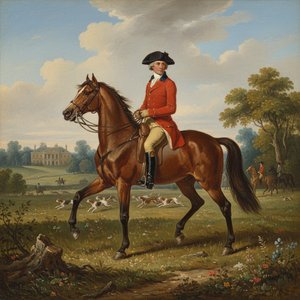 John Nost Sartorius: Equestrian Portraiture & the Shifting Social Landscape of 18th-Century EnglandExplore the captivating equestrian art of John Nost Sartorius (1759-1828). Discover his detailed paintings of racehorses, hunting scenes & …
 British pre-raphaelite paintersMasterpieces by Rossetti and Millais define British Pre-Raphaelite art. Explore the full collection online at OriginalUniqueArt.com.
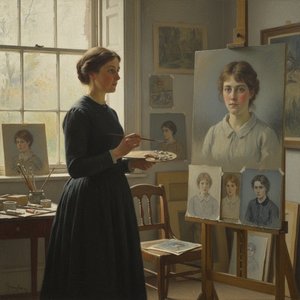 Gwen John: Intimacy, Modernity & the Quiet Power of Welsh PortraitureExplore the captivating world of Gwen John, a pioneering Welsh artist renowned for her intimate portraits & subtle style. Discover her life…