- Додому

- Репродукція картини олією
- Augustin Pajou
- Mantel clock
 Preview
 Надіслати
 Поділитися
 Деталі витвору

 Завантажити
 Схожі вироби
 Рентгенівське дослідження
 Слайд-шоу
Mantel clock


 Розгорнути текст
Олійная репродукція ручної роботи
Написана вручну олією на полотні у вашому розмірі та рамі, виготовлена на замовлення нашими художниками. ( Switch to Print Switch to Image)




P118B $10

P118H $10

P118W $10

P438Z $10

P508JH $12

P508YH $12

P805H $10

P805Z $10

P919BZ $10

P919G $10

P919XJ $10

P959ZH $10

P968JZ $12

W106C $8

W218G $10

W218JH $8

W218Y $10

W307PJ $10

W316G $10

W316PJ $8

W316Y $10

W398PJ $8

W4111J $10

W500HY $15

W500JH $15

W692G $12

W849H $8

W940BG $15

W953PJ $8




Обирайте з наших стандартних розмірів, що відповідають оригінальним пропорціям твору мистецтва.

Ви можете вказати власні розміри, щоб репродукція підійшла до конкретної рами або інтер'єру. Якщо вибраний вами розмір не відповідає пропорціям оригіналу, ми або обріжемо полотно, або доповнимо картину додатковими елементами, промальованими вручну. Цифровий макет буде надіслано вам на затвердження перед початком виробництва.
Зверніть увагу, що попередній перегляд на екрані не відображає фактичне обрізання або розширення зображення. Тільки макет точно покаже остаточну композицію.
Хоча ми можемо виготовити виріб у нестандартному розмірі, для збереження оригінальних пропорцій рекомендуємо обирати варіанти зі встановленого списку.
Після оформлення замовлення команда OriginalUniqueArt.com зв'яжеться з клієнтом електронною поштою для отримання інструкцій та надасть попередній макет
Доставка по всьому світу () за 3–4 тижні замість стандартних 5 тижнів. (29 Липень). Без жодних компромісів у якості.

Безкоштовна експрес-доставка по всьому світу

Високоякісне лляне полотно

Повне страхове покриття доставки

Гарантія відшкодування митних зборів

Гарантія точного відтворення кольорів

Політика повернення протягом 60 днів (лише у разі виявлення дефектів)

Гарантія повернення 100% коштів

Знижка на багатоелементні замовлення
 Скляний варіант доступний лише для розмірів до 110 см

Mantel clock
Матеріал репродукції
Розмір репродукції
-


Підсумкова ціна
$ 300
Опис твору
A Masterpiece of Neoclassical Grace: The Augustin Pajou Mantel Clock
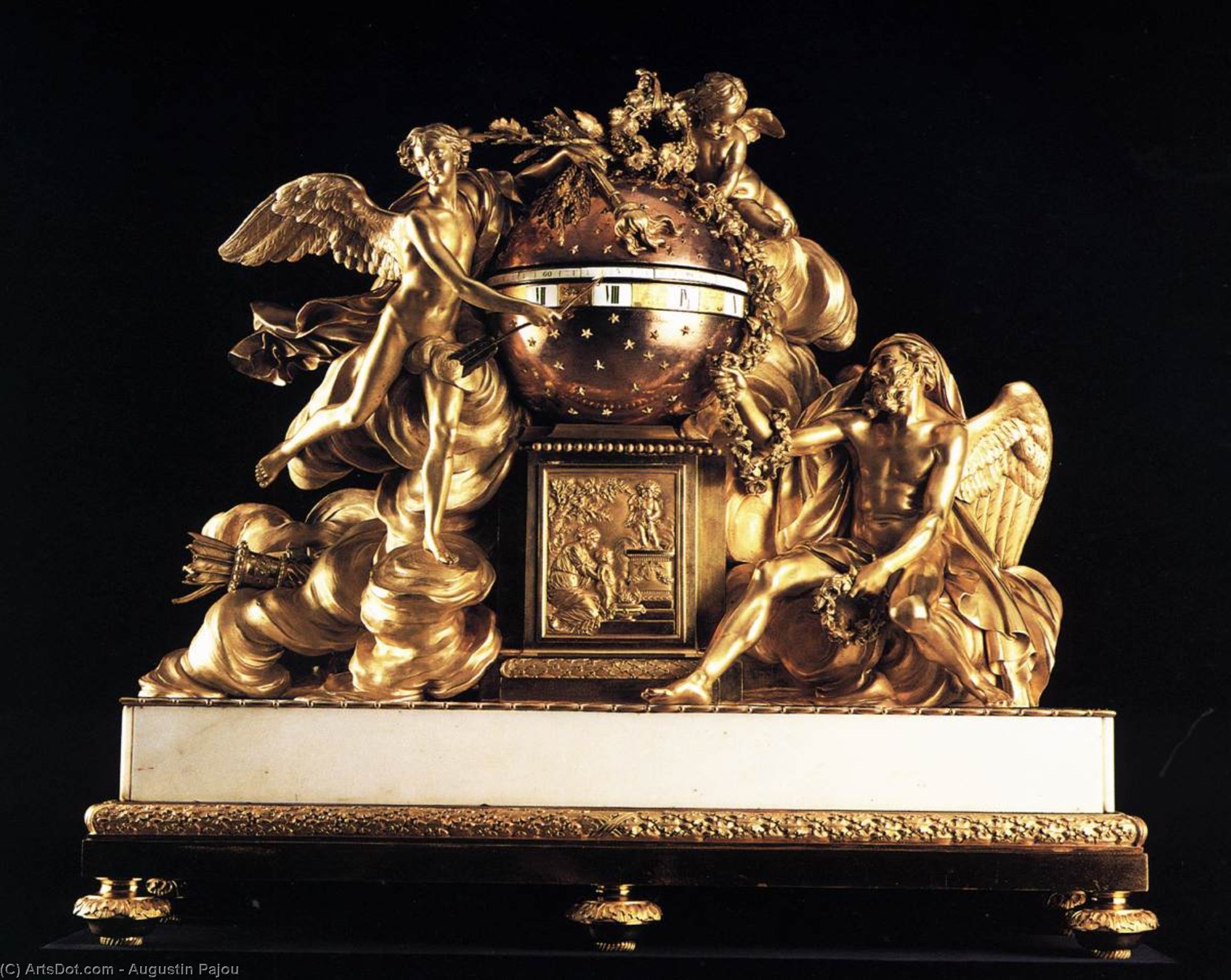
The image before you presents more than just a timepiece; it's a meticulously crafted window into the opulent world of late 18th-century France. Augustin Pajou’s mantel clock, dating back to 1785, is a testament to the Neoclassical style’s enduring appeal – a harmonious blend of classical ideals and refined craftsmanship. The scene unfolds against a dark backdrop, deliberately chosen to accentuate the clock's golden hues and intricate detailing, drawing the viewer into its captivating embrace. It’s a piece that whispers tales of aristocratic salons, philosophical discussions, and the pursuit of beauty and knowledge.
- The Figures: At the heart of the design are two arresting figures, rendered with Pajou's signature grace and precision. The angelic figure, wings outstretched, holds a scroll or document – a potent symbol of wisdom, scholarship, and divine inspiration. Beside him sits a seated figure, radiating an aura of contemplative serenity; this enigmatic presence likely represents the pursuit of knowledge, perhaps even philosophical reflection. Their postures are deliberately classical, echoing the idealized forms favored by Neoclassical artists.
- The Base: The clock’s base is a veritable cornucopia of mythological and human figures. Griffins, lions, and other fantastical creatures intertwine with elegantly posed human figures – a deliberate invocation of ancient Greek and Roman mythology, reflecting the era's fascination with classical antiquity. These sculpted elements aren’t merely decorative; they contribute to a narrative of timeless wisdom and artistic achievement.
- Bronze and Gold: The clock is predominantly crafted from gilt bronze, a material prized for its luster and malleability. Pajou masterfully employed this metal to create a surface that shimmers with an almost ethereal glow, highlighting the intricate details of each sculpture. The use of gold further elevates the piece, imbuing it with a sense of luxury and prestige.
A Sculptor’s Legacy: Augustin Pajou and the Rise of Neoclassicism
Augustin Pajou (1766-1828) stands as a pivotal figure in the artistic landscape of late eighteenth-century France, embodying the ideals of Neoclassicism. Born into a family steeped in artistic tradition – his father, Jean-Baptiste Pajou, was himself a renowned sculptor – Augustin inherited not only technical skill but also a deep appreciation for classical forms and principles. His early training under Lemoyne solidified his understanding of these foundational elements, shaping his distinctive sculptural style characterized by refined grace, meticulous detail, and an unwavering commitment to capturing idealized beauty.
Pajou’s rise to prominence was cemented by his victory in the prestigious Prix de Rome competition in 1784. This coveted award provided him with invaluable experience and access to the artistic circles of Rome, where he honed his skills and developed a distinctive style. His success reflected not only his talent but also the broader cultural shift towards Neoclassicism – an aesthetic movement that sought to revive the ideals of ancient Greece and Rome, rejecting the excesses of the Rococo period.
Technique and Materials: A Symphony of Craftsmanship
The creation of this mantel clock represents a pinnacle of 18th-century craftsmanship. Pajou’s skill is evident in every detail – from the delicate modeling of the figures to the precise application of gold leaf. The bronze itself was meticulously cast, then painstakingly gilded by skilled artisans using the “dorure au mercure” technique—a process that involved applying molten gold over a layer of mercury, creating an exceptionally smooth and lustrous finish. This method, while beautiful, unfortunately exposed the gilders to significant health risks due to mercury poisoning.
- Bronze Casting: The clock’s body is cast in bronze, a material chosen for its durability, malleability, and ability to take intricate detail.
- Gilding: The gold leaf application was executed with unparalleled precision, creating a surface that shimmers with an almost otherworldly radiance.
- Sculptural Detailing: The figures are sculpted in exquisite detail, capturing the essence of classical forms and conveying a sense of movement and emotion.
A Timeless Symbol: The Clock as Embodiment of Enlightenment Values
More than just a functional timepiece, Augustin Pajou’s mantel clock embodies the values of the Enlightenment – reason, knowledge, beauty, and harmony. The figures depicted represent key intellectual pursuits: wisdom, scholarship, and contemplation. The clock itself serves as a symbol of order, precision, and the pursuit of perfection—qualities highly valued during this era of scientific and philosophical advancement. It’s a piece that invites reflection on the enduring legacy of classical ideals and their continued relevance in our own time. Its presence evokes a sense of quiet elegance and intellectual curiosity, making it a truly exceptional work of art.
Біографія митця
Augustin Pajou: The Sculptor of Elegant Grace
Augustin Pajou (1766 – 1809) stands as a pivotal figure in the artistic landscape of late eighteenth-century France, embodying the ideals of Neoclassicism and securing his place amongst the most celebrated sculptors of his era. Born in Paris to Jean-Baptiste Pajou, a renowned sculptor himself, Augustin inherited a legacy of artistic excellence and swiftly established himself as a prodigious talent destined for greatness. His formative years were marked by rigorous training under Lemoyne, cementing his understanding of classical principles and shaping his distinctive sculptural style—characterized by refined grace, meticulous detail, and an unwavering commitment to capturing idealized beauty.- Early Career & Prix de Rome: Pajou’s ambition propelled him toward the prestigious Prix de Rome in 1784, a competition that recognized exceptional artistic merit. Despite multiple unsuccessful attempts, he persevered, demonstrating remarkable determination and honing his craft through tireless experimentation.
- Notable Commissions & Patronage: His breakthrough came with commissions from influential patrons like Madame du Barry and Louis XVI, securing him positions at Versailles and propelling him to international acclaim. These projects showcased Pajou’s ability to translate aristocratic tastes into breathtaking sculptural masterpieces.
Sculptural Style & Technique
Pajou's artistic vision was firmly rooted in the principles of Neoclassicism, a movement that championed rationalism and sought inspiration from ancient Greece and Rome. He meticulously studied classical sculptures, absorbing their anatomical accuracy and expressive dynamism. His technique involved painstaking carving—often utilizing marble—employing tools with precision to achieve unparalleled realism and conveying emotion through subtle gestures and facial expressions. The sculptor’s mastery of material was evident in his ability to imbue stone with life-like qualities, capturing the essence of human form with remarkable sensitivity.- Emphasis on Anatomy & Proportion: Pajou adhered strictly to classical anatomical standards, ensuring that every sculpture reflected a profound understanding of human musculature and skeletal structure.
- Material Choice & Surface Treatment: He favored marble—particularly alabaster—renowned for its translucency and ability to capture delicate textures—a hallmark of his distinctive aesthetic.
Major Achievements & Legacy
Augustin Pajou’s artistic output spanned a remarkable breadth of projects, cementing his reputation as one of the foremost sculptors of his time. Among his most celebrated works are monumental sculptures like “Neptune Calming the Waves,” commissioned for Lyon’s Musée des Beaux-Arts, and busts of luminaries such as Voltaire, Rousseau, and Madame du Barry—each embodying exceptional artistic skill and capturing the spirit of Enlightenment thought. Furthermore, he played a crucial role in decorating Versailles' opera house, collaborating with Jean-Baptiste Raspail to create opulent interiors that reflected royal grandeur. His contribution to the monumental sculpture "The Princesse de Hesse-Homburg as Minerva" remains an enduring testament to his artistic prowess and stylistic innovation.- Versailles Opera House Decoration: Pajou’s involvement in Versailles' opera house project solidified his position as a leading artist of the era, demonstrating his ability to elevate architectural spaces through sculptural embellishments.
- Influence on Subsequent Artists: Pajou’s stylistic influence extended beyond his own lifetime, inspiring generations of sculptors who embraced Neoclassical ideals and sought to emulate his meticulous craftsmanship and expressive artistry.
Recognition & Collections
Today, Augustin Pajou's sculptures reside in prestigious collections worldwide—including the Louvre Museum, Musée des Beaux-Arts Lyon, Metropolitan Museum of Art (New York), Tate Britain, and numerous other institutions across Europe and America. His enduring legacy testifies to his unparalleled artistic achievement and ensures that his masterpieces continue to captivate audiences with their elegance, grace, and profound understanding of classical art principles. He is remembered as a sculptor who elevated Neoclassicism to new heights, securing his place among the giants of French sculpture history.
Augustin Pajou
1766 - 1828 , France
Короткі факти
- Artistic Movement Or Style: Neoclassical
- Artists Or Movements Influenced By This Artist: ['Classical Art']
- Artists Who Influenced This Artist: ['Jean-Baptiste Lemoyne']
- Date Of Birth: Paris, France (1766)
- Date Of Death: Paris, France (1809)
- Full Name: Augustin Pajou
- Nationality: French
- Notable Artworks:
- Bust of Madame du Barry
- Psyche Abandoned
- The Princess of Hesse-Homburg as Minerva
- Place Of Birth: Paris
Пов'язані статті

The Enduring Legacy of Bronze Sculpture: Technique, Symbolism & Cultural Impact
Explore the rich history & enduring appeal of bronze sculpture with expert insights for collectors. Learn about casting techniques, iconic artists, collecting tips & contemporary interpretations at OriginalUniqueArt.
Вічна спадщина бронзової скульптури: історія, техніки та сучасні інтерпретації
Відкрийте для себе захопливу історію бронзової скульптури! Дізнайтесь про техніки лиття, ключові епохи та сучасні тенденції. Корисні поради для колекціонерів та інвесторів.
The Enduring Legacy of Bronze Sculpture: A Collector's Guide to Form & Cultural Significance
Explore the rich history & enduring appeal of bronze sculpture with expert insights for collectors at OriginalUniqueArt. Learn about casting techniques, iconic artists, and collecting tips to build a discerning art collection.
Paul Manship: Reassessing the Master of American Art Deco Sculpture
Explore the captivating world of Paul Manship, a leading figure in American Art Deco sculpture. Discover his iconic works like Prometheus, influence on modernism, and investment potential. Expert insights for collectors.
The Enduring Legacy of Classical Style: Form, Narrative & Influence in Art
Explore the enduring legacy of classical art – from ancient Greece & Rome to Neoclassicism. Discover key artists, philosophical roots & build a timeless collection with OriginalUniqueArt's expert guidance.

