

 Переглянути в інтер'єрі
 Надіслати як листівку
 Поділитися
 Детальніше

 Завантажити
 Схожі експонати
 Рентгенівське дослідження
 Слайд-шоу
Three acts
 Олія на полотні
- Настінне мистецтво
- German Expressionism
 1913
1913- — Модерн
 82.0 x 51.0 cm
 Читати далі
Олійная репродукція ручної роботи
Написана вручну олією на полотні у вашому розмірі та рамі, виготовлена на замовлення нашими художниками. ( Замовити принт Купити цифрове зображення)




P118B $10

P118H $10

P118W $10

P438Z $10

P508JH $12

P508YH $12

P805H $10

P805Z $10

P919BZ $10

P919G $10

P919XJ $10

P959ZH $10

P968JZ $12

W106C $8

W218G $10

W218JH $8

W218Y $10

W307PJ $10

W316G $10

W316PJ $8

W316Y $10

W398PJ $8

W4111J $10

W500HY $15

W500JH $15

W692G $12

W849H $8

W940BG $15

W953PJ $8




Обирайте з наших стандартних розмірів, що відповідають оригінальним пропорціям твору мистецтва.

Ви можете вказати власні розміри, щоб репродукція ідеально підійшла до конкретної рами або інтер'єру. Якщо вибраний вами розмір не відповідає пропорціям оригіналу, ми або обріжемо полотно, або доповнимо картину додатковими елементами, промальованими вручну. Цифровий макет буде надіслано вам на затвердження перед початком виробництва.
Зверніть увагу, що попередній перегляд на екрані не відображає фактичне обрізання або розширення зображення. Тільки макет точно покаже остаточну композицію.
Хоча ми можемо виготовити виріб у нестандартному розмірі, для збереження оригінальних пропорцій рекомендуємо обирати варіанти зі встановленого списку.
Після оформлення замовлення команда OriginalUniqueArt.com зв'яжеться з клієнтом електронною поштою для отримання інструкцій та надасть попередній макет
Доставка по всьому світу () за 3–4 тижні замість стандартних 5 тижнів. (3 Вересень). Без жодних компромісів у якості.

Безкоштовна експрес-доставка по всьому світу

Високоякісне лляне полотно

Повне страхове покриття доставки

Гарантія відшкодування митних зборів

Гарантія точного відтворення кольорів

Політика повернення протягом 60 днів (лише у разі виявлення дефектів)

Гарантія повернення 100% коштів

Пропозиція на оптові замовлення
 Скляний варіант доступний лише для розмірів до 110 см

Three acts
Матеріал репродукції
Розмір репродукції
-


Підсумкова вартість
$ 300
A Symphony of Color and Form
In the vibrant tapestry of German Expressionism, few works capture the ephemeral beauty of life as poignantly as August Macke’s Three Acts. Painted in 1913, this masterpiece serves as a window into a world where color is not merely a descriptive tool but an emotional language. The canvas presents a breathtaking scene of three naked women standing amidst a lush, natural setting, their forms harmoniously integrated with the surrounding trees and foliage. There is an undeniable sense of rhythm in the composition; the way the figures are positioned—one partially obscuring another—creates a captivating visual dance that draws the eye through the depth of the forest. This arrangement does more than just showcase the human form; it establishes an intimate connection between the subjects, suggesting a shared moment of peace and profound togetherness.
The technique employed by Macke is nothing short of luminous. Utilizing bold brushstrokes and a palette of rich, saturated hues, he breathes life into the canvas, imbuing the scene with a palpable energy. The interplay of light and shadow across the skin of the women and the verdant leaves of the backdrop creates a sense of movement, as if a gentle breeze is passing through the clearing. For the discerning collector or interior designer, this painting offers a dynamic focal point that can transform a room, bringing an infusion of vitality and warmth to any sophisticated space.
The Spirit of Expressionism and Historical Resonance
To understand Three Acts, one must look toward the historical currents that shaped Macke’s brief but brilliant career. As a key figure associated with the Der Blaue Reiter movement, Macke was deeply influenced by the avant-garde explorations of his contemporaries, such as Franz Marc and Robert Delaunay. His work sits at a fascinating intersection of Fauvism and Orphism, where the structural integrity of form meets the wild, uninhibited use of color. This specific piece, created just a year before Macke’s untimely death in the First World War, embodies the optimistic, experimental spirit of pre-war European modernism.
The symbolism within the painting transcends the literal depiction of a pastoral scene. The "three acts" suggested by the title can be interpreted as a celebration of the cycles of nature or perhaps a metaphorical representation of stages of life and connection. By stripping the figures of clothing, Macke removes the distractions of social class or era, presenting a universalized vision of humanity in its most natural state. This raw, unadorned beauty, paired with the distorted yet graceful forms characteristic of Expressionism, evokes an emotional intensity that resonates deeply with the viewer, inviting contemplation on the harmony between the human spirit and the natural world.
An Invitation to Timeless Elegance
Owning a piece of art history is a profound experience, and a high-quality reproduction of Three Acts offers an opportunity to bring this era of German Expressionism into the modern home. Whether you are an art historian captivated by the technical nuances of Macke’s brushwork or an interior designer seeking to add a layer of sophisticated narrative to a curated collection, this artwork provides endless inspiration. The painting's ability to balance vibrant energy with a serene, meditative atmosphere makes it a versatile treasure for any decor style, from contemporary minimalism to classic luxury.
Investing in a hand-painted reproduction allows the enduring legacy of August Macke to live on within your personal sanctuary. Each stroke of the brush in a faithful recreation seeks to honor the original's texture and light, ensuring that the emotional impact of those three figures in the forest remains as potent today as it was in 1913. It is more than just a decoration; it is an invitation to experience a moment of eternal summer, frozen in a masterpiece of color and soul.
Біографія митця
A Life Cut Short: The Vibrant World of August Macke
August Robert Ludwig Macke, a name inextricably linked to the brief but intensely vibrant era of German Expressionism, lived a life tragically curtailed by the horrors of World War I. Born in Meschede, Westphalia, on January 3, 1887, his artistic journey was one of rapid transformation and passionate exploration – a relentless pursuit of capturing not just what he saw, but how he *felt* about it. From his early years spent amidst the coal-mining landscape of his hometown to his formative years in Bonn and later Düsseldorf, Macke’s life was shaped by an insatiable curiosity for new styles and a profound desire to translate the emotional resonance of the world onto canvas. His formal training at the Düsseldorf Art Academy (1904-1906) under Adolf Maennchen provided him with a solid foundation, but it was through independent study, travel, and encounters with groundbreaking artists that his unique voice truly began to emerge.Influences and Artistic Evolution
Macke’s artistic trajectory was profoundly shaped by the currents of early 20th-century art. A pivotal moment arrived in Paris in 1912, where he encountered Robert Delaunay, a leading figure in Orphism – a branch of Cubism that prioritized pure abstraction and dazzling color harmonies. This encounter proved transformative, introducing Macke to the concept of simultaneous contrast and fundamentally altering his approach to composition. He began experimenting with broken planes of color, fragmented forms, and an emphasis on capturing the *feeling* of light and space rather than strict representational accuracy. Simultaneously, his close friendship with Franz Marc, a key member of Der Blaue Reiter (The Blue Rider), drew him into the orbit of Wassily Kandinsky and other avant-garde thinkers. While Macke’s style diverged from Kandinsky's more purely abstract explorations, he embraced the group’s spirit of artistic freedom and its exploration of spiritual themes. His early works often reflected this influence, displaying a sensitivity to color and form that foreshadowed his later developments. He also absorbed elements of Fauvism, particularly in his use of bold, non-naturalistic colors, and Futurism's emphasis on dynamism and movement.The Blue Rider and the Pursuit of Harmony
As an integral member of Der Blaue Reiter, Macke played a crucial role in shaping the group’s artistic direction and disseminating its radical ideas. The Blue Rider collective sought to break free from traditional academic constraints and explore new ways of expressing emotion and spirituality through art. Macke contributed significantly to their exhibitions and publications, helping to establish the movement's reputation for innovation and experimentation. However, he wasn’t simply a passive participant; he forged his own distinctive path within the group. Unlike some of his colleagues who leaned towards darker, more angst-ridden themes, Macke consistently sought to portray beauty and harmony in the world around him – capturing the joy of sunlight on water, the vitality of rural life, and the simple pleasures of everyday existence. His paintings, such as *Bathing Girls with Town in the Background*, exemplify this approach: vibrant colors, simplified forms, and a sense of idyllic tranquility characterize his work. He masterfully blended elements of Fauvism, Cubism, and Futurism into a uniquely personal style, creating compositions that are both visually arresting and emotionally resonant. Woman in a Green Jacket, painted in 1913, is another prime example – a portrait radiating warmth and vitality through its bold color palette and confident brushwork.A Tragic End and Lasting Legacy
The outbreak of World War I brought an abrupt and devastating end to Macke’s promising career. Driven by patriotic fervor, he volunteered for military service in 1914, a decision that ultimately led to his tragic demise. He was killed in action on September 26th, near Champagne, France, at the young age of 27 – just weeks after arriving on the front lines. His final painting, *Farewell*, poignantly captures the somber mood that enveloped Europe as war engulfed the continent. Despite his untimely death, August Macke’s artistic legacy endures. He remains a significant figure in the history of Expressionism, celebrated for his vibrant colors, dynamic compositions, and optimistic vision. His paintings offer a powerful glimpse into a world on the cusp of change – a world grappling with uncertainty yet still imbued with beauty and hope.Exploring Macke’s World Today
Today, August Macke's works are held in prestigious collections across the globe, including the Staatsgalerie Moderner Kunst in Munich, the Museum Ludwig in Cologne, and the Kunsthaus Zürich. Several museums dedicated to Expressionism prominently feature his paintings, providing visitors with a valuable opportunity to experience the power of his art firsthand. The Westfälisches Landesmuseum Münster and the Kunstmuseum Bonn are particularly noteworthy for their extensive holdings of Macke’s work. His influence can be seen in the continued exploration of color and emotion by contemporary artists. Resources like Artnet and Wikipedia provide invaluable biographical information and insights into his artistic development, allowing art enthusiasts to delve deeper into his world and appreciate the enduring appeal of this remarkable artist whose life was tragically cut short but whose legacy continues to shine brightly.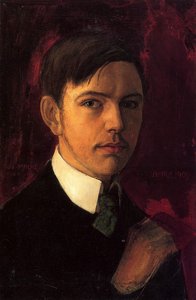
Авґуст Макке
1887 - 1914 , Німеччина
Короткі факти
- Artistic Movement Or Style: Експресіонізм
- Artists Or Movements Influenced By This Artist: ['Der Blaue Reiter']
- Artists Who Influenced This Artist:
- Роберт Делаunay
- Франц Мак
- Date Of Birth: 3 січня 1887
- Date Of Death: 26 вересня 1914
- Full Name: August Robert Ludwig Macke
- Nationality: Німецький
- Notable Artworks:
- Жінка в зеленому піджаку
- Купальники з містом на задньому плані
- Турецька кав'ярня
- Place Of Birth: Мецеде, Німеччина
Пов'язані статті
Топ-25 шедеврів П’єра-Огюста Ренуара: мистецтво, краса та декор для вашого дому
Відкрийте для себе 25 найкращих шедеврів П’єра-Огюста Ренуара! Імпресіонізм, балерини, портрети – історія мистецтва та натхнення для вашого дому. Репродукції картин високої якості на OriginalUniqueArt.com.

10 шедеврів німецького експресіонізму, що змінили мистецтво | OriginalUniqueArt
Пориньте у світ німецького експресіонізму! 10 шедеврів від Кандинського, Кірхнера та інших – історія творчості, емоцій та кольорів. Купуйте репродукції картин на OriginalUniqueArt.com та створіть неповторний інтер'єр.
August Macke: Expressionist Visions of Harmony & Modern Life
Explore the vibrant Expressionist paintings of August Macke (1887-1914). Discover his key role in Der Blaue Reiter, Fauvist influences, and captivating depictions of modern life. A comprehensive guide for art enthusiasts & collectors.

Unmasking Emotion: A Journey Through the Raw Power and Visceral Beauty of German Expressionism
Explore the raw emotional power of German Expressionism. From Kirchner to Die Brücke, discover how artists used distortion and vibrant color to unmask the human psyche. A deep dive into art history for the discerning collector and enthusiast.
The Visceral Cry of a Nation: Exploring Emotion & Distortion in German Expressionism
Explore the powerful world of German Expressionism with OriginalUniqueArt. Discover Kirchner, Nolde & Die Brücke's emotive masterpieces. Learn about this pivotal art movement and its lasting impact on modern art.



