

 Переглянути в інтер'єрі
 Надіслати
 Поділитися
 Деталі
 Посібник

 Завантажити
 Схожі предмети колекціонування
 Рентгенівське дослідження
 Слайд-шоу
 Статистика переглядів
Red house in park
 Oil On Canvas
- WallArt
- German Expressionism
 1914
1914- Modern
 60.0 x 80.0 cm
 Читати далі
Придбайте цифрову копію високої роздільної здатності з покращеною якістю, що значно перевершує онлайн-перегляд.
Кожен файл ретельно підготовлений нашими фахівцями за допомогою сучасних інструментів та професійної ручної ретуші. Ми гарантуємо виняткову чіткість, точну передачу кольору та високу деталізацію кожного зображення.
Фінальний файл надсилається електронною поштою протягом 72 годин і оптимізований для негайного використання у професійних виданнях та друкованих матеріалах. Таку якість обирають провідні дизайнерські студії, видавництва та галереї.
Цифрове зображення
Завантажте файл високої роздільної здатності для особистого використання, друку та творчих проєктів. ( Перейти до друку Купити картину ручної роботи)
Що входить у кожне замовлення цифрових зображень
Експертна цифрова доставка з гарантією якості
Обираючи OriginalUniqueArt.com, ви отримуєте не просто зображення — ви отримуєте професійно вдосконалений цифровий витвір мистецтва, створений з надзвичайною точністю та підкріплений гарантією задоволення. Ось усе, що автоматично додається до вашого замовлення:

Швидка доставка на email
Ваш цифровий файл із зображенням високої роздільної здатності буде надісланий вам електронною поштою протягом 72 годин після оформлення замовлення — він буде готовий до негайного використання.

Цифровий файл із покращенням ШІ
Ваш витвір мистецтва професійно оптимізовано за допомогою передових інструментів штучного інтелекту та ручної корекції, що забезпечує максимальну деталізацію, чіткість і точність передачі кольорів.

Безкоштовне повторне завантаження назавжди
Випадково видалили або втратили файл? Не хвилюйтеся — ми надішлемо його вам повторно в будь-який час безкоштовно.

Без митних зборів — завжди
Насолоджуйтесь вашим витвором мистецтва миттєво без жодних мит, зборів або плати за доставку — цифрові завантаження завжди не оподатковуються.

Гарантія точності кольорів
Ми гарантуємо максимально точне відтворення оригінальних кольорів на вашому цифровому зображенні завдяки використанню професійних інструментів та систем управління кольором.

100-денна гарантія задоволення клієнта
Якщо ви не задоволені придбаним цифровим зображенням, ми внесемо правки або повернемо 100% вартості протягом 100 днів — без зайвих запитань.

Гарантія повернення 100% коштів
Незадоволені покупкою? Отримайте повне повернення коштів протягом 100 днів після отримання цифрового файлу — без зайвих запитань.

Знижки на оптові замовлення
Купуйте 3 зображення — заощаджуйте 10% — Купуйте 5 — заощаджуйте 15% — Купуйте 10+ — заощаджуйте 20%. Чудово підходить для творчих проєктів, галерей та агентств.
A Moment Frozen in Tranquility: The Vibrant Soul of August Macke
In the fleeting moments before the world was irrevocably changed by the shadows of the Great War, August Macke captured a vision of peace that remains as luminous today as it was in 1914. His masterpiece, "Red House in Park," is far more than a mere landscape; it is a profound emblem of German Expressionism’s brief but incandescent flowering. At first glance, the viewer is greeted by a deceptally simple scene—a solitary red house nestled within a lush, verdant sanctuary. Yet, beneath this tranquil surface lies an intense emotional resonance, a deliberate attempt to distill the very spirit of life through color and form. The painting serves as a poignant window into a pivotal era, capturing a sense of stability and warmth even as the historical tides began to turn toward uncertainty.
The brilliance of Macke’s technique lies in his ability to prioritize feeling over meticulous detail. Eschewing the rigid accuracy of traditional realism, he employs loose, expressive brushstrokes that breathe life into the canvas. The composition is a masterclass in harmonious balance, where the commanding vibrant red of the house acts as a heartbeat for the entire piece, strategically positioned against a textured tapestry of deep greens and earthy browns. Through the skillful use of geometric shapes—squares and rectangles that provide structural integrity—Mackeb creates a sense of permanence. This is further heightened by his use of chiaroscuro, where the delicate interplay of light and shadow sculpts the contours of the trees and the architecture, lending a three-dimensional drama to an otherwise serene setting.
Symbolism and the Language of Color
For the discerning collector or interior designer, "Red House in Park" offers a sophisticated palette that can transform any space. The color choices are not merely descriptive but deeply symbolic; the warmth of the red hue serves as a defiant counterpoint to the pervasive gloom of the early 20th century. This fascination with Fauvist-inspired color palettes allows the artwork to evoke sensations of vitality and joy, making it an ideal centerpiece for rooms designed to inspire energy and calm simultaneously. The pathway leading toward the house invites the viewer’s eye into the scene, creating a sense of depth and dimension that draws one into the heart of the park.
Beyond its aesthetic appeal, the painting carries a heavy historical weight. As a prominent member of Der Blaue Reiter (The Blue Rider) movement, Macke sought to integrate the avant-garde elements of his time—such as the rhythmic energy of Impressionism and the bold color theory of Post-Impressionism—into a cohesive emotional experience. The house itself can be viewed as a symbol of domesticity and sanctuary, a quiet refuge amidst the encroaching chaos of the modern world. To possess a reproduction of this work is to hold a fragment of history—a beautiful, defiant moment of peace captured by an artist whose life was tragically cut short, leaving behind a legacy of light that continues to illuminate the halls of art history.
Запитання та відповіді
Який емоційний тон має «Red house in park» Авґуст Макке?
Емоційний тон, зафіксований для «Red house in park» Авґуст Макке, — Tranquil. Він узагальнює почуття, які виражає цей твір.
Яка насиченість кольорів у «Red house in park» Авґуст Макке?
Кольори твору «Red house in park» Авґуст Макке мають Balanced Soft насиченість. Насиченість описує, наскільки яскравими або приглушеними є кольори.
Який настрій передає «Red house in park» Авґуст Макке у межах German Expressionism?
Tranquil емоційність твору "Red house in park" супроводжує його стиль German Expressionism.
Біографія митця
A Life Cut Short: The Vibrant World of August Macke
August Robert Ludwig Macke, a name inextricably linked to the brief but intensely vibrant era of German Expressionism, lived a life tragically curtailed by the horrors of World War I. Born in Meschede, Westphalia, on January 3, 1887, his artistic journey was one of rapid transformation and passionate exploration – a relentless pursuit of capturing not just what he saw, but how he *felt* about it. From his early years spent amidst the coal-mining landscape of his hometown to his formative years in Bonn and later Düsseldorf, Macke’s life was shaped by an insatiable curiosity for new styles and a profound desire to translate the emotional resonance of the world onto canvas. His formal training at the Düsseldorf Art Academy (1904-1906) under Adolf Maennchen provided him with a solid foundation, but it was through independent study, travel, and encounters with groundbreaking artists that his unique voice truly began to emerge.Influences and Artistic Evolution
Macke’s artistic trajectory was profoundly shaped by the currents of early 20th-century art. A pivotal moment arrived in Paris in 1912, where he encountered Robert Delaunay, a leading figure in Orphism – a branch of Cubism that prioritized pure abstraction and dazzling color harmonies. This encounter proved transformative, introducing Macke to the concept of simultaneous contrast and fundamentally altering his approach to composition. He began experimenting with broken planes of color, fragmented forms, and an emphasis on capturing the *feeling* of light and space rather than strict representational accuracy. Simultaneously, his close friendship with Franz Marc, a key member of Der Blaue Reiter (The Blue Rider), drew him into the orbit of Wassily Kandinsky and other avant-garde thinkers. While Macke’s style diverged from Kandinsky's more purely abstract explorations, he embraced the group’s spirit of artistic freedom and its exploration of spiritual themes. His early works often reflected this influence, displaying a sensitivity to color and form that foreshadowed his later developments. He also absorbed elements of Fauvism, particularly in his use of bold, non-naturalistic colors, and Futurism's emphasis on dynamism and movement.The Blue Rider and the Pursuit of Harmony
As an integral member of Der Blaue Reiter, Macke played a crucial role in shaping the group’s artistic direction and disseminating its radical ideas. The Blue Rider collective sought to break free from traditional academic constraints and explore new ways of expressing emotion and spirituality through art. Macke contributed significantly to their exhibitions and publications, helping to establish the movement's reputation for innovation and experimentation. However, he wasn’t simply a passive participant; he forged his own distinctive path within the group. Unlike some of his colleagues who leaned towards darker, more angst-ridden themes, Macke consistently sought to portray beauty and harmony in the world around him – capturing the joy of sunlight on water, the vitality of rural life, and the simple pleasures of everyday existence. His paintings, such as *Bathing Girls with Town in the Background*, exemplify this approach: vibrant colors, simplified forms, and a sense of idyllic tranquility characterize his work. He masterfully blended elements of Fauvism, Cubism, and Futurism into a uniquely personal style, creating compositions that are both visually arresting and emotionally resonant. Woman in a Green Jacket, painted in 1913, is another prime example – a portrait radiating warmth and vitality through its bold color palette and confident brushwork.A Tragic End and Lasting Legacy
The outbreak of World War I brought an abrupt and devastating end to Macke’s promising career. Driven by patriotic fervor, he volunteered for military service in 1914, a decision that ultimately led to his tragic demise. He was killed in action on September 26th, near Champagne, France, at the young age of 27 – just weeks after arriving on the front lines. His final painting, *Farewell*, poignantly captures the somber mood that enveloped Europe as war engulfed the continent. Despite his untimely death, August Macke’s artistic legacy endures. He remains a significant figure in the history of Expressionism, celebrated for his vibrant colors, dynamic compositions, and optimistic vision. His paintings offer a powerful glimpse into a world on the cusp of change – a world grappling with uncertainty yet still imbued with beauty and hope.Exploring Macke’s World Today
Today, August Macke's works are held in prestigious collections across the globe, including the Staatsgalerie Moderner Kunst in Munich, the Museum Ludwig in Cologne, and the Kunsthaus Zürich. Several museums dedicated to Expressionism prominently feature his paintings, providing visitors with a valuable opportunity to experience the power of his art firsthand. The Westfälisches Landesmuseum Münster and the Kunstmuseum Bonn are particularly noteworthy for their extensive holdings of Macke’s work. His influence can be seen in the continued exploration of color and emotion by contemporary artists. Resources like Artnet and Wikipedia provide invaluable biographical information and insights into his artistic development, allowing art enthusiasts to delve deeper into his world and appreciate the enduring appeal of this remarkable artist whose life was tragically cut short but whose legacy continues to shine brightly.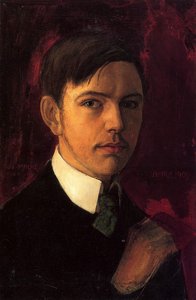
Авґуст Макке
1887 - 1914 , Німеччина
Коротко про автора
- Artistic Movement Or Style: Експресіонізм
- Artists Or Movements Influenced By This Artist: ['Der Blaue Reiter']
- Artists Who Influenced This Artist:
- Роберт Делаunay
- Франц Мак
- Date Of Birth: 3 січня 1887
- Date Of Death: 26 вересня 1914
- Full Name: August Robert Ludwig Macke
- Nationality: Німецький
- Notable Artworks:
- Жінка в зеленому піджаку
- Купальники з містом на задньому плані
- Турецька кав'ярня
- Place Of Birth: Мецеде, Німеччина