
 Переглянути в інтер'єрі
 Надіслати як листівку
 Поділитися
 Деталі витвору
 Посібник

 Завантажити
 Схожі екземпляри
 Рентгенівське дослідження
 Слайд-шоу
 Питання та відповіді
 Статистика
Market in Tunis II

- 20.0 x 25.0 cm


 Розгорнути текст
Отримайте файл, готовий до друку, якість якого значно перевищує якість веб-попереднього перегляду. Кожне цифрове зображення, яке ми продаємо, створене на основі високої роздільної здатності з нашої бази даних — зазвичай від 5 000 до 15 000 пікселів по ширині — тому ви можете впевнено друкувати у великому форматі, робити щільну обрізку або відтворювати найдрібніші деталі.
Жоден файл не залишається в нашій студії без уваги. Експерт із цифрової обробки звіряє кольори з оригінальною картиною та за потреби коригує їх, після чого покращує чіткість і деталізацію за допомогою професійних інструментів ретушування — завжди зберігаючи вірність мазкам пензля та стилю художника. Результатом є зображення, яке виглядає як справжня картина, а не як відскановане фото з накладеними фільтрами.
Ви затверджуєте результат перед завершенням замовлення: протягом 72 годин наш експерт надішле зображення електронною поштою для вашого перегляду. Не задоволені результатом? Ви можете попросити про внесення змін чи виправлень або отримати відшкодування, якщо якість не відповідає вашим очікуванням.
Саме на таку якість покладаються видавництва, дизайн-студії, галереї та друкарні.
Цифрове зображення
Завантажте файл високої роздільної здатності для особистого використання, друку та творчих проєктів. ( Перейти до друку Замовити картину ручної роботи)
Переваги кожного замовлення цифрових зображень
Експертна цифрова доставка з гарантією якості
Обираючи OriginalUniqueArt.com, ви отримуєте не просто зображення — ви отримуєте професійно вдосконалений цифровий витвір мистецтва, створений з надзвичайною точністю та підкріплений гарантією задоволення. Ось усе, що автоматично додається до вашого замовлення:

Швидка доставка на email
Ваш цифровий файл із зображенням високої роздільної здатності буде надісланий вам електронною поштою протягом 72 годин після оформлення замовлення — він буде готовий до негайного використання.

Цифровий файл із покращенням ШІ
Ваш витвір мистецтва професійно оптимізовано за допомогою передових інструментів штучного інтелекту та ручної корекції, що забезпечує максимальну деталізацію, чіткість і точність передачі кольорів.

Безкоштовне повторне завантаження назавжди
Випадково видалили або втратили файл? Не хвилюйтеся — ми надішлемо його вам повторно в будь-який час безкоштовно.

Без митних зборів — завжди
Насолоджуйтесь вашим витвором мистецтва миттєво без жодних мит, зборів або плати за доставку — цифрові завантаження завжди не оподатковуються.

Гарантія точності кольорів
Ми гарантуємо максимально точне відтворення оригінальних кольорів на вашому цифровому зображенні завдяки використанню професійних інструментів та систем управління кольором.

100-денна гарантія задоволення
Якщо ви не задоволені придбаним цифровим зображенням, ми внесемо правки або повернемо 100% вартості протягом 100 днів — без зайвих запитань.

Гарантія повернення 100% коштів
Незадоволені покупкою? Отримайте повне повернення коштів протягом 100 днів після отримання цифрового файлу — без зайвих запитань.

Знижки на оптові замовлення
Купуйте 3 зображення — заощаджуйте 10% — Купуйте 5 — заощаджуйте 15% — Купуйте 10+ — заощаджуйте 20%. Чудово підходить для творчих проєктів, галерей та агентств.
A Snapshot of Tunisian Life: August Macke’s Vibrant Market Scene
August Macke's “Market in Tunis II,” painted just months before his untimely death in 1914, isn’t merely a depiction of a bustling marketplace; it’s an immersive experience. Created during a pivotal journey with Paul Klee and Louis Moilliet to the North African city of Tunis, the painting captures a fleeting moment of vibrant energy and social interaction against a backdrop of intense light and color. Macke, already experimenting with Fauvist techniques – bold, non-naturalistic colors – found himself utterly captivated by the sensory overload of Tunis, translating this experience onto canvas with remarkable immediacy.
The scene unfolds within a tightly packed market square, dominated by a complex interplay of figures and structures. Buildings lean precariously, their facades rendered in planar segments that deliberately clash with the traditional perspective, hinting at Macke’s experimentation with geometric abstraction. This deliberate disruption of linear space isn't about creating illusion; it’s about conveying the overwhelming density and dynamism of the market itself – a feeling of being enveloped by movement and sound.
Color as Emotion: The Fauvist Influence
Macke’s masterful use of color is arguably the painting’s most striking feature. He abandons naturalistic hues, opting instead for intense, saturated tones—deep blues, fiery oranges, vibrant reds, and yellows—that seem to pulse with life. These aren't colors that simply describe; they evoke emotion. The warm palette dominates the foreground, drawing the eye towards the central figures while simultaneously suggesting a sense of heat and activity. Notice how the deep greens and browns of the surrounding buildings provide a grounding contrast, anchoring the scene within its Tunisian context.
The influence of Fauvism is undeniable here. Macke, like his contemporaries, sought to liberate color from its descriptive function, using it purely for expressive effect. This bold approach aligns with the broader artistic currents of the early 20th century, reflecting a desire to capture subjective experience rather than objective reality.
Details and Storytelling: A Moment Frozen in Time
Despite the flattened perspective and vibrant colors, Macke meticulously renders details that bring the scene to life. The richly textured camel-hair coats worn by the two Arab figures in the foreground are particularly noteworthy – their thick seams and deep hues immediately conveying a sense of warmth and practicality. The inclusion of episodic events, such as the man leaning on a column, adds layers of narrative complexity, suggesting that this is not simply a snapshot but a carefully constructed tableau.
Furthermore, the painting’s composition subtly guides the viewer's eye through the scene. The diagonal lines created by the stalls and figures create a sense of movement, while the central figure acts as a focal point, drawing attention to the heart of the market activity. Macke’s ability to capture both the overall atmosphere and individual details is a testament to his artistic skill.
A Legacy of Light and Emotion
“Market in Tunis II” stands as a powerful example of August Macke's unique artistic vision. It’s a painting that transcends its subject matter, offering viewers a glimpse into the vibrant culture and sensory experience of early 20th-century Tunisia. The painting’s emotional intensity, combined with Macke’s innovative use of color and perspective, continues to resonate with audiences today, cementing its place as a significant work in the history of modern art. Reproductions capture only a fraction of the original's impact, but offer an accessible way to appreciate this remarkable artist’s ability to translate fleeting moments into enduring works of beauty.
Питання та відповіді
Чи залишився твір «Market in Tunis II» у батьківщині свого автора?
Так — твір зберігається в країні походження митця. Твір "Market in Tunis II" зберігається в Німеччина, тоді як Авґуст Макке народився(-лася) в Німеччина.
Який домінуючий колір у «Market in Tunis II» роботи Авґуст Макке?
Найбільш виразним кольором у творі «Market in Tunis II» є Putty (#d8d4c8). Домінантний колір допомагає підібрати витвір мистецтва до інтер'єру.
Для якого приміщення та з якою метою рекомендується "Market in Tunis II"?
«Market in Tunis II» чудово підійде для Statement, а найкращим місцем для його розміщення стане Living Room.
Біографія митця
A Life Cut Short: The Vibrant World of August Macke
August Robert Ludwig Macke, a name inextricably linked to the brief but intensely vibrant era of German Expressionism, lived a life tragically curtailed by the horrors of World War I. Born in Meschede, Westphalia, on January 3, 1887, his artistic journey was one of rapid transformation and passionate exploration – a relentless pursuit of capturing not just what he saw, but how he *felt* about it. From his early years spent amidst the coal-mining landscape of his hometown to his formative years in Bonn and later Düsseldorf, Macke’s life was shaped by an insatiable curiosity for new styles and a profound desire to translate the emotional resonance of the world onto canvas. His formal training at the Düsseldorf Art Academy (1904-1906) under Adolf Maennchen provided him with a solid foundation, but it was through independent study, travel, and encounters with groundbreaking artists that his unique voice truly began to emerge.Influences and Artistic Evolution
Macke’s artistic trajectory was profoundly shaped by the currents of early 20th-century art. A pivotal moment arrived in Paris in 1912, where he encountered Robert Delaunay, a leading figure in Orphism – a branch of Cubism that prioritized pure abstraction and dazzling color harmonies. This encounter proved transformative, introducing Macke to the concept of simultaneous contrast and fundamentally altering his approach to composition. He began experimenting with broken planes of color, fragmented forms, and an emphasis on capturing the *feeling* of light and space rather than strict representational accuracy. Simultaneously, his close friendship with Franz Marc, a key member of Der Blaue Reiter (The Blue Rider), drew him into the orbit of Wassily Kandinsky and other avant-garde thinkers. While Macke’s style diverged from Kandinsky's more purely abstract explorations, he embraced the group’s spirit of artistic freedom and its exploration of spiritual themes. His early works often reflected this influence, displaying a sensitivity to color and form that foreshadowed his later developments. He also absorbed elements of Fauvism, particularly in his use of bold, non-naturalistic colors, and Futurism's emphasis on dynamism and movement.The Blue Rider and the Pursuit of Harmony
As an integral member of Der Blaue Reiter, Macke played a crucial role in shaping the group’s artistic direction and disseminating its radical ideas. The Blue Rider collective sought to break free from traditional academic constraints and explore new ways of expressing emotion and spirituality through art. Macke contributed significantly to their exhibitions and publications, helping to establish the movement's reputation for innovation and experimentation. However, he wasn’t simply a passive participant; he forged his own distinctive path within the group. Unlike some of his colleagues who leaned towards darker, more angst-ridden themes, Macke consistently sought to portray beauty and harmony in the world around him – capturing the joy of sunlight on water, the vitality of rural life, and the simple pleasures of everyday existence. His paintings, such as *Bathing Girls with Town in the Background*, exemplify this approach: vibrant colors, simplified forms, and a sense of idyllic tranquility characterize his work. He masterfully blended elements of Fauvism, Cubism, and Futurism into a uniquely personal style, creating compositions that are both visually arresting and emotionally resonant. Woman in a Green Jacket, painted in 1913, is another prime example – a portrait radiating warmth and vitality through its bold color palette and confident brushwork.A Tragic End and Lasting Legacy
The outbreak of World War I brought an abrupt and devastating end to Macke’s promising career. Driven by patriotic fervor, he volunteered for military service in 1914, a decision that ultimately led to his tragic demise. He was killed in action on September 26th, near Champagne, France, at the young age of 27 – just weeks after arriving on the front lines. His final painting, *Farewell*, poignantly captures the somber mood that enveloped Europe as war engulfed the continent. Despite his untimely death, August Macke’s artistic legacy endures. He remains a significant figure in the history of Expressionism, celebrated for his vibrant colors, dynamic compositions, and optimistic vision. His paintings offer a powerful glimpse into a world on the cusp of change – a world grappling with uncertainty yet still imbued with beauty and hope.Exploring Macke’s World Today
Today, August Macke's works are held in prestigious collections across the globe, including the Staatsgalerie Moderner Kunst in Munich, the Museum Ludwig in Cologne, and the Kunsthaus Zürich. Several museums dedicated to Expressionism prominently feature his paintings, providing visitors with a valuable opportunity to experience the power of his art firsthand. The Westfälisches Landesmuseum Münster and the Kunstmuseum Bonn are particularly noteworthy for their extensive holdings of Macke’s work. His influence can be seen in the continued exploration of color and emotion by contemporary artists. Resources like Artnet and Wikipedia provide invaluable biographical information and insights into his artistic development, allowing art enthusiasts to delve deeper into his world and appreciate the enduring appeal of this remarkable artist whose life was tragically cut short but whose legacy continues to shine brightly.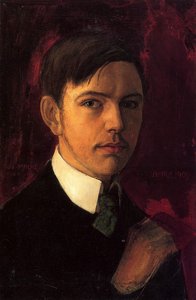
Авґуст Макке
1887 - 1914 , Німеччина
Короткі факти
- Artistic Movement Or Style: Експресіонізм
- Artists Or Movements Influenced By This Artist: ['Der Blaue Reiter']
- Artists Who Influenced This Artist:
- Роберт Делаunay
- Франц Мак
- Date Of Birth: 3 січня 1887
- Date Of Death: 26 вересня 1914
- Full Name: August Robert Ludwig Macke
- Nationality: Німецький
- Notable Artworks:
- Жінка в зеленому піджаку
- Купальники з містом на задньому плані
- Турецька кав'ярня
- Place Of Birth: Мецеде, Німеччина