Переглянути в інтер'єрі
 Надіслати як листівку
 Поділитися
 Детальніше

 Завантажити
 Схожі експонати
 Рентгенівське дослідження
 Слайд-шоу
 Статистика
William Fermor
 Oil On Canvas
- WallArt
- Neoclassicism
 1757
1757- Early Modern
 61.0 x 47.0 cm
 Ашмолеанський музей мистецтва та археології
 Читати далі
Гікле / Художній принт
Музейна якість друку جيкле або на полотні з оперативним виготовленням та різноманітними варіантами фінішної обробки. ( Замовити репродукцію ручної роботи Перейти до цифрових зображень)




P118B $10

P118H $10

P118W $10

P438Z $10

P508JH $12

P508YH $12

P805H $10

P805Z $10

P919BZ $10

P919G $10

P919XJ $10

P959ZH $10

P968JZ $12

W106C $8

W218G $10

W218JH $8

W218Y $10

W307PJ $10

W316G $10

W316PJ $8

W316Y $10

W398PJ $8

W4111J $10

W500HY $15

W500JH $15

W692G $12

W849H $8

W940BG $15

W953PJ $8




Обирайте з наших стандартних розмірів, що відповідають оригінальним пропорціям твору мистецтва.

Ви можете вказати власні розміри, щоб репродукція ідеально підійшла до конкретної рами або інтер'єру. Якщо обраний вами розмір не відповідає пропорціям оригіналу, ми або обріжемо полотно, або розширимо зображення за допомогою дзеркального відображення чи суцільної заливки країв. Перед початком виробництва вам буде надіслано цифровий макет для затвердження.
Будь ласка, зверніть увагу, що попередній перегляд на екрані не відображає фактичне обрізання або розширення. Тільки макет точно покаже фінальну композицію.
Хоча можливість замовлення індивідуальних розмірів доступна, ми рекомендуємо обирати формат із попередньо визначеного списку, щоб зберегти оригінальні пропорції.
Доставка по всьому світу () за 2 тижні замість стандартних 4/5 тижнів. (10 Вересень)

Безкоштовна експрес-доставка по всьому світу

Високоякісне лляне полотно

Повне страхове покриття доставки

Гарантія відшкодування митних зборів

Гарантія точного відтворення кольорів

Політика повернення протягом 100 днів (тільки у разі виявлення дефектів)

Гарантія повернення 100% коштів

Пропозиція на оптові замовлення
 Скляний варіант доступний лише для розмірів до 110 см

William Fermor
Гікле / Художній принт
Розмір репродукції
-


Підсумкова вартість
$ 80
A Vision of Neoclassical Grace: The Portrait of William Fermor
In the delicate transition between the exuberant flourishes of the Rococo and the disciplined clarity of Neoclassicism, Anton Raphael Mengs’s 1757 masterpiece, “William Fermor,” emerges as a profound testament to artistic evolution. This striking oil on canvas does more than merely capture the likeness of a Scottish-born officer in the Imperial Russian Army; it serves as a window into an era where the intellectual rigor of the Enlightenment began to reshape the visual language of Europe. As one gazes upon the portrait, there is an immediate sense of dignified resolve, a quality that transcends the sitter's individual identity to touch upon universal ideals of nobility and strength.
The technical execution of the piece reveals Mengs’s unparalleled mastery over light and form. Utilizing a sophisticated application of chiaroscuro, the artist orchestrates a dramatic interplay between shadow and illumination to sculpt Fermor’s features with sculptural precision. The subtle textures of the background wall act as a quiet stage, ensuring that the viewer's focus remains anchored on the subject's commanding presence. Every brushstroke contributes to a sense of tactile reality, from the crispness of the white cravat to the heavy, luxurious weight of the crimson coat, inviting the observer to appreciate the meticulous craftsmanship that defines this pivotal work of the mid-18th century.
Symbolism and the Language of Authority
Beyond its surface beauty, “William Fermor” is rich with symbolic layers that would have been deeply legible to a contemporary audience. The sitter’s attire—a vibrant crimson coat embellished with gleaming gold buttons—is far from a mere fashion statement; it is a deliberate reference to royal heraldry, signaling prestige, authority, and a high social standing. This sartorial grandeur is balanced by the refined elegance of his powdered wig and cravat, elements that evoke the idealized dignity of Roman antiquity. Through these details, Mengs aligns Fermor with the classical virtues of gravitas and decorum, echoing the influential aesthetic theories of Johann Joachim Winckelmann.
The composition itself functions as a visual anchor for the Neoclassical movement. By placing Fermor against a restrained, subtly textured backdrop, Mengs avoids the distracting ornamentation typical of the preceding Rococo style, opting instead for a clarity that mirrors the stability and order sought during the Seven Years’ War era. This deliberate simplicity allows the emotional weight of the portrait to resonate more deeply, making it an ideal centerpiece for those who appreciate art that communicates power through restraint rather than excess.
An Enduring Legacy for the Modern Collector
For the discerning collector or interior designer, a high-quality reproduction of “William Fermor” offers much more than a decorative element; it provides a profound connection to art history. The painting’s palette of deep reds, brilliant golds, and soft neutrals possesses a timeless versatility, capable of anchoring a room with a sense of historical weight and intellectual sophistication. Whether placed in a formal study, a grand library, or a contemporary living space, the portrait introduces an atmosphere of stately composure and refined taste.
Owning a piece that embodies the bridge between two great eras allows for a continuous dialogue with the past. The artwork’s ability to evoke both the warmth of human character and the cold precision of classical ideals makes it a captivating subject for contemplation. It remains an evocative choice for those seeking to surround themselves with art that inspires respect, commands attention, and celebrates the enduring beauty of the human spirit captured through the lens of classical perfection.
Біографія митця
Міст між світами: Життя та мистецтво Антона Рафаеля Меньса
Антон Рафаель Меньс з’явився на світ у надзвичайно цікавий період європейського мистецтва — у часи, коли пишні орнаменти рококо починали поступатися місцем новому шануванню класичних ідеалів. Народившись у 1728 році в Усті-над-Лабем, Богемія (регіон, що нині є частиною Чехії), він пройшов шлях митця, глибоко сформований як його походженням, так і інтелектуальми течіями Просвітництва. Його батько, Ізмаїл Меньс, данський живописець, що мав прихильність при дворі Дрездена, рано розпізнав винятковий талант юного Антона. Це визнання призвело до доленосного кроку у 1741 році: переїзду до Рима, де молодий митець занурився у вивчення античних шедеврів та праць майстрів Відродження, таких як Рафаель. Саме цей досвід назавжди відбився на його естетичному сприйнятті, прищепивши йому глибоку повагу до класичної форми, чіткості та композиції — якостей, що стали візитівкою його зрілого стилю. Перші роки були присвячені ретельному копіюванню, що було не просто вправою у техніці, а справжнім мистецьким паломництвом, спрямованим на поглинання самої суті генія Рафаеля.Від Дрездена до Мадрида: Кар'єра крізь європейські двори
Кар'єра Меньса розгорталася в кількох визначних європейських дворах, кожен з яких залишив свій унікальний відбиток на його творчому розвитку. У 1749 році він здобув престижну посаду придворного художника Фрідріха Августа, курфюрста Саксонії, що забезпечило йому як фінансову стабільність, так і свободу підтримувати свою базу в Римі — епіцентрі його художнього натхнення. Проте саме фрески принесли йому справжню славу. «Парнас» у Віллі Альбані в Римі, завершений близько 1761 року, миттєво став сенсацією, отримавши визнання за гармонійну композицію, елегантні постаті та витончене, але потужне відтворення класичної міфології. Ця робота не була просто декоративним елементом; це був маніфест — свідома спроба синтезувати барокову велич із новоприйденими принципами неокласицизму. За цим послідували нові замовлення, зокрема приголомшлива фреска на куполі церкви Сант-Еусебіо в Римі, що продемонструвала його майстерність у монументальному декорі та просторовій ілюзії. Мабуть, найамбітнішим його починанням стало запрошення з іспанського двору у 1761 році. Він вирушив до Мадрида, де отримав завдання прикрасити кілька королівських палаців, що завершилося створенням величного стелі Бенкетної зали Королівського палацу — роботи, яка вважається одним із його найкращих досягнень, демонструючи дивовижну здатність поєднувати італійську елегантність з іспанським темпераментом.Зв'язок із Вінкельманом: Формування неокласичної думки
Еволюція Меньса не була зумовлена лише візуальним вивченням мистецтва; вона була глибоко переплетена з інтелектуальною дискусією. Вирішальним поворотним моментом стала його близька дружба та співпраця з Йоганном Йоахімом Вінкельманом, піонером історії мистецтва, чиї праці стали фундаментом для неокласичного руху. Вінкельман виступав за повернення до чистоти та простоти давньогрецького мистецтва, пропонуючи естетику, засновану на розумі, порядку та ідеалізованих формах. Меньс не просто ілюстрував теорії Вінкельмана; він брав активну участь у їхньому формуванні, перетворюючи абстрактні концепції на відчутні художні вирази. Разом вони вірили, що справжня краса полягає не в поверхневому орнаменті, а в основоположних принципах гармонії та пропорції, знайдених у класичній античності. Це партнерство виходило за межі теоретичних дискусій; воно проявлялося в самих картинах Меньса, які дедалі більше відображали акцент Вінкельмана на шляхетній простоті та стриманості емоцій. Вплив був взаємним: тексти Вінкельмана забезпечили філософську базу для мистецьких пошуків Меньса, тоді як мистецтво Меньса слугувало візуальним доказом життєздатності — і краси — неокласичних ідеалів.Спадщина та вплив: Першопроходець своєї епохи
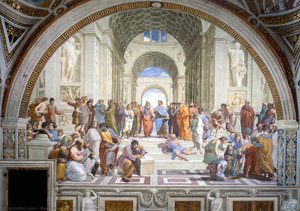
Антон Рафаель Меньс помер у Римі в 1779 році, залишивши по собі спадщину, що виходить далеко за межі його вражаючого корпусу робіт. Він був більше ніж просто художником; він був ключовою постаттю переходу від однієї мистецької ери до іншої. Хоча він залишався вкоріненим у барокову традицію — що було помітно в його драматичному використанні світла й тіні та майстерності ілюзіоністичних технік — Меньс сміливо прийняв нові принципи неокласицизму, прокладаючи шлях таким митцям, як Жак-Луї Давід та Антоніо Канова. Його акцент на класичних ідеалах у поєднанні з технічною віртуозністю утвердив його як провідну силу у формуванні мистецтва XVIII століття. «Афінська школа», написана для герцога Нортумберлендського, є свідченням його здатності синтезувати історичний прецедент із сучасними художніми відчуттями. Окрім живопису та фресок, вплив Меньса поширився й на освіту: він обіймав посаду директора Ватиканської школи живопису, плекаючи нове покоління митців, виховане на класичних принципах. Він був складною постаттю — відданим католиком, який водночас був прихильником ідей Просвітництва, художником, що балансував між традицією та інновацією. Його життя та творчість представляють захоплююче перетинення мистецької майстерності, інтелектуальної допитливості та історичних обставин, закріплюючи за ним місце справжнього піонера неокласичного мистецтва. Його вплив резонує і сьогодні, нагадуючи нам про незмінну силу класичних ідеалів надихати та трансформувати художнє самовираження.
Антон Рафаэль Меньґс
1728 - 1779 , Чехія
Короткі факти
- Artistic Movement Or Style: Неокласицизм
- Artists Or Movements Influenced By This Artist: ['Жан Жозеф Восьєр']
- Artists Who Influenced This Artist: ['Рафаель']
- Date Of Birth: 12 березня 1728 р.
- Date Of Death: 29 червня 1779 р.
- Full Name: Антон Рафаэль Мэнс
- Nationality: Німецький художник
- Notable Artworks:
- Театр Посейдона
- Парнас
- Place Of Birth: Усті над Лабем, Чехія
Пов'язані статті

Baroque Classicism: The Grandeur of Order and Drama in 17th-Century Art History
Explore the profound elegance of Baroque Classicism. Discover how 17th-century masters synthesized dramatic emotion with classical order through the lens of the Counter-Reformation and the works of legends like Carlo Maratta and Andrea Sacchi.

Neoclassical Art: The Timeless Elegance of Order, Virtue, and Classical Grace
Explore the profound elegance of Neoclassical art. Discover the principles of order, symmetry, and virtue through the works of masters like David and Mengs. Immerse yourself in a journey of classical grace and timeless aesthetic perfection.
Baroque Classicism: Reconciling Drama & Order in 17th-Century Art
Explore the captivating world of Baroque Classicism! Discover its history, key artists like Caravaggio & Rubens, and defining characteristics. Expert insights & high-quality reproductions at OriginalUniqueArt.
Neoclassicism Unveiled: The Timeless Elegance of Order, Reason, and Classical Antiquity
Explore the profound elegance of Neoclassicism. Discover how Enlightenment ideals, the discovery of Pompeii, and masters like Jacques-Louis David revived the glory of Greek and Roman antiquity through art defined by order, reason, and timeless beauty.
Рафаель: 25 шедеврів епохи Відродження для вашого дому | OriginalUniqueArt
Відкрийте 25 найвідоміших шедеврів Рафаеля! Історія мистецтва Відродження, техніки живопису та неймовірні історії кожної картини. Купуйте репродукції картин Рафаеля для вашого дому на OriginalUniqueArt.com.