Переглянути в інтер'єрі
 Надіслати
 Поділитися
 Деталі
 Посібник

 Завантажити
 Схожі предмети колекціонування
 Рентгенівське дослідження
 Слайд-шоу
 Статистика переглядів
Self-Portrait
 Oil
Oil- WallArt
- Neoclassical Style
 1779
1779- Early Modern
 57.0 x 43.0 cm
 Державні музеї Берліна
 Читати далі
Олійная репродукція ручної роботи
Написана вручну олією на полотні у вашому розмірі та рамі, виготовлена на замовлення нашими художниками. ( Перейти до друку Перейти до цифрових зображень)




P118B ₴10

P118H ₴10

P118W ₴10

P438Z ₴10

P508JH ₴12

P508YH ₴12

P805H ₴10

P805Z ₴10

P919BZ ₴10

P919G ₴10

P919XJ ₴10

P959ZH ₴10

P968JZ ₴12

W106C ₴8

W218G ₴10

W218JH ₴8

W218Y ₴10

W307PJ ₴10

W316G ₴10

W316PJ ₴8

W316Y ₴10

W398PJ ₴8

W4111J ₴10

W500HY ₴15

W500JH ₴15

W692G ₴12

W849H ₴8

W940BG ₴15

W953PJ ₴8




Обирайте з наших стандартних розмірів, що відповідають оригінальним пропорціям твору мистецтва.

Введіть необхідну ширину та висоту, щоб картина підійшла до вашої рами або стіни. Оскільки це ручний розпис, для розміру іншої форми художник може написати трохи більше навколо картини або трохи обрізати її — вибір за вами. Перед початком роботи ми надішлемо вам цифровий макет для затвердження. Зображення, показане на цій сторінці, не є реальним результатом — лише макет відображає майбутній вигляд.
Після оформлення замовлення команда OriginalUniqueArt.com зв'яжеться з клієнтом електронною поштою для отримання інструкцій та надасть попередній макет
Доставка по всьому світу () за 3–4 тижні замість стандартних 5 тижнів. (24 Жовтень). Без жодних компромісів у якості.

Безкоштовна експрес-доставка по всьому світу

Високоякісне лляне полотно

Повне страхове покриття доставки

Гарантія повернення митних зборів

Гарантія точного відтворення кольорів

Політика повернення протягом 100 днів (лише у разі виявлення дефектів)

Гарантія повернення 100% коштів

Знижка на оптові замовлення
 Скляний варіант доступний лише для розмірів до 110 см

Self-Portrait
Техніка репродукції
Розмір репродукції
-


Загальна вартість
₴ 13486
A Window into Baroque Reflection: The Soul of Mengs’ Self-Portrait
In the quiet intensity of Anton Raphael Mengs' Self-Portrait, we encounter more than just a mere likeness; we find ourselves standing before a profound meditation on identity and the weight of artistic genius. Completed in 1779, this work serves as a pivotal bridge between two monumental eras of European art. While it retains the dramatic, emotive fervor characteristic of the Baroque period, it simultaneously breathes with the disciplined clarity of the burgeoning Neoclassical movement. As the Enlightenment began to champion reason and classical ideals, Mengs used his own image to navigate this complex duality, offering a gaze that is as much about intellectual introspection as it is about physical presence.
The composition is masterfully orchestrated to command the viewer's attention through a sense of contemplative stillness. Seated three-quarters to the right upon a chair draped in opulent damask fabric, the artist directs his gaze outward, yet his eyes seem to look through the viewer toward an unseen horizon. This deliberate arrangement creates a tension between the formal, structured pose and the raw, psychological depth of his expression. The subject is rendered with such precision that one can almost feel the texture of the heavy fabrics and the weight of the artist's thoughts, making it an ideal centerpiece for those who appreciate art that invites deep conversation and quiet reflection.
Mastery of Light and the Neoclassical Spirit
Technically, the painting is a tour de force of chiaroscuro. Mengs employs a dramatic interplay of light and shadow to sculpt his features, lending the portrait a palpable sense of three-dimensionality and physical gravity. This technique does not merely illuminate the face; it carves it out of the darkness, emphasizing the furrowed brow and the serious, focused expression that suggests a mind deeply engaged in the rigors of creation. The palette is intentionally restrained, dominated by muted gray tones and deep shadows that reflect the prevailing aesthetic shift away from the flamboyant, often frivolous colors of the Rococo era.
The brushwork itself speaks to Mengs' technical virtuosity—precise, controlled, yet possessing a subtle texture that breathes life into the skin and cloth. By prioritizing clarity and restraint over ornamentation, Mengs aligns himself with the new classical ideals of his time, seeking beauty in truth and proportion rather than in excess. For the discerning collector or interior designer, this piece offers a sophisticated elegance; its muted tones and structured composition allow it to integrate seamlessly into refined, modern spaces while providing a timeless anchor of historical significance.
An Enduring Legacy for the Modern Collector
To possess a reproduction of this self-portrait is to hold a fragment of art history's most transformative moment. Mengs was not merely a painter but a visionary who helped redefine the visual language of Europe, moving away from the decorative whimsy of the past toward a renewed fascination with Greco-Roman antiquity. His work embodies the struggle of an artist grappling with his legacy and the moral responsibilities of beauty in an age of reason.
Whether placed in a private study, a grand library, or a contemporary living space, this artwork radiates an aura of intellectual prestige and emotional depth. It is a piece designed for those who seek more than decoration—it is for those who desire an encounter with the profound. The Self-Portrait remains a hauntingly beautiful testament to the enduring power of the human spirit, captured in a moment of eternal, quiet brilliance.
Запитання та відповіді
Чи можу я побачити «Self-Portrait» Антон Рафаэль Меньґс при іншому освітленні?
«Self-Portrait» можна досліджувати шар за шаром на сторінці Рентгенівське дослідження твору — це інтерактивний візуалізатор, натхненний освітлювальним столом реставратора, що пропонує одинадцять оптичних пластів зображення.
«Self-Portrait» Антон Рафаэль Меньґс — це світлий чи темний твір мистецтва?
Зафіксовані значення для «Self-Portrait» Антон Рафаэль Меньґс: яскравість — deep_shadow, світловий потік — Dark.
Який розмір друку «Self-Portrait» Антон Рафаэль Меньґс підійде для рекомендованої кімнати?
Для Living Room рекомендується друк «Self-Portrait» у розмірі Small.
Біографія митця
Міст між світами: Життя та мистецтво Антона Рафаеля Меньса
Антон Рафаель Меньс з’явився на світ у надзвичайно цікавий період європейського мистецтва — у часи, коли пишні орнаменти рококо починали поступатися місцем новому шануванню класичних ідеалів. Народившись у 1728 році в Усті-над-Лабем, Богемія (регіон, що нині є частиною Чехії), він пройшов шлях митця, глибоко сформований як його походженням, так і інтелектуальми течіями Просвітництва. Його батько, Ізмаїл Меньс, данський живописець, що мав прихильність при дворі Дрездена, рано розпізнав винятковий талант юного Антона. Це визнання призвело до доленосного кроку у 1741 році: переїзду до Рима, де молодий митець занурився у вивчення античних шедеврів та праць майстрів Відродження, таких як Рафаель. Саме цей досвід назавжди відбився на його естетичному сприйнятті, прищепивши йому глибоку повагу до класичної форми, чіткості та композиції — якостей, що стали візитівкою його зрілого стилю. Перші роки були присвячені ретельному копіюванню, що було не просто вправою у техніці, а справжнім мистецьким паломництвом, спрямованим на поглинання самої суті генія Рафаеля.Від Дрездена до Мадрида: Кар'єра крізь європейські двори
Кар'єра Меньса розгорталася в кількох визначних європейських дворах, кожен з яких залишив свій унікальний відбиток на його творчому розвитку. У 1749 році він здобув престижну посаду придворного художника Фрідріха Августа, курфюрста Саксонії, що забезпечило йому як фінансову стабільність, так і свободу підтримувати свою базу в Римі — епіцентрі його художнього натхнення. Проте саме фрески принесли йому справжню славу. «Парнас» у Віллі Альбані в Римі, завершений близько 1761 року, миттєво став сенсацією, отримавши визнання за гармонійну композицію, елегантні постаті та витончене, але потужне відтворення класичної міфології. Ця робота не була просто декоративним елементом; це був маніфест — свідома спроба синтезувати барокову велич із новоприйденими принципами неокласицизму. За цим послідували нові замовлення, зокрема приголомшлива фреска на куполі церкви Сант-Еусебіо в Римі, що продемонструвала його майстерність у монументальному декорі та просторовій ілюзії. Мабуть, найамбітнішим його починанням стало запрошення з іспанського двору у 1761 році. Він вирушив до Мадрида, де отримав завдання прикрасити кілька королівських палаців, що завершилося створенням величного стелі Бенкетної зали Королівського палацу — роботи, яка вважається одним із його найкращих досягнень, демонструючи дивовижну здатність поєднувати італійську елегантність з іспанським темпераментом.Зв'язок із Вінкельманом: Формування неокласичної думки
Еволюція Меньса не була зумовлена лише візуальним вивченням мистецтва; вона була глибоко переплетена з інтелектуальною дискусією. Вирішальним поворотним моментом стала його близька дружба та співпраця з Йоганном Йоахімом Вінкельманом, піонером історії мистецтва, чиї праці стали фундаментом для неокласичного руху. Вінкельман виступав за повернення до чистоти та простоти давньогрецького мистецтва, пропонуючи естетику, засновану на розумі, порядку та ідеалізованих формах. Меньс не просто ілюстрував теорії Вінкельмана; він брав активну участь у їхньому формуванні, перетворюючи абстрактні концепції на відчутні художні вирази. Разом вони вірили, що справжня краса полягає не в поверхневому орнаменті, а в основоположних принципах гармонії та пропорції, знайдених у класичній античності. Це партнерство виходило за межі теоретичних дискусій; воно проявлялося в самих картинах Меньса, які дедалі більше відображали акцент Вінкельмана на шляхетній простоті та стриманості емоцій. Вплив був взаємним: тексти Вінкельмана забезпечили філософську базу для мистецьких пошуків Меньса, тоді як мистецтво Меньса слугувало візуальним доказом життєздатності — і краси — неокласичних ідеалів.Спадщина та вплив: Першопроходець своєї епохи
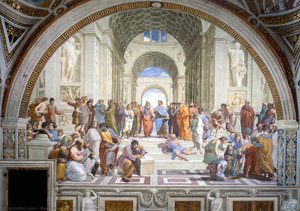
Антон Рафаель Меньс помер у Римі в 1779 році, залишивши по собі спадщину, що виходить далеко за межі його вражаючого корпусу робіт. Він був більше ніж просто художником; він був ключовою постаттю переходу від однієї мистецької ери до іншої. Хоча він залишався вкоріненим у барокову традицію — що було помітно в його драматичному використанні світла й тіні та майстерності ілюзіоністичних технік — Меньс сміливо прийняв нові принципи неокласицизму, прокладаючи шлях таким митцям, як Жак-Луї Давід та Антоніо Канова. Його акцент на класичних ідеалах у поєднанні з технічною віртуозністю утвердив його як провідну силу у формуванні мистецтва XVIII століття. «Афінська школа», написана для герцога Нортумберлендського, є свідченням його здатності синтезувати історичний прецедент із сучасними художніми відчуттями. Окрім живопису та фресок, вплив Меньса поширився й на освіту: він обіймав посаду директора Ватиканської школи живопису, плекаючи нове покоління митців, виховане на класичних принципах. Він був складною постаттю — відданим католиком, який водночас був прихильником ідей Просвітництва, художником, що балансував між традицією та інновацією. Його життя та творчість представляють захоплююче перетинення мистецької майстерності, інтелектуальної допитливості та історичних обставин, закріплюючи за ним місце справжнього піонера неокласичного мистецтва. Його вплив резонує і сьогодні, нагадуючи нам про незмінну силу класичних ідеалів надихати та трансформувати художнє самовираження.
Антон Рафаэль Меньґс
1728 - 1779 , Чехія
Довідкова інформація
- Artistic Movement Or Style: Неокласицизм
- Artists Or Movements Influenced By This Artist: ['Жан Жозеф Восьєр']
- Artists Who Influenced This Artist: ['Рафаель']
- Date Of Birth: 12 березня 1728 р.
- Date Of Death: 29 червня 1779 р.
- Full Name: Антон Рафаэль Мэнс
- Nationality: Німецький художник
- Notable Artworks:
- Театр Посейдона
- Парнас
- Place Of Birth: Усті над Лабем, Чехія
Схожі статті

Топ-10 шедеврів бароко: картини, що змінили мистецтво | OriginalUniqueArt.com
Відкрийте для себе 10 шедеврів бароко від Караваджо, Рембрандта та Рубенса! Історія мистецтва, техніки живопису та натхнення для вашого інтер'єру. Репродукції картин високої якості – OriginalUniqueArt.com

The Enduring Legacy of Fine Art Prints: Technique, History & Aesthetic Impact
Explore the rich history & techniques of fine art prints. Discover investment potential, assess authenticity, and learn how to preserve your collection with expert guidance. Trusted insights for discerning collectors.

Giclée Prints: Archival Quality & Aesthetic Nuances for the Discerning Collector
Explore the world of giclée prints with OriginalUniqueArt. Learn about archival quality, aesthetic nuances & investment potential. Expert guidance for discerning art collectors seeking museum-quality reproductions and lasting value.

Барокова драма: мистецтво, що привносить велич у дім
Відкрийте для себе велич бароко! Дізнайтесь про історію стилю, особливості українського бароко та як створити розкішний інтер'єр. Ексклюзивні репродукції картин від .

Echoes of Time: Exploring the Enduring Appeal & Historical Context of Vintage Art Prints
Explore the captivating world of vintage art prints! Discover their history, collecting tips & enduring appeal. Expert insights on chromolithography and building a legacy collection with OriginalUniqueArt.