

 Переглянути в інтер'єрі
 Надіслати як листівку
 Поділитися
 Детальніше

 Завантажити
 Схожі експонати
 Рентгенівське дослідження
 Слайд-шоу
Untitled (D2X6N7)
 Acrylic On Canvas
- WallArt
- Dutch Realism
 50.0 x 86.0 cm
 Музей Метрополітен
 Читати далі
Гікле / Художній принт
Музейна якість друку جيкле або на полотні з оперативним виготовленням та різноманітними варіантами фінішної обробки. ( Замовити репродукцію ручної роботи Купити цифрове зображення)




P118B $10

P118H $10

P118W $10

P438Z $10

P508JH $12

P508YH $12

P805H $10

P805Z $10

P919BZ $10

P919G $10

P919XJ $10

P959ZH $10

P968JZ $12

W106C $8

W218G $10

W218JH $8

W218Y $10

W307PJ $10

W316G $10

W316PJ $8

W316Y $10

W398PJ $8

W4111J $10

W500HY $15

W500JH $15

W692G $12

W849H $8

W940BG $15

W953PJ $8




Обирайте з наших стандартних розмірів, що відповідають оригінальним пропорціям твору мистецтва.

Ви можете вказати власні розміри, щоб репродукція ідеально підійшла до конкретної рами або інтер'єру. Якщо обраний вами розмір не відповідає пропорціям оригіналу, ми або обріжемо полотно, або розширимо зображення за допомогою дзеркального відображення чи суцільної заливки країв. Перед початком виробництва вам буде надіслано цифровий макет для затвердження.
Будь ласка, зверніть увагу, що попередній перегляд на екрані не відображає фактичне обрізання або розширення. Тільки макет точно покаже фінальну композицію.
Хоча можливість замовлення індивідуальних розмірів доступна, ми рекомендуємо обирати формат із попередньо визначеного списку, щоб зберегти оригінальні пропорції.
Доставка по всьому світу () за 2 тижні замість стандартних 4/5 тижнів. (30 Серпень)

Безкоштовна експрес-доставка по всьому світу

Високоякісне лляне полотно

Повне страхове покриття доставки

Гарантія відшкодування митних зборів

Гарантія точного відтворення кольорів

Політика повернення протягом 60 днів (лише у разі виявлення дефектів)

Гарантія повернення 100% коштів

Пропозиція на оптові замовлення
 Скляний варіант доступний лише для розмірів до 110 см

Untitled (D2X6N7)
Гікле / Художній принт
Розмір репродукції
-


Підсумкова вартість
$ 80
A Shepherd’s Vigil: Anton Mauve's "Untitled (D2X6N7)"
Anton Mauve’s “Untitled (D2X6N7),” a captivating depiction of a lone shepherd guiding his flock across a windswept field, isn’t merely a landscape; it’s a profound meditation on rural life, the cyclical rhythms of nature, and the quiet dignity of human endeavor. Painted in the late 1870s during Mauve's period of intense observation and experimentation with light and color, this work embodies the core tenets of the Hague School – a commitment to capturing the essence of Dutch reality through direct observation and a nuanced understanding of atmosphere. The painting’s power lies not in dramatic action or grand vistas, but in its subtle details and the palpable sense of solitude and connection it evokes.
Mauve's technique is characterized by an almost hesitant brushwork, a deliberate avoidance of overly smooth surfaces. He employs a palette dominated by muted greys, blues, and browns – colors that perfectly mirror the overcast skies and earthy tones of the Dutch countryside. Notice how he builds up layers of paint to create a sense of depth and texture, particularly in the rough wool of the sheep and the weathered faces of the figures. The artist’s masterful use of light is equally remarkable; it's not bright or dramatic, but rather diffused and atmospheric, casting long shadows across the field and lending an almost melancholic quality to the scene. This deliberate restraint, a hallmark of Mauve’s style, allows the viewer to fully immerse themselves in the painting’s mood.
The Roots of Realism: Contextualizing Mauve's Vision
To understand “Untitled (D2X6N7),” one must consider the artistic landscape of late 19th-century Holland. Following the influence of the Barbizon School in France, a group of Dutch artists sought to break away from the academic traditions of the time and paint directly from nature. Mauve, deeply connected to his rural roots, became a pivotal figure in this movement. He rejected idealized representations of the countryside in favor of portraying the lives of ordinary people – farmers, laborers, and shepherds – with honesty and empathy. This commitment to realism was not simply about accurate depiction; it was an attempt to capture the spirit and character of the Dutch nation.
Mauve’s work is inextricably linked to his personal life. He spent much of his career observing and painting the landscapes surrounding Laren, a small farming village in the Gooi region of Holland. The sheep depicted here are not just livestock; they represent a vital part of the local economy and culture. The shepherd himself embodies a timeless archetype – a solitary figure connected to the land, responsible for its care and sustenance. This painting speaks to a deeper longing for simplicity and connection with nature, values that resonated strongly in 19th-century Europe.
Symbolism of Solitude and Connection
Beyond its straightforward depiction of rural life, “Untitled (D2X6N7)” is rich in symbolic meaning. The lone shepherd, positioned centrally within the composition, represents a figure of quiet authority and responsibility. His posture – upright, attentive, and focused – conveys a sense of determination and resilience. The sheep themselves symbolize not only livestock but also obedience, community, and the cyclical nature of life. Their movement across the field mirrors the passage of time and the enduring rhythms of the natural world.
Furthermore, the painting’s muted color palette and atmospheric lighting evoke a feeling of introspection and solitude. The vastness of the landscape emphasizes the shepherd's isolation, yet it also suggests a profound connection to something larger than himself – to the land, to his community, and to the traditions that have shaped his life. The subtle details—the worn clothing of the shepherd, the rough texture of the sheep’s wool—invite us to contemplate the dignity and quiet beauty of everyday existence.
A Timeless Masterpiece: Reproduction and Beyond
Reproductions of “Untitled (D2X6N7)” capture much of the original's evocative power, offering a window into Mauve’s world. When selecting a reproduction, consider the quality of the print and the accuracy of the color palette. A high-quality print will faithfully reproduce the nuances of Mauve’s brushwork and the subtle shifts in light and shadow. This painting would be an exceptional addition to any home or office space, bringing a touch of rustic charm and contemplative beauty to your surroundings. It's a reminder that even in the simplest scenes, profound truths can be found—truths about our connection to nature, our shared humanity, and the enduring spirit of rural life.
Біографія митця
A Life Painted in Light: The World of Anton Mauve
Anton Mauve, a name synonymous with the delicate beauty of Dutch Realism and the burgeoning spirit of Impressionism, occupies a pivotal position in 19th-century art. Born Anthonij Rudolf Mauve in Zaandam, Netherlands, in 1838, his journey was one of artistic evolution, deeply connected to the land and its people. His early life unfolded within a contemplative atmosphere; his father served as a Mennonite chaplain, instilling a quiet observational quality that would permeate his canvases. The family’s relocation to Haarlem provided young Anton with access to formal artistic training, initially under Pieter Frederik van Os and then Wouter Verschuur, laying the foundation for his technical skill. However, it was his association with Paul Gabriël at Oosterbeek – affectionately known as the “Dutch Barbizon” – that truly ignited his passion for painting directly from nature, forging a path toward more liberated artistic expression. This period proved formative, encouraging him to abandon highly finished techniques in favor of freer brushwork and a delicate harmonic palette.The Hague School and Pastoral Visions
By 1872, Mauve had settled in The Hague, becoming a central figure within the burgeoning Hague School of painters. This collective, dedicated to depicting scenes of everyday life with unflinching realism, provided fertile ground for his artistic growth. He wasn’t merely a participant; he was instrumental in establishing both the Hollandsche Teekenmaatschappij (Dutch Drawing Society) in 1876 and played a vital role in developing Pulchri Studio, The Hague's most influential art society. Mauve’s subject matter consistently revolved around people and animals integrated into outdoor settings – fashionable equestrians enjoying a “Morning Ride,” peasants toiling in the fields, and particularly, his beloved sheep flocks. These pastoral scenes weren’t simply idyllic representations; they were imbued with authenticity, even incorporating details often overlooked by other artists—a testament to his commitment to realism, such as the inclusion of horse droppings in the foreground of “Morning Ride,” grounding the scene in tangible reality. His depictions of sheep proved remarkably popular, especially among American patrons, creating a curious distinction in value between paintings showing them arriving versus departing, perhaps reflecting symbolic resonance with themes of prosperity and transience. He masterfully captured the ‘silver light’ characteristic of the Dutch landscape, imbuing his scenes with a unique atmospheric quality.A Mentor's Hand: Influencing Vincent van Gogh
Mauve’s legacy extends far beyond his own artistic output; he served as a crucial early influence on Vincent van Gogh. The connection was deeply personal, stemming from the fact that Ariëtte (Jet) Sophia Jeannette Carbentus, Mauve’s wife, was Van Gogh’s cousin. In 1881, Van Gogh sought guidance from Mauve, spending three weeks immersed in his studio, marking the beginning of his serious exploration of oil painting under Mauve's tutelage. Mauve provided not only technical instruction but also a crucial introduction to the art world and its possibilities. However, their relationship was complex and ultimately fractured. A decisive break occurred when Mauve informed Van Gogh that their association was “over and done with,” reportedly due to concerns about Van Gogh’s increasingly intense personality and his relationship with Clasina Maria Hoornik. Despite this painful separation, Van Gogh continued to hold Mauve in high regard, a sentiment powerfully expressed through art. Following Mauve's untimely death in 1888, Van Gogh dedicated one of his iconic paintings—a blossoming fruit tree scene—to him, signing it “Souvenir de mauve vincent & theo,” a poignant tribute to the man who had first guided him on his artistic path. This act underscores the profound impact Mauve had on shaping Van Gogh’s early development as an artist.The Larense School and Lasting Significance
In the final years of his life, Mauve sought refuge in the tranquil countryside surrounding Laren, part of the Gooi region. This area quickly became known as “Mauve land,” attracting a community of artists including Jozef Israëls and Albert Neuhuys, collectively referred to as the Larense School. Here, he continued to refine his delicate style, capturing the subtle nuances of light and atmosphere in his landscapes and genre scenes. His portraits, such as that of Pieter Frederik van Os (1855), reveal a keen eye for character and an impressive command of impasto technique. Mauve’s art serves as a window into a bygone era, offering a glimpse into the lives and landscapes of 19th-century Netherlands while simultaneously resonating with timeless themes of nature, humanity, and the enduring power of artistic expression. His influence extended beyond his immediate circle, impacting artists like Scottish painter Robert McGregor. But perhaps his most enduring legacy lies in his role as a mentor to Vincent van Gogh, demonstrating the profound impact one artist can have on another, shaping not only individual styles but also the trajectory of art history itself. He remains a vital link between the traditions of 19th-century Dutch painting and the revolutionary innovations of modernism.A Continuing Legacy
Today, Anton Mauve’s works are celebrated for their evocative beauty and technical mastery. Paintings like “Winter in the Scheveningen Woods” (1870-1888) and “On the Heath near Laren” (1887) continue to captivate audiences with their atmospheric depth and poignant depictions of rural life. His portraits, such as that of Pieter Frederik van Os (1855), reveal a keen eye for character and an impressive command of impasto technique. Mauve’s art serves as a window into a bygone era, offering a glimpse into the lives and landscapes of 19th-century Netherlands while simultaneously resonating with timeless themes of nature, humanity, and the enduring power of artistic expression. His influence continues to be felt by artists and art lovers alike, solidifying his place as a key figure in Dutch art history and a significant precursor to the innovations that would define the modern era. He was truly a master of silver light.
Антон Мавве
1838 - 1888 , Нідерланди
Короткі факти
- Artistic Movement Or Style: Реалізм, Гаазька школа
- Artists Or Movements Influenced By This Artist: ['Вінсент ван Гох']
- Artists Who Influenced This Artist: ['Пауль Грабоїл']
- Date Of Birth: 1838 рік
- Date Of Death: 1888 рік
- Full Name: Антоній Рудольф Мавве
- Nationality: Німець
- Notable Artworks:
- Зимова сцена в лісі Шевенинге
- На лузі біля Ларену
- Place Of Birth: Заандам, Нідерланди
Пов'язані статті

Golden Light & Dutch Skies: The Timeless Magic of Dutch Golden Age Landscapes
Discover the breathtaking beauty of Dutch Golden Age landscapes. Explore the mastery of light, chiaroscuro, and 17th-century realism through an expert art history lens, celebrating the enduring legacy of the Dutch Masters for discerning collectors and art lovers.

Jan van Goyen: Master of Dutch Landscape & Atmospheric Perspective
Discover Jan van Goyen, the master of Dutch landscape painting. Explore his subtle technique, atmospheric realism & lasting influence on art history. Learn about this 17th-century pioneer at OriginalUniqueArt.

The Hague School: Realism, Atmosphere & the Dawn of Dutch Impressionism
Explore the Hague School's pivotal role in Dutch art history. Discover realism, atmospheric landscapes & its influence on Impressionism. Learn about key artists like Mauve & Maris with OriginalUniqueArt.
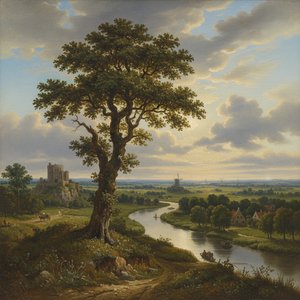
Jacob van Ruisdael: Master of Dutch Landscape & the Evocation of National Identity
Explore the life & work of Jacob van Ruisdael, the preeminent Dutch landscape painter. Discover his technical brilliance, symbolic depth, and lasting influence on art history. Learn about collecting Ruisdael's masterpieces.
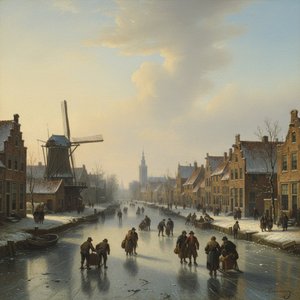
Charles Leickert: Capturing the Dutch Golden Age Light – A Comprehensive Study of Technique, Context, and Legacy
Explore the captivating winter landscapes of Charles Leickert, a master of Dutch Golden Age light & atmosphere. Discover his techniques, symbolism, and lasting legacy – a comprehensive study for art enthusiasts and collectors.

