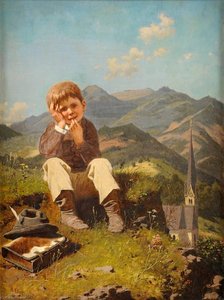
Kristina Nilsson (Anton Windmaier)
Anton Windmaier (1840–1896) створив Kristina Nilsson.

 Переглянути в інтер'єрі

 Картина олією ручної роботи
 Надіслати як листівку
 Поділитися
 Інформаційна картка


 Завантажити
 Схожі екземпляри
 Рентгенівське дослідження
 Слайд-шоу
 Питання та відповіді

 Статистика
Kristina Nilsson коротко
- Назва
- Kristina Nilsson
- Художник
- Anton Windmaier (1840–1896)
- Рік народження митця
- Pfarrkirchen, Germany
Зображення високої роздільної здатності Kristina Nilsson
Суспільне надбання: художник помер у 1896 році.
Anton Windmaier, Kristina Nilsson. Суспільне надбання
Відповіді на запитання про Kristina Nilsson
Чи є «Kristina Nilsson» роботи Anton Windmaier суспільним надбанням?
«Kristina Nilsson» роботи Anton Windmaier перебуває у є суспільним надбанням — термін дії авторського права закінчився. Цей статус визначає правила відтворення зображення твору.
Хто є автором "Kristina Nilsson"?
Автором твору «Kristina Nilsson» є Anton Windmaier. Робота внесена до каталогу під іменем Anton Windmaier.
Яким чином обґрунтовано статус авторського права на «Kristina Nilsson» роботи Anton Windmaier?
«Kristina Nilsson» роботи Anton Windmaier перебуває у є суспільним надбанням — термін дії авторського права закінчився. Термін дії авторського права розраховується від року смерті митця, яка відбулася у 1896.
Про художника Anton Windmaier
1840–1896, Germany
Anton Windmaier
The Soul of a Nation: The Life and Art of Anton Ebert Anton Ebert stands as a pivotal figure in the development of Russian realist painting, a master whose meticulous observation and profound empathy captured the very essence of everyday life in 19th-century Russia. Born in Berlin to Polish heritage, Ebert’s artistic journey was one of remarkable migration, leading him from the bustling, structured streets of Europe to the heartland of Russia. It was here that he found his true calling, spending much of his career documenting the lives of peasants, merchants, and members of the aristocracy with a sensitivity that transcended mere portraiture. His work offers a poignant window into a rapidly changing nation, reflecting both its enduring, ancient traditions and the encroaching, transformative forces of modernity.
 Girl in Folk Costume1879
 Autumn Near Munich1874
 The Little Polka Dancer1879
 The Little Truant1885