

 Переглянути в інтер'єрі
 Надіслати
 Поділитися
 Деталі
 Посібник

 Завантажити
 Схожі предмети колекціонування
 Рентгенівське дослідження
 Слайд-шоу
 Статистика переглядів
Hercules at the Crossroads


 Читати далі
Олійная репродукція ручної роботи
Написана вручну олією на полотні у вашому розмірі та рамі, виготовлена на замовлення нашими художниками. ( Перейти до друку Перейти до цифрових зображень)




P118B ₴10

P118H ₴10

P118W ₴10

P438Z ₴10

P508JH ₴12

P508YH ₴12

P805H ₴10

P805Z ₴10

P919BZ ₴10

P919G ₴10

P919XJ ₴10

P959ZH ₴10

P968JZ ₴12

W106C ₴8

W218G ₴10

W218JH ₴8

W218Y ₴10

W307PJ ₴10

W316G ₴10

W316PJ ₴8

W316Y ₴10

W398PJ ₴8

W4111J ₴10

W500HY ₴15

W500JH ₴15

W692G ₴12

W849H ₴8

W940BG ₴15

W953PJ ₴8




Обирайте з наших стандартних розмірів, що відповідають оригінальним пропорціям твору мистецтва.

Введіть необхідну ширину та висоту, щоб картина підійшла до вашої рами або стіни. Оскільки це ручний розпис, для розміру іншої форми художник може написати трохи більше навколо картини або трохи обрізати її — вибір за вами. Перед початком роботи ми надішлемо вам цифровий макет для затвердження. Зображення, показане на цій сторінці, не є реальним результатом — лише макет відображає майбутній вигляд.
Після оформлення замовлення команда OriginalUniqueArt.com зв'яжеться з клієнтом електронною поштою для отримання інструкцій та надасть попередній макет
Доставка по всьому світу () за 3–4 тижні замість стандартних 5 тижнів. (23 Жовтень). Без жодних компромісів у якості.

Безкоштовна експрес-доставка по всьому світу

Високоякісне лляне полотно

Повне страхове покриття доставки

Гарантія повернення митних зборів

Гарантія точного відтворення кольорів

Політика повернення протягом 100 днів (лише у разі виявлення дефектів)

Гарантія повернення 100% коштів

Знижка на оптові замовлення
 Скляний варіант доступний лише для розмірів до 110 см

Hercules at the Crossroads
Техніка репродукції
Розмір репродукції
-


Загальна вартість
₴ 13459
A Crossroads of Virtue and Vice: Annibale Carracci’s “Hercules at the Crossroads”
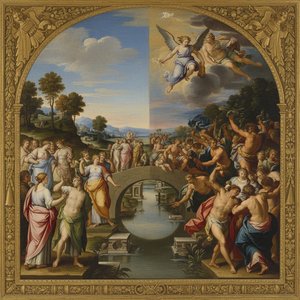
Annibale Carracci's "Hercules at the Crossroads," painted between 1596 and 1597 for the opulent Camerino room within the Farnese Palace in Rome, is more than just a depiction of a legendary hero; it’s a meticulously crafted allegory of human choice, a vibrant testament to Renaissance ideals, and a remarkably prescient foreshadowing of Baroque dynamism. This monumental oil on canvas, now housed in the Capodimonte Museum in Naples, immediately commands attention with its dramatic composition and rich palette, drawing the viewer into a pivotal moment in Hercules’s life – a moment of profound deliberation between the allure of pleasure and the demanding path of virtue.
The scene unfolds within a verdant, almost Edenic landscape, sharply divided to mirror the two opposing forces confronting the hero. To his left, a seductive vision of Pleasure beckons, an explosion of vibrant color and theatricality. Playing cards spill from hands, musical instruments overflow, and masked figures dance in a whirlwind of indulgence – a direct reference to the hedonistic pursuits that Hercules could easily abandon for immediate gratification. The terrain here is lush and inviting, a rolling meadow promising ease and fleeting joy. Conversely, on the right, Virtue stands firm and resolute, bathed in cooler tones of blue and red. She points towards a rugged, winding road leading upwards – a steep ascent toward a winged Pegasus, symbolizing divine favor and ultimate glory. This landscape is starker, drier, and more challenging, reflecting the arduous journey demanded by moral righteousness.
The Mythic Foundation and Farnese Ideology
Carracci’s painting isn't simply illustrating a Greek myth; it’s deeply rooted in the philosophical currents of his time. The story originates from Prodicus, a Sophist who presented Hercules with two paths: one leading to immediate pleasure through worldly pursuits, the other demanding hardship and dedication to virtue. Cardinal Odoardo Farnese, the palace's librarian and a key patron of the arts, recognized the potent symbolism within this parable – a visual representation of the virtues he wished to instill in his court. Fulvio Orsini, another influential figure at the Farnese Palace, further shaped the painting’s iconography, drawing inspiration from ancient Greek tales recounted by Cicero, ensuring the narrative resonated with humanist ideals.
The choice of Hercules himself is significant. He represents not just strength and heroism but also a crucial test – a demonstration that even a demigod could be tempted by earthly desires. The painting’s placement within the Camerino room, a space designed to embody moral principles, underscores its didactic purpose. It wasn't intended as mere decoration; it was a carefully orchestrated visual sermon, guiding visitors toward a life of virtue and civic responsibility – a core tenet of Renaissance humanism.
A Synthesis of Styles: High Renaissance and Baroque Foreshadowing
Carracci’s genius lies in his masterful synthesis of artistic styles. While deeply influenced by the classical ideals of the High Renaissance, particularly Michelangelo's frescoes in the Sistine Chapel, he skillfully incorporates elements that prefigure the dramatic intensity and emotional depth characteristic of the emerging Baroque style. The figures are rendered with a remarkable sense of volume and plasticity, echoing Michelangelo’s monumental forms but imbued with a greater dynamism and expressiveness. Notice how Hercules himself is not depicted as a static hero but as a figure caught in a moment of intense contemplation – his posture conveying both strength and vulnerability.
The use of color is equally striking. The vibrant hues of Pleasure contrast sharply with the cooler tones of Virtue, creating a visual tension that mirrors the internal conflict at the heart of the myth. Carracci’s brushwork is loose and expressive, abandoning the meticulous detail favored by earlier Renaissance painters in favor of a more fluid and gestural approach – a hallmark of Baroque painting. This deliberate shift signals a move towards greater emotional impact and a heightened sense of realism.
Symbolism and Emotional Resonance
Beyond its narrative content, “Hercules at the Crossroads” is rich in symbolic detail. The poet crowned with laurels at the bottom left serves as a moral guide, assuring Hercules that virtue will ultimately lead to renown. The presence of Pegasus, representing divine favor, underscores the rewards awaiting those who choose the path of righteousness. Even the landscape itself contributes to the painting’s meaning – the lush meadow symbolizing fleeting pleasure, the rugged road signifying the arduous journey toward true fulfillment.
Ultimately, “Hercules at the Crossroads” is a profoundly moving work that speaks to the universal human struggle between desire and duty. It invites viewers to contemplate their own choices, to consider the consequences of their actions, and to embrace the virtues that will lead them towards a life of purpose and meaning. Its enduring power lies not only in its masterful execution but also in its timeless message – a reminder that true glory is found not in fleeting pleasures but in unwavering commitment to moral principles.
Запитання та відповіді
Чи знаходиться «Hercules at the Crossroads» Аннібале Карраччі у рідній країні митця?
Так — твір зберігається в країні походження митця. Країна походження Аннібале Карраччі — Італія, а музей, у якому зберігається оригінал твору «Hercules at the Crossroads», розташований у Італія.
Як кольори «Hercules at the Crossroads» Аннібале Карраччі пов'язані з емоційним настроєм твору?
«Hercules at the Crossroads» Аннібале Карраччі поєднує в собі Earthy палітру та Reflective тональність.
До якого художнього напряму належить «Hercules at the Crossroads» Аннібале Карраччі?
Мистецький напрям, до якого належить «Hercules at the Crossroads» Аннібале Карраччі, — це Baroque. Така класифікація дозволяє розмістити цей твір у контексті суміжних художників та творів мистецтва.
Біографія митця
Early Life and the Bolognese Roots
Annibale Carracci, born in Bologna on November 3, 1560, emerged from a family deeply rooted in artistic tradition. His initial training likely unfolded within the nurturing environment of his familial workshop, laying the foundation for a career that would profoundly reshape the landscape of Italian painting. Bologna at this time was a vibrant hub of intellectual and artistic ferment, yet it felt somewhat distant from the dominant currents emanating from Rome and Venice. This sense of provincialism fueled a desire among a group of young artists—Annibale, his brother Agostino, and cousin Ludovico—to forge a new path, one that would revitalize Italian art by looking to the masters of the High Renaissance while simultaneously embracing a more naturalistic approach.
In 1582, this ambition materialized in the establishment of the *Accademia degli Incamminati*, initially known as the Academy of the Desiderosi. This wasn’t merely a studio; it was a crucible for artistic innovation, a space dedicated to rigorous life drawing, spirited debate, and a collective pursuit of artistic excellence. The academy's name itself—the “Progressives”—signified their intent: to move beyond the stylistic complexities of Mannerism and chart a new course toward a more grounded, emotionally resonant form of expression. The Incamminati became a model for art academies across Europe, emphasizing observation from life as the cornerstone of artistic training.
A Synthesis of Styles and Influences
Carracci’s artistic vision wasn't born in a vacuum; it was meticulously crafted through a deep engagement with the legacies of past masters. He possessed an extraordinary ability to synthesize diverse influences, creating a style that felt both deeply rooted in tradition and strikingly original. He admired the clarity of line and compositional balance found in the works of Raphael and Andrea del Sarto, seeking to emulate their grace and harmony. Yet, he also recognized the power of color and atmospheric effects championed by Venetian painters like Titian, infusing his own work with a vibrant luminosity and emotional depth.
The influence of Correggio was particularly profound, evident in Carracci’s dynamic compositions and illusionistic techniques—especially those showcased in his frescoes. He wasn’t simply copying these masters; he was absorbing their strengths and forging them into something new. This eclectic blend became the hallmark of the Bolognese School, a significant branch of Baroque art that emphasized both classical ideals and naturalistic observation. Carracci’s genius lay in his ability to reconcile seemingly disparate elements, creating a harmonious whole that resonated with both intellectual rigor and emotional power.
The Roman Triumph: Palazzo Farnese and Beyond
The invitation to decorate the Palazzo Farnese in Rome marked a pivotal moment in Annibale Carracci’s career. This monumental commission—a vast fresco cycle depicting scenes from mythology—provided him with an unparalleled opportunity to showcase his artistic prowess and establish his reputation on a grand scale. The *Triumph of Bacchus and Ariadne*, arguably his masterpiece, is a breathtaking display of illusionistic technique, dynamic composition, and vibrant color. The frescoes seem to dissolve the boundaries between painting and reality, drawing the viewer into a world of mythic grandeur.
Alongside the *Triumph*, Carracci also undertook *The Loves of the Gods* at Palazzo Farnese, further exploring themes of mythology and love with a blend of classical idealism and keen observation. These works weren’t merely decorative; they were statements about the power of art to elevate the human spirit and celebrate the beauty of the natural world. His success in Rome solidified his position as one of the leading artists of his time, attracting a stream of commissions and influencing generations of painters.
Legacy and Historical Significance
Annibale Carracci’s impact on art history is immeasurable. He played a crucial role in bridging the gap between the High Renaissance and the Baroque period, moving away from the stylized complexities of Mannerism toward a more dynamic, emotionally charged aesthetic. His emphasis on naturalism—on depicting figures with anatomical accuracy and psychological depth—paved the way for artists like Caravaggio, who would further revolutionize Italian painting with their dramatic use of light and shadow.
The Accademia degli Incamminati, founded by Carracci and his associates, served as a model for art academies across Europe, promoting artistic training based on observation and classical principles. His frescoes at Palazzo Farnese remain iconic examples of Baroque illusionism and artistic grandeur, continuing to inspire awe and admiration centuries after their creation. The collective legacy of the Carracci family—Annibale, Agostino, and Ludovico—is one of profound innovation and enduring influence, establishing Bologna as a major center for artistic creativity.
Carracci’s work wasn't simply about technical skill; it was about conveying emotion, telling stories, and celebrating the human experience. He sought to create art that was both beautiful and meaningful, capable of inspiring wonder and provoking thought. His legacy endures not only in his magnificent paintings but also in the enduring principles he championed: a commitment to observation, a reverence for tradition, and an unwavering belief in the power of art to transform the world.
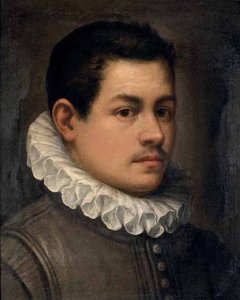
Аннібале Карраччі
1560 - 1609 , Італія
Довідкова інформація
- Artistic Movement Or Style: Бароко
- Artists Or Movements Influenced By This Artist:
- Манєризм
- Болондська школа
- Artists Who Influenced This Artist:
- Рафаель
- Андреа дель Сарто
- Date Of Birth: 3 квiтня 1560
- Date Of Death: 15 липня 1609
- Full Name: Annibale Carracci
- Nationality: Італійський
- Notable Artworks:
- Тріумф Бахуса
- Кохання богів
- Place Of Birth: Болонья, Італія
Схожі статті

The Dramatic Flourish: Exploring the Baroque Movement's Enduring Legacy in Art History
Explore the dramatic world of Baroque art! Discover iconic artists like Caravaggio & Rubens, defining techniques, and its lasting impact on art history. Expert insights for collectors & enthusiasts at OriginalUniqueArt.
Annibale Carracci: Bridging Renaissance Ideals & Baroque Innovation
Explore the life & art of Annibale Carracci, a pivotal figure bridging Renaissance ideals with Baroque innovation. Discover his masterpieces and lasting influence on Italian painting.

Baroque Classicism: The Grandeur of Order and Drama in 17th-Century Art History
Explore the profound elegance of Baroque Classicism. Discover how 17th-century masters synthesized dramatic emotion with classical order through the lens of the Counter-Reformation and the works of legends like Carlo Maratta and Andrea Sacchi.

Топ-10 шедеврів бароко: картини, що змінили мистецтво | OriginalUniqueArt.com
Відкрийте для себе 10 шедеврів бароко від Караваджо, Рембрандта та Рубенса! Історія мистецтва, техніки живопису та натхнення для вашого інтер'єру. Репродукції картин високої якості – OriginalUniqueArt.com

Барокова драма: мистецтво, що привносить велич у дім
Відкрийте для себе велич бароко! Дізнайтесь про історію стилю, особливості українського бароко та як створити розкішний інтер'єр. Ексклюзивні репродукції картин від .


