

 Переглянути в інтер'єрі
 Надіслати як листівку
 Поділитися
 Детальніше

 Завантажити
 Схожі експонати
 Рентгенівське дослідження
 Слайд-шоу
 Статистика
deposition

 Читати далі
Придбайте цифрову копію високої роздільної здатності з покращеною якістю, що значно перевершує онлайн-перегляд.
Кожен файл ретельно підготовлений нашими фахівцями за допомогою сучасних інструментів та професійної ручної ретуші. Ми гарантуємо виняткову чіткість, точну передачу кольору та високу деталізацію кожного зображення.
Фінальний файл надсилається електронною поштою протягом 72 годин і оптимізований для негайного використання у професійних виданнях та друкованих матеріалах. Таку якість обирають провідні дизайнерські студії, видавництва та галереї.
Цифрове зображення
Завантажте файл високої роздільної здатності для особистого використання, друку та творчих проєктів. ( Перейти до друку Замовити репродукцію ручної роботи)
Переваги кожного замовлення цифрових зображень
Експертна цифрова доставка з гарантією якості
Обираючи OriginalUniqueArt.com, ви отримуєте не просто зображення — ви отримуєте професійно вдосконалений цифровий витвір мистецтва, створений з надзвичайною точністю та підкріплений гарантією задоволення. Ось усе, що автоматично додається до вашого замовлення:

Швидка доставка на email
Ваш цифровий файл із зображенням високої роздільної здатності буде надісланий вам електронною поштою протягом 72 годин після оформлення замовлення — він буде готовий до негайного використання.

Цифровий файл із покращенням ШІ
Ваш витвір мистецтва професійно оптимізовано за допомогою передових інструментів штучного інтелекту та ручної корекції, що забезпечує максимальну деталізацію, чіткість і точність передачі кольорів.

Безкоштовне повторне завантаження назавжди
Випадково видалили або втратили файл? Не хвилюйтеся — ми надішлемо його вам повторно в будь-який час безкоштовно.

Без митних зборів — ніколи
Насолоджуйтесь вашим витвором мистецтва миттєво без жодних мит, зборів або плати за доставку — цифрові завантаження завжди не оподатковуються.

Гарантія точності кольорів
Ми гарантуємо максимально точне відтворення оригінальних кольорів на вашому цифровому зображенні завдяки використанню професійних інструментів та систем управління кольором.

100-денна гарантія задоволення
Якщо ви не задоволені придбаним цифровим зображенням, ми внесемо правки або повернемо 100% вартості протягом 100 днів — без зайвих запитань.

Гарантія повернення 100% коштів
Незадоволені покупкою? Отримайте повне повернення коштів протягом 100 днів після отримання цифрового файлу — без зайвих запитань.

Знижки на оптові замовлення
Купуйте 3 зображення — заощаджуйте 10% — Купуйте 5 — заощаджуйте 15% — Купуйте 10+ — заощаджуйте 20%. Чудово підходить для творчих проєктів, галерей та агентств.
Біографія митця
Andrea del Castagno, A Florentine Renaissance Master: The Life and Art of Andrea del Castagno
Andrea del Castagno, a pivotal figure in the Early Renaissance, emerged from the Tuscan countryside near Florence around 1419 to leave an indelible mark on the artistic landscape. His life, though shrouded in some mystery, was one of innovation, dramatic realism, and a departure from the more stylized conventions that preceded him. Born in Castagnoli, not far from Monte Falterona, young Andrea’s early years were touched by conflict; his family resided in Corella during periods of war between Florence and Milan before returning home. It was under the patronage of Bernardo de' Medici in 1440 that he truly entered the Florentine art world, an entry marked by a rather grim commission – painting portraits of citizens executed after the Battle of Anghiari on the facade of the Palazzo del Podestà. This act earned him the chilling nickname “Andrea degli Impiccati” (Andrea of the Hanged), a testament to the political turbulence and stark realities of the era, and a shadow that followed him throughout his career. While details regarding his formal training remain scarce, it is widely believed he studied under both Fra Filippo Lippi and Paolo Uccello, absorbing their techniques while forging his own distinct path. His early works, such as the fresco of the Crucifixion and Saints in the Ospedale di Santa Maria Nuova (1440-1441), already demonstrate a keen interest in perspective and figures that bear the clear influence of Masaccio’s groundbreaking naturalism.Evolution of Style and Major Works
Castagno's artistic journey was one of continuous development, moving away from decorative approaches towards a more profound realism and psychological depth. His frescoes in San Tarasio Chapel, Venice (1442), represent an early expression of this evolving style, while his work within St Mark’s Basilica (1442-1443), including the poignant “Death of the Virgin,” showcased a growing mastery of dramatic composition. The Last Supper fresco at Sant’Apollonia in Florence, completed around 1447, stands as a monumental achievement—a testament to his unparalleled skill and vision. This work is considered not merely a painting but a pivotal moment in Renaissance art; its exceptional detail, naturalistic portrayal of the apostles' reactions, and innovative use of perspective captivated contemporaries and profoundly influenced later artists – most notably Leonardo da Vinci, who is believed to have studied it intently before embarking on his own iconic rendition of the scene. The Assumption with Saints Julian and Miniato (c. 1449-1450), now housed in Berlin, further exemplifies this stylistic progression, demonstrating Castagno’s ability to handle large-scale compositions with dynamic energy. Alongside these masterpieces, he undertook commissions for Villa Carducci, producing a series of portraits that captured the essence of prominent Florentine figures – Dante Alighieri, Petrarch, Pippo Spano, and Farinata degli Uberti—reflecting his mastery in conveying character and intellect through visual representation. Finally, Castagno’s ambitious undertaking to create an equestrian statue of Niccolò da Tolentino for Florence Cathedral exemplifies his technical prowess and artistic ambition. This monumental fresco, completed shortly before his death, mirrored Paolo Uccello's depiction of John Hawkwood, showcasing Castagno’s ability to execute complex compositions with remarkable precision and expressive power.Influences and Artistic Legacy
Andrea del Castagno did not operate in isolation; his art was deeply informed by the artistic giants who preceded him. The pioneering use of perspective championed by Masaccio served as a cornerstone of his artistic philosophy, establishing a new standard for naturalistic representation. Similarly, Giotto di Bondone’s expressive figures instilled in Castagno an appreciation for conveying emotion and psychological nuance—a characteristic that distinguishes his work from earlier stylistic conventions. He skillfully synthesized these influences into something uniquely his own – a style characterized by stark contrasts in light and shadow that heightened dramatic effect, and a steadfast commitment to portraying human experience with unflinching honesty. This approach resonated throughout Italy, significantly impacting subsequent generations of artists, particularly those associated with the Ferrarese school. Cosme Tura, Francesco del Cossa, and Ercole de’ Roberti all absorbed Castagno's innovations, carrying forward his legacy of naturalistic representation and psychological depth. He brought to painting what Banco and Donatello brought to sculpture, as one contemporary observer noted—a profound statement that underscores Castagno’s enduring contribution to the artistic heritage of Florence and beyond.Controversies and Historical Significance
Despite his undeniable artistic achievements, Andrea del Castagno's life was not without its complexities. Giorgio Vasari famously alleged that Castagno murdered Domenico Veneziano, a claim fueled by professional rivalry and speculation—a rumor that continues to intrigue historians today. However, scholarly consensus overwhelmingly rejects this accusation due to inconsistencies in biographical accounts. Nevertheless, Andrea del Castagno remains an indispensable figure in Florentine Renaissance art history. He represents a decisive break from stylistic traditions of the Medieval period, ushering in a new era of artistic realism and emotional intensity. His work secured his place among the foremost artists of his time—a testament to his unwavering dedication to craftmanship and his profound understanding of human psychology. ## Exploring Castagno’s World Today Reproductions of Andrea del Castagno's frescoes – including the dramatic *Last Supper* and the poignant *Death of the Virgin* – offer a tangible connection to this remarkable artist’s creative vision. These images continue to inspire awe and admiration, reminding us of the enduring power of art to capture the spirit of its age and resonate across centuries. Examining Castagno's oeuvre provides invaluable insight into the artistic currents shaping Renaissance Florence—a period marked by intellectual ferment, political upheaval, and an unprecedented surge in artistic innovation.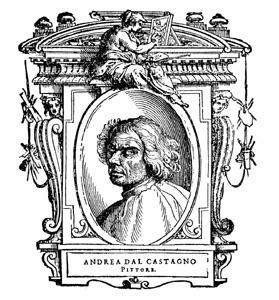
Андреа дел Кастаньо
1419 - 1457 , Італія
Основна інформація
- Artistic Movement Or Style: Ранній Ренесанс
- Artists Or Movements Influenced By This Artist:
- Феррареська школа
- Козме Тура
- Франческо дель Косса
- Artists Who Influenced This Artist:
- Мазаччо
- Джото ді Бондоне
- Фра Філіппо Ліппі
- Паоло Учелло
- Date Of Birth: c. 1419
- Date Of Death: 19 серпня 1457 р.
- Full Name: Andrea del Castagno
- Nationality: Італійський
- Notable Artworks:
- Останній Сьпіс
- Розп’яття
- Зіставлення
- Втілення
- Place Of Birth: Каштаньолі, Італія