

 Переглянути в інтер'єрі
 Надіслати як листівку
 Поділитися
 Деталі витвору
 Посібник

 Завантажити
 Схожі екземпляри
 Рентгенівське дослідження
 Слайд-шоу
 Статистика
Job 1


 Розгорнути текст
Гікле / Художній принт
Друк جيкле або на полотні музейної якості з оперативним виготовленням та різноманітними варіантами фінішної обробки. ( Замовити картину ручної роботи Перейти до цифрових зображень)




P118B ₴10

P118H ₴10

P118W ₴10

P438Z ₴10

P508JH ₴12

P508YH ₴12

P805H ₴10

P805Z ₴10

P919BZ ₴10

P919G ₴10

P919XJ ₴10

P959ZH ₴10

P968JZ ₴12

W106C ₴8

W218G ₴10

W218JH ₴8

W218Y ₴10

W307PJ ₴10

W316G ₴10

W316PJ ₴8

W316Y ₴10

W398PJ ₴8

W4111J ₴10

W500HY ₴15

W500JH ₴15

W692G ₴12

W849H ₴8

W940BG ₴15

W953PJ ₴8




Обирайте з наших стандартних розмірів, що відповідають оригінальним пропорціям твору мистецтва.

Введіть необхідну ширину та висоту, щоб принт ідеально підійшов до вашої рами або стіни. Принт можна лише обрізати, але не можна зробити більшим за оригінал, тому при зміні пропорцій частина зображення буде втрачена. Перед друком ми надсилаємо вам цифровий макет для затвердження. Зображення на цій сторінці не відображає реальну обрізку — її можна побачити лише на макеті.
Доставка по всьому світу () за 2 тижні замість стандартних 4/5 тижнів. (26 Жовтень)

Безкоштовна експрес-доставка по всьому світу

Високоякісне лляне полотно

Повне страхове покриття доставки

Гарантія повернення митних зборів

Гарантія точного відтворення кольорів

Політика повернення протягом 100 днів (лише у разі виявлення дефектів)

Гарантія повернення 100% коштів

Пропозиція на оптові замовлення
 Скляний варіант доступний лише для розмірів до 110 см

Job 1
Гікле / Художній принт
Розмір репродукції
-


Підсумкова вартість
₴ 3588
A Vision of Art Nouveau Elegance: The Allure of Mucha’s “Job”
The allure of Art Nouveau persists today, captivating designers and collectors alike with its celebration of organic forms and delicate ornamentation. At the heart of this movement lies a singular aesthetic championed by the Czech master Alphonse Maria Mucha—a style instantly recognizable for its flowing lines, stylized floral motifs, and idealized female figures. His 1896 masterpiece, “Job,” exemplifies this mastery, offering a breathtaking glimpse into both artistic innovation and the burgeoning advertising landscape of the Belle Époque. To behold this work is to step into a world where commercial utility meets high art, creating a visual language that remains as potent in a modern interior as it was in the streets of Paris over a century ago.
The composition centers on a woman of ethereal beauty, her long, dark hair adorned with a vibrant red flower that serves as a focal point of natural vitality. Dressed in an orange gown that contrasts beautifully against the warm, sun-drenched yellow background, she embodies the sinuous grace characteristic of le style Mucha. In her hand, she holds a small bird, a delicate touch of life that enhances the piece's connection to the natural world. Every element is meticulously crafted; from the swirling arabesque smoke emanating from her hand to the intricate border decorations inspired by Byzantine mosaics, the artwork breathes with a rhythmic, undulating pulse.
Symbolism and the Art of the Belle Époque
Beyond its surface beauty, “Job” is a profound exercise in symbolic storytelling. Created as an advertisement for Joseph Bardou Cigarette Papers, the poster utilizes a sophisticated arrangement that blends biblical allusion with Art Nouveau principles. The woman’s pose—leaning back sensamente with her head tilted—is deliberately theatrical, mirroring the grandeur and spiritual weight found in Byzantine churches. This sense of sacredness is further reinforced by the subtle Job monograms adorning the background, which serve as a nod to both the brand's identity and a deeper narrative core.
The technique employed during this era—lithograph printing on wove paper—ensured an exceptional tonal accuracy and textural richness. This allowed Mucha to capture the essence of his vision with a precision that made the colors appear almost luminous. For the discerning collector or interior designer, this piece offers more than just decoration; it provides a window into a period of significant artistic experimentation, where the rejection of academic conventions led to the elevation of commercial advertising into a legitimate and celebrated art form.
A Timeless Addition to the Modern Collection
For those seeking to infuse a space with sophistication and historical depth, a high-quality reproduction of “Job” serves as an incomparable centerpiece. The rich, varied color palette and the dynamic interplay of organic forms make it a versatile choice for various design aesthetics, from classical elegance to contemporary bohemian chic. It possesses the unique ability to anchor a room, providing a sense of warmth and nostalgic luxury.
Owning a piece of Mucha’s legacy is an invitation to experience the enchantment of the Art Nouveau movement. Whether placed in a curated gallery or used to add a touch of romanticism to a living space, this artwork continues to fulfill its original promise: to transform the mundane into the magnificent through the power of decorative symbolism and unparalleled aesthetic grace.
Питання та відповіді
Як можна використати «Job 1» роботи Альфонс Муха в інтер'єрі дому?
«Job 1» чудово підійде для Accent, а найкращим місцем для його розміщення стане Living Room.
Як сюжет твору "Job 1" перегукується із звичними темами Альфонс Муха?
Серед відомих тем Альфонс Муха, як і в renoir’s impressionism, symbolism, feminine beauty, advertising heritage, mucha’s artistic legacy, у творі «Job 1» особливий акцент зроблено на floral motifs, woman figure, decorative art, symbolism, art nouveau style, alphonse mucha, advertising poster.
Яким чином твір "Job 1" перегукується з іншими роботами Альфонс Муха?
«Job 1» поділяє з іншими творами Альфонс Муха характерний стиль Art Nouveau та притаманні йому теми: renoir’s impressionism, symbolism, feminine beauty, advertising heritage, mucha’s artistic legacy.
Біографія митця
Early Life and Artistic Beginnings
Alphonse Maria Mucha, відомий як Alphonse Mucha, народився 24 липня 1860 року в невеликому містечку Іванчіце, у південній Моравії, тодішньої частини Австрійської імперії (зараз частина Чехії). Його родина мала скромні доходи; батько, Андрей Муха, був канцеляристом при дворі, а мати, Маліне, була власницею млина. Він був найстаршим із шести дітей, і всі вони мали імена, що починалися на "А". З дитинства він проявляв талант до малювання; місцевий торговець вражений його роботами подарував йому папір – тоді це було рідкісне та дороге удовольствие.
Муха мав музичний талант: він був сопрано і віолончеліст. Після закінчення гімназії, він прагнув продовжити навчання, але його родина не могла собі цього дозволити, оскільки вже фінансувала освіту своїх трьох старших братів та сестер. Його вчитель музики відправив його до Павла Кріжковського, видатного чеського композитора та педагога.
Розвиток Стилю та Значні Творчі Досягнення
У Парижі, де він оселився у 1887 році, Муха швидко здобув визнання як талановитий графік. Його стиль, який згодом став відомий як “Стиль Мухи”, характеризувався плавними лініями, органічними формами та відчуттям руху. Він був під впливом таких художників, як П’єр-Огюст Ренуар і Журсть Море, а також чеського мистецтва та символізму. Його роботи часто зображували ідеалізованих жінок у струмових шатах, оточених розкішними квітами – це була типова риса його творчості.
Особливо важливим моментом у його кар’єрі стала співпраця з актрисою Сарою Бернард. У 1894 році він створив плакат для її вистави “Джимонда”, який став сенсацією та заклав основу для його успіху. Потім Муха розробив постери для кількох інших вистав Бернард, а також дизайн декорацій і костюмів. Він також працював над рекламою, дизайном ювелірних виробів, килимів та театральних декорацій.
У 1900 році на Універсальній виставці в Парижі його стиль Art Nouveau отримав міжнародне визнання. Він прикрасив павільйони Боснії і Герцеговини та співпрацював над павільйоном Австрії. Він також створив серію великих історичних картин, відомих як “Слов’янська епопея”, за підтримки Чарлза Річарда Кріна – це стало важливим внеском у популяризацію чеського мистецтва та культури.
Співпраця з Сарою Бернард і "Слов'янська Епопея"
Співпраця з Сарою Бернард стала початком кар’єри Мухи. Її плакат для вистави “Джимонда” (1894) одразу ж привернув увагу публіки та заклав основу для його успіху. Потім він створив серію плакатів для інших вистав Бернард, які стали візуальними символами епохи. Пізніше, у 1912-1930 роках, Муха працював над “Слов’янською епопеєю” – масштабним циклом з 20 картин, що зображують історію слов'янських народів. Цей проект став найважливішим у його творчості та продемонстрував його глибоке розуміння історії та культури Східної Європи.
Подальша Життя і Наследя
У 1906 році Муха одружився з Марускою Чтилівою. У 1910 році вони переїхали до США, де народилася їхня дочка Ярослава. Після повернення до Чехословакії у 1922 році він працював над проектами для нового незалежного уряду, включаючи дизайн печаток, банкнот та державних документів. Муха помер 14 липня 1939 року в Празі, Чехословакія. Його творчість продовжує надихати художників і дизайнерів у всьому світі.

Альфонс Муха
1860 - 1939 , Чеська республіка
Короткі факти
- Artistic Movement Or Style: Ар-нуво
- Artists Or Movements Influenced By This Artist: ['Ева Прокопцова']
- Artists Who Influenced This Artist:
- П’єр-Огюст Ренуар
- Жуль Густав Море
- Date Of Birth: 24 лип 1860
- Date Of Death: 14 сер 1939
- Full Name: Alphonse Maria Mucha
- Nationality: Чех
- Notable Artworks:
- Слов’янська епопея
- Салон 1900
- Доньки Тєспіо
- Ла Рібамбеле дес Гобельін
- Молоді фермери, що розмолотють лєн
- Place Of Birth: Брно, Чехія
Пов'язані статті
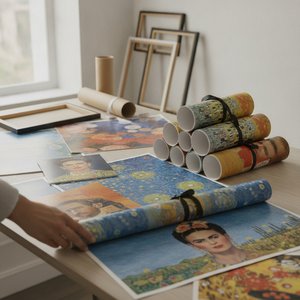
OriginalUniqueArt.com F.A.Q.: Premium Art Poster Prints – Vivid Colors & Versatile Sizing
Discover OriginalUniqueArt.com's premium art poster prints. Featuring 12-color archival pigments for vivid color fidelity and versatile sizing for bespoke decor. Expertly crafted museum-quality reproductions designed for discerning collectors and professional decorators.