 Переглянути в інтер'єрі
 Надіслати як листівку
 Поділитися
 Деталі витвору
 Посібник

 Завантажити
 Схожі екземпляри
 Рентгенівське дослідження
 Слайд-шоу
 Q&A
Q&A Статистика
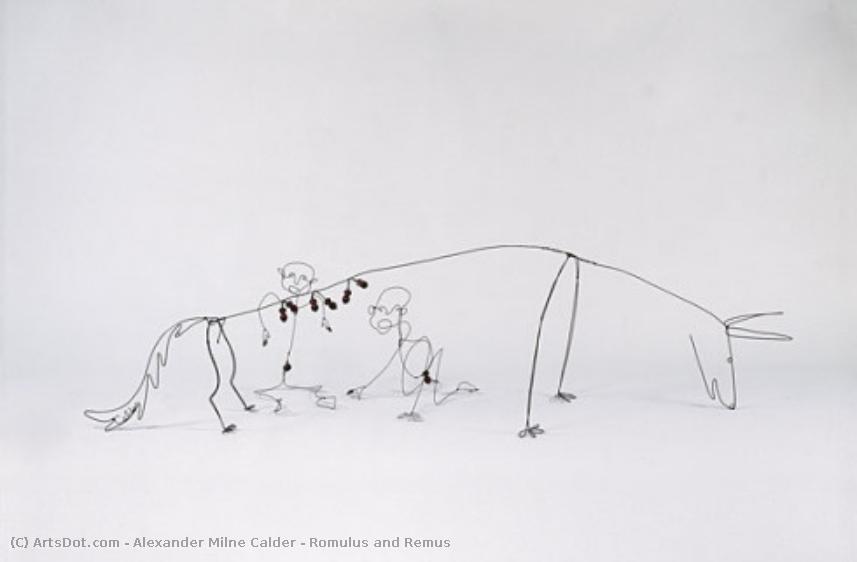
Romulus and Remus


 Розгорнути текст
Мистецький твір, представлений на цій сторінці, захищений законом про авторське право, що унеможливлює легальне створення або продаж його ідентичної репродукції. Цей захист забезпечується відповідно до міжнародних угод, таких як Бернська конвенція та національним законодавством, зокрема положеннями, що викладені в Законодавство США про авторське право — Розділ 17. Всі права захищені. Будь-яке використання без дозволу заборонено.
Цей метод повністю відповідає нормам авторського права, оскільки він не передбачає копіювання чи дублювання захищеного твору мистецтва. Натомість це творче переосмислення — створення нового малюнка під впливом оригіналу, який не є його точним відтворенням.
Гікле / Художній принт
Друк جيкле або на полотні музейної якості з оперативним виготовленням та різноманітними варіантами фінішної обробки. ( Замовити картину ручної роботи Перейти до цифрових зображень)




P118B ₴10

P118H ₴10

P118W ₴10

P438Z ₴10

P508JH ₴12

P508YH ₴12

P805H ₴10

P805Z ₴10

P919BZ ₴10

P919G ₴10

P919XJ ₴10

P959ZH ₴10

P968JZ ₴12

W106C ₴8

W218G ₴10

W218JH ₴8

W218Y ₴10

W307PJ ₴10

W316G ₴10

W316PJ ₴8

W316Y ₴10

W398PJ ₴8

W4111J ₴10

W500HY ₴15

W500JH ₴15

W692G ₴12

W849H ₴8

W940BG ₴15

W953PJ ₴8




Обирайте з наших стандартних розмірів, що відповідають оригінальним пропорціям твору мистецтва.

Введіть необхідну ширину та висоту, щоб принт ідеально підійшов до вашої рами або стіни. Принт можна лише обрізати, але не можна зробити більшим за оригінал, тому при зміні пропорцій частина зображення буде втрачена. Перед друком ми надсилаємо вам цифровий макет для затвердження. Зображення на цій сторінці не відображає реальну обрізку — її можна побачити лише на макеті.
Доставка по всьому світу () за 2 тижні замість стандартних 4/5 тижнів. (3 Листопад)

Безкоштовна експрес-доставка по всьому світу

Високоякісне лляне полотно

Повне страхове покриття доставки

Гарантія повернення митних зборів

Гарантія точного відтворення кольорів

Політика повернення протягом 100 днів (лише у разі виявлення дефектів)

Гарантія повернення 100% коштів

Пропозиція на оптові замовлення
 Скляний варіант доступний лише для розмірів до 110 см

Romulus and Remus
Гікле / Художній принт
Розмір репродукції
-


Підсумкова вартість
₴ 3609
A Moment Frozen in Steel: Exploring Calder’s “Romulus and Remus”
Alexander Milne Calder's "Romulus and Remus," crafted in 1928, isn’t merely a sculpture; it’s a distilled essence of myth rendered in delicate wire. This piece, a testament to the artist’s pioneering approach to three-dimensional form, transcends its subject matter – the legendary founders of Rome – to become a profound meditation on beginnings, brotherhood, and the very act of creation itself. Calder, deeply influenced by Constructivism and early Modernism, sought to liberate sculpture from the constraints of traditional materials, embracing the inherent qualities of industrial wire as both medium and metaphor.
The sculpture’s stark simplicity is its most arresting feature. Two figures, rendered with astonishing grace despite their skeletal construction, stand beneath a subtly arching structure that evokes a horizon line or perhaps a stylized landscape. The color palette – a resolute black and white punctuated by subtle grays – amplifies the work's austerity, forcing the viewer to focus entirely on form and movement. The lines themselves are paramount; thin, almost impossibly delicate wires define every contour, creating an illusion of both fragility and strength. This deliberate reductionist approach mirrors Calder’s broader philosophy: to strip away the superfluous and reveal the fundamental elements of a subject.
The Poetics of Chance and Kinetic Form
Calder's work in this period – particularly his “Cirque Calder” series – exemplifies his fascination with chance and spontaneity. He didn’t meticulously plan every curve or angle; instead, he allowed the wire to guide him, embracing the unpredictable nature of the material. This process is vividly captured in "Romulus and Remus," where the figures appear to be caught mid-action, poised on the precipice of a narrative yet undefined. The slight wobble inherent in the sculpture’s construction – a subtle consequence of its wire composition – hints at a kinetic energy, suggesting that even stillness can hold a dynamic potential.
The technique itself is deceptively complex. Calder skillfully bent and assembled hundreds of individual wires, creating a surprisingly robust structure despite its delicate appearance. The varying thicknesses of the wire contribute to the sculpture’s textural richness, offering subtle shifts in sheen as light catches the metal. This careful manipulation of material speaks to Calder's mastery of his chosen medium – a testament to his ability to transform industrial components into objects of profound beauty and intellectual resonance.
Myth, Brotherhood, and the Dawn of Rome
The subject matter—the story of Romulus and Remus—is deeply rooted in Roman mythology. The legend of the twins suckled by a she-wolf is an enduring symbol of resilience, survival, and the founding of civilization. Calder’s sculpture doesn't simply depict this narrative; it captures its essence – the primal struggle for existence, the bond between brothers, and the birth of a new order. The wire itself can be interpreted as representing the threads that connect us to our past, shaping our present and influencing our future.
Created in 1928, “Romulus and Remus” stands as a pivotal work in Calder’s oeuvre, marking a significant shift towards abstraction while retaining a powerful connection to his artistic roots. It's a sculpture that invites contemplation, prompting viewers to consider the interplay of form, material, and narrative – a timeless meditation on the foundations of human experience.
Питання та відповіді
Чи знаходиться «Romulus and Remus» роботи Александр Мильне Кадер у рідній країні митця?
Ні — твір зберігається за кордоном. Александр Мильне Кадер народився(-лася) в Шотландія, а музей, у якому зберігається оригінал твору «Romulus and Remus», розташований у Сполучені Штати Америки.
Хто є автором та в якому році було створено твір "Romulus and Remus"?
Автором «Romulus and Remus» є Александр Мильне Кадер, а дата створення твору — 1928.
Де я можу знайти статистику про «Romulus and Remus» роботи Александр Мильне Кадер?
Сторінка Статистика переглядів для роботи «Romulus and Remus» роботи Александр Мильне Кадер містить статистику публічних переглядів: кількість щомісячних відвідувань цього твору, порівняння з найбільш популярними роботами митця та географію відвідувачів.
Біографія митця
Introduction to Alexander Milne Calder
Alexander Milne Calder (MILL-nee) was a Scottish-American sculptor whose groundbreaking approach to art revolutionized the visual landscape of the 20th century. Born in Aberdeen, Scotland, on August 23, 1846, Calder’s artistic journey began amidst the burgeoning Arts and Crafts Movement, profoundly shaped by his father's influence as a stonemason—a craft he himself diligently honed early in life. He attended the Royal Academy in Edinburgh, immersing himself in classical sculpture traditions before embarking on a transformative relocation to London where he studied at the South Kensington School and collaborated closely with Thomas Eakins at the Pennsylvania Academy of Fine Arts. This formative period instilled within him an appreciation for both meticulous technique and expressive experimentation.- Early Life & Education: Calder’s childhood was marked by a fascination with art, nurtured by his parents' dedication to creative pursuits. Notably, he posed nude for his father’s sculpture *Man Cub*, demonstrating an early inclination towards artistic representation.
- Parisian Influences: Calder’s travels to Paris exposed him to the avant-garde currents of Surrealism and Kinetic Art—movements that would irrevocably alter his artistic vision.
- Philadelphia & Collaboration: He established himself in Philadelphia, where he partnered with John McArthur Jr., to realize monumental sculptures for City Hall—a project that demanded unparalleled precision and innovation.
Notable Works & Artistic Style
Calder’s oeuvre is characterized by two distinct yet interconnected styles: architectural sculpture and kinetic mobiles. His magnum opus, Philadelphia City Hall, stands as a testament to his mastery of marble and bronze, embodying the grandeur and ambition of Beaux-Arts architecture. The statue of William Penn atop the tower—a colossal undertaking—further cemented Calder’s reputation as a visionary sculptor capable of tackling ambitious projects. However, it was Calder's mobiles – delicately balanced assemblages of metal rods and hanging weights – that truly captivated audiences and established him as a pioneer in Kinetic Art. These sculptures harnessed the principles of chance and movement, reflecting Calder’s belief that “theories may be all very well for the artist himself, but they shouldn’t be broadcast to other people.”- Philadelphia City Hall: Calder's architectural sculpture showcased his meticulous attention to detail and technical prowess.
- William Penn Statue: This monumental sculpture demonstrated Calder’s ability to execute large-scale projects with exceptional artistry.
- Mobiles: Calder’s mobiles—characterized by their balanced movement—became iconic representations of Kinetic Art, embodying the spirit of improvisation and serendipity.
Legacy & Influence
Alexander Milne Calder's influence extended far beyond his own creations, shaping the artistic landscape of subsequent generations. His son, Alexander Stirling Calder, and grandson, Alexander ‘Sandy’ Calder—both accomplished sculptors—carried forward his legacy, perpetuating his innovative spirit and furthering the exploration of kinetic sculpture. Calder’s contributions to art history are recognized globally, with his sculptures housed in prestigious museums worldwide, including the Smithsonian American Art Museum and the Galleria Civica di Arte Moderna e Contemporanea Torino. His unwavering conviction that “art should be a surprise” continues to inspire artists today—a testament to the enduring power of his artistic vision.- Son’s Artistic Contribution: Alexander Stirling Calder, Calder's son, followed in his father's footsteps as a sculptor, furthering the family tradition of artistic excellence.
- Grandson’s Artistic Legacy: Alexander ‘Sandy’ Calder—Calder’s grandson—maintained his grandfather’s pioneering spirit and expanded upon his explorations of Kinetic Art.

Александр Мильне Кадер
1898 - 1976 , Шотландія
Короткі факти
- Artistic Movement Or Style: Architectural sculpture
- Artists Or Movements Influenced By This Artist:
- Kinetic art
- Surrealism
- Artists Who Influenced This Artist: ['John Rhind']
- Date Of Birth: August 23, 1846
- Date Of Death: June 14, 1923
- Full Name: Alexander Milne Calder
- Nationality: Scottish-American
- Notable Artworks:
- Philadelphia City Hall
- William Penn statue
- Place Of Birth: Aberdeen, Scotland
Пов'язані статті

10 Легендарних Бронзових Шедеврів, Які Змінили Мистецтво | OriginalUniqueArt
Відкрийте для себе 10 легендарних бронзових шедеврів, що змінили мистецтво! Історія створення, художні техніки та вплив скульпторів Ренесансу й Античності. Купуйте репродукції картин на OriginalUniqueArt.com – музейна якість для вашого дому.
Alexander Calder: Kinetic Sculpture, Mobile Art & the Poetics of Chance
Explore the revolutionary world of Alexander Calder's kinetic sculptures & mobiles. Discover insights for collectors, acquisition advice, and the enduring legacy of this modern master. Expert analysis & art valuation.

The Enduring Form: Exploring Themes & Techniques in Sculpture Across Historical Periods
Explore the rich history of sculpture from ancient masterpieces to contemporary innovations. Discover key techniques, influential artists & investment potential for discerning art collectors.

The Enduring Form: Sculpture Across History, Technique & Emotional Resonance
Explore the rich history of sculpture with OriginalUniqueArt. Discover key techniques, influential artists & investment potential for discerning collectors. Expert insights into valuing and collecting timeless masterpieces.

10 легендарних бронзових скульптур, що змінили мистецтво | OriginalUniqueArt
Відкрийте 10 легендарних бронзових скульптур, що змінили хід мистецтва! Дізнайтесь історії Мікеланджело, Родена та інших геніїв. Репродукції картин преміум-класу для вашого дому – на OriginalUniqueArt.com
