

 Переглянути в інтер'єрі
 Надіслати
 Поділитися
 Деталі
 Посібник

 Завантажити
 Схожі предмети колекціонування
 Рентгенівське дослідження
 Слайд-шоу
 Статистика переглядів
Louis Pasteur
 Акрил на полотні
- Настінне мистецтво
- Realist Painting
 1885
1885- — XIX століття
 154.0 x 126.0 cm
 Музей д’Орсе
 Читати далі
Гікле / Художній принт
Музейна якість друку جيкле або на полотні з оперативним виготовленням та різноманітними варіантами фінішної обробки. ( Купити картину ручної роботи Перейти до цифрових зображень)




P118B ₴10

P118H ₴10

P118W ₴10

P438Z ₴10

P508JH ₴12

P508YH ₴12

P805H ₴10

P805Z ₴10

P919BZ ₴10

P919G ₴10

P919XJ ₴10

P959ZH ₴10

P968JZ ₴12

W106C ₴8

W218G ₴10

W218JH ₴8

W218Y ₴10

W307PJ ₴10

W316G ₴10

W316PJ ₴8

W316Y ₴10

W398PJ ₴8

W4111J ₴10

W500HY ₴15

W500JH ₴15

W692G ₴12

W849H ₴8

W940BG ₴15

W953PJ ₴8




Обирайте з наших стандартних розмірів, що відповідають оригінальним пропорціям твору мистецтва.

Введіть необхідну ширину та висоту, щоб принт ідеально підійшов до вашої рами або стіни. Принт можна лише обрізати, але не можна зробити більшим за оригінал, тому при зміні пропорцій частина зображення буде втрачена. Перед друком ми надсилаємо вам цифровий макет для затвердження. Зображення на цій сторінці не відображає реальну обрізку — її можна побачити лише на макеті.
Доставка по всьому світу () за 2 тижні замість стандартних 4/5 тижнів. (21 Жовтень)

Безкоштовна експрес-доставка по всьому світу

Високоякісне лляне полотно

Повне страхове покриття доставки

Гарантія повернення митних зборів

Гарантія точного відтворення кольорів

Політика повернення протягом 100 днів (лише у разі виявлення дефектів)

Гарантія повернення 100% коштів

Знижка на оптові замовлення
 Скляний варіант доступний лише для розмірів до 110 см

Louis Pasteur
Гікле / Художній принт
Розмір репродукції
-


Загальна вартість
₴ 3577
The Genesis of a Masterpiece
Albert Edelfelt’s “Louis Pasteur,” painted in 1885, isn't merely a portrait; it’s a meticulously crafted distillation of an era – the burgeoning age of scientific discovery and the quiet revolution taking place within the laboratories of France. Commissioned during a period of intense intellectual ferment, this oil-on-canvas work transcends simple representation to embody Pasteur’s unwavering commitment to unraveling the mysteries of life and disease. Edelfelt, a Finnish artist deeply influenced by Northern European realism, chose to capture Pasteur not as a celebrated figure in public acclaim, but as a man profoundly engaged in his craft – a scientist immersed in the focused intensity of his laboratory.
The painting’s genesis lies within the context of Pasteur's groundbreaking work. His pioneering research into germ theory, vaccination against rabies and anthrax, and pasteurization were fundamentally reshaping medicine and public health. Edelfelt, keenly aware of this transformative impact, sought to immortalize not just Pasteur’s physical presence but also the spirit of relentless inquiry that defined his legacy. The choice of setting – a meticulously rendered laboratory filled with scientific instruments – immediately establishes this intellectual atmosphere, suggesting a space dedicated to observation, experimentation, and the pursuit of knowledge.
A Symphony of Detail: Technique and Style
Edelfelt’s masterful technique is evident in every brushstroke. He employs a rich, layered impasto—a thick application of paint—that lends texture and depth to the scene. The careful rendering of light and shadow creates a palpable sense of realism, drawing the viewer into Pasteur's world. Notice particularly the subtle gradations of color applied to the various glass bottles and scientific equipment; each element is rendered with painstaking detail, reflecting Edelfelt’s dedication to accuracy. The composition itself is carefully balanced, guiding the eye through the scene – from Pasteur himself, deeply absorbed in his work, to the surrounding apparatus that speaks volumes about his research.
- Color Palette: A muted palette of browns, greens, and blues dominates, reflecting the laboratory’s atmosphere.
- Brushwork: Edelfelt's brushstrokes are visible and deliberate, contributing to the painting's textured surface.
- Lighting: The use of chiaroscuro (strong contrasts between light and dark) emphasizes Pasteur’s figure and highlights the details of his workspace.
Symbolism and the Portrait of a Mind
Beyond its technical brilliance, “Louis Pasteur” is laden with symbolic meaning. The bottles scattered around the laboratory represent the countless experiments and observations that constitute Pasteur's scientific journey. The focused gaze of Pasteur himself embodies his intellectual rigor and unwavering dedication to his work. He’s not a triumphant hero; he’s a man consumed by curiosity, driven by an insatiable desire to understand the natural world. The inclusion of specific instruments—beakers, flasks, and retorts—are not merely decorative elements but rather visual cues that underscore Pasteur's scientific pursuits.
The painting subtly suggests the transformative power of science – a quiet revolution unfolding within the confines of the laboratory, with profound implications for humanity’s future.A Legacy Preserved: Emotional Resonance and Artistic Significance
“Louis Pasteur” is more than just a portrait; it's a testament to the enduring legacy of scientific innovation. It captures not only the likeness of a brilliant mind but also the spirit of inquiry that defines the modern era. The painting’s emotional resonance lies in its portrayal of focused concentration and unwavering dedication—qualities that continue to inspire scientists, artists, and thinkers today. It serves as a poignant reminder of the transformative power of knowledge and the profound impact one individual can have on the world. Reproductions of this iconic work offer a beautiful way to bring this powerful image into your home or office, celebrating both artistic mastery and scientific achievement.
Запитання та відповіді
З якої країни походить твір у стилі Realist Painting під назвою "Louis Pasteur"?
«Louis Pasteur» пов’язує напрям Realist Painting із Фінляндія через місце народження його творця.
Чи є у «Louis Pasteur» можливість попереднього перегляду в доповненій реальності?
Ви можете приміряти «Louis Pasteur» Альберт Едельфельт на власну стіну за допомогою сторінки AR-перегляд з використанням технології доповненої реальності на сумісному пристрої.
Хто є автором "Louis Pasteur" і до якого напряму він належить?
За творінням "Louis Pasteur" стоять Альберт Едельфельт та течія Realist Painting.
Біографія митця
Early Life and Education
Albert Gustaf Aristides Edelfelt, a luminary of Finnish art history, was born on July 21st, 1854, in Porvoo, Finland—a city steeped in Swedish heritage. His parents, Carl Albert Edelfelt and Alexandra Edelfelt (née Brandt), instilled in him a profound appreciation for aesthetics from an early age. This familial influence would prove pivotal in shaping his artistic trajectory. From childhood, Edelfelt exhibited an innate talent for drawing and painting, foreshadowing the remarkable career that lay ahead. He pursued formal studies diligently at the Drawing School of the Finnish Art Society in Helsinki in 1869, laying the groundwork for mastering the fundamentals of artistic expression.Artistic Journey
Edelfelt’s artistic journey commenced with a formative period spent honing his skills at Antwerp Academy of Art between 1873 and 1874. There, under the guidance of Jean-Léon Gérôme—a celebrated history painter—he immersed himself in classical techniques and compositional principles. This experience solidified his understanding of narrative art and established him as a student deeply committed to artistic excellence. Subsequently, he traveled to Paris (1874–78), enrolling at École nationale des beaux-arts where Gérôme continued to mentor him. The Parisian atelier fostered an environment conducive to experimentation and innovation, allowing Edelfelt to refine his craft and broaden his artistic horizons. A brief excursion to Saint Petersburg in 1881–82 exposed him to the vibrant cultural landscape of Russia, enriching his artistic sensibilities with diverse influences.Rise to Prominence and Notable Works
Edelfelt’s ascent to artistic prominence arrived swiftly following his triumphant performance at the Paris Universal Exposition of 1889—where he secured a gold medal. This accolade catapulted him into international recognition and cemented his reputation as one of Finland's foremost artists. Among his most iconic creations are: “Portrait of Louis Pasteur,” an evocative depiction capturing the scientist’s intellectual intensity, earning him the Legion of Honor in 1886; “Young Woman in Her Boudoir,” a masterful portrayal of feminine grace and intimacy—a testament to Edelfelt's ability to convey emotion through subtle nuances; "Under the Birches," a breathtaking landscape painting that embodies the spirit of Finnish wilderness, showcasing Edelfelt’s profound connection with nature. His artistic vision resonated deeply with contemporaries and continues to inspire admiration today.Legacy and Impact
Albert Edelfelt stands as a cornerstone of Finnish realist art—a movement characterized by uncompromising honesty and meticulous observation. He served as an influential mentor to younger artists like Akseli Gallen-Kallela and Gunnar Berndtson, guiding them toward breakthroughs in Paris and establishing himself as a pivotal figure in shaping the artistic landscape of Finland. Edelfelt’s works are housed in prestigious museums across Europe, including Ateneum Museum in Helsinki—a testament to his enduring legacy. His contribution to Finnish art history is commemorated annually through exhibitions and scholarly research, ensuring that his artistic achievements endure for generations to come.Museum Collections and Commemoration
Edelfelt's oeuvre graces the collections of numerous museums worldwide, notably Ateneum Museum in Helsinki, Finland—where visitors can immerse themselves in the beauty of his landscapes and portraits. To honor Edelfelt’s 150th birthday, a €100 commemorative coin was issued in 2004—a tangible symbol of Finland's appreciation for its artistic heritage. His enduring influence on Finnish art continues to inspire artists and scholars alike.
Альберт Едельфельт
1854 - 1905 , Фінляндія
Довідкова інформація
- Artistic Movement Or Style: Реалізм
- Artists Or Movements Influenced By This Artist: ['Ерік']
- Artists Who Influenced This Artist:
- Жан Леон Жерьом
- Аксель Гален-Каллела
- Date Of Birth: 21 липня 1854
- Date Of Death: 18 серпня 1905
- Full Name: Albert Gustaf Aristides Edelfelt
- Nationality: Фінський
- Notable Artworks:
- Портрет Луї Пастера
- Молода жінка в будинку
- Під вербами
- Place Of Birth: Порвоо, Фінляндія
Схожі статті

Anne-Louis Girodet: Bridging Neoclassicism & Romanticism with Emotional Truth
Explore the captivating world of Anne-Louis Girodet, a pivotal figure bridging Neoclassicism & Romanticism. Discover his masterpieces and unique artistic vision with OriginalUniqueArt.

Morris Louis: Pioneering Color Field Painting & Abstract Expressionism's Legacy
Explore the groundbreaking abstract expressionism of Morris Louis, a pioneer of Color Field painting. Discover his innovative techniques, influential series & lasting legacy in post-war American art. Learn more at OriginalUniqueArt.

Albert Charles Lebourg: A Study in Atmospheric Impressionism & Rural France
Explore the serene landscapes of Albert Charles Lebourg, a master of the Rouen School Impressionists. Discover his atmospheric paintings of the Seine and enduring legacy in 19th-century French art.
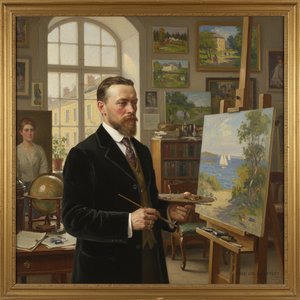
Albert Edelfelt: A Pioneer of Finnish Realism & International Impressionist Circles
Explore the life & work of Albert Edelfelt, a pioneering Finnish Realist painter who bridged Impressionism & national identity. Discover his masterpieces and lasting influence on art history.
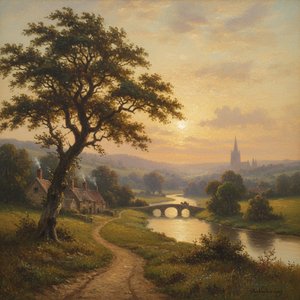
Albert Goodwin: Capturing Victorian Light & Atmosphere – A Study in Landscape Painting
Explore the captivating landscapes of Albert Goodwin (1845-1932), a celebrated Victorian watercolourist influenced by Turner & Ruskin. Discover his techniques, prolific collection, and lasting legacy in British art history.
