- Додому

- Друк на полотні
- Адріаен Ганнеман
- John Evelyn

 Замовити репродукцію Купити цифрове зображення
 Надіслати
 Поділитися
 Деталі витвору
 Додати до улюблених

 Завантажити
 Схожі вироби
 Рентгенівське дослідження
 Слайд-шоу
John Evelyn

 Розгорнути текст
Гікле / Художній принт
Музейна якість друку جيкле або на полотні з оперативним виготовленням та різноманітними варіантами фінішної обробки.




































Обирайте з наших стандартних розмірів, що відповідають оригінальним пропорціям твору мистецтва.

Ви можете вказати власні розміри, щоб репродукція ідеально підійшла до конкретної рами або інтер'єру. Якщо обраний вами розмір не відповідає пропорціям оригіналу, ми або обріжемо полотно, або розширимо зображення за допомогою дзеркального відображення чи суцільної заливки країв. Перед початком виробництва вам буде надіслано цифровий макет для затвердження.
Будь ласка, зверніть увагу, що попередній перегляд на екрані не відображає фактичне обрізання або розширення. Тільки макет точно покаже фінальну композицію.
Хоча можливість замовлення індивідуальних розмірів доступна, ми рекомендуємо обирати формат із попередньо визначеного списку, щоб зберегти оригінальні пропорції.
Доставка по всьому світу () за 2 тижні замість стандартних 4/5 тижнів. (21 Липень)

Безкоштовна експрес-доставка по всьому світу

Високоякісне лляне полотно

Повне страхове покриття доставки

Гарантія відшкодування митних зборів

Гарантія точного відтворення кольорів

Політика повернення протягом 60 днів (лише у разі виявлення дефектів)

Гарантія повернення 100% коштів

Знижка на багатоелементні замовлення
 Скляний варіант доступний лише для розмірів до 110 см

John Evelyn
Гікле / Художній принт
Розмір репродукції
-


Підсумкова ціна
-
Біографія митця
Early Life and Artistic Foundations
Adriaen Hanneman emerged onto the vibrant Dutch Golden Age art scene around 1603, born into a prosperous Catholic family in The Hague – a city renowned for its artistic patronage and burgeoning merchant class. This familial background subtly shaped his career trajectory, fostering an appreciation for wealth, social standing, and the allure of courtly life. From a remarkably young age, Adriaen demonstrated a keen sensitivity to aesthetics and a natural aptitude for artistry; he began his formal training in 1619 under the tutelage of Jan Antonisz. van Ravesteyn the Younger – a highly respected Hague portraitist whose meticulous technique and ability to capture nuanced character would profoundly influence the young Hanneman’s developing style. Van Ravesteyn instilled within him a precise, sculptural approach to rendering form, emphasizing careful observation and an understanding of anatomy; this foundational period wasn't merely about mastering technical skills, but rather absorbing the established conventions of Dutch portraiture – learning to effectively convey not just physical likeness, but also social status, personality, and the subtle power dynamics inherent in aristocratic relationships. The crispness and clarity evident in Van Ravesteyn’s work provided Hanneman with a solid, enduring base upon which he would later build his own distinctive artistic voice, one characterized by elegance, refinement, and an undeniable sense of sophistication.The English Interlude: Embracing the Van Dyck Influence
A pivotal moment in Adriaen Hanneman's artistic development arrived in 1626 when he embarked on a significant relocation to England – a move that would irrevocably alter his style and expose him to a radically different artistic landscape. This journey proved transformative, placing him squarely at the heart of a dynamic and evolving art scene centered around London. The arrival of Anthony van Dyck in London in 1632 as court painter to Charles I exerted an immediate and profound influence on Hanneman’s aesthetic sensibilities. Van Dyck's masterful compositions – characterized by their dramatic dynamism, rich color palettes, and skillful use of light and shadow – captivated the young artist, who may have even had the opportunity to work within Van Dyck’s studio during this period—a formative experience that undoubtedly shaped his approach to portraiture. Beyond Van Dyck, Hanneman also encountered other prominent artists such as Cornelis Janssens van Ceulen and Daniel Mytens, broadening his exposure to diverse artistic techniques and styles. Crucially, he secured the patronage of Constantijn Huygens – a powerful figure at the English court who actively championed Hanneman’s career, facilitating introductions to influential circles and securing commissions that propelled him into the heart of aristocratic society. This period wasn't simply about imitation; it was an immersion in a sophisticated courtly culture—a vibrant exchange of ideas and techniques that would ultimately inform his future artistic endeavors and establish his reputation as a leading portraitist.Return to The Hague and Artistic Maturity
Around 1638, Adriaen Hanneman returned to The Hague – marking a significant turning point in both his personal life and his professional career. This homecoming solidified his ties to the local art community through marriage to Maria van Ravesteyn, the daughter of his former teacher, thereby establishing a lineage of artistic expertise within his family. In 1645, he was appointed as a deacon of the Guild of St. Luke – a prestigious position that reflected his integration into the established artistic hierarchy of The Hague and underscored his commitment to upholding traditional standards of craftsmanship. Furthermore, Hanneman actively participated in the Confrerie Pictura – an influential artists’ society dedicated to fostering collaboration and innovation within the Dutch art world—demonstrating his dedication to pushing the boundaries of artistic expression. Back on Dutch soil, Hanneman continued to specialize in portraiture, skillfully blending the lessons learned from Van Dyck with a growing sense of distinctly Dutch artistic identity. He catered to the burgeoning demand for portraits among the wealthy elite and members of the exiled English court who sought refuge in The Hague following the tumultuous events of the English Civil War. His subjects included prominent figures such as Constantijn Huygens himself, Charles II (then Prince of Wales), and William III, Prince of Orange – testament to his rising reputation and access to influential patrons.Legacy and Lasting Impact
Hanneman’s later years were marked by financial challenges—a common plight for artists during the “Rampjaar” (Disaster Year) of 1672—a period of war and economic hardship that gripped the Dutch Republic. He passed away in The Hague in 1671, leaving behind a modest estate despite his previous successes – a poignant reflection of the volatile economic climate of the time. However, his artistic legacy endured. Hanneman’s notable works include striking portraits of Henry, Duke of Gloucester (now housed in the National Gallery of Art, Washington D.C.), a captivating depiction of Charles II as Prince of Wales, and a posthumous portrait of Maria I Stuart (displayed at the Mauritshuis in The Hague). He is remembered for his refined court portraits that masterfully captured both the physical likenesses and social status of his aristocratic sitters. *His influence extended beyond his own creations*, impacting other painters such as Govert Flinck, demonstrating his significant contribution to Dutch portraiture during the Golden Age. Hanneman’s ability to synthesize Flemish elegance with Dutch realism cemented his place as a key figure in 17th-century art—a painter who not only documented his era but also helped define its aesthetic ideals.Notable Works
- John Evelyn: A Baroque masterpiece showcasing rich detail and dramatic lighting.
- Charles II: An exquisite 17th-century portrait embodying royal authority.
- Charles II as Prince of Wales: A stunning depiction of royal status and artistry, notable for its dramatic lighting.
- Henry, Duke of Gloucester: Currently residing in the National Gallery of Art, Washington D.C., this portrait exemplifies Hanneman’s skill in capturing aristocratic presence.
- William III as a young prince: A captivating work held at the Rijksmuseum, Amsterdam, showcasing the future ruler's early years.
- Posthumous portrait of Maria I Stuart: Located in the Mauritshuis, Netherlands, this piece is a testament to Hanneman’s ability to create compelling portraits even from memory or description.

Адріаен Ганнеман
1603 - 1671 , Нідерланди
Короткі факти
- Artistic Movement Or Style: Бароко, Портрет
- Artists Or Movements Influenced By This Artist: ['Govert Flinck']
- Artists Who Influenced This Artist:
- Антоній ван Дейк
- Ян Равестін
- Date Of Birth: c. 1603
- Date Of Death: 1671
- Full Name: Adriaen Hanneman
- Nationality: Нідерландський
- Notable Artworks:
- Портрет Джона Евеліна
- Чарльз II
- Вільям III як принц
- Place Of Birth: The Hague, Нідерланди
Пов'язані статті
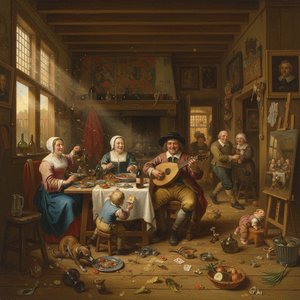
Jan Steen: A Master of Dutch Genre Painting & the Golden Age
Explore the life & art of Jan Steen, a leading Dutch Golden Age painter renowned for his humorous genre scenes & insightful social commentary. Discover his techniques, legacy, and collecting tips.
Genre Painting: A Window into Daily Life & Societal Values of the Dutch Golden Age
Explore the captivating world of Dutch Golden Age genre painting! Discover realistic depictions of daily life, masterful artists like Ostade & Metsu, and hidden symbolism. Learn about this influential art movement with OriginalUniqueArt.

Rembrandt van Rijn: A Life Illuminated – Innovation, Emotion, and the Dutch Golden Age
Explore the life & art of Rembrandt van Rijn, a Dutch Golden Age master. Discover his innovative techniques, iconic paintings like 'The Night Watch', and enduring legacy. Expert insights for collectors & enthusiasts.

Frans Hals I: Innovation, Intimacy & the Dutch Golden Age Portrait
Explore the revolutionary portraiture of Frans Hals I, a master of the Dutch Golden Age. Discover his innovative techniques, captivating character studies & lasting impact on art history. Learn more at OriginalUniqueArt.

Willem van de Velde the Elder: Master of Maritime Painting & Chronicler of the Dutch Golden Age
Discover the captivating maritime paintings of Willem van de Velde the Elder, a master chronicler of the Dutch Golden Age. Explore his unparalleled realism and lasting influence on naval art history.

