

 Переглянути в інтер'єрі
 Надіслати як листівку
 Поділитися
 Детальніше

 Завантажити
 Схожі експонати
 Рентгенівське дослідження
 Слайд-шоу
Peasants Fighting
 Олія на полотні
- Настінне мистецтво
- Baroque Genre Painting
 1631
1631- — Ранній модерн
 33.0 x 49.0 cm
 Альте Пінакотека
 Читати далі
Гікле / Художній принт
Музейна якість друку جيкле або на полотні з оперативним виготовленням та різноманітними варіантами фінішної обробки. ( Замовити репродукцію ручної роботи Купити цифрове зображення)




P118B $10

P118H $10

P118W $10

P438Z $10

P508JH $12

P508YH $12

P805H $10

P805Z $10

P919BZ $10

P919G $10

P919XJ $10

P959ZH $10

P968JZ $12

W106C $8

W218G $10

W218JH $8

W218Y $10

W307PJ $10

W316G $10

W316PJ $8

W316Y $10

W398PJ $8

W4111J $10

W500HY $15

W500JH $15

W692G $12

W849H $8

W940BG $15

W953PJ $8




Обирайте з наших стандартних розмірів, що відповідають оригінальним пропорціям твору мистецтва.

Ви можете вказати власні розміри, щоб репродукція ідеально підійшла до конкретної рами або інтер'єру. Якщо обраний вами розмір не відповідає пропорціям оригіналу, ми або обріжемо полотно, або розширимо зображення за допомогою дзеркального відображення чи суцільної заливки країв. Перед початком виробництва вам буде надіслано цифровий макет для затвердження.
Будь ласка, зверніть увагу, що попередній перегляд на екрані не відображає фактичне обрізання або розширення. Тільки макет точно покаже фінальну композицію.
Хоча можливість замовлення індивідуальних розмірів доступна, ми рекомендуємо обирати формат із попередньо визначеного списку, щоб зберегти оригінальні пропорції.
Доставка по всьому світу () за 2 тижні замість стандартних 4/5 тижнів. (22 Серпень)

Безкоштовна експрес-доставка по всьому світу

Високоякісне лляне полотно

Повне страхове покриття доставки

Гарантія відшкодування митних зборів

Гарантія точного відтворення кольорів

Політика повернення протягом 60 днів (лише у разі виявлення дефектів)

Гарантія повернення 100% коштів

Пропозиція на оптові замовлення
 Скляний варіант доступний лише для розмірів до 110 см

Peasants Fighting
Гікле / Художній принт
Розмір репродукції
-


Підсумкова вартість
$ 80
Опис експоната
A Moment Frozen in Chaos: The Raw Energy of Adriaen Brouwer
In the quiet halls of the Alte Pinakothek in Munich, there exists a window into a much louder, more turbulent era. Adriaen Brouwer’s 1631 masterpiece, Peasants Fighting, serves as a visceral time capsule, capturing the unvarnating grit of 17th-century Flemish life. Unlike the polished, idealized portraits favored by many of his contemporaries, Brouwer turned his gaze toward the shadows of the tavern and the rustic corners of the countryside. This oil on canvas work does not merely depict a brawl; it invites the viewer into a sensory experience of tension, movement, and the raw human instinct for conflict.
The composition is a masterclass in controlled chaos. At the heart of the narrative, two men are locked in a physical struggle that feels immediate and dangerously real. One figure sits precariously on a stool, his posture vulnerable and defensive, while his adversary looms over him with a raised hand, poised to strike. The kinetic energy of this moment is balanced by the presence of observers in the background—figures who stand as silent witnesses to the unfolding violence. Through this arrangement, Brouwer creates a circularity of focus that keeps the eye moving between the central struggle and the watchful, perhaps even indifferent, eyes of the onlookers.
The Artistry of Light and TextureTechnically, Peasants Fighting is a triumph of the Flemish genre tradition. Brouwer utilizes a sophisticated interplay of light and shadow, often referred to as chiaroscuro, to sculpt the figures out of the murky, rustic interior. The dim light filtering through what appears to be a humble dwelling catches the folds of coarse clothing and the rugged textures of wooden beams, lending an incredible sense of three-dimensionality to the scene. Every brushstroke contributes to the atmosphere; the artist’s ability to render the grain of old wood and the sweat-slicked skin of the combatants demonstrates a profound command over his medium.
For the discerning collector or interior designer, this painting offers more than just historical interest; it provides a profound emotional anchor. The muted, earthy palette—dominated by ochres, deep browns, and somber greys—allows the piece to integrate seamlessly into sophisticated, classical, or even modern rustic interiors. It is a work that demands attention not through garish color, but through its psychological depth and the sheer authenticity of its subject matter.
A Legacy of Human EmotionBeyond the physical brawl, there is a deeper, more symbolic layer to Brouwer’s work. He was a pioneer of genre painting, a style that finds divinity in the mundane and drama in the everyday. In Peasants Fighting, we see the exploration of human temperament—the sudden eruption of anger, the tension of anticipation, and the stoicism of those who watch life's dramas unfold from the periphery. It is this ability to capture the fleeting, often uncomfortable truths of the human condition that makes a high-quality reproduction of this work such a compelling addition to any art collection.
Owning a piece that echoes Brouwer’s spirit means bringing a sense of history and narrative weight into a living space. Whether displayed in a study or as a focal point in a grand hall, this painting serves as a reminder of the enduring power of storytelling through art, celebrating the beauty found even in the most turbulent moments of our shared existence.
Біографія митця
A Life Cut Short: The Turbulent World of Adriaen Brouwer
Adriaen Brouwer, a name resonating with the vibrant energy of 17th-century Flemish and Dutch painting, remains an enigmatic figure despite his profound impact on genre art. Born in Oudenaarde, Belgium, around 1605 or 1606 – the exact year is debated – Brouwer’s life was tragically brief, ending before he reached forty in January of 1638. His father, also named Adriaen, worked as a tapestry designer, exposing the young artist to visual composition and design from an early age. However, hardship struck when Brouwer was just fifteen; his father's death forced him to leave home, embarking on a path marked by both artistic brilliance and personal turmoil. This early independence undoubtedly shaped his rebellious spirit and fueled his keen observation of life’s undercurrents, themes that would become central to his oeuvre.Pioneering Genre: Capturing the Essence of Everyday Life
Brouwer swiftly established himself as a key innovator in genre painting – an artistic movement dedicated to depicting scenes from ordinary life. He didn't idealize or romanticize; instead, he presented raw, unvarnished glimpses into the world of peasants, soldiers, and common folk. Taverns became his favored stage, bustling with figures engaged in drinking, smoking, playing cards, brawling, and simply existing within the confines of their daily routines. Works like *Poor Folk Drinking in a Tavern*, *Smallholders Playing Cards*, and *The Brawl* are not merely depictions of activity; they are psychological studies, revealing character through gesture, expression, and the subtle interplay of light and shadow. He possessed an exceptional ability to capture fleeting moments of human interaction, imbuing his scenes with a sense of immediacy and authenticity that resonated deeply with contemporary audiences. *The Smokers*, for example, is believed to include a self-portrait within the lively group, showcasing Brouwer’s own participation in the boisterous social life he so often portrayed. His paintings weren't simply about *what* people did, but *how* they felt while doing it. The scenes are filled with a palpable sense of tension, humor, and everyday drama—a stark contrast to the formal portraits and mythological subjects that dominated much of 17th-century art.Influences and Artistic Style: A Blend of Tradition and Innovation
Brouwer’s artistic development was shaped by a fascinating confluence of influences. He deeply admired the meticulous realism of the Flemish Primitives – artists like Jan van Eyck and Robert Campin – evident in his attention to detail and precise rendering of textures. These masters demonstrated an unparalleled ability to capture the nuances of light, shadow, and material surfaces, qualities that Brouwer skillfully incorporated into his own work. However, he wasn’t content with mere imitation. Brouwer embraced the dramatic lighting and emotional intensity characteristic of Baroque art, injecting a dynamic energy into his compositions. He also drew inspiration from the works of Pieter Bruegel the Elder, whose depictions of peasant life offered a similar focus on everyday activities and human behavior. His style is characterized by a masterful blend of realism and humor, coupled with a remarkably lively observation of human behavior. Brouwer’s use of *chiaroscuro* – the dramatic contrast between light and dark – created a sense of depth and atmosphere that heightened the emotional impact of his scenes. He didn't shy away from depicting the less savory aspects of life, but he did so with empathy and understanding, avoiding moral judgment. This unique approach set him apart from many of his contemporaries and paved the way for future generations of genre painters.A Turbulent Life: Early Years and Artistic Beginnings
Brouwer’s early life was marked by hardship and instability. Born in Oudenaarde, a significant center for tapestry production, he was exposed to visual design from an early age through his father's work. The sudden death of his father at the age of fifteen forced him to leave home and seek his fortune independently. This experience instilled in him a sense of resilience and self-reliance, which undoubtedly influenced his artistic vision. He spent time in Antwerp, a major artistic hub during this period, where he likely honed his skills and developed his distinctive style. He was known for his somewhat reckless behavior and penchant for indulgence, often spending his earnings on tobacco and drink – habits that ultimately contributed to his premature death. Despite these personal struggles, Brouwer’s talent quickly became apparent, attracting the attention of prominent artists like Peter Paul Rubens, who recognized his potential and offered him a position in his studio. However, Brouwer's unconventional personality and demanding lifestyle eventually led to his dismissal.Legacy and Historical Significance: A Lasting Impact
Despite his short career, Adriaen Brouwer’s influence on subsequent artists was substantial. He helped elevate genre painting to a position of prominence within the art world, demonstrating its potential for both artistic expression and social commentary. David Teniers the Younger, along with other Flemish and Dutch painters, drew significant inspiration from Brouwer's innovative approach to depicting everyday life. His focus on ordinary people offered valuable insights into the social customs and daily routines of 17th-century Flanders and the Dutch Republic, providing a window into a world often overlooked by more traditional forms of art. Today, his works are held in esteemed museums such as the Koninklijk Museum voor Schone Kunsten in Antwerp, Belgium, ensuring that his legacy continues to inspire and captivate audiences for generations to come. He remains a testament to the power of observation, the beauty of imperfection, and the enduring appeal of capturing life’s raw, unfiltered moments on canvas.
Адріаен Бровер
1635 - 1638 , БЕЛЬГІЯ
Короткі факти
- Artistic Movement Or Style: Бароко, Жанровий живопис
- Artists Or Movements Influenced By This Artist: ['Девід Тенієрс молодший']
- Artists Who Influenced This Artist:
- Фламари
- Фламінги
- Date Of Birth: 1605/1606
- Date Of Death: 1638
- Full Name: Adriaen Brouwer
- Nationality: Фламанець
- Notable Artworks:
- Поїздка бідних у таверну
- Маленькі селяни грають в карти
- Бійка
- Курящі
- Place Of Birth: Оуданард, Бельгія
Пов'язані статті

Adriaen Brouwer: Capturing Dutch Life & Social Commentary Through Genre Painting
Explore the captivating world of Adriaen Brouwer, a master of Dutch Golden Age genre painting. Discover his vivid depictions of peasant life, social commentary, and lasting influence on art history. Learn more at OriginalUniqueArt.

Oil on Canvas: A Historical & Technical Exploration of a Timeless Artistic Medium
Explore the rich history & enduring techniques of oil painting on canvas. Discover the science behind its longevity, conservation practices, and contemporary relevance. Expert insights for art enthusiasts.

The Enduring Legacy of Oil on Canvas: Technique, History & Aesthetic Impact
Explore the rich history & techniques of oil painting – from Renaissance masters to Impressionism. Discover pigments, layering methods, and why this timeless medium endures. Expert insights for artists & art enthusiasts.
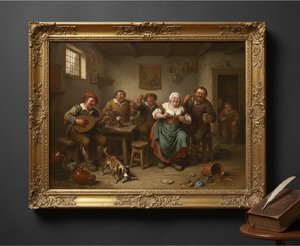
Adriaen van Ostade: A Master of Dutch Genre Painting & Social Commentary
Explore the life & work of Adriaen van Ostade, a leading Dutch Golden Age painter. Discover his realistic genre scenes, social commentary, and lasting influence on art history. Learn more at OriginalUniqueArt.

The Enduring Power of Painting: A Historical & Contemporary Exploration of Form and Emotion
Explore the rich history & enduring techniques of oil painting with OriginalUniqueArt. Discover masterpieces, learn about art collecting, and find authentic handmade reproductions crafted by skilled artists.

