

 Переглянути в інтер'єрі
 Надіслати
 Поділитися
 Деталі
 Посібник

 Завантажити
 Схожі предмети колекціонування
 Рентгенівське дослідження
 Слайд-шоу
 Статистика переглядів
German Atelierwand
 Oil On Canvas
- WallArt
- Realism
 1872
1872 111.0 x 79.0 cm
 Гамбургская художественная галерея
 Читати далі
Олійная репродукція ручної роботи
Написана вручну олією на полотні у вашому розмірі та рамі, виготовлена на замовлення нашими художниками. ( Перейти до друку Перейти до цифрових зображень)




P118B $10

P118H $10

P118W $10

P438Z $10

P508JH $12

P508YH $12

P805H $10

P805Z $10

P919BZ $10

P919G $10

P919XJ $10

P959ZH $10

P968JZ $12

W106C $8

W218G $10

W218JH $8

W218Y $10

W307PJ $10

W316G $10

W316PJ $8

W316Y $10

W398PJ $8

W4111J $10

W500HY $15

W500JH $15

W692G $12

W849H $8

W940BG $15

W953PJ $8




Обирайте з наших стандартних розмірів, що відповідають оригінальним пропорціям твору мистецтва.

Ви можете вказати власні розміри, щоб репродукція ідеально підійшла до конкретної рами або інтер'єру. Якщо вибраний вами розмір не відповідає пропорціям оригіналу, ми або обріжемо полотно, або доповнимо картину додатковими елементами, промальованими вручну. Цифровий макет буде надіслано вам на затвердження перед початком виробництва.
Зверніть увагу, що попередній перегляд на екрані не відображає фактичне обрізання або розширення зображення. Тільки макет точно покаже остаточну композицію.
Хоча ми можемо виготовити виріб у нестандартному розмірі, для збереження оригінальних пропорцій рекомендуємо обирати варіанти зі встановленого списку.
Після оформлення замовлення команда OriginalUniqueArt.com зв'яжеться з клієнтом електронною поштою для отримання інструкцій та надасть попередній макет
Доставка по всьому світу () за 3–4 тижні замість стандартних 5 тижнів. (25 Вересень). Без жодних компромісів у якості.

Безкоштовна експрес-доставка по всьому світу

Високоякісне лляне полотно

Повне страхове покриття доставки

Гарантія повернення митних зборів

Гарантія точного відтворення кольорів

Політика повернення протягом 100 днів (лише у разі виявлення дефектів)

Гарантія повернення 100% коштів

Знижка на оптові замовлення
 Скляний варіант доступний лише для розмірів до 110 см

German Atelierwand
Техніка репродукції
Розмір репродукції
-


Загальна вартість
$ 575
A Chaotic Symphony of Faces: Unpacking Adolph von Menzel’s “German Atelierwand”
Adolph von Menzel's "German Atelierwand" (1872) isn’t merely a painting; it’s an immersive experience, a visual plunge into the depths of human consciousness. Immediately arresting, the work confronts the viewer with a densely packed tableau – a swirling vortex of hundreds of faces emerging from a suffocatingly dark background. It's a scene that simultaneously evokes claustrophobia and overwhelming presence, hinting at both judgment and profound melancholy. Menzel, a master of realism and a keen observer of his time, doesn’t offer easy answers or comforting narratives; instead, he presents us with a raw, unsettling exploration of mortality, power, and the burden of history.
The painting's genesis lies within Menzel’s own studio – specifically, a wall in his workshop. This intimate setting lends an air of vulnerability to the scene, suggesting that these faces aren’t merely representations but fragments of the artist’s own psyche and perhaps reflections on the artistic process itself. The sheer number of portraits, ranging from recognizable historical figures to distorted, almost grotesque visages, creates a sense of collective memory, a chaotic archive of human experience.
Expressionist Roots in a Realist Framework
While firmly rooted in the tenets of German Realism – Menzel’s meticulous attention to detail and his commitment to portraying life as he saw it – “German Atelierwand” exhibits characteristics that foreshadow Expressionism. The fractured lines, the jarring juxtapositions of light and shadow, and the overwhelming emotional intensity all point towards a desire to convey inner turmoil rather than simply depict external reality. Menzel’s use of impasto—thickly applied paint—further amplifies this effect, creating a tactile surface that vibrates with energy and contributes significantly to the painting's unsettling atmosphere.
The technique itself is masterful. Menzel employs a layered approach, building up the composition through countless glazes and brushstrokes. This creates a remarkable sense of depth and movement, as if the faces are constantly shifting and merging within the darkness. The color palette—dominated by deep reds, browns, and ochres—reinforces this feeling of gloom and foreboding, punctuated only by the stark highlights that illuminate certain features, drawing our attention to their anguish or perhaps their silent judgment.
Symbolism and Historical Weight
Beyond its immediate visual impact, “German Atelierwand” is rich in symbolic potential. The dark background can be interpreted as representing the unknown, the void of death, or perhaps the collective unconscious. The faces themselves are not simply individuals; they embody a multitude of historical figures, memories, and anxieties. Some scholars have suggested that Menzel was alluding to the concept of “damned souls” – a common theme in medieval art—while others see echoes of the Nuremberg Trials and the weight of past injustices. The inclusion of plaster casts, particularly the headless torso, adds another layer of complexity, hinting at themes of mortality, fragmentation, and the ephemeral nature of beauty.
The painting’s creation coincided with a period of significant social and political upheaval in Germany, marked by rising nationalism and anxieties about the future. Menzel's work reflects these concerns, offering a powerful meditation on the human condition amidst times of uncertainty. It is a testament to his ability to capture not just the outward appearance of reality but also the underlying currents of emotion and thought that shape our experience.
A Timeless Masterpiece: Reproduction Possibilities
“German Atelierwand” remains a profoundly moving and intellectually stimulating work of art. OriginalUniqueArt offers meticulously crafted, hand-painted reproductions that faithfully capture Menzel’s original vision—the dramatic lighting, the intricate detail, and the overwhelming emotional intensity. These reproductions provide an exceptional opportunity to bring this iconic masterpiece into your home or office, allowing you to contemplate its enduring power and symbolism for years to come.
Біографія митця
A Life Etched in Realism: The World of Adolph von Menzel
Adolph Friedrich Erdmann von Menzel, a name synonymous with German Realism, was more than just a painter; he was a visual chronicler of 19th-century life. Born on December 8, 1815, in Breslau (now Wrocław, Poland), his journey began not amidst the hallowed halls of artistic academies, but within the practical world of his father’s lithographic workshop. This early immersion in reproduction and detail would profoundly shape his aesthetic sensibilities. Though initially intended for a professorial path by his father, young Adolph's passion for art proved undeniable, leading to brief studies at the Berlin Academy of Art in 1833 before embracing a largely self-taught approach. He quickly distinguished himself through meticulous draftsmanship and an uncanny ability to capture the essence of everyday scenes, initially through lithography, but soon expanding into painting and etching—media he would master with unparalleled skill. Menzel’s life was one dedicated to observation, to translating the world around him onto canvas and paper with a precision that bordered on photographic realism, yet always imbued with a subtle emotional depth. His work wasn't merely about depicting reality; it was about understanding it, dissecting it, and presenting it with an honesty that resonated deeply with his contemporaries.From Historical Grandeur to Intimate Moments
Menzel’s artistic output was remarkably diverse, spanning historical paintings, genre scenes, portraits, and landscapes. Early success came through his illustrations for historical works, notably those depicting the reign of Frederick the Great, showcasing a dedication to accuracy and narrative detail that resonated with a burgeoning national pride in Prussia. These large-scale compositions established him as a leading history painter, satisfying public demand for patriotic imagery during a period of significant political and social change. The meticulous research undertaken for these works—historical documents, court records, even architectural plans—is evident in the painstaking detail of his paintings. However, it was his later work—the seemingly unassuming genre paintings and intimate studies of modern life—that truly cemented his legacy. The Iron Rolling Mill, completed between 1872 and 1875, stands as a monumental achievement, not merely for its scale but for its unflinching depiction of industrial labor. It’s a scene teeming with energy and grit, capturing the raw power and human cost of the burgeoning Industrial Revolution. The figures are rendered with remarkable realism—their faces etched with exhaustion, their movements dictated by the relentless rhythm of the machinery. This wasn't romanticized industry; it was honest, visceral, and profoundly modern in its approach. Alongside grand historical narratives, Menzel found beauty and significance in quieter moments: a glimpse through a French window, a scene in a palace garden, or a simple portrait revealing character through subtle gestures and expressions. These smaller works demonstrate his ability to capture the essence of human experience with remarkable sensitivity.Influences and Artistic Development
While largely self-taught, Menzel was not immune to artistic influences. He admired the Dutch Masters—their mastery of light and shadow, their ability to elevate everyday life to artful significance—and elements of this influence can be seen in his compositions and use of color. Artists like Rembrandt and Vermeer served as models for his dramatic lighting effects and detailed observation. However, he forged a distinctly German path, rejecting the overt romanticism prevalent in some contemporary circles in favor of a more objective, analytical approach. His work resonated with French artists as well; Edgar Degas, famously, deeply admired Menzel’s skill, even copying his works and declaring him “the greatest living master.” This mutual respect highlights a shared commitment to realism and observation, despite differing national contexts. Menzel's development wasn't linear. He continually experimented with technique and subject matter, moving from the grand historical canvases of his early career to the more intimate and psychologically nuanced scenes that characterized his later work. His etching skills were particularly noteworthy, allowing for a level of detail and tonal range that further enhanced his realistic style. He was also known for his ability to capture fleeting moments in charcoal sketches, demonstrating an extraordinary talent for observation and quick rendering.Major Achievements and Recognition
Adolph von Menzel’s career produced a vast body of work, encompassing over 3,000 paintings, drawings, and prints. His most celebrated works include the monumental *History of Frederick the Great* (a series of approximately 400 illustrations), *The Iron Rolling Mill*, *Market-place at Verona*, and numerous portraits of prominent figures of his time. The *History of Frederick the Great* is a testament to his meticulous research, technical skill, and ability to convey complex historical narratives through visual storytelling. His work was widely exhibited throughout Germany and internationally, earning him critical acclaim and establishing him as one of the leading artists of his era. In 1898, he was knighted by Kaiser Wilhelm II, a recognition of his immense contribution to German culture. This honor further elevated his status and solidified his position as a respected figure within the artistic community. His legacy extends beyond individual artworks; Menzel’s influence can be seen in the work of subsequent generations of German artists who followed in his footsteps, embracing realism and exploring contemporary life with honesty and insight.Historical Significance
Adolph von Menzel's art serves as a powerful window into 19th-century Germany—a period of rapid industrialization, political upheaval, and social change. His paintings capture the dynamism of this era, depicting not only grand historical events but also the everyday lives of ordinary people. *The Iron Rolling Mill*, in particular, offers a poignant commentary on the impact of industrialization on society, highlighting both its potential for progress and its inherent human cost. Menzel’s work is a valuable resource for historians and art scholars alike, providing insights into the cultural values, social attitudes, and artistic trends of his time. His dedication to realism—his commitment to portraying the world as he saw it, with all its complexities and contradictions—makes him one of the most important figures in German Realism. His legacy continues to inspire artists today, reminding us of the power of art to illuminate the human condition and capture the essence of our shared experience.
Адльф фон Мenzel
1815 - 1905 , Польща
Довідкова інформація
- Artistic Movement Or Style: Реалізм
- Artists Or Movements Influenced By This Artist: ['Едгар Дега']
- Artists Who Influenced This Artist: ['Голландські майстри']
- Date Of Birth: 8 груд., 1815
- Date Of Death: 9 лют., 1905
- Full Name: Adolph Friedrich Erdmann von Menzel
- Nationality: Німецький
- Notable Artworks:
- Трубецький
- Завод
- Коронація
- Place Of Birth: Вроцлав, Польща
Схожі статті
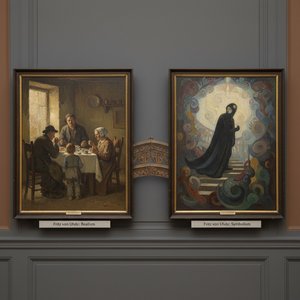
Fritz von Uhde: Bridging Realism & Symbolism in Late 19th-Century German Painting
Explore the captivating world of Fritz von Uhde, a pivotal German painter bridging Realism & Symbolism. Discover his plein-air techniques, religious themes, and influence on modern art. Learn about this fascinating artist at OriginalUniqueArt.

Romantic Realism's Finest: 10 Masterpieces for Your Home | OriginalUniqueArt
Explore 10 defining masterpieces of Romantic Realism! Discover Courbet, Millet & Daumier's powerful paintings—capturing emotion and social realities. Find museum-quality reproductions for your home at OriginalUniqueArt.com.

Adolph von Menzel: Realism, Prussian Society & the Painterly Chronicle of a Changing Era
Explore the life & work of Adolph von Menzel, a leading German Realist painter. Discover his detailed depictions of Prussian society, innovative techniques, and lasting influence on art history. Hand-painted reproductions available at OriginalUniqueArt.

Anton von Werner: Imperial Painter, Historical Witness & Shifting German Identity
Explore the life & work of Anton von Werner, Imperial Germany's leading painter. Discover his dramatic depictions of war, unification, and court life – a fascinating insight into 19th-century German history & art.

The Evocative Embrace of Reality: Exploring Romantic Realism in 19th-Century Painting
Explore the captivating world of Romantic Realism! Discover key artists like Courbet & Millet, masterpieces, and the social context behind this influential art movement. Expert insights for collectors at OriginalUniqueArt.


