Önizle
 Gönder
 Paylaş
 Detaylar
 Rehber

 Dosyayı İndir
 Benzerleri
 X-Işını
 Slayt Gösterisi
 İstatistikler
İç Mekanı
 Tuval Üzerine Akrilik Boya
- Duvar Sanatı
- Expressionism
 1909
1909- Modern
 50.0 x 65.0 cm
 Devamını Oku
Giclée / Sanat Baskısı
Hızlı üretim ve esnek bitiş seçenekleriyle müze kalitesinde giclée veya kanvas baskı. ( El Yapımı Tablo Satın Al Dijital Görsel Satışına Geç)




P118B ₺10

P118H ₺10

P118W ₺10

P438Z ₺10

P508JH ₺12

P508YH ₺12

P805H ₺10

P805Z ₺10

P919BZ ₺10

P919G ₺10

P919XJ ₺10

P959ZH ₺10

P968JZ ₺12

W106C ₺8

W218G ₺10

W218JH ₺8

W218Y ₺10

W307PJ ₺10

W316G ₺10

W316PJ ₺8

W316Y ₺10

W398PJ ₺8

W4111J ₺10

W500HY ₺15

W500JH ₺15

W692G ₺12

W849H ₺8

W940BG ₺15

W953PJ ₺8




Eserin orijinal oranlarıyla uyumlu, önceden belirlenmiş boyutlarımız arasından seçim yapın.

Çerçevenize veya duvarınıza uygun olması için ihtiyacınız olan genişlik ve yüksekliği yazın. Bir baskı yalnızca kesilebilir, görselden daha büyük hale getirilemez; bu nedenle farklı bir formdaki boyut seçimi, görselin bir kısmının kaybına neden olur. Herhangi bir baskı yapmadan önce onaylamanız için size bir dijital taslak gönderiyoruz. Bu sayfada gösterilen resim gerçek kesimi göstermez — bunu yalnızca taslak gösterir.
Dünya Çapında Teslimat (); standart 4/5 hafta yerine 2 haftada. (22 Ekim)

Dünya Çapında Ücretsiz Ekspres Kargo

Yüksek Kaliteli Keten Tuval

Tam Nakliye Sigortası

Gümrük Vergisi İadesi Garantisi

Gerçek Renk Uyumu Garantisi

100 Günlük İade Koşulları (Sadece Üretim Hatalı Ürünler İçin)

%100 Para İade Garantisi

Toplu Alım Avantajı
 Cam seçeneği yalnızca 110 cm altındaki boyutlar için mevcuttur.

İç Mekanı
Giclée / Sanat Baskısı
Baskı Boyutu
-


Toplam Fiyat
₺ 3909
Kandinsky'den Canlı Bir Ev Sahnesi
Wassily Kandinsky'nin "İç Mekan (Mutfak Masam)" adlı eseri, cesur renkler ve dinamik fırça darbeleriyle hayat bulan ev yaşamının büyüleyici bir keşfidir. 1909 yılında yaratılan bu post-empresyonist şaheser, izleyiciyi enerji ve duyguyla atan, canlı ve biraz da kaotik bir iç mekan sahnesine davet eder.
Kompozisyon ve Renk Paleti
Tablonun merkezinde, kırmızı-beyaz pötikareli bir örtüyle kaplı, etrafı çeşitli tabak ve mutfak gereçleriyle çevrili bir masa yer alır. Sağ tarafta küçük bir yan sehpa üzerinde duran meyve kasesi dikkat çekerken, arka planda dekoratif objelerle süslenmiş büyük bir ahşap dolap kompozisyona hakim olur. Odanın iki açık kapısı ise sahneye derinlik ve merak uyandırıcı bir gizem katar.
Renk paleti oldukça zengin ve yoğundur; kırmızı, turuncu ve sarının sıcak tonları baskınlık kurarken, yeşil ve mavinin daha soğuk tonlarıyla etkileyici bir kontrast oluşturur. Derin kızıl-pembe duvarlar, sahnenin genel canlılığını artıran hareketli bir fon yaratır.
Üslup ve Teknik
Kandinsky'nin post-empresyonist üslubu; cesur renklerde, dışavurumcu fırça darbelerinde ve gerçekçi bir temsilden ziyade kişisel ifadeye verilen önemde kendini açıkça gösterir. Serbest ve jestsel fırça vuruşları bir hareket ve enerji duygusu yaratırken, basitleştirilmiş ve abartılmış formlar, kesin detaylardan ziyade genel yapıya odaklanır.
Boyanın kalın uygulanışı (impasto) ve çeşitli dokular, sanat eserine derinlik ve boyut kazandırır. Dağınık ışık kullanımı ve hafifçe çarpıtılmış perspektif, eserin rüya benzeri niteliğine katkıda bulunarak onu soyut dışavurumculuk üzerine büyüleyici bir çalışma haline getirir.
Tarihsel Bağlam
Kandinsky'nin Münih'te bulunduğu dönemde yaratılan bu tablo, sanatçının erken dönem sanatsal gelişimini ve soyuta doğru geçiş sürecini yansıtır. Bu dönem, Kandinsky'nin sanatta ruhsal ve duygusal yankıyı vurgulayan Der Blaue Reiter grubuna dahil olmasıyla damgalanmıştır. Eser, Kandinsky'nin evsel realizmi dışavurumcu bir soyutlama ile harmanlayan yenilikçi yaklaşımının bir kanıtıdır.
Sembolizm ve Duygusal Etki
Bir iç mekan teması gündelik yaşamı ve evcilliği çağrıştırsa da, canlı renkler ve enerjik fırça darbeleri sıcaklık ve hayat dolu bir his iletir. Nesnelerin kaotik düzeni ve çarpıtılmış perspektif, hem konfor hem de hafif bir huzursuzluk duygusu uyandırarak duygusal açıdan yüklü bir atmosfer yaratır.
Kandinsky'nin cesur, doğal olmayan renkleri ve dışavurumcu darbeleri kullanması, sahneye güçlü bir duygusal ve psikolojik varlık kazandırır. Bu sanat eseri, bir ev mekanının özünü yakalama yeteneğinin yanı sıra, ona rüya gibi ve hayal gücü yüksek bir nitelik katmasıyla öne çıkar.
Bu Sanat Eseri Neden Koleksiyona Eklenmeli veya Sergilenmeli?
"İç Mekan (Mutfak Masam)", canlı renkleri, dinamik fırça darbelerini ve duygusal derinliği bir araya getiren bir parça arayan sanatseverler, koleksiyonerler ve iç mimarlar için vazgeçilmez bir eserdir. Post-empresyonist üslubu ve dışavurumcu tekniği, onu herhangi bir sanat koleksiyonuna veya yaşam alanına çok yönlü bir katkı haline getirir.
İster Kandinsky'nin yenilikçi yaklaşımına ister sahnenin duygusal yankısına kapılın, bu tablo evsel realizm ile soyut dışavurumculuğun eşsiz bir karışımını sunar. Bu sanat eserinin yüksek kaliteli bir reprodüksiyonu, evinize veya ofisinize enerji ve yaratıcılık katabilir; onu hem bir sohbet konusu hem de bir ilham kaynağı yapabilir.
Soru ve Cevaplar
Vasılı Vasılıeviç Kandinskiy imzalı "İç Mekanı" eserini farklı ışıklar altında görebilir miyim?
"İç Mekanı", görüntünün on bir optik okumasını içeren ve bir konservatörün ışıklı masasından ilham alan interaktif bir görüntüleyici olan eserin X-Işını sayfasında katman katman incelenebilir.
"İç Mekanı" adlı eserin atmosferi nasıldır?
"İç Mekanı" Zarif bir atmosfere sahip.
"İç Mekanı" hangi yılda ve hangi akıma ait olarak yapıldı?
Vasılı Vasılıeviç Kandinskiy imzalı "İç Mekanı", 1909 tarihli olup Expressionism akımına aittir.
Sanatçı Biyografisi
A Life Immersed in Color and Spirit
Wassily Wassilyevich Kandinsky, born December 4, 1866, in Moscow, Russia, was a revolutionary figure who irrevocably altered the course of modern art. His journey wasn’t one of immediate artistic calling; initially destined for a career in law and economics at the University of Moscow, it was a profound encounter with Impressionist painting – specifically Claude Monet's “Haystacks” – and a deeply moving experience witnessing Wagner’s opera "Lohengrin" that ignited within him an irrepressible desire to pursue art. This pivotal moment, occurring around age thirty, marked not merely a career change but a complete transformation of perspective, setting him on a path toward pioneering abstraction. He soon relocated to Munich, enrolling at the prestigious Academy of Fine Arts and studying under Franz von Stuck, though even within formal training, Kandinsky’s spirit yearned for exploration beyond conventional boundaries. Early influences included Russian folk art, gleaned from an ethnographic expedition to the Vologda region in 1889, which instilled a fascination with vibrant color palettes and symbolic imagery. This foundation would prove crucial as he began to develop his unique artistic language. These early explorations weren’t simply about aesthetic preference; they were rooted in a deep cultural connection and a burgeoning understanding of how art could communicate beyond the literal. He experimented with landscapes and portraits, demonstrating considerable skill but always feeling constrained by representational limitations.The Dawn of Abstraction: From Expressionism to Inner Necessity
Kandinsky’s early works reveal a strong expressionistic bent, characterized by bold colors and emotional intensity – pieces like “Papeln (Poplars)” from 1902 exemplify this period. However, he wasn't content with merely representing the external world; he sought to express inner realities, spiritual truths that transcended mere visual depiction. This quest led him gradually away from representational art and toward a revolutionary exploration of color, form, and their emotional resonance. He believed that colors possessed inherent psychological effects, capable of evoking specific feelings and sensations in the viewer. This conviction was deeply intertwined with his burgeoning interest in Theosophy, a spiritual movement emphasizing esoteric knowledge and universal brotherhood. As he delved deeper into these ideas, Kandinsky’s paintings became increasingly non-objective, shedding recognizable forms in favor of abstract compositions driven by an “inner necessity.” This wasn't simply about abandoning representation; it was about discovering a new visual language capable of expressing the intangible realms of emotion and spirituality. He sought to create a visual equivalent of music, where color and form harmonized to evoke profound emotional responses.- Notable Early Works: “Papeln (Poplars),” “Fruitful Tree,” “Moscow Landscape”
- Influences: Impressionism (Monet), Russian Folk Art
Geometric Harmony and Spiritual Resonance
The period following his involvement with the influential artist group Der Blaue Reiter (The Blue Rider), which he co-founded in Munich in 1911, saw a further evolution in Kandinsky’s style. While earlier works often featured fluid, organic shapes, he began to explore geometric abstraction, focusing on the interplay of circles, triangles, and squares. “Several Circles” (140 x 140 cm) stands as a prime example of this phase – a dynamic composition where color and form interact in a harmonious yet energetic dance. He meticulously studied mathematical principles and sought to translate them into visual terms, believing that geometric forms possessed inherent symbolic meaning. This wasn’t cold or sterile geometry; rather, it was imbued with spiritual significance. Kandinsky argued that art should not aim to imitate nature but rather to reveal the artist’s inner world and connect with the viewer on a deeper, more intuitive level.- Key Artistic Developments: Shift from Expressionism to Geometric Abstraction
- Theoretical Writings: “Concerning the Spiritual in Art” (1911)
Bauhaus Influence and Lasting Legacy
The outbreak of World War I forced Kandinsky's return to Russia in 1914, but following the Russian Revolution, he found himself increasingly at odds with the prevailing artistic climate. In 1920, he accepted a teaching position at the Bauhaus school in Germany, where he profoundly influenced generations of artists with his theories on color, form, and abstraction. The Bauhaus provided an ideal environment for Kandinsky to further develop his ideas and explore new creative avenues. He continued to experiment with geometric forms and vibrant colors, often incorporating layered impasto techniques to create textured surfaces that added depth and complexity to his compositions – as seen in later works like “An Intimate Party” (1942). After the closure of the Bauhaus by the Nazi regime in 1933, Kandinsky moved to France, where he remained for the rest of his life. His impact on modern art is immeasurable; he is widely recognized as a pioneer of abstract expressionism and a key figure in the development of non-representational painting. His works are held in major museums worldwide, including the Tretyakov Gallery in Moscow, which houses his monumental “Composition VII,” a testament to his artistic vision and enduring legacy. Kandinsky died December 13, 1944, in Neuilly-sur-Seine, France.
Vasılı Vasılıeviç Kandinskiy
1866 - 1944 , Rusya
Kısa Bilgiler
- Artistic Movement Or Style: Abstr Ekspres
- Artists Or Movements Influenced By This Artist: ['Abs Ekspres']
- Artists Who Influenced This Artist:
- Claude Monet
- Richard Wagner
- Date Of Birth: 1866
- Full Name: Wassily Wassilyevich Kandinsky
- Nationality: Rus
- Notable Artworks:
- Murnau Rainbow
- Tempered Elan
- Several Circles
- Place Of Birth: Moscow, Russia
İlgili Yazılar

Soyut Ekspresyonizmin İzinden: Sanat Tarihini Derinleştiren 10 Başyapıt
Soyut Ekspresyonizmin zirvesi! Pollock, Rothko ve daha fazlasıyla sanat tarihini şekillendiren 10 başyapıtı keşfedin. Sanatçı hikayeleri, renklerin gücü ve evinizi dönüştürecek müze kalitesinde reprodüksiyonlar için OriginalUniqueArt.com'u ziyaret edin.

Geometrik Soyutlamanın Öncü Eserleri: Sanat Tarihinin İzinde 🖼️🎨
Geometrik Soyutlamanın 10 başyapıtını keşfedin! Mondrian, Malevich ve Kandinsky gibi sanatçıların ikonik eserleriyle modern sanatın derinliklerine yolculuk edin. Evinizi lüks sanat baskılarıyla renklendirin. OriginalUniqueArt.com'da tüm koleksiyonu inceleyin!
Denge ve Cesaretin Uyumu: Klasik İç Mekanlarda Çağdaş Sanatın Bütüncül Yansıması
Klasik iç mekanlarda çağdaş sanatın uyumunu keşfedin! Uzman sanat danışmanlığıyla lüks estetiği yakalayın. Villa ve restoran tasarımlarınız için ilham alın, sürrealist eserlerle mekanlarınızı dönüştürün.

Kandinsky's Masterpieces: 25 Paintings That Define Abstract Art | OriginalUniqueArt
Journey through Wassily Kandinsky's 25 most iconic abstract paintings. Explore his revolutionary use of color, form & spiritual expressionism. Find museum-quality Kandinsky reproductions and elevate your home decor with OriginalUniqueArt.com. Discover all masterpieces on OriginalUniqueArt.com!
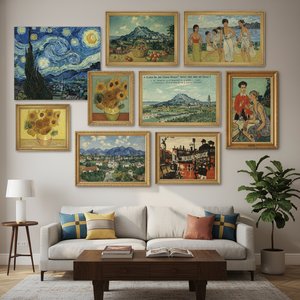
Post-Empresyonizmin İzinden: Sanat Tarihini Şekillendiren 10 Başyapıt
Post-Empresyonizmin en etkileyici 10 başyapıtını keşfedin! Van Gogh, Gauguin ve daha fazlasının eserleriyle sanat tarihine yolculuk yapın. OriginalUniqueArt.com'da yüksek kaliteli tablo reproduksiyonları ve benzersiz dekorasyon fikirleri sizi bekliyor. Sanat dolu bir yaşam için şimdi inceleyin!