
 Önizleme yap
 Paylaş
 Paylaş
 Detayları Gör

 İndir
İndir
 Benzerlerini gör
 X-Işını
 Slayt Gösterisi
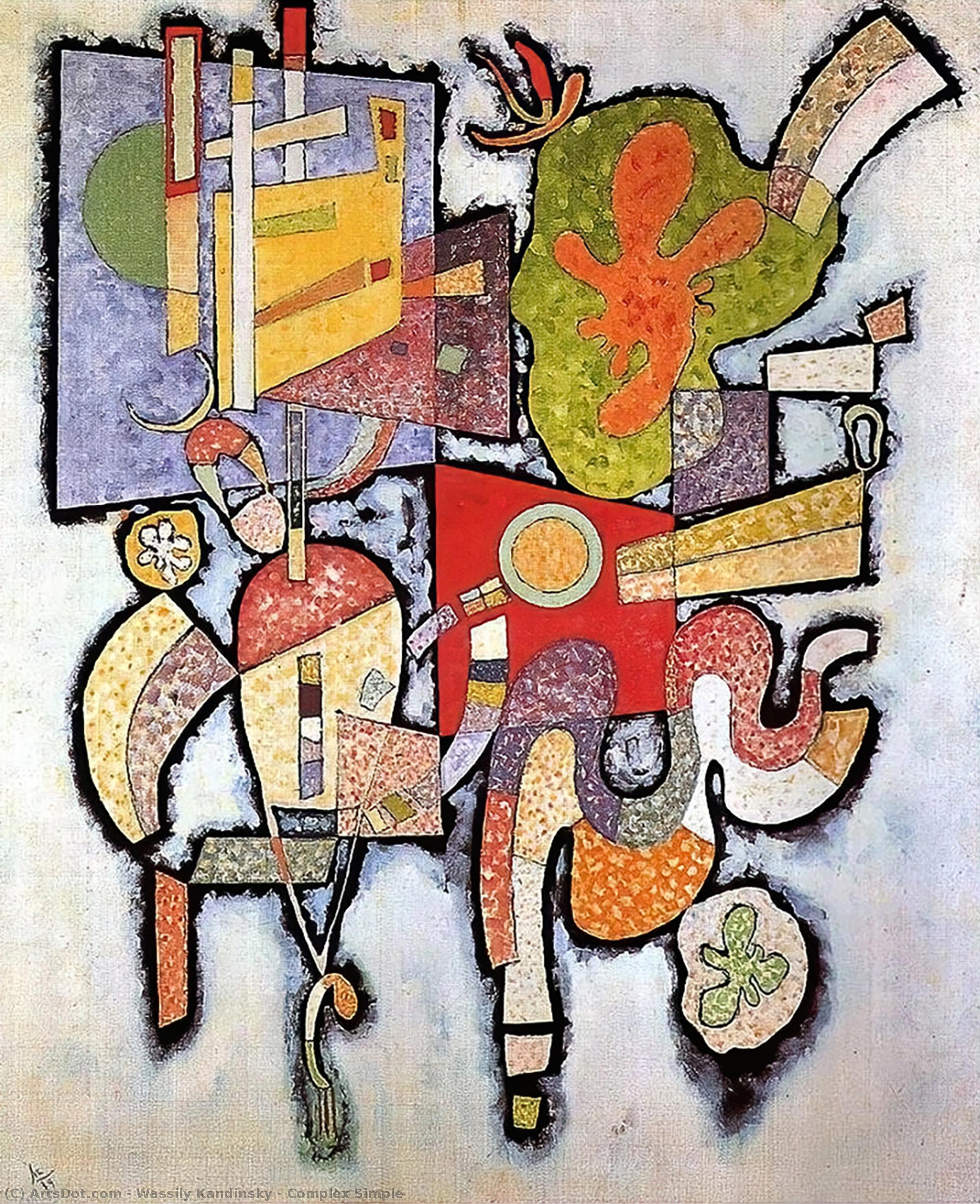
Complex Simple
 Acrylic On Canvas
- WallArt
- Abstract Expressionism
 1939
1939 100.0 x 81.0 cm
 Tümünü Gör
Çevrimiçi önizlemeden çok daha üstün, yüksek çözünürlüklü ve iyileştirilmiş bir dijital görüntü satın alın.
Her dosya, uzman ekibimiz tarafından gelişmiş araçlar ve titiz manuel rötuş teknikleri kullanılarak özenle hazırlanır. Her görüntünün olağanüstü netliğe, kusursuz renk doğruluğuna ve ince ayrıntılara sahip olduğundan emin oluruz.
Son dosya; profesyonel, editoryal ve baskı süreçlerinde anında kullanıma uygun şekilde optimize edilerek 72 saat içinde e-posta yoluyla teslim edilir. Bu, seçkin tasarım stüdyoları, yayıncılar ve galerilerin güvendiği aynı kalite standartlarındadır.
Dijital Görsel
Kişisel sergileme, baskı ve yaratıcı projeleriniz için yüksek çözünürlüklü bir dosya indirin. ( Baskıya Geç El boyaması versiyona geç)
Her Dijital Görüntü Siparişinde Dahil Olanlar
Uzman Dijital Teslimat, Garantili
OriginalUniqueArt.com seçtiğinizde, sadece bir görsel edinmekle kalmaz; titizlikle hazırlanmış, profesyonelce iyileştirilmiş dijital bir sanat eserine sahip olur ve memnuniyet garantisiyle güvence altına alınırsınız. Siparişinizle birlikte otomatik olarak sunulan her şey şunlardır:

Hızlı E-posta ile Teslimat
Yüksek çözünürlüklü dijital görüntü dosyanız, siparişinizin üzerinden en geç 72 saat geçmeden e-posta ile size gönderilecektir; hemen kullanıma hazırdır.

Yapay Zeka İle İyileştirilmiş Dijital Dosya
Sanat eseriniz; maksimum detay, netlik ve renk doğruluğu sağlamak amacıyla gelişmiş yapay zeka araçları ve manuel düzenleme kullanılarak profesyonelce optimize edilmektedir.

Ömür Boyu Ücretsiz Yeniden Gönderim
Dosyanızı yanlışlıkla mı sildiniz yoksa kayıp mı oldu? Endişelenmeyin; dosyanızı dilediğiniz zaman size ücretsiz olarak tekrar göndereceğiz.

Hiçbir Zaman İthalat Ücreti Ödemeyin
Sanat eserinizin tadını gümrük vergisi, harç veya teslimat ücreti ödemeden anında çıkarın; dijital indirmeler her zaman vergiden muaftır.

Renk Doğruluğu Garantisi
Profesyonel araçlar ve renk yönetimi kullanarak dijital görselinizin orijinal renklere mümkün olduğunca yakın yansıtılmasını sağlıyoruz.

60 Günlük Memnuniyet Garantisi
If you're not satisfied with your digital image, we'll revise it or refund 100% within 60 days - no questions asked.

100% Para İadesi Garantisi
Memnun kalmadınız mı? Dijital dosyanızı aldıktan sonraki 60 gün içinde, hiçbir soru sorulmaksızın tam iade alın.

Toplu Sipariş İndirimleri
Buy 3 images, save 10% - Buy 5, save 15% - Buy 10+, save 20%. Great for creative projects, galleries, and agencies.
Koleksiyon Detayları
A Symphony of Geometric Forms: Exploring Wassily Kandinsky’s “Complex Simple”
The canvas holds an arresting stillness—a deceptive calm that belies the turbulent currents of artistic innovation swirling beneath its surface. “Complex Simple,” painted in 1939 by Wassily Kandinsky, stands as a cornerstone of abstract art and embodies the culmination of decades spent dismantling representational conventions to liberate color and form from the constraints of illusion. Created during his Parisian exile following the Nazi occupation of Germany, this oil on canvas offers more than just visual pleasure; it invites contemplation on the fundamental relationship between perception and emotion—a core tenet of Kandinsky’s groundbreaking theoretical framework.The Genesis of Geometric Abstraction
Kandinsky's artistic evolution began in Munich’s Academy of Fine Arts where he initially pursued a path rooted in Impressionism, captivated by Monet’s luminous depictions of landscapes. However, it was Wagnerian opera—specifically “Lohengrin”—that irrevocably altered his sensibilities. The visceral experience of music transcended visual representation, prompting Kandinsky to question whether art could achieve similar expressive power without mimicking the natural world. This epiphany fueled his relentless experimentation with color and shape, propelling him toward a radical departure from traditional artistic practices. His subsequent studies at the Bauhaus school solidified his conviction that art should serve as a conduit for spiritual insight—a belief that profoundly influenced his stylistic choices throughout his career.Composition and Color Harmony: Decoding Kandinsky’s Visual Language
“Complex Simple” is dominated by a masterful orchestration of geometric forms—primarily rectangles, triangles, and circles—arranged in a dynamic interplay of hues. The palette employs vibrant reds, yellows, greens, blues, and whites, meticulously balanced to achieve a harmonious visual equilibrium. These colors aren't merely decorative; they operate as symbolic representations of Kandinsky’s philosophical concepts. Red embodies passion and energy, yellow signifies intellect and optimism, while blue evokes tranquility and contemplation. The artist skillfully utilizes textured brushstrokes—particularly in the central region—to imbue the canvas with palpable depth and materiality, countering the perceived flatness of pure abstraction.Symbolism Beyond Representation
Beyond its formal elegance lies a rich tapestry of symbolic meaning. At the heart of the composition resides a child figure—a motif recurrent throughout Kandinsky’s oeuvre—representing innocence and spiritual awakening. Surrounding it are other geometric shapes and forms, each imbued with specific connotations. The chair symbolizes stability and grounding, while the clock embodies time's relentless passage—themes that resonate deeply within Kandinsky’s exploration of existential concerns. Furthermore, subtle biomorphic forms—shapes blending organic and geometric elements—suggest a connection to nature and the subconscious mind, reflecting Kandinsky’s belief in art’s capacity to access hidden realms of consciousness.Legacy and Enduring Influence
“Complex Simple” cemented Kandinsky's position as a titan among modernist artists, inspiring subsequent generations of painters and sculptors who embraced abstraction as a means of conveying emotion and exploring the intangible dimensions of human experience. Artists like Frank Stella and Jackson Pollock recognized Kandinsky’s pioneering vision—his unwavering commitment to liberating color and form from representational constraints—and adopted his stylistic innovations as foundational elements of their own artistic endeavors. Today, “Complex Simple” resides in the Musée de Grenoble, serving as a poignant reminder of Kandinsky's enduring legacy—a testament to the transformative power of art to transcend visual illusion and illuminate the profound mysteries of human consciousness.- Artist: Wassily Wassilyevich Kandinsky
- Born Year: 1866
- Death Year: 1944
- Birth City: Moscow
- Birth Country: Russia
Sanatçı Özgeçmişi
A Life Immersed in Color and Spirit
Wassily Wassilyevich Kandinsky, born December 4, 1866, in Moscow, Russia, was a revolutionary figure who irrevocably altered the course of modern art. His journey wasn’t one of immediate artistic calling; initially destined for a career in law and economics at the University of Moscow, it was a profound encounter with Impressionist painting – specifically Claude Monet's “Haystacks” – and a deeply moving experience witnessing Wagner’s opera "Lohengrin" that ignited within him an irrepressible desire to pursue art. This pivotal moment, occurring around age thirty, marked not merely a career change but a complete transformation of perspective, setting him on a path toward pioneering abstraction. He soon relocated to Munich, enrolling at the prestigious Academy of Fine Arts and studying under Franz von Stuck, though even within formal training, Kandinsky’s spirit yearned for exploration beyond conventional boundaries. Early influences included Russian folk art, gleaned from an ethnographic expedition to the Vologda region in 1889, which instilled a fascination with vibrant color palettes and symbolic imagery. This foundation would prove crucial as he began to develop his unique artistic language. These early explorations weren’t simply about aesthetic preference; they were rooted in a deep cultural connection and a burgeoning understanding of how art could communicate beyond the literal. He experimented with landscapes and portraits, demonstrating considerable skill but always feeling constrained by representational limitations.The Dawn of Abstraction: From Expressionism to Inner Necessity
Kandinsky’s early works reveal a strong expressionistic bent, characterized by bold colors and emotional intensity – pieces like “Papeln (Poplars)” from 1902 exemplify this period. However, he wasn't content with merely representing the external world; he sought to express inner realities, spiritual truths that transcended mere visual depiction. This quest led him gradually away from representational art and toward a revolutionary exploration of color, form, and their emotional resonance. He believed that colors possessed inherent psychological effects, capable of evoking specific feelings and sensations in the viewer. This conviction was deeply intertwined with his burgeoning interest in Theosophy, a spiritual movement emphasizing esoteric knowledge and universal brotherhood. As he delved deeper into these ideas, Kandinsky’s paintings became increasingly non-objective, shedding recognizable forms in favor of abstract compositions driven by an “inner necessity.” This wasn't simply about abandoning representation; it was about discovering a new visual language capable of expressing the intangible realms of emotion and spirituality. He sought to create a visual equivalent of music, where color and form harmonized to evoke profound emotional responses.- Notable Early Works: “Papeln (Poplars),” “Fruitful Tree,” “Moscow Landscape”
- Influences: Impressionism (Monet), Russian Folk Art
Geometric Harmony and Spiritual Resonance
The period following his involvement with the influential artist group Der Blaue Reiter (The Blue Rider), which he co-founded in Munich in 1911, saw a further evolution in Kandinsky’s style. While earlier works often featured fluid, organic shapes, he began to explore geometric abstraction, focusing on the interplay of circles, triangles, and squares. “Several Circles” (140 x 140 cm) stands as a prime example of this phase – a dynamic composition where color and form interact in a harmonious yet energetic dance. He meticulously studied mathematical principles and sought to translate them into visual terms, believing that geometric forms possessed inherent symbolic meaning. This wasn’t cold or sterile geometry; rather, it was imbued with spiritual significance. Kandinsky argued that art should not aim to imitate nature but rather to reveal the artist’s inner world and connect with the viewer on a deeper, more intuitive level.- Key Artistic Developments: Shift from Expressionism to Geometric Abstraction
- Theoretical Writings: “Concerning the Spiritual in Art” (1911)
Bauhaus Influence and Lasting Legacy
The outbreak of World War I forced Kandinsky's return to Russia in 1914, but following the Russian Revolution, he found himself increasingly at odds with the prevailing artistic climate. In 1920, he accepted a teaching position at the Bauhaus school in Germany, where he profoundly influenced generations of artists with his theories on color, form, and abstraction. The Bauhaus provided an ideal environment for Kandinsky to further develop his ideas and explore new creative avenues. He continued to experiment with geometric forms and vibrant colors, often incorporating layered impasto techniques to create textured surfaces that added depth and complexity to his compositions – as seen in later works like “An Intimate Party” (1942). After the closure of the Bauhaus by the Nazi regime in 1933, Kandinsky moved to France, where he remained for the rest of his life. His impact on modern art is immeasurable; he is widely recognized as a pioneer of abstract expressionism and a key figure in the development of non-representational painting. His works are held in major museums worldwide, including the Tretyakov Gallery in Moscow, which houses his monumental “Composition VII,” a testament to his artistic vision and enduring legacy. Kandinsky died December 13, 1944, in Neuilly-sur-Seine, France.
Vasılı Vasılıeviç Kandinskiy
1866 - 1944 , Rusya
Kısa Bilgiler
- Artistic Movement Or Style: Abstr Ekspres
- Artists Or Movements Influenced By This Artist: ['Abs Ekspres']
- Artists Who Influenced This Artist:
- Claude Monet
- Richard Wagner
- Date Of Birth: 1866
- Full Name: Wassily Wassilyevich Kandinsky
- Nationality: Rus
- Notable Artworks:
- Murnau Rainbow
- Tempered Elan
- Several Circles
- Place Of Birth: Moscow, Russia

