

 Gönder
 Paylaş
 Detaylar
 Rehber

 Dosyayı İndir
 Benzerleri
 Slayt Gösterisi
 İstatistikler
Erase
 Installation Art
- Installation
- Contemporary Installation Art
 2013
2013- Contemporary
 Kochi-Muziris Biennale
 Devamını Oku
Bu sayfada sergilenen eser telif hakkı yasasıyla korunmaktadır; bu da yasal olarak eserin birebir kopyasını oluşturamayacağımız veya satamayacağımız anlamına gelir. Bu koruma, aşağıdakiler gibi uluslararası anlaşmalar kapsamında uygulanmaktadır: Bern Sözleşmesi ve aşağıdakiler de dahil olmak üzere ulusal yasalarca belirlenen ABD Telif Hakkı Kanunu - 17. Başlık.
Bu yöntem, koruma altındaki sanat eserinin kopyalanmasını veya çoğaltılmasını içermediği için telif hakkı düzenlemelerine tam uyum sağlar. Bunun yerine, yaratıcı bir yeniden yorumlamadır; orijinalinden etkilenen ancak onunla aynı olmayan yeni bir tablodur.
Giclée / Sanat Baskısı
Hızlı üretim ve esnek bitiş seçenekleriyle müze kalitesinde giclée veya kanvas baskı. ( El Yapımı Tablo Satın Al Dijital Görsel Satışına Geç)




































Eserin orijinal oranlarıyla uyumlu, önceden belirlenmiş boyutlarımız arasından seçim yapın.

Çerçevenize veya duvarınıza uygun olması için ihtiyacınız olan genişlik ve yüksekliği yazın. Bir baskı yalnızca kesilebilir, görselden daha büyük hale getirilemez; bu nedenle farklı bir formdaki boyut seçimi, görselin bir kısmının kaybına neden olur. Herhangi bir baskı yapmadan önce onaylamanız için size bir dijital taslak gönderiyoruz. Bu sayfada gösterilen resim gerçek kesimi göstermez — bunu yalnızca taslak gösterir.
Dünya Çapında Teslimat (); standart 4/5 hafta yerine 2 haftada. (23 Ekim)

Dünya Çapında Ücretsiz Ekspres Kargo

Yüksek Kaliteli Keten Tuval

Tam Nakliye Sigortası

Gümrük Vergisi İadesi Garantisi

Gerçek Renk Uyumu Garantisi

100 Günlük İade Koşulları (Sadece Üretim Hatalı Ürünler İçin)

%100 Para İade Garantisi

Toplu Alım Avantajı
 Cam seçeneği yalnızca 110 cm altındaki boyutlar için mevcuttur.

Erase
Giclée / Sanat Baskısı
Baskı Boyutu
-


Toplam Fiyat
₺ 3912
A Ritual of Release: The Immersive World of Erase
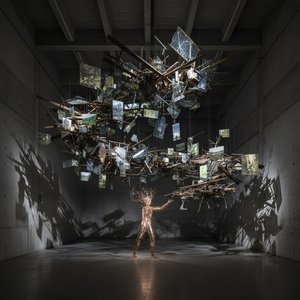
In the quiet intersection of sculpture and performance, Venkataiah Srinivas Prasad’s 2013 installation, Erase, stands as a profound testament to the power of catharsis. This is not merely an object to be viewed from a distance, but an experiential journey that demands physical participation. The work presents a striking visual paradox: a thorny, woven cocoon suspended precariously above a rugged ascent of gunny sacks. As one navigates the uneven terrain of these earth-toned, filled bags, the viewer is drawn upward toward a prickly hollow. This architectural movement—the literal climb toward vulnerability—sets the stage for a deeply personal encounter with one's own psyche.
The aesthetic of the piece is rooted in a raw, organic minimalism that resonates with the textures of the natural world. The use of thorny branches to construct the cocoon creates a sense of protective yet sharp boundaries, while the burlap and sand elements ground the installation in a tactile, elemental reality. To look upon this work is to witness a dialogue between the man-made and the wild; the structured geometry of the ascent meets the chaotic, organic sprawl of the thorns. For collectors and designers, the visual language of Erase offers a sophisticated palette of earthy neutrals and complex textures that evoke a sense of grounded tranquility and contemplative depth.
Symbolism and the Alchemy of Destruction
Beyond its physical presence, Erase functions as a vessel for human emotion. The interior of the thorny cocoon serves as a sacred, private chamber—a sanctuary where the boundaries between the self and the external world blur. It is within this hollow that the artist invites the viewer to perform an act of psychological shedding. By whispering or thinking of unwanted memories, fears, or traumas into the heart of the structure, the participant engages in a ritualistic form of letting go. The installation acts as a physical manifestation of the desire to purge the heavy burdens of the past.
The true climax of the work, however, lies in its ephemeral nature. At the conclusion of its exhibition period, the cocoon is set ablaze under the cover of night. This ritualistic destruction is the ultimate expression of the title; as the flames consume the thorns and the branches, they take with them the very confessions uttered within. What remains is nothing but a layer of sand—a clean slate, devoid of the weight of history. This cycle of creation and annihilation offers a powerful metaphor for renewal, making the piece an emotionally resonant masterpiece that speaks to the universal human need for rebirth and the beauty of starting anew.
A Legacy of Experimental Vision
Venkataiah Srinivas Prasad’s work continues to captivate because it refuses to remain static. By blending elements of installation art, environmental sculpture, and ritualistic performance, he challenges the traditional boundaries of what a piece of art can be. Erase is not just a relic of a moment in time, but a living concept that explores the fragility of memory and the strength found in vulnerability. For those seeking to bring a sense of profound meaning and narrative complexity into their spaces, a high-quality reproduction of this work serves as a constant reminder of the transformative power of release and the enduring elegance of the natural world.
Soru ve Cevaplar
"Erase" eserini kim yarattı ve hangi tarzda?
"Erase" eserinin arkasında Venkataiah Srinivas Prasad ve Contemporary Installation Art akımı yer almaktadır.
Venkataiah Srinivas Prasad imzalı "Erase" için hangi alan öneriliyor?
Venkataiah Srinivas Prasad imzalı "Erase" için önerilen alan bir Wellness Center'dur. Bu öneri, elbette iç mekanınıza göre uyarlanabilir.
Venkataiah Srinivas Prasad imzalı "Erase" için hangi kullanım önerilmektedir?
"Erase" baskısının önerilen kullanım alanı Conversation şeklindedir.
Sanatçı Biyografisi
The Soul of Installation: Venkataiah Srinivas Prasad
Venkataiah Srinivas Prasad was an artist whose work occupied the profound intersection of sculpture and performance, creating experiences that transcended mere observation to demand physical and emotional participation. Born in Chamarajanagara, India, his practice was deeply rooted in the concept of catharsis and the ritualistic release of human emotion. Rather than producing static objects for distant contemplation, Prasad crafted immersive environments that invited viewers to navigate uneven terrains and engage with the raw, organic textures of the natural world.
His artistic language was one of organic minimalism, often utilizing elemental materials to bridge the gap between the man-made and the wild. Through his use of earth-toned elements, burlap, and sand, he grounded his installations in a tactile reality that resonated with the primal textures of the earth. His work frequently explored the tension between protection and vulnerability, using sharp, thorny structures to create boundaries that were simultaneously sheltering and prickly, mirroring the complexities of the human psyche.
A Ritual of Release
One of his most significant contributions to contemporary installation art was the 2013 work titled Erase, showcased at the Kochi-Muziris Biennale in Kochi. This piece functioned as a vessel for psychological shedding, presenting a striking visual paradox: a thorny, woven cocoon suspended above a rugged ascent of gunny sacks. The installation was not merely an architectural feat but a sacred chamber where participants were invited to whisper or think of unwanted memories, fears, or traumas into the heart of the structure.
The true power of Prasad's work lay in its ephemeral and ritualistic nature. In Erase, the climax of the experience was the intentional destruction of the artwork itself. At the conclusion of its exhibition, the thorny cocoon was set ablaze under the cover of night, a symbolic act where flames consumed both the physical branches and the whispered confessions held within. This cycle of destruction left behind nothing but a layer of sand—a clean slate representing the ultimate purification from the weight of history.
Legacy and Artistic Significance
Prasad's significance in the realm of Contemporary Installation Art stems from his ability to transform the gallery space into a site of spiritual and psychological alchemy. His mastery lay in the following elements:
- The creation of experiential journeys that required the viewer to physically climb and navigate difficult landscapes.
- The use of symbolic materials, such as thorns and sand, to represent the duality of pain and peace.
- The implementation of performance-based destruction to achieve a sense of true artistic finality and emotional cleansing.
Through his dedication to the ritual of letting go, Venkataiah Srinivas Prasad left an indelible mark on the landscape of contemporary art, reminding us that the most profound encounters often occur when we allow ourselves to be vulnerable to the transformative power of change.

Venkataiah Srinivas Prasad
1947 - 2024 , India
İlgili Yazılar

Raja Ravi Varma: Bridging Tradition & Modernity in 19th-Century Indian Art
Explore the life & art of Raja Ravi Varma, a pioneer who fused European techniques with Indian iconography. Discover his iconic paintings, lasting legacy, and influence on modern Indian art at OriginalUniqueArt.
Richard Wilson: Deconstructing Landscape & Memory in Contemporary Installation Art
Explore Richard Wilson's groundbreaking landscape paintings & his enduring influence on contemporary installation art. Discover investment opportunities, provenance insights & the materiality of memory in this expert analysis.

Otel Tasarımında Sanatın Dönüştürücü Gücü: Marka Kimliğini Yükseltmek ve Misafir Deneyimini Zenginleştirmek
Otel tasarımında marka kimliğinizi yansıtan sanat eserleri seçimi konusunda uzman danışmanlık hizmeti. Misafir deneyimini güçlendirin, mekan değerinizi artırın. İlham alın ve otelinizi dönüştürün!

Duvarları Pazarlama Anlarına Dönüştürmek: Otel Misafir Katılımını ve Organik Sosyal Medya Etkisini Artırmak İçin Sanat Enstalasyonlarının Estetik Katalizörlüğü
Otel misafir deneyimini sanatla dönüştürün! Uzman sanat danışmanlığı ile marka kimliğinizi güçlendirin, organik sosyal medya etkisini artırın. Lüks otel tasarımı için ilham alın.
OriginalUniqueArt ile Küresel Duvar Fırçası: Fresko ve Mural Soru-Cevap Rehberi – Koleksiyonunuzun Sanatsal Yükselişi
OriginalUniqueArt ile küresel duvar fırçası ve fresk sanatında uzmanlıkla, güvenilir hizmetle koleksiyonunuza değer katın. Özel tasarım, yüksek kalite garantisi ve kişiye özel danışmanlık sunuyoruz.