Baskı Satışına Geç
 Tümünü Gör







































 Herhangi bir kenarı 105 cm'den (yaklaşık 41 inç) büyük olan sanat eserleri veya reprodüksiyonlar için çerçeve, demonte edilmiş bir kit halinde gönderilecektir. Bu yöntem, güvenli teslimat sağlar ve taşıma sırasında oluşabilecek hasarları önler.


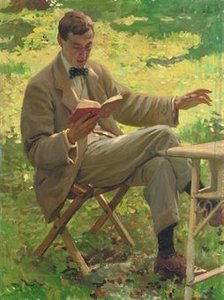
The Enduring Charm of Munnings’s “Study (verso)”
Sir Alfred James Munnings's "Study (verso)" offers a captivating glimpse into the world of rural England, meticulously rendered with an artist deeply attuned to both observation and emotion. This unassuming sketch, executed in 1928, transcends its humble origins as a preliminary study for a larger painting – “Sir Thomas Robins Bolitho” – to become a poignant meditation on landscape, labor, and the vanishing traditions of the countryside. Munnings, already establishing himself as one of Britain’s foremost equine artists, was at this point navigating a crucial period of artistic evolution, moving beyond purely representational work towards a more atmospheric and emotionally resonant style. The piece isn't merely a depiction of a scene; it’s an evocation of a feeling – the quiet dignity of rural life, the rhythms of the seasons, and the enduring connection between man and beast.A Study in Light and Texture
The sketch itself is executed with remarkable economy of line and color. Munnings employs a loose, expressive brushstroke, prioritizing capturing the essence of light and texture over precise detail. The palette is muted yet vibrant, dominated by earthy browns, greens, and greys – colors that perfectly mirror the weathered tones of the Suffolk landscape. Notice how he uses short, broken strokes to suggest the rough bark of trees, the undulating contours of fields, and the worn surfaces of carts and buildings. The subtle variations in tone create a remarkable sense of depth and atmosphere, drawing the viewer into the scene with an almost tactile quality. The artist’s skill lies not just in his ability to render form but also in his capacity to imbue it with life and character.Echoes of Tradition and Social Commentary
“Study (verso)” is deeply rooted in the traditions of rural England, a subject that held a profound significance for Munnings. He was acutely aware of the changes sweeping across the countryside – the rise of industrialization, the decline of traditional farming practices, and the displacement of rural communities. The presence of the working men, depicted with a quiet dignity, speaks to this social context. They are not idealized figures; they are ordinary people engaged in their daily labor, reflecting a sense of resilience and connection to the land. The sketch subtly hints at a world on the cusp of transformation, capturing a fleeting moment before these traditions were irrevocably lost. The inclusion of the horse-drawn cart is particularly telling, symbolizing both the economic importance of agriculture and the reliance on animal power in a time before mechanization.Symbolism and Emotional Resonance
Beyond its documentary value, “Study (verso)” is rich in symbolic meaning. The muted colors and atmospheric perspective evoke a sense of melancholy – a recognition of the beauty that is fading away. The composition itself—a simple, unadorned scene—suggests a focus on essential values: hard work, community, and connection to nature. Munnings’s masterful use of light and shadow further enhances this emotional impact, creating a sense of quiet contemplation. The “verso” aspect of the sketch – often overlooked – adds another layer of intrigue, inviting us to consider the artist's creative process and his initial intentions for the larger work. It serves as a reminder that even in preliminary sketches, Munnings was already striving to capture something profound about the human condition.A Timeless Masterpiece
“Study (verso)” is more than just a sketch; it’s a testament to Munnings's artistic vision and his deep appreciation for the beauty of rural England. It stands as a poignant reminder of a bygone era, inviting us to reflect on the enduring values of tradition, community, and connection to nature. Reproductions of this evocative work offer a unique opportunity to bring a touch of timeless charm into any space, capturing the spirit of a vanishing world with exquisite detail and emotional resonance.Soru ve Cevaplar
Alfred Munnings imzalı "Study (verso)" eserinin renk kompozisyonu nasıl kurgulanmıştır?
Alfred Munnings imzalı "Study (verso)" eserinin renk kompozisyonu, Serene bir kontrast ile Unified Palette bir uyumu bir araya getiriyor.
"Study (verso)" adlı eserin sanat baskısı mevcut mu?
Alfred Munnings imzalı "Study (verso)" eserinin bir baskısını doğrudan ilgili Sanat Baskısı sayfasından sipariş edebilirsiniz: pamuklu kanvas veya arşivlik kanvas kağıt üzerine yüksek kaliteli sanat baskısı.
"Study (verso)" eserini kim yarattı ve hangi tarzda?
Alfred Munnings, "Study (verso)" adlı eserini Tonal Impressionism akımı içerisinde yaratmıştır.
Bu tablo hakkında daha fazla bilgi
 Gerçek Boyutta Önizle
 Paylaş
 Paylaş
 Detayları Gör
 Rehber

 İndir
İndir
 Benzer ürünler
 X-Işını
 Slayt Gösterisi
 Soru & Cevap
 İstatistikler