Yağlı Boya Versiyonu
 Rythm hakkında her şey







































 Herhangi bir kenarı 105 cm'den (yaklaşık 41 inç) büyük olan sanat eserleri veya reprodüksiyonlar için çerçeve, demonte edilmiş bir kit halinde gönderilecektir. Bu yöntem, güvenli teslimat sağlar ve taşıma sırasında oluşabilecek hasarları önler.


The Composition of Form and Color
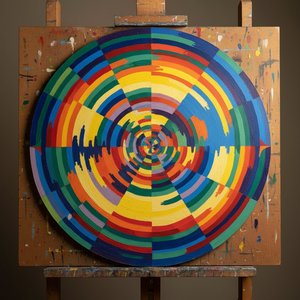
The painting Rythm, dated 1939, presents a central circular structure composed of intersecting geometric shapes and varied color segments. This primary circle is divided into multiple sections, each containing distinct patterns and internal designs. Smaller circles are nested within the larger circular framework, creating a layered effect of concentricity. Two additional circles appear in the periphery: one in the upper right corner and another in the lower left corner. The arrangement of these shapes suggests a spiral or a swirling motion. The surface is characterized by a variety of hues that interact through their proximity, creating a sense of movement across the canvas.
The technique relies on the application of color to define form rather than using line to outline recognizable objects. The artist utilizes the principles of Orphism, focusing on the interaction of light and chromatic intensity. The shapes are not static; they are organized to create a visual rhythm through the interplay of curves and counter-curves. This method uses the physical action of looking to activate the vision, as the eye moves between the contrasting colors and the varying thicknesses of the circular discs.
Historical Context and Artistic Intent
Created in 1939, this work belongs to a period when the artist had moved toward a more radical, non-objective form of abstraction. This phase of production followed a return to the circular forms that characterized earlier explorations of harmony. The composition reflects a departure from figurative subjects, focusing instead on the expressive potential of color alone. The organization of these shapes and their spatial relationships determine the visual tempo of the piece.
The work is situated within the School of Paris movement. It reflects a theoretical interest in how color functions as an active force capable of shaping perception. By utilizing contrasting complementary colors, such as red and green or blue and orange, the painting creates a synchromic effect. This approach seeks to move beyond the representation of the physical world, aiming instead to establish a direct connection between the viewer's eye and the agitation of light and color.
Soru ve Cevaplar
Rythm adlı bu eser el ile mi boyanmıştır yoksa baskı mıdır?
El ile boyanmıştır: eğitimli bir ressam, Rythm eserini keten kanvas üzerine yağlı boya ile yeniden çalışır.
Rythm için hangi boyutu seçmeliyim?
Boyutlar 30.2 x 33.2 cm (₺10019) ile 218.9 x 240.7 cm (₺95932) arasında değişmektedir; bu sayfadaki tablo ana seçenekleri ve fiyatlarını listelemektedir.
Teslimat ne kadar sürer?
Dünya çapında ücretsiz ekspres kargo ile teslimat 4 ila 5 hafta sürmektedir; bu sayfa üzerinden acil üretim seçeneği de sunulmaktadır. Hiçbir koşul aranmaksızın, 100 gün içinde tam iade ile ürünü geri gönderebilirsiniz.
Rythm adlı eserin orijinali nerede?
Orijinal eser Musée d'Art Moderne de la Ville de Paris, Paris koleksiyonunda yer almaktadır.
Robert Delaunay, Rythm eserinde hangi tekniği/malzemeyi kullanmıştır?
Oil On Canvas
Bu tablo hakkında daha fazla bilgi
 Gerçek Boyutta Önizle

 Paylaş
 Paylaş
 Detayları Gör
 Bilgi formu


 İndir
 Benzer ürünler
 X-Işını
 Slayt Gösterisi
 Soru & Cevap

 İstatistikler