Önizle
 Gönder
 Paylaş
 Detaylar
 Rehber

 Dosyayı İndir
 Benzerleri
 X-Işını
 Slayt Gösterisi
 İstatistikler
The Great War


 Devamını Oku
Bu sayfada sergilenen eser telif hakkı yasasıyla korunmaktadır; bu da yasal olarak eserin birebir kopyasını oluşturamayacağımız veya satamayacağımız anlamına gelir. Bu koruma, aşağıdakiler gibi uluslararası anlaşmalar kapsamında uygulanmaktadır: Bern Sözleşmesi ve aşağıdakiler de dahil olmak üzere ulusal yasalarca belirlenen ABD Telif Hakkı Kanunu - 17. Başlık.
Bu yöntem, koruma altındaki sanat eserinin kopyalanmasını veya çoğaltılmasını içermediği için telif hakkı düzenlemelerine tam uyum sağlar. Bunun yerine, yaratıcı bir yeniden yorumlamadır; orijinalinden etkilenen ancak onunla aynı olmayan yeni bir tablodur.
Giclée / Sanat Baskısı
Hızlı üretim ve esnek bitiş seçenekleriyle müze kalitesinde giclée veya kanvas baskı. ( El Yapımı Tablo Satın Al Dijital Görsel Satışına Geç)




P118B ₺10

P118H ₺10

P118W ₺10

P438Z ₺10

P508JH ₺12

P508YH ₺12

P805H ₺10

P805Z ₺10

P919BZ ₺10

P919G ₺10

P919XJ ₺10

P959ZH ₺10

P968JZ ₺12

W106C ₺8

W218G ₺10

W218JH ₺8

W218Y ₺10

W307PJ ₺10

W316G ₺10

W316PJ ₺8

W316Y ₺10

W398PJ ₺8

W4111J ₺10

W500HY ₺15

W500JH ₺15

W692G ₺12

W849H ₺8

W940BG ₺15

W953PJ ₺8




Eserin orijinal oranlarıyla uyumlu, önceden belirlenmiş boyutlarımız arasından seçim yapın.

Çerçevenize veya duvarınıza uygun olması için ihtiyacınız olan genişlik ve yüksekliği yazın. Bir baskı yalnızca kesilebilir, görselden daha büyük hale getirilemez; bu nedenle farklı bir formdaki boyut seçimi, görselin bir kısmının kaybına neden olur. Herhangi bir baskı yapmadan önce onaylamanız için size bir dijital taslak gönderiyoruz. Bu sayfada gösterilen resim gerçek kesimi göstermez — bunu yalnızca taslak gösterir.
Dünya Çapında Teslimat (); standart 4/5 hafta yerine 2 haftada. (27 Ekim)

Dünya Çapında Ücretsiz Ekspres Kargo

Yüksek Kaliteli Keten Tuval

Tam Nakliye Sigortası

Gümrük Vergisi İadesi Garantisi

Gerçek Renk Uyumu Garantisi

100 Günlük İade Koşulları (Sadece Üretim Hatalı Ürünler İçin)

%100 Para İade Garantisi

Toplu Alım Avantajı
 Cam seçeneği yalnızca 110 cm altındaki boyutlar için mevcuttur.

The Great War
Giclée / Sanat Baskısı
Baskı Boyutu
-


Toplam Fiyat
₺ 3920
A Dream Obscured: Delving into Magritte’s ‘The Great War’
René Magritte's 1964 painting, *The Great War*, is a quintessential example of Surrealist artistry – a work that simultaneously captivates and unsettles. It presents a formally dressed man, complete with bowler hat and dark suit, but crucially, his face is entirely concealed by a vibrant green apple. Above the apple float several delicate leaves against a backdrop of softly rendered clouds. This seemingly simple composition unlocks layers of symbolic meaning and psychological intrigue.Style & Technique: The Precision of Dreams
Magritte masterfully employs the hallmarks of his signature style in *The Great War*. His technique is rooted in traditional oil painting, characterized by meticulous detail and smooth application – a deliberate contrast to the chaotic energy often associated with Surrealism. Geometric lines define the man’s attire, sharply contrasting with the organic forms of the apple and leaves. The color palette is restrained, dominated by blacks and greys that amplify the startling vibrancy of the green apple. This calculated use of color draws immediate attention to the central symbol. Perspective is flattened, contributing to the dreamlike quality and a sense of spatial ambiguity.Symbolism & Interpretation: Beyond the Surface
The symbolism within *The Great War* is rich and open to interpretation. The apple, a recurring motif in Magritte’s work, often represents temptation, hidden knowledge, or even innocence. Here, obscuring the face, it suggests an obstruction of identity or perception. Is this a commentary on how war conceals individual humanity? Or perhaps a representation of societal conformity – the bowler hat and suit signifying adherence to norms that mask true selfhood? The leaves above the apple could symbolize fleeting life or lost memories. Given the title, “The Great War,” it’s reasonable to interpret the work as a meditation on the obscuring effects of conflict—how war hides individual stories and distorts reality.Historical Context: Post-War Reflections
Created two decades after the end of World War II, *The Great War* reflects a lingering sense of trauma and disillusionment. While Magritte wasn’t directly involved in depicting battlefield scenes, his work often grapples with themes of anxiety, alienation, and the fragility of existence – sentiments deeply felt in the post-war era. His Surrealist approach allowed him to explore these complex emotions through symbolic imagery rather than direct representation. The painting stands as a quiet yet powerful statement about the psychological impact of large-scale conflict.Emotional Impact & Aesthetic Appeal
*The Great War* evokes a profound sense of unease and mystery. The juxtaposition of familiar elements – a well-dressed man, an apple – with their illogical arrangement creates a disquieting effect. The painting isn’t overtly dramatic; its power lies in its subtle psychological tension. It invites contemplation, prompting viewers to question what lies beneath the surface and to confront the hidden realities of human experience. Its sophisticated composition and evocative symbolism make it a compelling addition to any art collection or interior space. The painting’s muted tones and elegant simplicity lend themselves well to modern interiors, adding a touch of intellectual intrigue and surreal beauty.Collecting & Reproduction
As an iconic work by one of the 20th century's most influential artists, *The Great War* is highly sought after by collectors. High-quality reproductions allow art enthusiasts to experience Magritte’s vision in their own homes. When selecting a reproduction, consider canvas quality and color accuracy to best capture the nuances of the original painting. This piece serves as a powerful statement piece, sparking conversation and adding depth to any environment.Soru ve Cevaplar
"The Great War" adlı eserin Surrealism akımının arkasındaki ulusal köken nedir?
"The Great War", yaratıcısının doğum yeri aracılığıyla Surrealism akımını Belçika ile ilişkilendiriyor.
"The Great War" ne zaman yapıldı?
"The Great War", 1964 yılına tarihlenmektedir. Bu tarih, eseri René Magritte kariyerinin ve dönemin içerisine yerleştirmektedir.
René Magritte imzalı "The Great War" eserinin tekniği ve yapım tarihi nedir?
"The Great War", 1964 yılında Oil On Canvas tekniği kullanılarak üretilmiştir. Malzeme ve tarih, eserin orijinalinin nasıl ve ne zaman yapıldığını tanımlar.
Sanatçı Biyografisi
Early Life and the Seeds of Surrealism
René Magritte, born René François Ghislain Magritte on November 21, 1898, in Lessines, Belgium, emerged into a world that would profoundly shape his enigmatic artistic vision. His early years were marked by an unsettling event – the suicide of his mother when he was just thirteen. The image of her body being recovered from the River Sambre, with her dress obscuring her face, became a haunting motif that would subtly permeate his later work, manifesting in veiled figures and a persistent exploration of hidden realities. This early trauma instilled within him a fascination with mystery, loss, and the unsettling power of what remains unseen. While details of his childhood remain somewhat elusive, it’s clear this formative experience laid the groundwork for his lifelong questioning of perception and representation. He began drawing lessons at age ten, revealing an innate inclination towards visual expression, but initially explored Impressionism before embarking on a path that would lead him to become one of the most significant figures in Surrealist art.
Artistic Development and Influences
Magritte’s artistic journey was not immediate or straightforward. He studied at the Académie Royale des Beaux-Arts in Brussels, yet found its traditional methods stifling. His early work experimented with Futurism and Cubism, absorbing elements of these avant-garde movements but ultimately rejecting their purely formal concerns. It wasn't until encountering Giorgio de Chirico’s painting *The Song of Love* in 1922 that Magritte discovered a resonance that would irrevocably alter his artistic course. De Chirico’s dreamlike landscapes and unsettling juxtapositions unlocked within Magritte a new way of seeing – a world where the familiar could be rendered strange, and the ordinary imbued with profound mystery. This encounter sparked his commitment to Surrealism, though he often maintained a unique distance from its more overtly psychological or automatic approaches. He preferred a meticulous, almost clinical precision in his painting, using realistic techniques to depict illogical scenarios.
The Heart of Surrealism: Challenging Reality
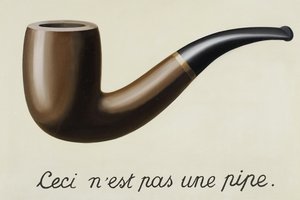
By 1926, Magritte had fully embraced the tenets of Surrealism, producing *Le Jockey Perdu (The Lost Jockey)*, widely considered his first truly surrealist work. However, his brand of Surrealism was distinct. He wasn’t interested in exploring the subconscious through free association or dream imagery in the manner of some of his contemporaries. Instead, Magritte sought to challenge viewers' perceptions of reality by presenting ordinary objects in unexpected contexts, forcing them to question their assumptions about the world around them. Iconic works like *The Treachery of Images (This is not a pipe)* (1929) brilliantly deconstructs the relationship between image and object, reminding us that a representation is never the thing itself. *Les Amants (The Lovers)* (1927-1928), with its shrouded figures, echoes the trauma of his mother’s death while simultaneously exploring themes of concealment and intimacy. *Time Transfixed* (1938) presents a locomotive bursting through a brick wall, disrupting our sense of space and time. And *The Human Condition* (1933), a canvas within a canvas, blurs the boundaries between representation and reality, prompting us to consider how we perceive and interpret the world.
Later Life, Recognition, and Enduring Legacy
Despite initial struggles for recognition, Magritte’s work gradually gained prominence, particularly in the United States with exhibitions in 1936 and later retrospective shows at the Museum of Modern Art (1965) and the Metropolitan Museum of Art (1992). He continued to refine his signature style, exploring themes of repetition, illusion, and the power of language in paintings that are both intellectually stimulating and visually arresting. Magritte died on August 15, 1967, leaving behind a body of work that continues to captivate and challenge audiences worldwide. His influence extends far beyond the realm of painting, impacting pop art, minimalist art, conceptual art, and even advertising and film. Today, his paintings are held in major museum collections around the globe, including the Musées royaux des beaux-arts de Belgique in Brussels, which houses the Magritte Museum – dedicated entirely to his work and boasting the world’s largest collection of his creations.
- Museum Collections: Musées royaux des beaux-arts de Belgique, Brussels; Magritte Museum.
Magritte's enduring legacy lies in his ability to make us see the familiar anew, to question our assumptions about reality, and to appreciate the power of art to provoke thought and inspire wonder. He wasn’t simply painting images; he was crafting visual paradoxes that continue to resonate with viewers decades after their creation, solidifying his position as a true master of Surrealism and a pivotal figure in 20th-century art.
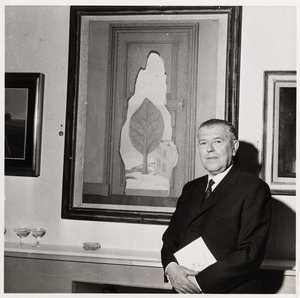
René Magritte
1898 - 1967 , Belçika
Kısa Bilgiler
- Artistic Movement Or Style: Gerçeküstücülük
- Artists Who Influenced This Artist: ['Giorgio de Chirico']
- Date Of Birth: Kasım 21, 1898
- Date Of Death: Ağustos 15, 1967
- Full Name: René François Ghislain Magritte
- Nationality: Belçikalı
- Notable Artworks:
- Les Amants
- Treachery of Images
- Time Transfixed
- Place Of Birth: Lessines, Belçika
İlgili Yazılar
The Treachery of Images: Decoding René Magritte’s Surrealist Philosophy and the Paradox of Representation
Explore the profound mystery of René Magritte’s 'The Treachery of Images.' Dive into an expert analysis of his Surrealist philosophy, the paradox of representation, and how he challenged reality through the interplay of language and visual perception.
Surrealist Painting Masterpieces: 10 Artworks That Redefined Reality | OriginalUniqueArt
Journey into the dreamlike world of Surrealism! Explore 10 masterpieces by Dali, Magritte & Miró that redefined art. Discover their stories & find museum-quality reproductions to elevate your home decor on OriginalUniqueArt.com.
Sürrealizmin İzinde: Sanat Tarihini Derinden Etkileyen 10 Başyapıt
Sürrealizmin büyüleyici dünyasına yolculuk! Dali, Magritte ve daha fazlasıyla sanat tarihini şekillendiren 10 başyapıtı keşfedin. Evinizi benzersiz eserlerle dekore edin. OriginalUniqueArt.com'da tüm koleksiyonu inceleyin!
Sürrealizmin Zirveleri: Evinizi Sanatla Tanıştıran 10 Eser
Sürrealizmin en etkileyici 10 başyapıtını keşfedin! Dali, Magritte ve daha fazlasının rüya gibi dünyasına dalın. Sanat tarihini öğrenin ve evinizi OriginalUniqueArt.com'dan kaliteli sanatla dekore edin.

The Treachery of Images: Decoding René Magritte’s Surrealist Vision and the Paradox of Representation
Delve into the profound mysteries of René Magritte’s Surrealism. Explore an expert analysis of 'The Treachery of Images,' decoding the philosophical paradoxes and visual subversions that redefined modern art history for collectors and connoisseurs alike.