

 Önizle
 Gönder
 Paylaş
 Detaylar
 Rehber

 Dosyayı İndir
 Benzerleri
 X-Işını
 Slayt Gösterisi
 İstatistikler
Heaps of Ashes V


 Devamını Oku
Giclée / Sanat Baskısı
Hızlı üretim ve esnek bitiş seçenekleriyle müze kalitesinde giclée veya kanvas baskı. ( El Yapımı Tablo Satın Al Dijital Görsel Satışına Geç)




































Eserin orijinal oranlarıyla uyumlu, önceden belirlenmiş boyutlarımız arasından seçim yapın.

Belirli bir çerçeveye veya alana uyması için kendi ölçülerinizi girebilirsiniz. Seçtiğiniz boyut orijinal görüntünün oranlarıyla eşleşmiyorsa, sanat eserini kırpacağız veya görüntüyü aynalanmış ya da düz dolgulu bir kenarlıkla genişleteceğiz. Üretim başlamadan önce onayınız için bir dijital taslak gönderilecektir.
Lütfen ekrandaki önizlemenin gerçek kırpma veya genişletmeyi yansıtmadığını unutmayın. Nihai kompozisyonu yalnızca taslak doğru bir şekilde gösterecektir.
Özel boyutlar mevcut olsa da, orijinal oranları korumak için önceden tanımlanmış listeden bir boyut seçmenizi öneririz.
Dünya Çapında Teslimat (); standart 4/5 hafta yerine 2 haftada. (25 Eylül)

Dünya Çapında Ücretsiz Ekspres Kargo

Yüksek Kaliteli Keten Tuval

Tam Nakliye Sigortası

Gümrük Vergisi İadesi Garantisi

Gerçek Renk Uyumu Garantisi

100 Günlük İade Koşulları (Sadece Üretim Hatalı Ürünler İçin)

%100 Para İade Garantisi

Toplu Alım Avantajı
 Cam seçeneği yalnızca 110 cm altındaki boyutlar için mevcuttur.

Heaps of Ashes V
Giclée / Sanat Baskısı
Baskı Boyutu
-


Toplam Fiyat
$ 80
Sanatçı Biyografisi
The Architecture of Absence: The Life and Legacy of Reiner Ruthenbeck
Emerging from the transformative artistic landscape of post-war Germany, Reiner Ruthenbeck (1937–2016) carved a singular path through the realms of sculpture and conceptual art. His journey began not with the chisel or the mold, but through the lens of a camera. In his early years, Ruthenbeck acted as a vital witness to the avant-garde, using photography to document the ephemeral performances of the Fluxus movement and the Zero Group. This formative period allowed him to inhabit the very pulse of experimental art, capturing the fleeting energy of movements that sought to redefine the boundaries of creativity. It was this deep immersion in the spirit of performance that would later inform his profound understanding of space, presence, and the weight of what is left unsaid.
The trajectory of Ruthenbeck’s career underwent a seismic shift when he moved to study painting under the legendary Joseph Beuys at the Düsseldorf Kunstakademie. While the mentorship of Beuys provided him with a philosophical foundation rooted in existential inquiry, Ruthenbeck eventually found himself moving away from the canvas. By 1968, he had abandoned painting as a primary medium, turning instead toward a diverse and tactile vocabulary of sculptural materials. He began to explore the physical properties of the world around him, seeking to reveal the hidden tensions within matter itself. His work became a dialogue between the organic and the industrial, where the soft vulnerability of felt or paper could meet the rigid permanence of steel mesh or glass.
Materiality and the Poetics of the Void
Ruthenbeck’s sculptural practice was characterized by an unwavering commitment to simplicity and a mastery of reductive forms. He did not seek to decorate space, but rather to interrogate it. Drawing significant inspiration from Arte Povera and Minimalism, he utilized materials such as rubber, wood, metal, and ash to create works that functioned as meditations on emptiness and silence. His approach was never about grand, sweeping gestures; instead, it was a meticulous consideration of how mass, geometry, and scale influence our perception of the void. Through the juxtaposition of contrasting elements, he could make the invisible felt, turning the "nothingness" of a space into a tangible, heavy presence.
One of his most evocative contributions to the history of contemporary sculpture can be found in his series “Kegel und Haufen” (Cones and Piles). A profound example is his work “Heaps of Ashes V,” which features a sheet metal structure partially submerged within a pile of ash, rising in a honeycomb pattern. This piece serves as a powerful intersection of formal experimentation and historical memory. The very scent of the slag and ash evokes the industrial soul of the Ruhr Area, the German region where Ruthenbeck was born and raised. In this way, his work transcends mere abstraction, anchoring itself in the socio-industrial history of Germany—a landscape defined by coal mining, metallurgy, and the transformative power of industry.
A Lasting Impression on Contemporary Thought
Throughout his decades-long career, Ruthenbeck’s influence resonated far beyond the borders of Germany. His exhibitions in major institutions, such as Haus Konstruktiv Leipzig and Kunsthalle Düsseldorf, solidified his reputation as a master of conceptual depth. He achieved a rare feat in the art world: creating works that are simultaneously intellectually rigorous and emotionally resonant. To stand before a Ruthenbeck sculpture is to enter a state of contemplative stillness, where the viewer is invited to confront the fundamental nature of existence and the beauty found within the ephemeral.
The historical significance of Reiner Ruthenbeck lies in his ability to bridge the gap between the radical performance art of the 1960s and the disciplined minimalism of later decades. His legacy is defined by several key artistic pillars:
- The Documentation of Fluxus: His early photographic work preserved the ephemeral moments of some of the most important avant-garde movements in history.
- Material Dialogue: His unique ability to draw together contrasting natural and industrial materials to highlight their inherent physical properties.
- The Concept of Absence: His profound exploration of the void, using sculpture to give shape to silence and emptiness.
- Regional Connection: The integration of the industrial identity of the Ruhr Area into the conceptual framework of his art.
Ultimately, Ruthenbeck’s oeuvre remains a testament to the power of reduction. By stripping away the unnecessary, he allowed the essence of material and space to speak, leaving behind a body of work that continues to haunt and inspire the contemporary art landscape.

reiner ruthenbeck
1937 - 2016 , Germany
Kısa Bilgiler
- Artistic Movement Or Style: Minimalist sculpture
- Artists Or Movements Influenced By This Artist: ['Arte Povera']
- Artists Who Influenced This Artist: ['Joseph Beuys']
- Date Of Birth: 1937
- Full Name: Reiner Ruthenbeck
- Nationality: German
- Notable Artworks: ['Heaps of Ashes V']
- Place Of Birth: Velbert, Germany
İlgili Yazılar
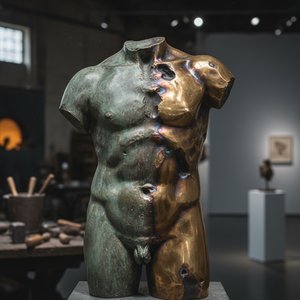
Bronz Heykelin Kalıcı Mirası: Tarih, Teknikler ve Çağdaş Yorumlar
Bronz heykelin tarihini, antik döküm tekniklerini ve çağdaş yorumlarını keşfedin. Uzman analizler, restorasyon bilgileri ve koleksiyon rehberleri ile sanat dünyasına adım atın. Sanat yatırımcıları için ideal kaynak!

Bronze Sculptures That Defined Art History | OriginalUniqueArt
Journey through art history with our Top 10 bronze sculptures! Explore masterpieces by Rodin, Michelangelo & more. Discover stories behind iconic statues and find museum-quality reproductions for your home decor at OriginalUniqueArt.com.

The Enduring Form: Exploring Themes & Techniques in Sculpture Across Historical Periods
Explore the rich history of sculpture from ancient masterpieces to contemporary innovations. Discover key techniques, influential artists & investment potential for discerning art collectors.

Bronze Age to Modern Masters: 10 Sculptures That Redefined Art | OriginalUniqueArt
Journey through art history with 10 legendary bronze sculptures – from Michelangelo's David to Rodin’s Thinker. Explore the stories, techniques & timeless beauty of these masterpieces. Find museum-quality reproductions & elevate your home decor on OriginalUniqueArt.com.

The Enduring Form: Sculpture Across History, Technique & Emotional Resonance
Explore the rich history of sculpture with OriginalUniqueArt. Discover key techniques, influential artists & investment potential for discerning collectors. Expert insights into valuing and collecting timeless masterpieces.