Yüksek Rönesans
Disputa (Raffaello Sanzio)
Disputa is a work by Raffaello Sanzio (1483–1520). It belongs to the Yüksek Rönesans movement. It is made in Fresk.
- Fresk

 El Yapımı Yağlı Boya Tablo
 Paylaş
 Paylaş
 Rehber


 İndir
 Benzer ürünler
 Slayt Gösterisi
 Soru & Cevap

 İstatistikler
Disputa: the essentials
- Title
- Disputa
- Artist
- Raffaello Sanzio (1483–1520)
- Artist born in
- Urbino, İtalya
- Medium
- Fresk
- Movement
- Yüksek Rönesans
- Period
- Rönesans
Looking at Disputa
A Divine Dialogue: Unveiling Raphael’s *Disputa*
Raphael's *Disputa*, painted between 1509 and 1510, is a cornerstone of High Renaissance art, residing within the breathtaking Stanze di Raffaello in the Apostolic Palace at Vatican City. This monumental fresco isn’t merely a painting; it’s a theological statement rendered with unparalleled grace and intellectual depth, inviting viewers into a visual discourse on faith, reason, and divine truth.Subject & Composition: Heaven Meets Earth
The *Disputa* presents a complex yet harmonious composition divided into two distinct realms. The upper portion depicts a celestial gathering of theologians, saints, prophets, and martyrs arranged in a semi-circular formation around Christ and the Virgin Mary. They engage in animated discussion, their gestures conveying reverence and intellectual fervor. Below, on an architectural platform resembling a classical temple apse, earthly theologians – recognizable figures like Saint Augustine, Saint Thomas Aquinas, and Saint Gregory – continue the debate concerning the Holy Sacrament. This deliberate juxtaposition visually represents the convergence of heavenly wisdom and human inquiry. The composition is masterfully structured with a pyramidal form culminating in Christ, drawing the eye upwards towards the divine source.Style & Technique: The High Renaissance Ideal
*Disputa* exemplifies the hallmarks of the High Renaissance: balance, clarity, and idealized beauty. Raphael’s mastery of perspective creates a convincing sense of depth, while his use of *sfumato* – subtle gradations of light and shadow – lends an ethereal quality to the figures. Executed as a fresco, the painting demonstrates Raphael's technical brilliance in applying pigments to wet plaster, resulting in vibrant colors that have endured for centuries. The figures are not static; they possess dynamic poses and expressive faces, conveying a sense of lively intellectual exchange.Historical Context & Symbolism
Commissioned by Pope Julius II as part of the decoration of his private library (the *Stanza della Segnatura*), *Disputa* reflects the humanist spirit of the Renaissance – a renewed interest in classical learning and philosophical inquiry alongside religious faith. The room itself was intended to represent different branches of human knowledge: theology, law, poetry, and philosophy. The painting’s symbolism is rich and layered. The Holy Spirit, represented as a dove emanating light, signifies divine inspiration. The inclusion of prominent theologians underscores the importance of reason and scholarship in understanding religious doctrine. The architectural setting evokes the grandeur of ancient Rome, linking Christian theology to classical tradition.Emotional Impact & Lasting Legacy
*Disputa* transcends its theological subject matter to evoke a profound sense of awe, reverence, and intellectual curiosity. The painting’s harmonious composition and idealized figures inspire contemplation on the nature of truth, faith, and knowledge. It is not merely a depiction of a debate but an invitation to participate in it – to engage with the eternal questions that have occupied humanity for centuries. Raphael's *Disputa* remains a testament to his artistic genius and continues to captivate viewers with its beauty, intellectual depth, and enduring spiritual power.- Explore high-quality reproductions of *The Disputation of the Holy Sacrament* to bring Renaissance grandeur into your space.
- Discover more about Raphael’s life and artistic contributions within the context of the High Renaissance movement.
Disputa in high resolution

Raffaello Sanzio, Disputa. Public domain.
Questions about Disputa
Raffaello Sanzio imzalı "Disputa" eserinin renklerine hangi alan uyum sağlıyor?
Toprak tonlu renkleri göz önüne alındığında, "Disputa" adlı eserin bir Yaşam Alanı için uygun olduğu önerilmektedir.
Raffaello Sanzio imzalı "Disputa", Yüksek Rönesans akımı içerisinde nasıl bir duygu yansıtıyor?
"Disputa", Yüksek Rönesans akımı içerisinde Ruhani bir duygusal ton taşımaktadır.
"Disputa" adlı eserin Yüksek Rönesans akımı hangi ulusal kökene dayanmaktadır?
"Disputa", İtalya doğumlu Raffaello Sanzio tarafından Yüksek Rönesans akımı içerisinde yaratılmıştır. Sanatçının kökeni, eseri Yüksek Rönesans akımının İtalyali sanatçılar tarafından uygulanan biçimine bağlamaktadır.
"Disputa" hangi tona daha yakın?
Raffaello Sanzio imzalı "Disputa" eserinde Okra ve sepya tonları bir ton hakimdir.
Raffaello Sanzio imzalı "Disputa" için hangi kullanım alanı ve mekan önerilir?
"Disputa" eseri Odak Noktası için önerilmektedir; kullanım için en uygun alan ise bir Yaşam Alanı'dur.
Raffaello Sanzio imzalı "Disputa" için hangi alan öneriliyor?
"Disputa" reprodüksiyonu bir Yaşam Alanı için oldukça uygundur.
Raffaello Sanzio imzalı "Disputa" bir hediye olarak kimlere önerilir?
Bir hediye olarak, Yıldönümü için Raffaello Sanzio imzalı "Disputa" önerilmektedir. Diğer özel günler için de oldukça uygundur.
"Disputa" adlı eser, Raffaello Sanzio kariyerinin hangi dönemine ait?
Raffaello Sanzio'in kariyerinde "Disputa", Mature Period dönemine denk gelmektedir. Bu evre, eserin sanatçının diğer çalışmalarıyla kıyaslanmasına olanak tanır.
Raffaello Sanzio imzalı "Disputa" reprodüksiyonu bir odaya nasıl bir atmosfer katardı?
Eterik havasıyla "Disputa", Yaşam Alanı için önerilmektedir.
About the artist, Raffaello Sanzio

1483–1520, İtalya
Raffaello Sanzio
Raphael'ın Hayatı ve Kimliği Tarih boyunca Raffaello Sanzio, Raffaello Santi ve Raffaello Sanzio da Urbino gibi pek çok isimle anılan Raphael, İtalyan Yüksek Rönesans döneminin en merkezi figürlerinden biriydi. Onun yaşamı, resim ve mimari üzerindeki eşsiz ustalığıyla şekillendi; bu çok yönlülük, bir portrenin mahrem ölçeği ile papal inşaatlarının anıtsal gereklilikleri arasında kusursuz bir geçiş yapmasına olanak tanıdı. 6 Nisan 1483 tarihinde İtalya'nın Urbino kentinde, entelektüel ve sanatsal faaliyetlerle dolu bir dünyanın içinde dünyaya geldi. Kariyeri, hamilerinin ihtiyaçlarını karşılamak adına büyük bir atölyeyi yönetmesini gerektiren muazzam bir üretkenlikle damgalandı.
Also by Raffaello Sanzio
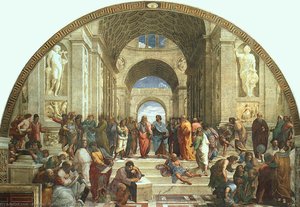 Atina Okulu1511
 Sistine Meryem1513
 Dönüşüm1520
 Raffaello
Urbino
İtalya
1483
1504
1520
Sanat Eseri Bilgileri:
Başlık: Bakire'nin Evlenmesi
Açıklama: Başyapıt: Rönesans'ın Muhteşemliğinin Bir Kanıtı
Raffaello'nun "Bakire'nin Evlenmesi" adlı eseri, klasik güzelliğin ve uyumun özünü yakalayan, tipik1504

Essays around Disputa
 Giotto di Bondone: Revolutionizing Late Medieval Painting through Narrative InnovationExplore the revolutionary art of Giotto di Bondone! Discover his groundbreaking techniques, iconic frescoes like those in the Arena Chapel,…
 Masterpieces of Light: The Top 25 Artworks by Duccio di BuoninsegnaJourney through the divine elegance of Duccio di Buoninsegna. Explore 25 iconic Sienese masterpieces, from the Maestà to the Rucellai Madon…
 Raffaello'nun En İyi 25 Eseri: Sanat Tarihine Yolculuk | OriginalUniqueArtRaffaello'nun en iyi 25 eserini keşfedin! Rönesans sanatının zirvesinden ikonik tablolar, freskler ve portrelerin hikayelerini okuyun. Ev d…