Expressionism
Self-portrait (Paula Modersohn-Becker)
Self-portrait, Paula Modersohn-Becker (1876–1907) tarafından yapıldı. Expressionism akımına aittir. Oil On Canvas ile yapılmıştır. Bremen, Germanydaki Paula Modersohn-Becker Museum bünyesinde korunmaktadır.
- Oil On Canvas
- Paula Modersohn-Becker Museum, Bremen

 Gerçek Boyutta Önizle

 El Yapımı Yağlı Boya Tablo
 Paylaş
 Paylaş
 Bilgi Formu


 İndir
 Benzer ürünler
 X-Işını
 Slayt Gösterisi
 Soru & Cevap

 İstatistikler
Self-portrait hakkında kısa bilgi
- Başlık
- Self-portrait
- Sanatçı
- Paula Modersohn-Becker (1876–1907)
- Sanatçının doğum yeri
- Dresden, Almanya
- Teknik
- Oil On Canvas
- Sergilendiği yerler
- Paula Modersohn-Becker Museum, Bremen, Germany
- Akım
- Expressionism
- Dönem
- Modern
- Konu
- woman, face, eyes, hair, skin, brown
Self-portrait neyi betimliyor?
Identification of the Self-portrait
The work titled Self-portrait is a creation by the German Expressionist painter and draftswoman Paula Modersohn-Becker. It captures a moment of quiet intensity through the artist's own likeness. This specific piece belongs to a vast body of work produced during her active life, a period that saw the creation of more than 700 paintings and over 1000 drawings.
Born on 8 February 1876 in Dresden, Germany, the artist developed a singular visual language. Her life was brief, ending in Worpswede on 30 November 1907. In this self-representation, she turns her gaze toward the viewer, using her own features to explore the essence of her identity. The image remains a direct encounter with the artist's presence.
Composition and Visual Elements
The composition is a tight enclosure. It focuses on the face and the upper torso, cropping the view just below the collarbone. This close-up framing pushes the subject forward, leaving little room for the background to breathe. Because of this narrow focus and the lack of detail behind her, the painting feels largely flat. The woman meets the viewer with a direct and intense gaze that anchors the entire arrangement.
Color arrives in muted, earthy tones. Browns, creams, and whites settle alongside quiet greens. These hues do not compete; they exist in a state of restraint. Lines define the contours of the face and the hair, yet they refuse to remain sharp. Instead, they soften into the surrounding colors. The shapes are organic and flowing, following the natural curves of the human form without the interruption of hard edges.
Light falls across the skin in a diffused, even manner. There are no heavy shadows or bright highlights to disrupt the surface. This evenness contributes to the sense of quietude. The subject remains still within her muted, tonal world. A steady, searching eye looks out from the center.
Technique and Artistic Style
The paint clings to the canvas in a rough, impasto-like texture. It is an oil work where colors are blended directly upon the surface, leaving behind the evidence of the hand. Visible brushstrokes mark the skin and hair, suggesting a spontaneous and expressive approach. This tactile application gives the surface a raw, immediate quality.
The style leans toward Expressionism, favoring the weight of feeling over the precision of academic tradition. A deliberate flattening of perspective removes the illusion of deep space, pushing the subject forward. The forms are simplified and almost primal, stripped of unnecessary detail to reach a core essence. The composition relies on these organic shapes to define the contours of the face and torso.
The artist rejects the polished finish of the past. Instead, she uses a heavy, direct method to build the presence of the figure. The light remains even and diffused, avoiding sharp shadows to maintain a sense of quiet intensity. The work exists as a direct encounter between the artist and the medium.
Related Works by the Artist
The artist’s gaze often turned toward her own reflection, seeking a quiet truth in the glass. In 1906, she painted Self-Portrait Looking Slightly Left, a work that shares the same searching quality found in her other studies of identity. During that same year, she produced Self-Portrait at 6th Wedding Anniversary and Self-Portrait on the 6th Wedding Anniversary, capturing a specific moment of transition. These works exist alongside her 1906 Self-Portrait nude with amber necklace, where the jewelry rests against her skin. She also created Self-Portrait with Red Flower Wreath and Necklace, a somber composition that explores the weight of her own presence.
Flowers often appear as silent companions in her compositions. Between 1906 and 1907, she worked on Self Portrait with Camellia Branch, a piece that emphasizes the intersection of the female form and the natural world. This connects to Self Portrait with Two Flowers, where she cradles blossoms with a deliberate, steady intention. Earlier, around 1904, she produced Self-Portrait with a bowl and a glass, a work from a period of intense exploration. Each image remains a fragment of a life lived through the brush. The paint dries on the canvas, holding a steady, unblinking stare.
Self-portrait adlı eseri hangi müze bünyesinde barındırmaktadır?
Paula Modersohn-Becker Museum
Bremen, Germany
The History of Paula Modersohn-Becker Museum Located in Bremen, Germany, the Paula Modersohn-Becker Museum holds a specific place in institutional history. It was established as a museum in 1927. This institution is the first in the world dedicated to the work of a female painter.
Self-portrait için yüksek çözünürlüklü görseller
Kamu malı: sanatçı 1907 yılında vefat etmiştir.
Paula Modersohn-Becker, Self-portrait, Paula Modersohn-Becker Museum. Kamu malı.
Self-portrait hakkında sorular ve cevaplar
Orijinal Paula Modersohn-Becker imzalı "Self-portrait" eserini nerede görebilirim?
"Self-portrait" eserinin orijinalini Paula Modersohn-Becker Museum, Bremen, Germany bünyesinde görebilirsiniz.
Paula Modersohn-Becker imzalı "Self-portrait" hangi teknikle icra edilmiştir?
Paula Modersohn-Becker imzalı "Self-portrait" eserinin tekniği Oil On Canvas kullanılarak uygulanmıştır. Çoğaltımlar, bu tekniğin görünümünü yansıtmayı amaçlamaktadır.
Paula Modersohn-Becker imzalı "Self-portrait" eserinde hangi konular işleniyor?
Paula Modersohn-Becker imzalı "Self-portrait" şunları betimler: woman, face, eyes, hair, skin, brown, cream, white.
Paula Modersohn-Becker imzalı "Self-portrait" eserinin görüntüsü serbestçe çoğaltılabilir mi?
Paula Modersohn-Becker imzalı "Self-portrait" için telif hakkı durumu: eser kamu malıdır - telif hakkı süresi dolmuştur kapsamındadır. Bu durum, görüntünün çoğaltmalarının serbestçe yapılıp yapılamayacağını belirler.
"Self-portrait" adlı eser hangi sanatçıya atfediliyor?
"Self-portrait" adlı eserin Paula Modersohn-Becker tarafından yapıldığı düşünülmektedir.
"Self-portrait" hangi sanat akımına aittir?
Paula Modersohn-Becker imzalı "Self-portrait" adlı eserin dahil olduğu akım Expressionism akımıdır. Bu sınıflandırma, çalışmayı ilgili sanatçılar ve sanat eserleri arasında konumlandırır.
"Self-portrait" adlı eser, Paula Modersohn-Becker kariyerinin hangi dönemine ait?
"Self-portrait", Paula Modersohn-Becker kariyerinin Mature Period dönemine aittir. Bu sınıflandırma, eseri sanatçının gelişim süreciyle ilişkilendirir.
"Self-portrait" eserinin telif hakkı durumu neden bu şekildedir?
Paula Modersohn-Becker imzalı "Self-portrait" adlı eser kamu malıdır - telif hakkı süresi dolmuştur statüsündedir. Telif hakları süresi sanatçının ölüm tarihinden itibaren hesaplanmaktadır ve Paula Modersohn-Becker, 1907 yılında vefat etmiştir.
"Self-portrait" sanatçısının ana vatanında mı bulunuyor?
Hayır - sanat eseri yurt dışında bulunmaktadır. Paula Modersohn-Becker, Almanya doğumludur ve orijinal "Self-portrait" adlı eser Germany bünyesindeki bir müzede bulunmaktadır.
Sanatçı hakkında, Paula Modersohn-Becker

1876–1907, Almanya
Paula Modersohn-Becker
Paula Modersohn-Becker: İçgörünün Öncüsü Paula Modersohn-Becker, erken modern sanatın kayıtlarında sessiz bir güçle yankılanan bir isimdir ve cesaret etmeye karar veren bir sanatçıdır. 8 Şubat 1876'da Almanya’nın Dresden şehrinde Minna Hermine Paula Becker olarak doğmuş, trajik bir şekilde kısa olan hayatı – 30 Kasım 1907'de Worpswede’de vefat etmiştir – ancak bu otuz yıl içinde olağanüstü sanatsal yenilik ve kişisel cesaret yolu çizmiştir. Hikayesi, yaşam boyu anında ün veya yaygın tanınma hikayesi değildir; aksine, geleneklere meydan okuyan ve dürüstlükle insan deneyiminin derinliklerini keşfeden bireysel bir sesin kalıcı gücünün kanıtıdır. Görece ayrıcalıklı bir yetiştirilmede – amcası Prusya Kralı'nı öldürmeye teşebbüs etmiş, gölgeli bir ailede – Paula’nın sanatsal eğilimleri beslenmiş olsa da toplumsal beklentiler de üzerine baskı yapmıştır.
Paula Modersohn-Becker Hakkında Paula Modersohn-Becker tarafından yapılmış öne çıkan eserler
Paula Modersohn-Becker tarafından yapılan diğer eserler
 Portrait of a young woman with red hat1900
 Half-length portrait of an old farmer1903
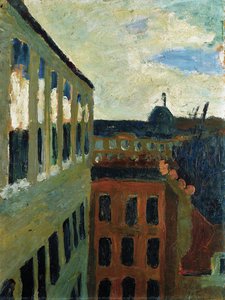 View from the studio window of the artist in Paris1900
 Still life with plant, lemon and orange1906
Self-portrait üzerine denemeler
 Egon Schiele'nin En İyi 25 Eseri: Duygusal Derinlik ve Sanatsal İkonlar | OriginalUniqueArtEgon Schiele'nin en etkileyici 25 eserini keşfedin! Avusturya ekspresyonizminin güçlü portreleri, çarpıcı figüratif sanat ve duygusal derin…
 James Abbott McNeill Whistler'ın En İyi 25 Eseri: Sanat ve Dekorasyon Rehberi | OriginalUniqueArtJames Abbott McNeill Whistler'ın en iyi 25 eserini keşfedin! Amerikan empresyonizminin öncüsü Whistler'ın nocturne resimleri, portreleri ve…
 Polish artworks of the 1900sPolish Symbolism in the 1900s features masterpieces by Jacek Malczewski, Olga Boznańska, and Józef Mehoffer. View the full collection at Or…