Yağlı Boya Versiyonu
 Circle hakkında her şey







































 Herhangi bir kenarı 105 cm'den (yaklaşık 41 inç) büyük olan sanat eserleri veya reprodüksiyonlar için çerçeve, demonte edilmiş bir kit halinde gönderilecektir. Bu yöntem, güvenli teslimat sağlar ve taşıma sırasında oluşabilecek hasarları önler.


Jackson Pollock’s Circle: A Dance of Color and Chaos
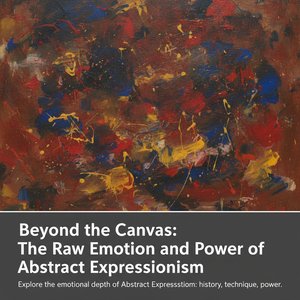
Jackson Pollock's “Circle,” painted in 1941, isn’t merely a depiction of a circle; it’s an embodiment of the burgeoning Abstract Expressionist movement and a profound exploration of subconscious creation. Measuring just 30 x 32 centimeters, this oil-on-canvas work feels surprisingly intimate despite its vibrant energy. It represents Pollock's early experimentation with form, a pivotal moment as he wrestled with new techniques and sought to capture the raw emotion of his inner world – a world increasingly influenced by the avant-garde currents swirling around him. The painting immediately draws the eye to the central red circle, a bold assertion of shape amidst a dynamic field of color: yellows, blues, greens, and oranges collide in a seemingly random yet meticulously orchestrated dance. This isn’t a static image; it's an invitation to lose yourself within its layers of texture and hue.Echoes of Surrealism and the Birth of Action Painting
Pollock’s “Circle” stands as a testament to his engagement with the artistic landscape of the early 1940s, particularly the influence of Surrealist artists like André Masson and Max Ernst. These pioneers championed spontaneous creation, tapping into the subconscious mind as a primary source of inspiration. Pollock adopted this approach, abandoning traditional representational techniques in favor of methods that prioritized instinct and gesture. The swirling brushstrokes, the drips and splatters – these aren’t accidental; they are deliberate marks, imbued with the artist's physical presence and emotional state. This technique, often referred to as “drip painting” or “action painting,” became a hallmark of Pollock’s style and fundamentally altered the course of 20th-century art. It was a rejection of the easel and brush, embracing instead the entire canvas as a battleground for color and movement.A Composition of Symbolic Forms
Beyond its purely abstract qualities, “Circle” is populated with carefully chosen symbolic figures – birds and fish scattered throughout the composition. These aren’t simply decorative elements; they seem to engage in an abstracted interaction, creating a sense of dynamic tension within the painting. Some art historians interpret these animal forms as representing primal instincts or perhaps even echoes of Pollock's early fascination with Native American culture and their connection to nature. The circle itself can be seen as a symbol of wholeness, unity, or perhaps even the cyclical nature of life and death – themes frequently explored in Surrealist art. The arrangement isn’t logical; it’s driven by feeling, mirroring the artist's own internal landscape.Abstract Expressionism: A New American Voice
“Circle” is inextricably linked to the rise of Abstract Expressionism, a movement that emerged in the United States following World War II and quickly gained international recognition. Artists like Pollock, Mark Rothko, Willem de Kooning, and others sought to express profound emotions through non-representational forms, rejecting European artistic traditions in favor of a distinctly American style. This period was characterized by a radical shift in artistic priorities – from depicting the external world to exploring the inner self. “Circle” exemplifies this ethos, capturing the raw energy and emotional intensity that defined Abstract Expressionism’s rebellious spirit. It's important to note that the term "abstract expressionism" itself was coined in 1929 by Alfred Barr at MoMA, initially applied to works by Kandinsky, but it truly took hold in the post-war era.A Legacy of Innovation
Pollock’s “Circle” isn't just a beautiful painting; it’s a foundational work that paved the way for countless artists who followed. Its influence can be seen in subsequent movements like Tachisme and Neo-expressionism, demonstrating its enduring relevance to contemporary art. Reproductions of this piece offer a remarkable opportunity to experience Pollock’s revolutionary approach firsthand – to feel the energy of his brushstrokes, to lose yourself in the vibrant colors, and to contemplate the profound questions he posed about the nature of creativity and human emotion. OriginalUniqueArt's hand-painted reproductions capture not only the visual impact but also the spirit of this iconic work, allowing you to bring a piece of art history into your own space.Soru ve Cevaplar
Circle adlı bu eser el ile mi boyanmıştır yoksa baskı mıdır?
El ile boyanmıştır: eğitimli bir ressam, Circle eserini keten kanvas üzerine yağlı boya ile yeniden çalışır.
Circle için hangi boyutu seçmeliyim?
Orijinal eser 30 x 32 cm boyutlarındadır. Boyutlar 30.5 x 32.8 cm (₺10006) ile 231.1 x 248.4 cm (₺103610) arasında değişmektedir; bu sayfadaki tablo ana seçenekleri ve fiyatlarını listelemektedir.
Teslimat ne kadar sürer?
Dünya çapında ücretsiz ekspres kargo ile teslimat 4 ila 5 hafta sürmektedir; bu sayfa üzerinden acil üretim seçeneği de sunulmaktadır. Hiçbir koşul aranmaksızın, 100 gün içinde tam iade ile ürünü geri gönderebilirsiniz.
Jackson Pollock, Circle eserinde hangi tekniği/malzemeyi kullanmıştır?
Oil On Canvas
Bu tablo hakkında daha fazla bilgi
 Gerçek Boyutta Önizle

 Paylaş
 Paylaş
 Detayları Gör
 Bilgi formu


 İndir
 Benzer ürünler
 X-Işını
 Slayt Gösterisi
 Soru & Cevap

 İstatistikler