

 Önizle
 Gönder
 Paylaş
 Detaylar
 Rehber

 Dosyayı İndir
 Benzerleri
 X-Işını
 Slayt Gösterisi
 İstatistikler
Gethsemane
 Oil On Board
- Neo-Romanticism
 1926
1926- Modern
 42.0 x 32.0 cm
 Bergen Kunstmuseum
 Devamını Oku
Giclée / Sanat Baskısı
Hızlı üretim ve esnek bitiş seçenekleriyle müze kalitesinde giclée veya kanvas baskı. ( El Yapımı Tablo Satın Al Dijital Görsel Satışına Geç)




P118B ₺10

P118H ₺10

P118W ₺10

P438Z ₺10

P508JH ₺12

P508YH ₺12

P805H ₺10

P805Z ₺10

P919BZ ₺10

P919G ₺10

P919XJ ₺10

P959ZH ₺10

P968JZ ₺12

W106C ₺8

W218G ₺10

W218JH ₺8

W218Y ₺10

W307PJ ₺10

W316G ₺10

W316PJ ₺8

W316Y ₺10

W398PJ ₺8

W4111J ₺10

W500HY ₺15

W500JH ₺15

W692G ₺12

W849H ₺8

W940BG ₺15

W953PJ ₺8




Eserin orijinal oranlarıyla uyumlu, önceden belirlenmiş boyutlarımız arasından seçim yapın.

Çerçevenize veya duvarınıza uygun olması için ihtiyacınız olan genişlik ve yüksekliği yazın. Bir baskı yalnızca kesilebilir, görselden daha büyük hale getirilemez; bu nedenle farklı bir formdaki boyut seçimi, görselin bir kısmının kaybına neden olur. Herhangi bir baskı yapmadan önce onaylamanız için size bir dijital taslak gönderiyoruz. Bu sayfada gösterilen resim gerçek kesimi göstermez — bunu yalnızca taslak gösterir.
Dünya Çapında Teslimat (); standart 4/5 hafta yerine 2 haftada. (21 Ekim)

Dünya Çapında Ücretsiz Ekspres Kargo

Yüksek Kaliteli Keten Tuval

Tam Nakliye Sigortası

Gümrük Vergisi İadesi Garantisi

Gerçek Renk Uyumu Garantisi

100 Günlük İade Koşulları (Sadece Üretim Hatalı Ürünler İçin)

%100 Para İade Garantisi

Toplu Alım Avantajı
 Cam seçeneği yalnızca 110 cm altındaki boyutlar için mevcuttur.

Gethsemane
Giclée / Sanat Baskısı
Baskı Boyutu
-


Toplam Fiyat
₺ 3907
A Visionary Encounter in the Norwegian Garden
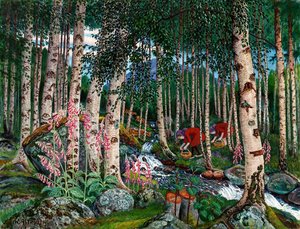
In the quiet, evocative depths of Nikolai Astrup’s 1926 masterpiece, Gethsemane, the boundaries between biblical history and the intimate landscapes of Norway begin to dissolve. While the title refers to the sacred garden in Jerusalem where Christ faced his darkest hour, Astrup performs a profound act of artistic localization. He transports this monumental moment of spiritual agony into the familiar, lush surroundings of the parsonage garden in Ålhus. This is not merely a religious illustration; it is a dreamlike fusion of the divine and the terrestrial. The viewer is invited into a space where the heavy atmosphere of the crucifixion narrative meets the verdant, mystical textures of the West Norwegian landscape, creating a scene that feels both ancient and deeply personal.
The composition breathes with a sense of quiet drama, capturing a moment of profound transition. As the eye wanders through the painting, one encounters a scene that oscillates between a somber historical event and a visionary hallucination. The presence of figures—some appearing caught in the weight of the narrative, others seemingly lost in a trance-like state—suggests a world where the veil between reality and the supernatural is perilously thin. This sense of mystery is heightened by the scattered birds that drift through the sky and perch upon the landscape, acting as silent witnesses to the unfolding drama. For the collector or designer, this piece offers more than just a subject; it offers an atmosphere of contemplative depth that can anchor a room with its soulful, introspective energy.
Technique and the Language of Light
Astrup’s technical mastery is evident in his use of oil on cardboard, a medium that allows for a rich, concentrated application of pigment. His style, rooted in Neo-Romanticism, eschews clinical realism in favor of an intense, emotive color palette. The textures are tactile and layered, reflecting the artist's lifelong obsession with the "visual language" of his homeland. He employs light not just to illuminate form, but to evoke mood; the shadows are deep and heavy, yet they are pierced by a spectral luminosity that suggests the presence of a divine vision. This interplay of light and shadow creates a rhythmic movement across the canvas, guiding the viewer through the dense foliage and toward the heart of the spiritual struggle.
The brushwork possesses a certain raw, organic vitality that mirrors the ruggedness of the Norwegian fjords. There is no sterile perfection here; instead, there is a deliberate, expressive quality that celebrates the natural world's untamed spirit. For those seeking to incorporate fine art into a sophisticated interior, a high-quality reproduction of Gethsemane provides a centerpiece of immense character. The painting’s ability to command attention through its complex textures and brooding tones makes it an ideal choice for spaces designed for reflection, such as libraries, study alcoves, or quiet sitting rooms where the interplay of history and nature can be fully appreciated.
A Legacy of Spiritual and National Identity
To understand Gethsemane is to understand Nikolai Astrup’s broader mission: to capture the very soul of Norway. By situating a universal Christian narrative within his own local topography, he elevates the Norwegian landscape to a stage for the eternal. This technique of "sacralizing" the everyday—turning a simple garden patch into a site of cosmic significance—is what makes his work so enduringly powerful. The painting serves as a bridge between the theological and the topographical, making the profound accessible through the familiar.
For the discerning art lover, owning a reproduction of this work is an opportunity to possess a fragment of this visionary legacy. It is a piece that invites continuous re-examination, revealing new layers of symbolism and emotion with every viewing. Whether one is drawn to its historical weight, its masterful use of color, or its ability to evoke the misty, magical atmosphere of a Norwegian night, Gethsemane remains a breathtaking testament to the power of art to transform the world we see into a world we feel.
Soru ve Cevaplar
Nikolai Astrup imzalı "Gethsemane" adlı eser kamu malı mıdır ve neden?
"Gethsemane" eserinin telif hakkı durumu - kamu malıdır - telif hakkı süresi dolmuştur - sanatçının 1928 yılındaki ölümünden kaynaklanmaktadır.
Nikolai Astrup imzalı "Gethsemane" eserinde hangi konular yer alıyor?
Nikolai Astrup imzalı "Gethsemane" şunları betimler: biblical scene, religious, jesus christ, gethsemane, norway landscape, night scene, visionary.
"Gethsemane" eseri tarihsel olarak nerede konumlanıyor?
Tarihsel olarak "Gethsemane", daha geniş kapsamlı olan Modern dönemine ait bir Neo-Romanticism eseridir.
Sanatçı Biyografisi
Nikolai Astrup: Vestlandet'in Vizyoneri
Nikolai Astrup (1880 – 1928), Norveç sanat tarihinin en eşsiz figürlerinden biri olarak duruyor; Vestlandet'in manzaraları ve gelenekleriyle kurduğu derin bağ, onu döneminin en belirgin neo-romantik sanatçıları arasında sarsılmaz bir yere yerleştirdi. Bremanger, Sogn og Fjordane'de dünyaya gelen Astrup'un sarp fiyortlar ve huzurlu vadiler arasındaki yetiştirilme tarzı, sanatsal duyarlılığını derinden şekillendirdi; onu yoğun renk paletleri ve Norveç kırsalının günlük yaşamını tasvir etmeye yönelik sarsılmaz bir adanmışlıkla karakterize edilen bir üsluba yöneltti. Onun mirası sadece estetik açıdan büyüleyici tuvallerde değil, aynı zamanda "vatanının geleneklerini ve folklorunu çağrıştıran ulusal bir görsel dil" yakalamaya yönelik öncü çabasında yatmaktadır.- İlk Yıllar ve Eğitim: Astrup'un biçimlendirici yılları, kendisini ilahiyat çalışmalarına teşvik eden papaz babası Christian Astrup tarafından aşılanan ailevi bir dindarlıkla damgalanmıştı. Din adamlığına yönelik ilk eğilimlerine rağmen, Astrup'un çizim ve resme olan tutkusu, sonunda Trondheim Katedral Okulu'nu bırakarak Kristiania'da (Oslo) sanatsal arayışlara yönelmesine neden oldu; burada yeteneklerini Harriet Backer'ın rehberliğinde geliştirdi.
- Paris Etkileri: Paris'te geçirdiği kısa bir süre, Astrup'u gelişmekte olan avangart hareketle tanıştırdı, Christian Krohg gibi sanatçı dostlarıyla bağlar kurmasını sağladı ve Empresyonist tekniklere dair anlayışını zenginleştirdi. Bu dönem, onun deneysel yaklaşımlara olan bağlılığını peçeledi ve sanatsal ufuklarını genişletti.
- Jølster'e Dönüş ve Sanatsal Gelişim: 1902 yılında atalarından kalan Jølster'deki evine dönen Astrup, sekiz çocuk sahibi olduğu eşi Engel Sunde ile bir yuva kurdu. Yaşamlarındaki ekonomik zorluklar, onun sanatsal arzusunu besledi ve kendisini çevresinin tasvirine tamamen kaptırmasına vesile oldu; bu manzara, onun için bitmek bilmeyen bir ilham kaynağı olarak hizmet etti.
- Önemli Sergiler: Astrup'un sanatsal itibarı; Kristiania (1905), Bergen (1908) ve Oslo'da (1911) düzenlenen üç önemli sergi aracılığıyla istikrarlı bir şekilde büyüdü. Bu sergiler eleştirmenlerden büyük övgü topladı ve onu Norveç sanat sahnesinin önde gelen seslerinden biri olarak konumlandırdı.
- Büyük Başarılar ve Miras: Astrup'un Norveç sanatına bıraktığı kalıcı katkı, sanatsal özgünlüğe olan sarsılmaz arayışında yatar; bu, Vestlandet'in güzelliğini ve ruhunu tavizsiz bir dürüstlükle tasvir etme kararlılığıdır. Resimleri bugün de yankılanmaya devam ederek, ulusal mirasın güçlü simgeleri olarak hizmet etmekte ve neo-romantizmin ideallerini bünyesinde barındırmaktadır.
Nikolai Astrup
1880 - 1928 , Norveç
Kısa Bilgiler
- Bu Sanatçıdan Etkilenen Sanatçılar Veya Akımlar: ['İskandinav Sanatı']
- Bu Sanatçıyı Etkileyen Sanatçılar: ['Christian Krohg']
- Doğum Tarihi: 1880
- Doğum Yeri: Bremanger, Norveç
- Sanatsal Akım Veya Tarz: Neo-Romantizm
- Tam Adı: Nikolai Johannes Astrup
- Uyruğu: Norveçli
- Ölüm Tarihi: 1928
- Önemli Eserleri:
- Hevesli Talip
- Çıplak Ağaçlar
- Eğiren Kız
İlgili Yazılar

Johan Christian Dahl: Pioneering Norwegian Romantic Landscape Painting
Explore the life & art of Johan Christian Dahl, Norway's first great Romantic painter. Discover his iconic landscapes, cultural impact, and lasting legacy with OriginalUniqueArt.

Romantik Resmin Zirveleri: Evinizi Sanatla Süsleyen 10 Usta Manzara
Romantizm sanatının en etkileyici 10 başyapıtını keşfedin! Friedrich, Turner gibi ustaların büyüleyici manzaralarıyla evinizi dönüştürün. Sanat tarihi ve dekorasyon rehberi OriginalUniqueArt.com'da tüm koleksiyonu inceleyin.

John Constable'ın En İyi 25 Eseri: İngiliz Manzaralarının Büyüsü OriginalUniqueArt'ta
John Constable'ın en iyi 25 eserini keşfedin! İngiliz manzara sanatının büyülü dünyasına dalın, romantizm akımını ve kırsal yaşamı yansıtan tablolarla evinizi zenginleştirin. Sanat reproduksiyonları OriginalUniqueArt'ta.

Evocations of Place: A Historical Journey Through Landscape Art
Explore the rich history of landscape art with OriginalUniqueArt. Discover renowned artists, movements like Impressionism & Romanticism, and expert guidance for collecting timeless pieces. Find your perfect serene escape today!

The Sublime and the Picturesque: Exploring Emotion & Nature in Romantic Landscape Painting
Explore the emotional power of Romantic landscape painting! Discover the sublime & picturesque traditions, key artists like Friedrich & Cole, and find your perfect artwork at OriginalUniqueArt.