Cubism
Father (Marcel Duchamp)
Father, Marcel Duchamp (1887–1968) tarafından yapıldı. Cubism akımına aittir. Acrylic On Canvas ile yapılmıştır.
- Acrylic On Canvas

 Gerçek Boyutta Önizle

 El Yapımı Yağlı Boya Tablo
 Paylaş
 Paylaş
 Bilgi formu


 İndir
 Benzer ürünler
 X-Işını
 Slayt Gösterisi
 Soru & Cevap

 İstatistikler
Father hakkında kısa bilgi
- Başlık
- Father
- Sanatçı
- Marcel Duchamp (1887–1968)
- Sanatçının doğum yeri
- Blainville-Crevon, Fransa
- Teknik
- Acrylic On Canvas
- Akım
- Cubism
- Konu
- portrait, cubism, fragmentation, introspection, earth tones, older man
Father neyi betimliyor?
Marcel Duchamp’s ‘Father’: A Cubist Portrait of Introspection
Marcel Duchamp's “Father,” painted in 1910, stands as a poignant testament to the artist’s exploration of familial bonds and psychological depth within the framework of Expressionism. More than just a likeness of his father, Eugène Duchamp, the painting delves into themes of vulnerability, contemplation, and the quiet dignity of aging—elements that resonate powerfully with viewers today.
- Style & Technique: The artwork embodies the stylistic hallmarks of Expressionism, characterized by bold brushstrokes and dramatic lighting. Thick impasto creates a palpable textural surface, conveying emotion through physicality rather than meticulous realism. Duchamp’s masterful manipulation of pigment captures the nuances of light and shadow, emphasizing the figure's solemn expression.
- Composition: The painting utilizes a simplified geometric composition—primarily dominated by the central figure seated in a chair—to heighten its impact. Overlapping planes contribute to a sense of depth, subtly disrupting traditional perspective conventions. This deliberate distortion serves not merely as aesthetic choice but as a symbolic representation of fractured perception.
- Color Palette: Employing earthy tones—primarily browns and ochres—the color palette evokes a mood of melancholy and introspection. The subdued hues underscore the painting’s contemplative atmosphere, mirroring the quiet contemplation conveyed by the subject’s gaze.
- Symbolism: “Father” transcends a simple portrait; it embodies Duchamp's preoccupation with familial relationships and the passage of time. The posture of Eugène Duchamp—seated calmly yet thoughtfully—suggests resilience amidst vulnerability, encapsulating the artist’s desire to portray dignity and inner strength.
Exploring Cubism: A Revolutionary Approach
“Father” is firmly rooted in the burgeoning movement of Cubism, spearheaded by Picasso and Braque. Duchamp's engagement with Cubist principles—particularly the fragmentation of form and simultaneous viewpoints—represents a radical departure from academic painting traditions. This stylistic influence underscores his commitment to questioning established artistic conventions and prioritizing conceptual exploration over visual representation.
- Geometric Abstraction: The artwork’s geometric abstraction—evident in the simplified shapes defining the chair and the man's facial features—reflects Cubist’s rejection of illusionistic depth. Instead, Duchamp prioritizes structural clarity and intellectual engagement, inviting viewers to consider the painting on a deeper level.
- Multiple Perspectives: The depiction of Eugène Duchamp from various angles simultaneously challenges conventional notions of perspective. This technique mirrors Cubism's ambition to capture reality as it is perceived by multiple observers—a concept that fundamentally altered artistic discourse.
The Significance of Impasto and Texture
Duchamp’s deliberate use of impasto—thickly applied paint—is crucial to conveying the painting’s emotional resonance. The textured surface captures the physicality of the brushstrokes, mirroring Eugène Duchamp's own presence within the artwork. This tactile element enhances the viewer’s experience, inviting contemplation and fostering a connection with the artist’s expressive intent.
- Material Choice: Oil paints on canvas—a standard medium for Expressionist painters—were selected to maximize textural impact and luminosity. Duchamp skillfully utilizes brushwork to sculpt form and imbue the painting with palpable energy.
- Emotional Impact: The resulting surface contributes significantly to “Father’s” emotional depth, mirroring Eugène Duchamp's inner life and conveying a sense of quiet dignity—a testament to Duchamp’s artistic vision.
A Legacy Beyond Representation
"Father" exemplifies Duchamp’s broader philosophical stance: rejecting the pursuit of visual beauty in favor of intellectual inquiry. By prioritizing conceptual exploration over realistic depiction, he ushered in a new era of art history—one characterized by questioning assumptions and redefining artistic value. This enduring legacy continues to inspire artists and collectors alike who appreciate the profound emotional impact of art that transcends mere surface appearance."
Father için yüksek çözünürlüklü görseller
Protected by copyright: these files are for personal reference, not a licence to republish.
Marcel Duchamp, Father.
Father hakkında sorular ve cevaplar
"Father" hangi teknikle yapılmıştır?
Marcel Duchamp imzalı "Father" eserinin tekniği Acrylic On Canvas kullanılarak uygulanmıştır. Çoğaltımlar, bu tekniğin görünümünü yansıtmayı amaçlamaktadır.
Marcel Duchamp imzalı "Father" neyi betimliyor?
Marcel Duchamp imzalı "Father" şunları betimler: portrait, cubism, fragmentation, introspection, earth tones, older man, abstract form, depth.
Marcel Duchamp imzalı "Father" eserinin görüntüsü serbestçe çoğaltılabilir mi?
Marcel Duchamp imzalı "Father" için telif hakkı durumu: eser telif hakları ile korunmaya devam etmektedir kapsamındadır. Bu durum, görüntünün çoğaltmalarının serbestçe yapılıp yapılamayacağını belirler.
"Father" eserinin yaratıcısı kim?
"Father" eserinin sanatçısı Marcel Duchamp'tir. Eser, Marcel Duchamp adına kataloglanmıştır.
"Father" hangi sanat akımına aittir?
Marcel Duchamp imzalı "Father", Cubism akımına aittir. Bu akım, eserin üslup bağlamını sunmaktadır.
"Father" adlı eser, Marcel Duchamp kariyerinin hangi dönemine ait?
"Father", Marcel Duchamp kariyerinin Mature Period dönemine aittir. Bu sınıflandırma, eseri sanatçının gelişim süreciyle ilişkilendirir.
Marcel Duchamp imzalı "Father" adlı eser kamu malı mıdır ve neden?
Marcel Duchamp imzalı "Father" adlı eser telif hakları ile korunmaya devam etmektedir statüsündedir. Telif hakları süresi sanatçının ölüm tarihinden itibaren hesaplanmaktadır ve Marcel Duchamp, 1968 yılında vefat etmiştir.
"Father" adlı eser, Marcel Duchamp’in temaları ve üslubuyla nasıl bir bütünlük sağlıyor?
"Father", temaları arasında father portrait series, exploration of identity, shift towards abstraction, expressionism, cubism, early 20th century art, introspection, melancholy yer alan Marcel Duchamp'in Cubism dönemine ait bir eserdir.
"Father" eserinin konusu, Marcel Duchamp sanatçısının alışılagelmiş temalarıyla nasıl bir ilişki içerisindedir?
"Father", portrait, cubism, fragmentation, introspection, earth tones, older man, abstract form, depth konularını betimlerken; Marcel Duchamp tarafından işlenen temalar father portrait series, exploration of identity, shift towards abstraction, expressionism, cubism, early 20th century art, introspection, melancholy şeklindedir. Bu iki unsurun karşılaştırılması, eserin sanatçının alışılagelmiş konularıyla nasıl bir ilişki içinde olduğunu ortaya koymaktadır.
Sanatçı hakkında, Marcel Duchamp
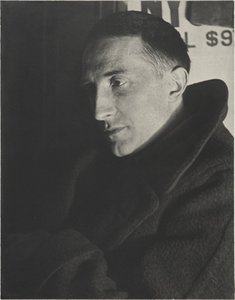
1887–1968, Fransa
Marcel Duchamp
Marcel Duchamp'ın Hayatı ve Sanatı 28 Temmuz 1887 tarihinde Fransa'nın Normandiya bölgesindeki Blainville'de dünyaya gelen Marcel Duchamp, yaratma dürtüsünün damarlarında en derinden hissedildiği bir dünyaya adım attı. Eugene ve Lucie Duchamp'ın yedi çocuğundan dördüncüsüydü. Bu ev, üreticilerden ve düşünürlerden oluşan bir yuvaydı; kardeşleri olan Jacques Villon ve Raymond Duchamp-Villon ile kız kardeşi Suzanne Duchamp-Crotti'nin her biri sanatçı kimliğiyle yaşamlarını sürdürerek bu yaratıcı huzursuzluğu paylaşıyorlardı. Zamanla muazzam bir karmaşıklığa sahip olan Fransız-Amerikan bir figüre dönüşse de, kökleri Normandiya'nın o dingin sessizliğinde kalmaya devam etti.
Marcel Duchamp Hakkında Marcel Duchamp tarafından yapılmış öne çıkan eserler
Marcel Duchamp tarafından yapılan diğer eserler
 Henri-Robert-Marcel Duchamp (UK: , US: ; French: [maʁsɛl dyʃɑ̃]; 28 July 1887 – 2 October 1968) was a French American artist, chess player, and inventor who played a key role in the development of the avant-garde in the United States and in New York City,1912
 Tren'deki Üzgün Genç Adam1911
 Verilmiş: 1. Şelale, 2. Aydınlatma Gazı1966
 Fountain1917
Father üzerine denemeler
 Deconstructing Reality: Cubism's Revolutionary Impact on 20th-Century ArtExplore the revolutionary world of Cubism with OriginalUniqueArt. Discover Picasso & Braque's groundbreaking techniques, its philosophical …
 The Sculptural Surface: Analyzing the Impact of Impasto and Texture in Oil PaintingMaster the science of impasto and oil texture through expert analysis. Explore the depth of fine art mastery now.
 Marcel Duchamp: The Top 25 Most Influential Artworks of a Modern IconExplore 25 iconic Marcel Duchamp masterpieces and Dadaist gems. Discover the full collection online at OriginalUniqueArt.com.