Baskı Satışına Geç
 Tümünü Gör







































 Herhangi bir kenarı 105 cm'den (yaklaşık 41 inç) büyük olan sanat eserleri veya reprodüksiyonlar için çerçeve, demonte edilmiş bir kit halinde gönderilecektir. Bu yöntem, güvenli teslimat sağlar ve taşıma sırasında oluşabilecek hasarları önler.


The Soul Captured in Chalk: Leonardo’s Vision of St. Peter
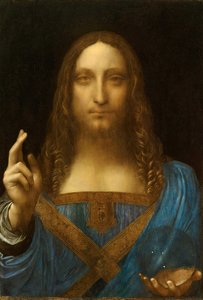
In the quiet corridors of the Musées des Beaux-Arts de Strasbourg, there exists a window into the divine mind of the Renaissance. Head of St. Peter, a profound work attributed to the incomparable Leonardo da Vinci, is far more than a mere portrait; it is an intimate encounter with the sacred. Through the delicate yet commanding medium of pencil and black chalk, Leonardo breathes life into the apostle, capturing a moment of intense spiritual gravity. The subject’s gaze, piercing and resolute, seems to transcend the boundaries of the paper, inviting the viewer into a deep, meditative dialogue with history itself. This is not just a depiction of a man, but an exploration of the weight of faith and the rugged dignity of a saintly life.
The technical mastery displayed in this piece serves as a testament to Leonardo’s unparalleled ability to manipulate light and shadow. Using the subtle gradations of chalk and pencil, the artist sculpts the features of St. Peter with a sculptural precision that anticipates the depth of oil painting. The flowing textures of his long beard and mustache are rendered with such tactile detail that one can almost feel the coarse hair, while the soft transitions of light across his forehead suggest a profound internal thought process. This mastery of sfumato—the smoky blurring of edges—allows the figure to emerge from the background not as a flat image, but as a three-dimensional presence, imbuing the work with an atmospheric mystery that has captivated scholars for centuries.
A Legacy of Devotion and Artistic Evolution
To understand the Head of St. Peter, one must view it within the broader tapestry of Leonardo’s late-period explorations. Often associated with a series of monumental studies including the heads of Christ, St. Andrew, and St. James, this work reflects the artist's fascination with the human countenance as a vessel for divine character. While some historical debates suggest these works may be masterful copies intended to preserve the essence of his larger compositions, the emotional resonance remains undiminable. The piece stands at the intersection of religious devotion and scientific observation, where the anatomical accuracy of the facial structure meets the ethereal symbolism of the saintly subject.
For the discerning collector or interior designer, a high-quality reproduction of this masterpiece offers an unparalleled opportunity to introduce a sense of timelessness and intellectual depth into a space. The monochromatic elegance of the black chalk and pencil allows it to integrate seamlessly into diverse decor styles—from the sophisticated minimalism of a modern gallery-style room to the rich, textured warmth of a classical study. Owning such a piece is not merely about decoration; it is about surrounding oneself with the enduring spirit of the High Renaissance, providing a focal point that inspires contemplation, grace, and a profound connection to the history of human genius.
Soru ve Cevaplar
Leonardo Da Vinci imzalı "Head of St Peter" eserindeki kontrast ne kadar belirgin?
"Head of St Peter" eserinin ışık-gölge kontrastı Beyan olarak kaydedilmiştir. Kontrast, açık ve koyu alanların birbirinden ne kadar belirgin şekilde ayrıldığını ifade eder.
"Head of St Peter" eserinin telif hakkı durumu neden bu şekildedir?
"Head of St Peter" eserinin telif hakkı durumu - kamu malıdır - telif hakkı süresi dolmuştur - sanatçının 1519 yılındaki ölümünden kaynaklanmaktadır.
Leonardo Da Vinci imzalı "Head of St Peter" hangi duyguyu hissettiriyor?
Leonardo Da Vinci imzalı "Head of St Peter" eserinin yansıttığı ruh hali Dramatik, duygusal tonu ise Melankolik'dur.
Bu tablo hakkında daha fazla bilgi
 Gerçek Boyutta Önizle
 Paylaş
 Paylaş
 Detayları Gör
 Rehber

 İndir
İndir
 Benzer ürünler
 X-Işını
 Slayt Gösterisi
 Soru & Cevap
 İstatistikler