

 Önizle
 Gönder
 Paylaş
 Detaylar
 Rehber

 Dosyayı İndir
 Benzerleri
 X-Işını
 Slayt Gösterisi
 İstatistikler
Pipe and Fruit Dish with Grapes
 Oil On Canvas
- WallArt
- Synthetic Cubism
 1918
1918- Modern
 61.0 x 38.0 cm
 Kröller-Müller Müzesi
 Devamını Oku
Giclée / Sanat Baskısı
Hızlı üretim ve esnek bitiş seçenekleriyle müze kalitesinde giclée veya kanvas baskı. ( El Yapımı Tablo Satın Al Dijital Görsel Satışına Geç)




P118B $10

P118H $10

P118W $10

P438Z $10

P508JH $12

P508YH $12

P805H $10

P805Z $10

P919BZ $10

P919G $10

P919XJ $10

P959ZH $10

P968JZ $12

W106C $8

W218G $10

W218JH $8

W218Y $10

W307PJ $10

W316G $10

W316PJ $8

W316Y $10

W398PJ $8

W4111J $10

W500HY $15

W500JH $15

W692G $12

W849H $8

W940BG $15

W953PJ $8




Eserin orijinal oranlarıyla uyumlu, önceden belirlenmiş boyutlarımız arasından seçim yapın.

Belirli bir çerçeveye veya alana uyması için kendi ölçülerinizi girebilirsiniz. Seçtiğiniz boyut orijinal görüntünün oranlarıyla eşleşmiyorsa, sanat eserini kırpacağız veya görüntüyü aynalanmış ya da düz dolgulu bir kenarlıkla genişleteceğiz. Üretim başlamadan önce onayınız için bir dijital taslak gönderilecektir.
Lütfen ekrandaki önizlemenin gerçek kırpma veya genişletmeyi yansıtmadığını unutmayın. Nihai kompozisyonu yalnızca taslak doğru bir şekilde gösterecektir.
Özel boyutlar mevcut olsa da, orijinal oranları korumak için önceden tanımlanmış listeden bir boyut seçmenizi öneririz.
Dünya Çapında Teslimat (); standart 4/5 hafta yerine 2 haftada. (26 Eylül)

Dünya Çapında Ücretsiz Ekspres Kargo

Yüksek Kaliteli Keten Tuval

Tam Nakliye Sigortası

Gümrük Vergisi İadesi Garantisi

Gerçek Renk Uyumu Garantisi

100 Günlük İade Koşulları (Sadece Üretim Hatalı Ürünler İçin)

%100 Para İade Garantisi

Toplu Alım Avantajı
 Cam seçeneği yalnızca 110 cm altındaki boyutlar için mevcuttur.

Pipe and Fruit Dish with Grapes
Giclée / Sanat Baskısı
Baskı Boyutu
-


Toplam Fiyat
$ 80
A Symphony of Geometry: The Essence of Juan Gris
In the pantheon of early twentieth-century modernism, few works capture the intellectual rigor and sensory delight of Synthetic Cubism as exquisitely as Juan Gris’s Pipe and Fruit Dish with Grapes. Created in 1918, a year defined by the profound shifts following the Great War, this oil on canvas is far more than a mere arrangement of objects; it is a masterful reconstruction of reality. While the pioneers of Analytical Cubism, such as Picasso and Braque, sought to dismantle the world into fractured, monochromatic planes, Gris embarked on a more ambitious journey of synthesis. He did not merely break the object apart; he rebuilt it, weaving together disparate textures, colors, and shapes to create a cohesive, vibrant new vision that invites the viewer to participate in the act of perception.
The composition is a breathtaking dance of geometric precision. At first glance, the eye is drawn to the stylized pipe, rendered through interlocking angular planes that seem to vibrate with structural energy. This is not a depiction of a physical object so much as an exploration of its essence. Alongside this central motif, a fruit dish overflows with grapes, their rounded forms providing a soft, organic counterpoint to the sharp, architectural lines of the surrounding elements. Through his unique ability to balance these opposing forces, Gris achieves a state of compositional harmony that feels both dynamic and eternally still.
The Engineer’s Eye: Technique and Texture
To understand the brilliance of this masterpiece, one must look toward the artist's unique background. Before he was a titan of the avant-garde, Juan Gris studied engineering, a discipline that instilled in him a profound respect for structure and logic. This mathematical precision is palpable in every brushstroke of Pipe and Fruit Dish with Grapes. He approaches the canvas not as a surface for imitation, but as a space for construction. Each plane is meticulously placed to guide the eye through a labyrinth of depth and overlapping layers, creating a sophisticated illusion of three-dimensionality within a flattened, modern aesthetic.
The technique employed here is a testament to the beauty of Synthetic Cubism. Unlike the muted palettes of earlier Cubist experiments, Gris utilizes color to define form and evoke emotion. The subtle interplay of light and shadow across the fruit and the pipe creates a tactile quality that makes the painting feel remarkably present. For the discerning collector or interior designer, this work offers an unparalleled sense of sophistication. Its ability to command attention through structural elegance rather than overt spectacle makes it a timeless addition to any curated space, providing a focal point that is both intellectually stimulating and visually soothing.
A Timeless Legacy for the Modern Interior
Beyond its technical mastery, the painting resonates with a deep, symbolic resonance. The still life, a genre with roots stretching back to the Dutch Golden Age, is reimagined here as a modern meditation on stability and abundance amidst a changing world. The pipe and fruit serve as anchors of domesticity, yet they are presented through a lens of radical innovation. This tension between the familiar and the revolutionary is what gives the work its enduring emotional impact; it evokes a sense of wonder at how much beauty can be found in the deconstruction of the everyday.
For those seeking to infuse their environments with the spirit of the avant-garde, a high-quality reproduction of this Gris masterpiece offers more than just decoration. It brings into a room a piece of art history—a fragment of the moment when the modern world was being visually redefined. Whether placed in a minimalist contemporary gallery or a richly textured classical study, Pipe and Fruit Dish with Grapes serves as an enduring symbol of artistic synthesis, reminding us that even in fragmentation, there is a profound and beautiful unity to be found.
Sanatçı Biyografisi
Madrid’den Kübizmin Kalbine: Juan Gris’in Yaşamı ve Sanatı
1887 yılında Madrid’de José Victoriano González-Pérez adıyla dünyaya gelen sanatçı, zamanla 20. yüzyılın en önemli figürlerinden biri olarak anılacak olan Juan Gris yolculuğuna başladı. İlk adımları tuval ve fırçaya doğrudan yönelmezken; Sanat ve Bilim Okulu’nda mühendislik eğitimi aldı. Bu dönemde sergilediği analitik zihin, daha sonra sanatsal yaklaşımını derinden etkileyecekti. Henüz bu oluşum yıllarında bile yaratıcı bir kıvılcım vardı – yerel yayınlara yaptığı çizimler, filizlenen görsel yeteneğinin ipuçlarını veriyordu. 1905 yılında Juan Gris takma adını benimsemesi, yeni bir kimlik ve amaç duygusuyla resim çalışmalarına resmi olarak başlamasıyla eş zamanlıydı. Bu, sanatsal yeniliğe doğru atılmış önemli bir adımdı.Paris’teki Uyanış ve Kübizmin Kucaklanışı
1906 yılı, sanat enerjisiyle dolup taşan Paris’e yaptığı dönüştürücü göçle birlikte yeni bir sayfa açtı. Gris, bu canlı ortamın içine kendini bırakarak Henri Matisse, Georges Braque ve Fernand Léger gibi aydınlarla arkadaşlık kurdu. Başlangıçta *L'Assiette au Beurre* gibi yayınlar için hicivsel çizimler yapmaya başladı; burada gözlem becerilerini geliştirdi ve keskin bir görsel anlayış kazandı. Ancak Pablo Picasso’nun manyetik çekimi, özellikle etkili oldu. Yaklaşık 1910 yılında resme kendini daha fazla adamaya başlayan Gris, karikatürden uzaklaşıp Kübizmin filizlenen diline yöneldi. Bu taklit değildi; form ve uzamın özünü damıtmaya, yeni bir görsel düzen aramaya koyuldu. İlk denemeleri, geleneksel temsilden kasıtlı bir kopuşla karakterizeydi; gerçekliğin altında yatan yapıyı yakalamak için soyutlamayı benimsedi.Algının Geometrisi: Stil ve Önemli Eserler
Juan Gris’in sanatsal üretimi, olağanüstü bir netlik ve entelektüel titizlikle tanımlanır. Nesneleri sadece parçalamakla kalmadı; onları bilinçli bir hassasiyetle yeniden inşa etti, geometrik formları ve özenle seçilmiş renk paletlerini vurguladı. Bu yaklaşım, *Hâlâ Yaşam Açık Pencere Önünde* ve *Place Ravignan* (1915) gibi başyapıtlarıyla örneklendirilen “kristal dönemi” olarak bilinen bir sürece yol açtı. Bu eserler, derinlik ve sağlamlık hissi uyandıran düzlemlerin ve açılarının dikkat çekici bir etkileşimini sergilerken aynı zamanda geleneksel perspektif kavramlarına meydan okudu. 1913’ten sonra Gris, *papier collé* – kolaj – tekniğini bütün kalbiyle benimsedi; kompozisyonlarına gazete kırpıntıları ve dokulu kağıtlar gibi gerçek dünya malzemelerini dahil etti. Bu teknik, eserlerine bir katman daha karmaşıklık ve somutluk kattı; resim ile heykel arasındaki sınırları bulanıklaştırdı. *Deniz Önünde Gitar* (1925), basitleştirilmiş formlarına ve Kübizm ilkelerine bağlılığına tanıklık eden dikkat çekici örnekler arasında yer alırken, *Pablo Picasso’ya Övgü* (1912) avangart sanat dünyasındaki artan tanınımlığını gösterdi.Mirası ve Kalıcı Etkisi
Juan Gris’in Kübizme katkısı, sadece stilistik bir yenilikle sınırlı kalmadı; harekete benzersiz bir entelektüel derinlik ve yapısal netlik getirdi. Analitik aşamayı aşıp, düzeni ve hassasiyeti vurgulayan daha organize ve sentetik bir yaklaşıma yöneldi. Çalışmaları, klasik form ve kompozisyon ilkelerine dönüşü savunan Amédée Ozenfant ve Charles Edouard Jeanneret (Le Corbusier) tarafından savunulan Pürizm stilini derinden etkiledi. Gris’in geometrik formlara, uyumlu renk paletlerine ve gündelik nesneleri sanatına entegre etme konusundaki ısrarı, onu 20. yüzyılın önemli bir figürü olarak konumlandırdı. Mirası bugün de sanatçıları ilham vermeye devam ediyor; Kübizmin kalıcı gücünü ve Juan Gris’in – algıyı ve temsili yeniden şekillendiren İspanyol ustasının – vizyoner dehasını kanıtlıyor.
Juan Gris
1887 - 1927 , İspanya
Kısa Bilgiler
- Bu Sanatçıdan Etkilenenler:
- Purizm
- Amédée Ozenfant
- Le Corbusier
- Doğum Tarihi: 23 Mart 1887
- Doğum Yeri: Madrid, İspanya
- Etkilenen Sanatçılar:
- Pablo Picasso
- Henri Matisse
- Georges Braque
- Sanatsal Akım: Kübizm, Sentetik Kübizm
- Tam Adı: José Victoriano González-Pérez
- Uyruğu: İspanyol
- Ölüm Tarihi: 11 Mayıs 1927
- Önemli Eserleri:
- Gitar denizi önünde
- Homage à Pablo Picasso
- Değirmenci
- Josette Gris Portresi
İlgili Yazılar
Deconstructing Identity: A Comprehensive Exploration of Cubist Portraiture
Explore the revolutionary world of Cubist portraiture with our comprehensive guide. Discover Picasso, Braque, Gris & the movement's impact on modern art. Expert analysis for collectors and enthusiasts.
Juan Gris: Cubist Deconstruction & Synthesis – A Comprehensive Exploration
Explore the revolutionary art of Juan Gris – a master of Cubism. Discover his unique approach to deconstruction, vibrant Synthetic Cubist works, and lasting influence on modern art. Expert analysis for collectors.
Deconstructing Reality: A Comprehensive Exploration of Cubist Still Life
Explore the revolutionary world of Cubist Still Life with OriginalUniqueArt. Discover Picasso & Braque's groundbreaking techniques, its philosophical roots, and lasting impact on modern art. Expert insights for collectors.
Deconstructing Reality: A Comprehensive Exploration of Synthetic Cubism's Evolution & Impact
Explore the revolutionary world of Synthetic Cubism! Discover its origins, key artists like Picasso & Braque, techniques, and lasting impact on modern art. A comprehensive guide for enthusiasts.
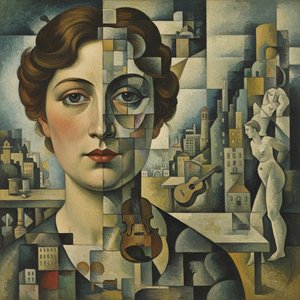
Deconstructing Reality: Cubism's Revolutionary Impact on 20th-Century Art
Explore the revolutionary world of Cubism with OriginalUniqueArt. Discover Picasso & Braque's groundbreaking techniques, its philosophical roots, and lasting impact on modern art. Expert insights for collectors.


