Baskı Satışına Geç
 Tümünü Gör







































 Herhangi bir kenarı 105 cm'den (yaklaşık 41 inç) büyük olan sanat eserleri veya reprodüksiyonlar için çerçeve, demonte edilmiş bir kit halinde gönderilecektir. Bu yöntem, güvenli teslimat sağlar ve taşıma sırasında oluşabilecek hasarları önler.


A Dance of Desire and Transformation: John William Waterhouse's *Apollo and Daphne*
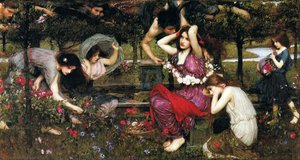
John William Waterhouse’s 1908 painting, *Apollo and Daphne*, is more than just a depiction of a Greek myth; it’s an exquisitely rendered exploration of desire, resistance, and the poignant beauty of transformation. This masterpiece, housed within the Plymouth City Museum and Art Gallery, exemplifies the Pre-Raphaelite movement's commitment to detailed realism and romantic storytelling, offering a captivating glimpse into a world where gods and mortals intertwine with breathtaking artistry.
The Myth Unveiled: A Story of Pursuit and Flight
The narrative at the heart of *Apollo and Daphne* is rooted in the classic tale from Ovid’s *Metamorphoses*. Apollo, the radiant god of light and music, finds himself irrevocably drawn to Daphne, a nymph renowned for her unparalleled grace and speed. His ardent pursuit, fueled by Eros's arrows, becomes a desperate struggle for Daphne as she attempts to evade his advances. The painting captures this pivotal moment – Apollo reaching out, attempting an embrace, while Daphne recoils in terror, transforming herself into the laurel tree that would forever bear her name. Waterhouse masterfully translates this dramatic scene onto canvas, imbuing it with palpable tension and emotional depth.
Pre-Raphaelite Technique: A Symphony of Color and Texture
Waterhouse’s skill as a Pre-Raphaelite painter is immediately apparent in the meticulous detail and rich textures of *Apollo and Daphne*. Executed in oil on canvas, the painting showcases his mastery of color theory and brushwork. The verdant forest setting – a carefully constructed landscape teeming with lush foliage and dappled light – creates an immersive atmosphere. Notice the subtle gradations of green, the delicate rendering of the leaves, and the way Waterhouse uses light to sculpt the forms of Apollo and Daphne. This technique contributes significantly to the painting’s dreamy, ethereal quality, characteristic of the Pre-Raphaelite style.
Symbolism and Emotional Resonance
Beyond the literal depiction of the myth, *Apollo and Daphne* is rich in symbolic meaning. The laurel tree itself represents Daphne's transformation – a poignant symbol of loss, escape, and ultimately, immortality. Apollo’s outstretched hand embodies both desire and frustration, while Daphne’s posture speaks volumes about her resistance to his affections. The overall mood is one of tragic beauty, capturing the fleeting nature of love and the desperate measures taken to avoid unwanted attention. The inclusion of potted plants adds a layer of domesticity and fragility to the scene, further emphasizing the vulnerability of Daphne.
A Timeless Masterpiece – Reproduction Options
OriginalUniqueArt offers meticulously crafted hand-painted reproductions of John William Waterhouse’s *Apollo and Daphne*, allowing you to bring this iconic artwork into your home or office. Our skilled artisans replicate Waterhouse's technique with the highest level of precision, ensuring that every detail – from the rich colors to the nuanced brushstrokes – is faithfully reproduced. Choose from a range of sizes to perfectly suit your space and budget. Own a piece of art history and experience the enduring power of this captivating masterpiece.
Soru ve Cevaplar
John William Waterhouse imzalı "Apollo and Daphne" eserinin algılanan parlaklığı nedir?
John William Waterhouse imzalı "Apollo and Daphne" eserinin algılanan parlaklığı deep_shadow düzeyindedir. Bu değer, kullanılacağı mekanın ışığıyla uyumlu hale getirilebilir.
"Apollo and Daphne" adlı eser, John William Waterhouse kariyerinin hangi dönemine ait?
John William Waterhouse'in kariyerinde "Apollo and Daphne", Mature Period dönemine denk gelmektedir. Bu evre, eserin sanatçının diğer çalışmalarıyla kıyaslanmasına olanak tanır.
"Apollo and Daphne" adlı eserin Pre-Raphaelite Revival akımı hangi ulusal kökene dayanmaktadır?
Pre-Raphaelite Revival akımına ait "Apollo and Daphne" adlı eser, İtalya doğumlu bir sanatçı tarafından yapılmıştır.
Bu tablo hakkında daha fazla bilgi
 Gerçek Boyutta Önizle
 Paylaş
 Paylaş
 Detayları Gör
 Rehber

 İndir
İndir
 Benzer ürünler
 X-Işını
 Slayt Gösterisi
 Soru & Cevap
 İstatistikler