

 Önizle
 Gönder
 Paylaş
 Detaylar
 Rehber

 Dosyayı İndir
 Benzerleri
 X-Işını
 Slayt Gösterisi
 İstatistikler
The Siesta
 Acrylic On Canvas
- WallArt
- Impressionism
 1912
1912 300.0 x 300.0 cm
 Devamını Oku
Giclée / Sanat Baskısı
Hızlı üretim ve esnek bitiş seçenekleriyle müze kalitesinde giclée veya kanvas baskı. ( El Yapımı Tablo Satın Al Dijital Görsel Satışına Geç)




P118B ₺10

P118H ₺10

P118W ₺10

P438Z ₺10

P508JH ₺12

P508YH ₺12

P805H ₺10

P805Z ₺10

P919BZ ₺10

P919G ₺10

P919XJ ₺10

P959ZH ₺10

P968JZ ₺12

W106C ₺8

W218G ₺10

W218JH ₺8

W218Y ₺10

W307PJ ₺10

W316G ₺10

W316PJ ₺8

W316Y ₺10

W398PJ ₺8

W4111J ₺10

W500HY ₺15

W500JH ₺15

W692G ₺12

W849H ₺8

W940BG ₺15

W953PJ ₺8




Eserin orijinal oranlarıyla uyumlu, önceden belirlenmiş boyutlarımız arasından seçim yapın.

Çerçevenize veya duvarınıza uygun olması için ihtiyacınız olan genişlik ve yüksekliği yazın. Bir baskı yalnızca kesilebilir, görselden daha büyük hale getirilemez; bu nedenle farklı bir formdaki boyut seçimi, görselin bir kısmının kaybına neden olur. Herhangi bir baskı yapmadan önce onaylamanız için size bir dijital taslak gönderiyoruz. Bu sayfada gösterilen resim gerçek kesimi göstermez — bunu yalnızca taslak gösterir.
Dünya Çapında Teslimat (); standart 4/5 hafta yerine 2 haftada. (28 Ekim)

Dünya Çapında Ücretsiz Ekspres Kargo

Yüksek Kaliteli Keten Tuval

Tam Nakliye Sigortası

Gümrük Vergisi İadesi Garantisi

Gerçek Renk Uyumu Garantisi

100 Günlük İade Koşulları (Sadece Üretim Hatalı Ürünler İçin)

%100 Para İade Garantisi

Toplu Alım Avantajı
 Cam seçeneği yalnızca 110 cm altındaki boyutlar için mevcuttur.

The Siesta
Giclée / Sanat Baskısı
Baskı Boyutu
-


Toplam Fiyat
₺ 3920
Joaquin Sorolla y Bastida: Capturing Sunlight’s Embrace – An Exploration of ‘La Siesta’
Joaquín Sorolla y Bastida (1863–1923) stands as a beacon of Impressionism in Spanish art, renowned for his masterful depiction of light and atmosphere. His canvases pulsate with warmth and vibrancy, transporting viewers to sun-drenched landscapes imbued with an unparalleled sense of tranquility – a quality exquisitely embodied in ‘La Siesta,’ completed in 1912.
This monumental oil on canvas measuring 300 x 300 cm resides at the Museo Sorolla in Madrid, Spain, offering visitors a privileged glimpse into Sorolla’s artistic vision. More than just a visual record of a summer afternoon, ‘La Siesta’ is a profound meditation on leisure, family life, and the fleeting beauty of everyday existence – themes central to Sorolla's oeuvre.
A Scene Steeped in Impressionistic Brilliance
Sorolla’s technique—characterized by rapid brushstrokes and a deliberate layering of color—captures the shimmering effect of sunlight filtering through foliage. He eschews meticulous detail, prioritizing instead the conveyance of mood and sensation. Observe how he skillfully blends hues to create an illusion of depth and luminosity, mirroring the dappled light dancing across the grass.
- Color Palette: Sorolla’s palette leans heavily on yellows, greens, and blues—colors that dominate the scene and evoke feelings of warmth and serenity.
- Brushwork: Loose, expressive brushstrokes are prominent throughout the painting, conveying movement and dynamism while simultaneously maintaining a sense of stillness.
- Composition: The arrangement of figures – three women reclining on the grass—creates a harmonious balance, drawing the eye across the canvas with graceful curves and diagonals.
Historical Context & Sorolla’s Artistic Philosophy
Sorolla emerged during Spain's Belle Époque, a period marked by artistic experimentation and optimism. Influenced by Impressionists like Claude Monet and Auguste Renoir, he sought to capture the immediacy of experience—the sensory impressions of light, color, and movement—rather than striving for photographic realism. His belief was that art should strive to evoke emotion and transport the viewer into the depicted moment.
"La Siesta" exemplifies Sorolla’s dedication to portraying life as it unfolds naturally, celebrating the simple pleasures of family and companionship. The painting isn't merely a depiction of a scene; it's an invitation to contemplate the beauty inherent in ordinary moments—a sentiment that resonates powerfully with viewers today.
Symbolism & Emotional Resonance
Beyond its technical brilliance, ‘La Siesta’ carries symbolic weight. The reclining figures represent repose and contentment, embodying the ideal of a leisurely afternoon spent amidst nature's embrace. The presence of a dog adds to the atmosphere of tranquility, symbolizing loyalty and companionship.
“Sorolla’s ability to capture the essence of Spanish light—the golden glow of midday sun—is unparalleled,” remarked art historian María Sánchez González. “He transforms a commonplace activity into an unforgettable experience.”Discovering ‘La Siesta’ – A Reproduction Worth Considering
A high-quality reproduction of ‘La Siesta’ can bring the warmth and serenity of Sorolla's vision into any home, serving as a constant reminder of the beauty found in simple pleasures. Explore Museo Sorolla’s collection online at Museo Sorolla to immerse yourself in the artist’s broader artistic legacy.
Soru ve Cevaplar
Joaquín Sorolla imzalı "The Siesta" eserinin renkleri ne kadar uyumlu?
"The Siesta" eserinin renk uyumu Balanced Harmony olarak kaydedilmiştir.
"The Siesta" eserinin ön izlemesini nerede görebilirim?
Joaquín Sorolla imzalı "The Siesta" eserinin bir reprodüksiyonunu önizlemek için eserin Önizleme sayfasını açın.
Joaquín Sorolla imzalı "The Siesta" eserindeki kontrast ne kadar güçlü?
Joaquín Sorolla imzalı "The Siesta", açık ve koyu alanlar arasında Statement bir kontrast sergiliyor.
Sanatçı Biyografisi
Joaquín Sorolla y Bastida - A Life Bathed in Light
Joaquín Sorolla y Bastida, a name synonymous with the radiant light and vibrant energy of Spain, was more than just a painter; he was a chronicler of his nation’s soul. Born in Valencia in 1863, Sorolla's early life was marked by tragedy. Orphaned at the tender age of two following a cholera epidemic that claimed both parents, young Joaquín and his sister were raised by their maternal aunt and uncle. This early experience with loss perhaps instilled within him a profound appreciation for the fleeting beauty of life – a sentiment that would permeate his art. Though hardship shadowed his beginnings, it did not dim the spark of artistic talent that quickly became apparent. He received initial instruction in Valencia, demonstrating an aptitude that led to studies under established artists like Cayetano Capuz and José Benlliure, eventually culminating in a four-year grant to study in Rome. It was there, amidst the classical grandeur of Italy, that Sorolla began to forge his unique artistic path, absorbing influences while simultaneously developing a style distinctly his own.Early Life and Influences
Joaquín Sorolla’s formative years were shaped by profound loss and circumstance. Born into a modest Valencian family, he endured the devastating impact of cholera when both his parents succumbed to illness at just two years old. His sister survived, but their upbringing was overseen by their maternal aunt and uncle—a poignant reminder of resilience amidst adversity. This early exposure to sorrow undoubtedly fostered within him an unwavering dedication to capturing life’s ephemeral splendor – a preoccupation that would become central to his artistic vision. Recognizing his exceptional talent from a young age, Sorolla pursued formal training diligently, commencing his artistic education at Valencia's School of Artisans and subsequently honing his skills under the tutelage of prominent Valencian painters like Cayetano Capuz and José Benlliure. His ambition extended beyond local instruction; he traveled to Madrid where he immersed himself in the masterpieces housed within the Museo del Prado, absorbing the stylistic innovations of artists such as Francisco Goya and Diego Velázquez—figures whose mastery of light and composition would profoundly influence his own artistic endeavors.Rome and Impressionistic Awakening
A pivotal moment arrived when Sorolla secured a prestigious scholarship to study painting in Rome in 1884. This journey marked not merely an academic pursuit but also a transformative encounter with the burgeoning artistic currents of Europe—particularly Impressionism. Surrounded by fellow artists experimenting with innovative techniques, Sorolla was captivated by exhibitions showcasing Jules Bastien-Lepage and Adolf von Menzel, whose groundbreaking explorations of light and color challenged traditional conventions. He embraced these influences wholeheartedly, abandoning academic realism for a looser, more expressive style characterized by visible brushstrokes—a stylistic decision that would solidify his position as one of Spain’s foremost Impressionists. The Roman landscape itself served as an inspiration, prompting Sorolla to depict the sun-drenched vistas of Lazio with breathtaking vibrancy and immediacy.The Valencian Coast: A Painter's Obsession
Sorolla’s artistic focus soon centered on the Valencian coast—a region he regarded as a crucible of beauty and vitality. Driven by an irresistible impulse to capture the essence of Mediterranean life, he embarked upon countless expeditions to paint *en plein air*, immersing himself in the intense sunlight and captivating atmosphere of his homeland. This dedication to outdoor painting resulted in a prolific output of canvases depicting beaches, fishermen’s villages, and portraits of local residents—works imbued with an unparalleled sense of spontaneity and emotional depth. Sorolla's technique became instantly recognizable – a bravura display of brushwork, characterized by loose, energetic strokes that conveyed movement and atmosphere. He wasn’t merely *depicting* light; he was attempting to *capture* its very essence, the way it danced on water, illuminated skin, and transformed ordinary moments into scenes of extraordinary beauty. His canvases shimmer with color—a testament to his masterful manipulation of pigments and his unwavering commitment to conveying the immediacy of perception.Major Achievements and Legacy
Sorolla’s artistic career spanned decades and encompassed numerous accolades and commissions. He achieved considerable renown during his lifetime, securing prestigious awards at exhibitions across Europe and establishing himself as a celebrated figure in the international art world. His monumental murals commissioned by the Hispanic Society of America—known collectively as *Vision of Spain*—remain an enduring symbol of his artistic ambition and technical prowess. Completed posthumously, these canvases represent Sorolla’s magnum opus—a breathtaking panorama of Spanish landscapes and cultural traditions rendered with unparalleled luminosity and detail. Today, Sorolla's paintings are housed in prominent museums worldwide—including the Museo Sorolla in Madrid—where they continue to inspire admiration for his artistic vision and unwavering devotion to capturing the sublime beauty of the natural world. He stands as a beacon of Luminism—a painter whose legacy transcends time, reminding us that art possesses the power to illuminate our understanding of both humanity and the environment.
Joaquín Sorolla
1863 - 1923 , İspanya
Kısa Bilgiler
- Artistic Movement Or Style: Luminizm ve Empresyonizm
- Artists Who Influenced This Artist:
- Francisco Pradilla
- Jules Bastien-Lepage
- Adolph von Menzel
- Date Of Birth: 27 Şubat 1863
- Date Of Death: 10 Ağustos 1923
- Full Name: Joaquín Sorolla y Bastida
- Nationality: İspanyol
- Notable Artworks:
- İtalyan Kızı Çiçeklerle
- Denizcilik Zamanı
- Mutlu Miras
- Place Of Birth: Valencia, İspanya
İlgili Yazılar

Manuel Benedito Vives: A Study of Light, Color & Emotional Resonance in Contemporary Spanish Painting
Explore the captivating world of Manuel Benedito Vives, a celebrated Spanish painter influenced by Sorolla. Discover his masterful portraits, luminous landscapes & enduring legacy – a favorite of the Spanish Royal Family. Art collectors will appreciate this in-depth study.

Capturing Sunlight: The Radiant Magic and Impressionist Brilliance of Joaquín Sorolla's Masterpieces
Embark on a visual journey through the radiant sunlight of Joaquín Sorolla's masterpieces. Discover the brilliance of Spanish Impressionism and learn how to bring this luminous legacy into your home with museum-quality, hand-painted oil reproductions from OriginalUniqueArt.
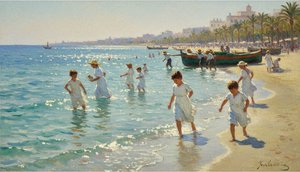
Joaquín Sorolla: Capturing Spanish Light & Life – A Legacy of Impressionism
Explore the luminous world of Joaquín Sorolla, Spanish master of Impressionism. Discover his life, techniques & legacy – a guide for art collectors and enthusiasts. Invest in timeless beauty.

Impressionism's Masterpieces: 10 Paintings That Defined a Movement | OriginalUniqueArt
Journey through Impressionism's heart with 10 iconic paintings by Monet, Renoir & Degas. Explore light, color & the stories behind these masterpieces. Find museum-quality art reproductions and elevate your home decor on OriginalUniqueArt.com.
Águeda Ruiz de la Prada: A Study of Eclecticism & Emotional Resonance in Contemporary Spanish Painting
Discover the vibrant world of Ágatha Ruiz de la Prada, a leading figure in contemporary Spanish art. Explore her eclectic style, emotional depth & legacy – a must-read for discerning collectors.


